
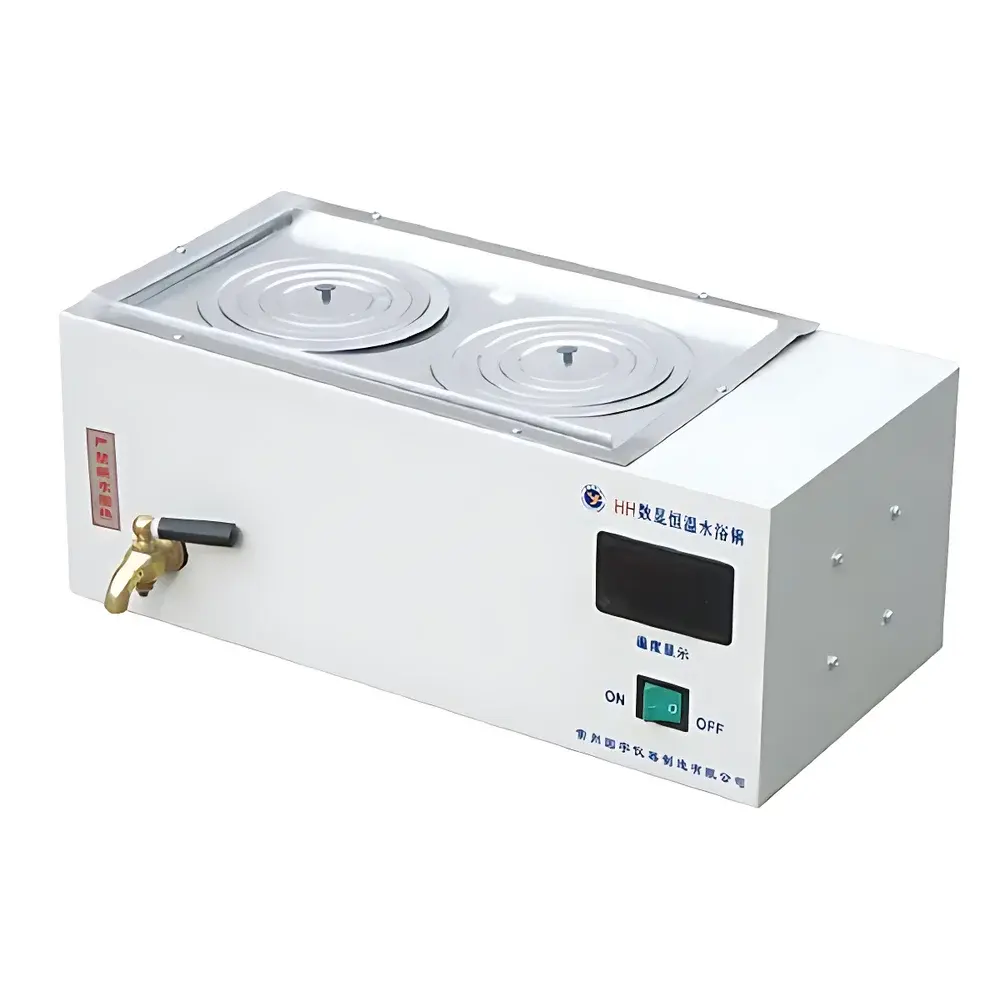
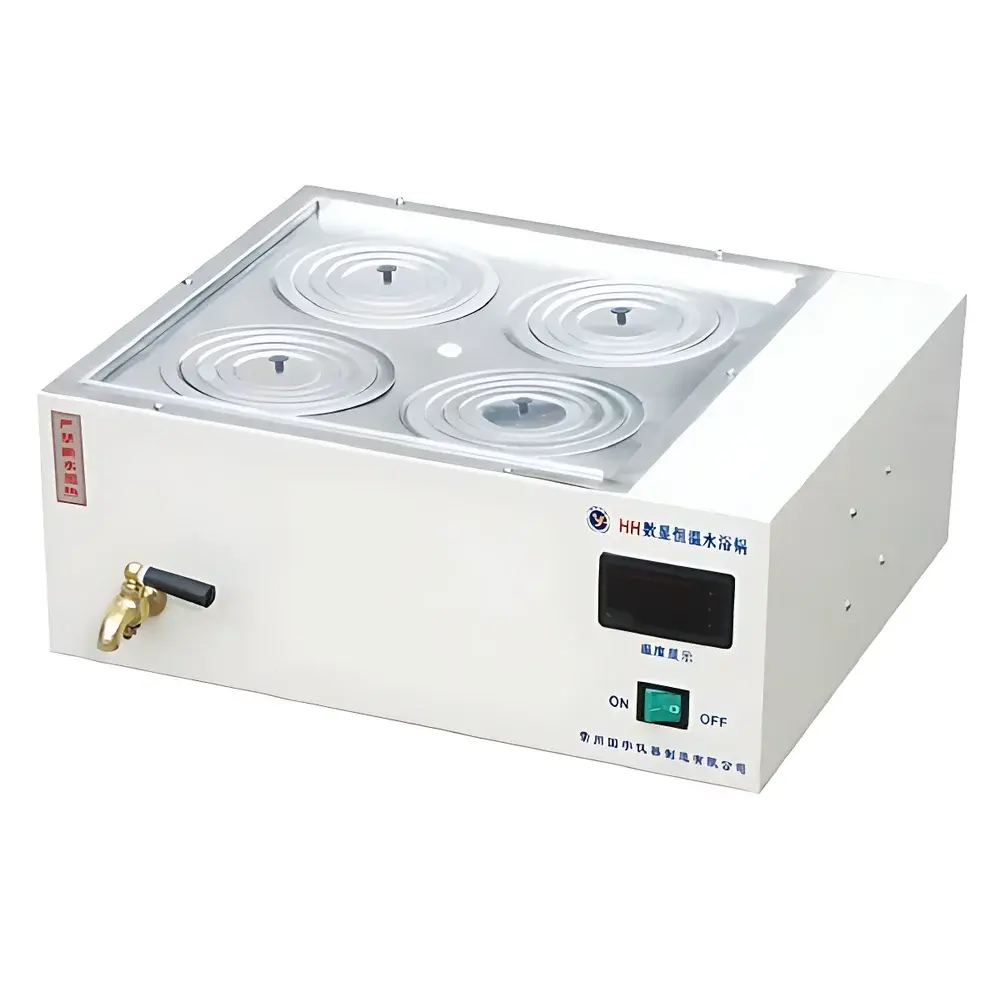
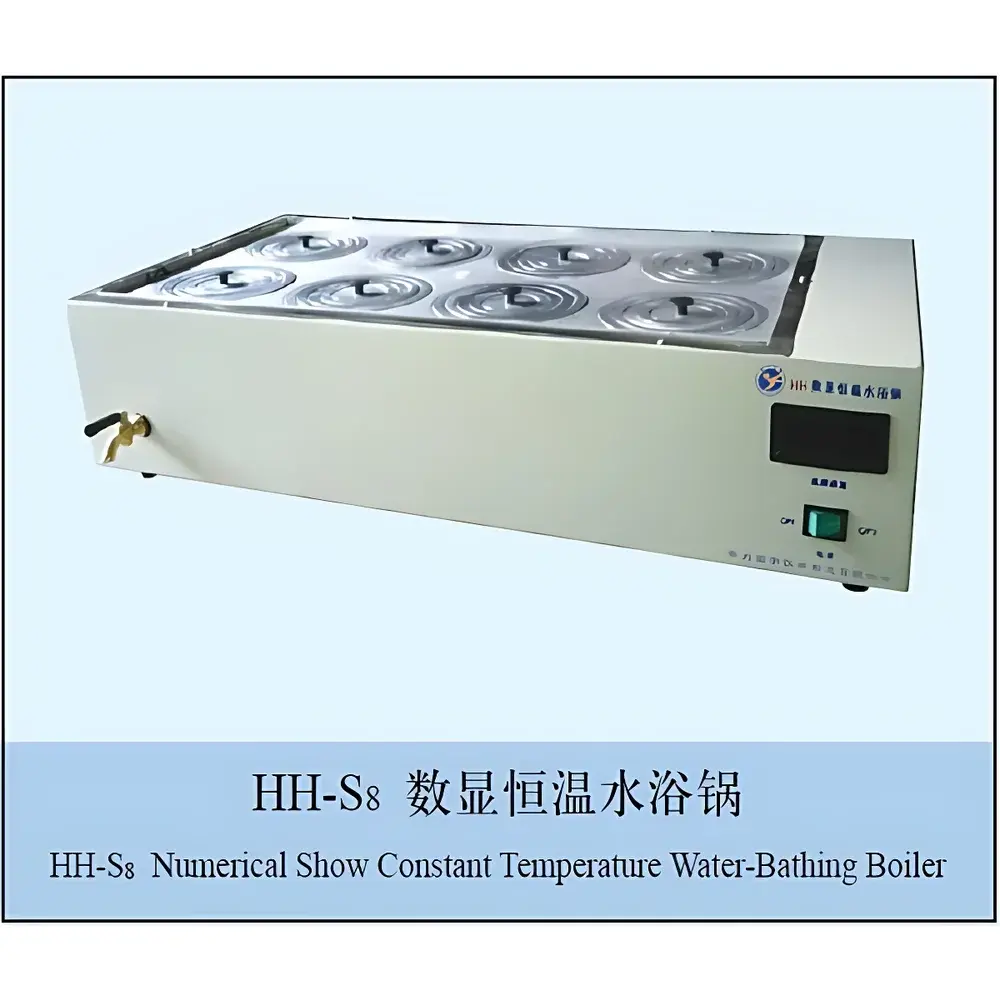
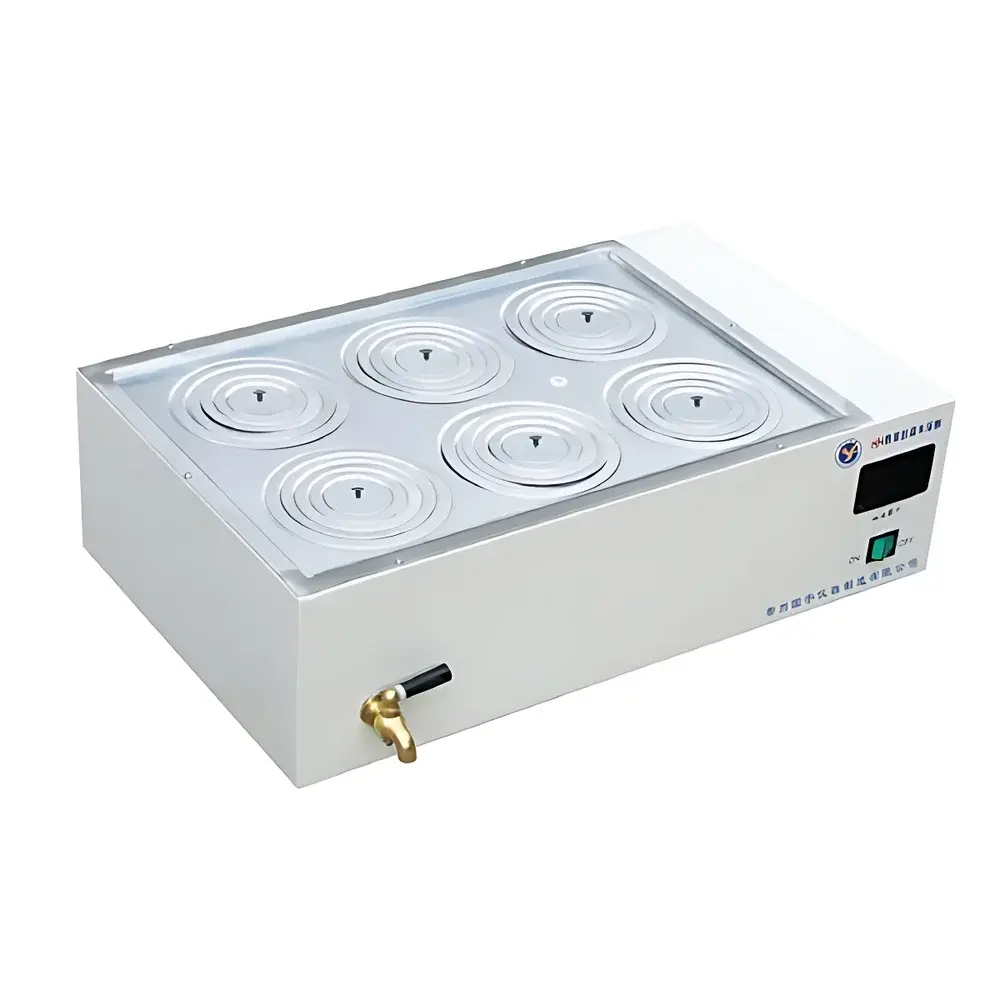
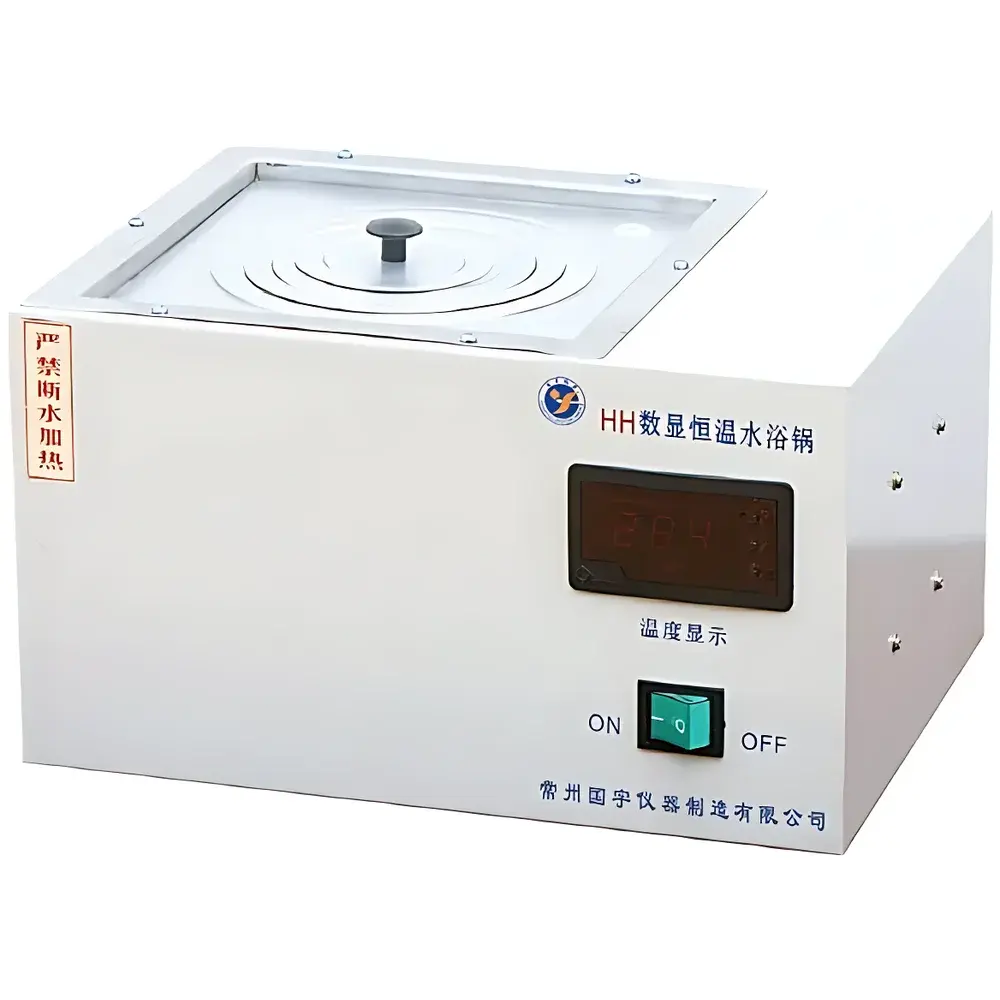
CZGY HH-2 Digital Display Constant Temperature Water Bath
| Brand | CZGY |
|---|---|
| Model | HH-2 |
| Type | Water Bath |
| Heating Power | 800 W |
| Tank Dimensions (L×W×H) | 305 × 160 × 120 mm |
| Capacity | ~5.8 L |
| Temperature Range | Ambient to 100 °C |
| Temperature Control Accuracy | ±0.5 °C |
| Display | LED Digital |
| Construction | Stainless Steel Inner Chamber, Cold-Rolled Steel Outer Casing with Epoxy Coating |
| Power Supply | 220 V AC, 50 Hz |
| Compliance | Designed for GLP-compliant laboratory environments |
Overview
The CZGY HH-2 Digital Display Constant Temperature Water Bath is an entry-level, precision-engineered thermal platform designed for routine temperature-controlled immersion applications in academic, industrial, and quality control laboratories. It operates on the principle of resistive heating combined with proportional-integral-derivative (PID) temperature regulation—enabling stable thermal equilibrium across the bath medium (water or compatible heat-transfer oils). Unlike circulating baths, the HH-2 relies on natural convection within the stainless steel tank to maintain uniformity; its design prioritizes mechanical robustness, operational simplicity, and long-term reliability under continuous low-to-moderate thermal load. The unit is optimized for static incubation, sample equilibration, enzymatic reactions, dissolution testing pre-conditioning, and gentle warming of reagents or biological specimens—applications where precise setpoint retention (±0.5 °C) and visual process transparency are essential.
Key Features
- High-visibility LED digital display with intuitive push-button interface for real-time temperature monitoring and setpoint adjustment
- Stainless steel inner tank (AISI 304 grade) welded for corrosion resistance and leak integrity; seamless construction prevents crevice accumulation of contaminants
- Epoxy-coated cold-rolled steel outer housing provides enhanced durability against chemical splashes and mechanical abrasion
- Intelligent PID temperature controller with adjustable parameters (P, T, E) for fine-tuned thermal response and minimized overshoot
- Over-temperature protection circuitry integrated into the control system to prevent dry-run damage during operator error or evaporation events
- Dual-layer insulated lid with standardized 12 cm diameter openings (four per lid), facilitating simultaneous processing of multiple vessels without cross-contamination risk
- No internal circulation pump—reducing maintenance requirements and eliminating vibration transmission to sensitive samples
Sample Compatibility & Compliance
The HH-2 accommodates standard laboratory glassware including beakers (up to 1000 mL), test tubes, flasks, and sample vials immersed directly in water or low-viscosity silicone oils (max. operating temp: 100 °C). Its non-circulating design ensures minimal mechanical disturbance—ideal for sedimentation studies, gel solidification, or cell culture pre-warming. The unit conforms to IEC 61010-1:2010 safety standards for electrical laboratory equipment and supports basic GLP documentation workflows through traceable temperature logging (when paired with external data loggers). While not FDA 21 CFR Part 11–compliant out-of-the-box, its analog control architecture allows integration into validated systems via third-party compliant recording solutions. All materials contacting the bath medium comply with USP Class VI biocompatibility guidelines for short-term aqueous exposure.
Software & Data Management
The HH-2 operates as a standalone analog-digital hybrid instrument with no embedded software stack or network interface. Temperature data is displayed locally only; however, the unit features a 0–5 V analog output signal (optional accessory) compatible with most industrial data acquisition systems (e.g., National Instruments DAQ, Keysight 34970A, or LabVIEW-based platforms). For regulatory environments requiring audit trails, users may connect calibrated external thermistors or RTDs to certified dataloggers (e.g., Omega OM-DAQPRO-5300) to record time-stamped bath temperature profiles meeting ISO/IEC 17025 calibration traceability requirements. Firmware updates are not applicable—the control logic resides in discrete hardware components ensuring deterministic behavior across decades of service life.
Applications
- Pre-equilibration of buffers, media, and reagents prior to HPLC injection or ELISA assay setup
- Controlled thawing of frozen biological samples (serum, plasma, cell suspensions) at defined ramp rates
- Accelerated stability testing of pharmaceutical formulations under ICH Q1A-recommended conditions
- Enzyme kinetics studies requiring sustained thermal environments between 25 °C and 95 °C
- Supporting ASTM D92 (flash point by Cleveland Open Cup) and ASTM D1500 (color of petroleum products) sample conditioning protocols
- Calibration verification of liquid-in-glass thermometers and digital probe sensors using fixed-point reference baths
- Material science applications such as polymer film annealing and wax melting point determination
FAQ
Does the HH-2 support external temperature probes for independent validation?
Yes—its analog output port accepts optional PT100 or thermistor inputs for parallel verification; calibration certificates for these probes are available upon request.
Can this bath be used with oil instead of water?
Yes, provided the oil’s flash point exceeds 100 °C and viscosity remains below 500 cSt at operating temperature; silicone oils are recommended over mineral oils due to oxidative stability.
Is the unit suitable for GMP-regulated environments?
It meets baseline electrical safety and material compatibility criteria for GMP Annex 15 supporting equipment; full qualification (IQ/OQ/PQ) requires documented installation and operational protocols developed by the end user.
What maintenance is required to ensure long-term accuracy?
Annual verification of temperature uniformity (per ASTM E1112) and calibration against NIST-traceable references is advised; cleaning with deionized water and mild detergent after each use prevents scale buildup.
How does the absence of circulation affect temperature uniformity?
Vertical gradients may reach ±1.2 °C at maximum depth (120 mm); best practice is to position samples centrally and avoid stacking—uniformity improves significantly when bath volume is maintained at ≥80% capacity.



