
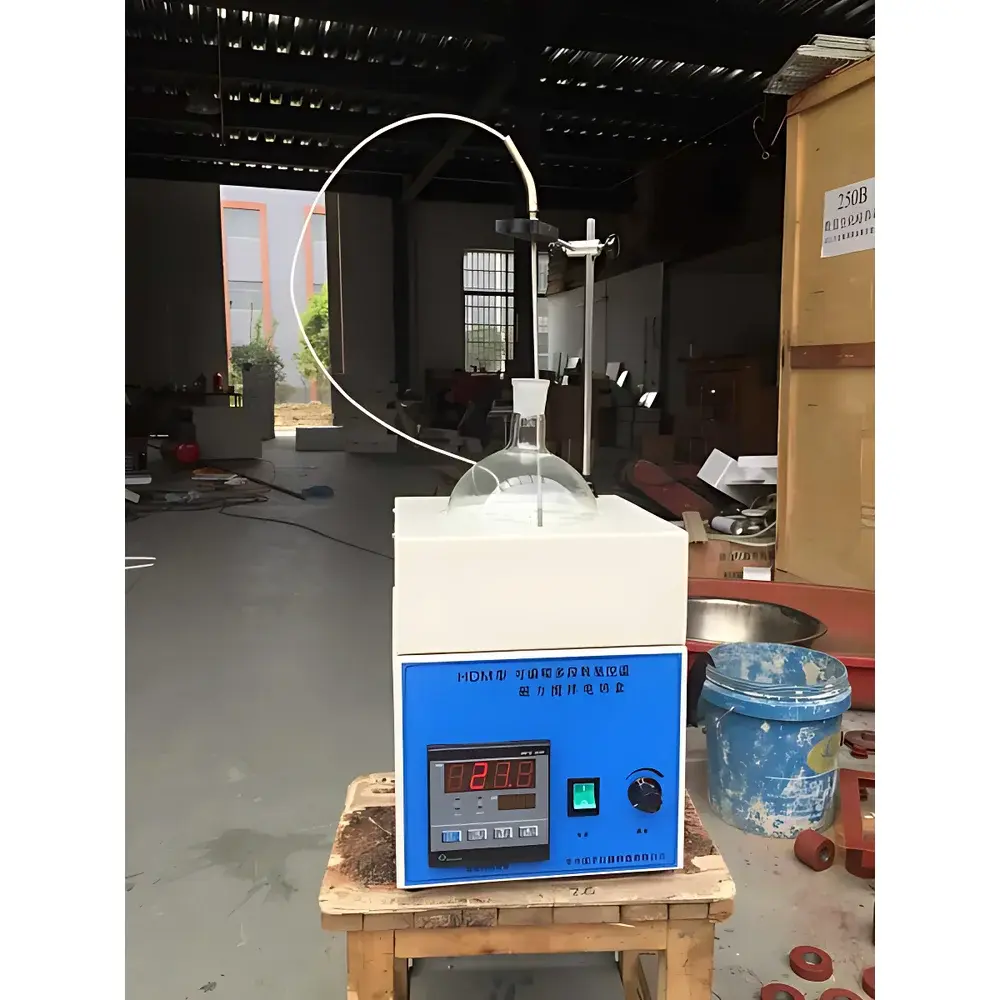
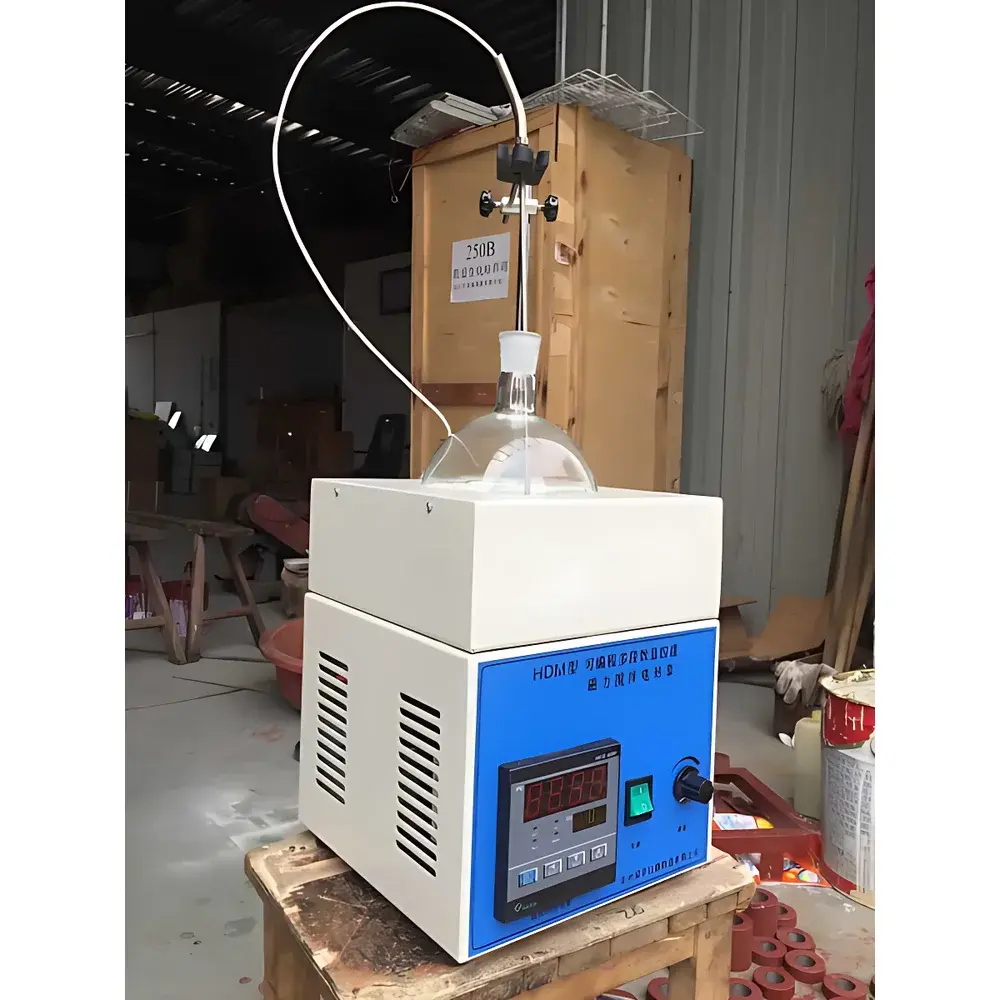
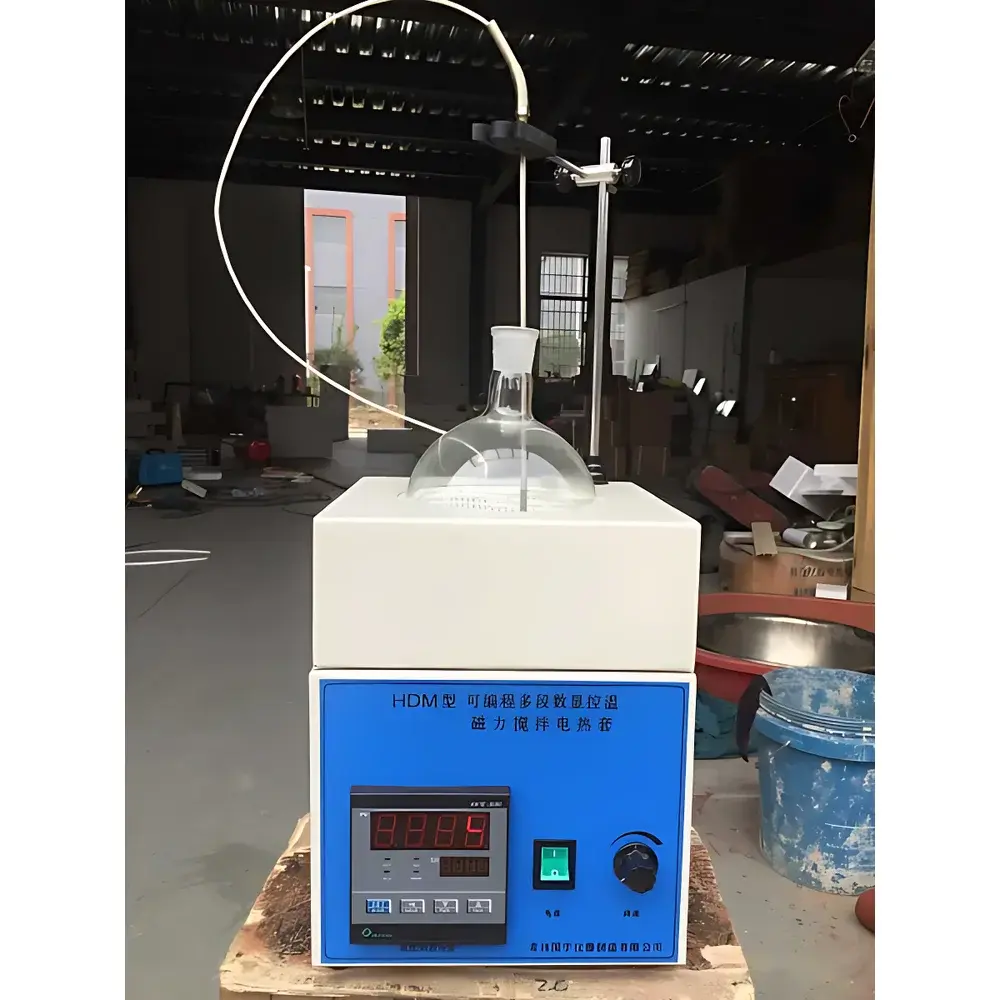
CZGY Programmable Multi-Stage Digital Temperature-Controlled Magnetic Stirring Heating Mantle
| Brand | CZGY |
|---|---|
| Origin | Jiangsu, China |
| Manufacturer Type | Direct Manufacturer |
| Model | Programmable Heating Mantle |
| Voltage | 220 V AC, 50 Hz |
| Max. Stirring Volume | 1000 mL |
| Temp. Range | Ambient +10 °C to 300 °C |
| Temp. Accuracy | ±0.5 °C |
| Stirring Speed | 0–2000 rpm (brushless DC motor, stepless adjustment) |
| Power Rating | 500 W |
| Insulation Material | High-Temperature Glass Fiber |
| Compliance | CE-marked design principles, GLP-aligned operational safeguards |
Overview
The CZGY Programmable Multi-Stage Digital Temperature-Controlled Magnetic Stirring Heating Mantle is an integrated laboratory heating and mixing system engineered for precise thermal management and consistent mechanical agitation in glass reaction vessels. It operates on the principle of resistive heating via embedded nickel-chromium alloy elements, thermally insulated by high-purity glass fiber to minimize heat loss and maximize energy efficiency. Temperature control is achieved through a microprocessor-based PID algorithm with multi-segment programming capability—enabling users to define up to eight independent time-temperature ramps, including hold periods, linear ramp rates, and cooling profiles. The system couples this thermal precision with a brushless DC magnetic stirrer, delivering continuous torque across its full 0–2000 rpm range without carbon brush wear or electromagnetic interference. Designed for compatibility with standard round-bottom flasks (up to 1000 mL), it serves as a core platform for reflux, synthesis, dissolution, and extraction protocols requiring synchronized heating and stirring under ambient or inert atmospheres.
Key Features
- Multi-stage programmable temperature controller with user-defined ramp/soak profiles (8 segments maximum)
- High-resolution digital display showing real-time setpoint, actual temperature, and stirring speed
- Brushless DC motor drive ensuring >10,000 hours MTBF, silent operation, and zero maintenance over extended duty cycles
- Optimized thermal architecture: glass-fiber insulation layer reduces surface temperature rise and improves thermal uniformity across mantle surface
- Independent dual-control interface: separate knobs for temperature setpoint and stirring speed, each with tactile feedback and position memory
- Over-temperature cut-off protection (hardware-based safety limiter at 320 °C) and automatic motor shutdown upon thermal fault detection
- Robust aluminum housing with reinforced silicone rubber base for vibration damping and benchtop stability
Sample Compatibility & Compliance
The heating mantle accommodates standard borosilicate glassware—including 500 mL and 1000 mL round-bottom flasks—without requiring vessel-specific adapters. Its conical geometry ensures optimal thermal contact and minimizes hot-spot formation. From a regulatory standpoint, the unit adheres to fundamental electrical safety requirements aligned with IEC 61010-1:2010 for laboratory equipment. While not certified for hazardous location use (e.g., Class I Div 1), its design supports GLP-compliant workflows through deterministic temperature logging (when paired with optional RS485 interface), traceable calibration procedures, and audit-ready operational logs. The absence of exposed heating coils eliminates contamination risk during solvent-based reactions and meets basic cleanliness expectations for pharmaceutical R&D environments.
Software & Data Management
This model operates as a standalone instrument with no embedded operating system; however, it supports external data acquisition via optional analog voltage output (0–5 V corresponding to 0–300 °C) or digital RS485 Modbus RTU communication. When integrated into a centralized lab automation network, temperature and speed parameters can be logged in compliance with 21 CFR Part 11 requirements using validated third-party SCADA or LIMS platforms. Internal non-volatile memory retains the last five executed programs and records cumulative operating hours—accessible via service mode for preventive maintenance scheduling. Firmware updates are performed via USB-to-serial adapter (not included), following documented change control procedures.
Applications
- Controlled-temperature synthesis in organic and medicinal chemistry (e.g., Grignard reactions, esterifications, condensations)
- Dissolution testing per USP and Ph. Eur. 2.9.3, particularly for poorly soluble APIs requiring sustained agitation above ambient
- Soil and water sample digestion in environmental analysis (EPA Methods 3015A, 3050B)
- Extraction optimization in natural product isolation (e.g., Soxhlet-assisted maceration, hydrodistillation)
- Cell culture media preparation and buffer equilibration in biomedical labs
- Calibration reference setups for thermocouple and RTD verification across 50–280 °C range
FAQ
Is the heating mantle compatible with Teflon-coated stir bars?
Yes—standard PTFE- or PTFE/glass-coated stir bars operate reliably within the specified speed and temperature range.
What is the expected lifetime of the heating element under continuous 250 °C operation?
Rated for ≥5,000 hours at 250 °C when operated within specified ventilation conditions (minimum 5 cm clearance on all sides).
Can the unit be used inside a fume hood without performance degradation?
Yes—its convection-independent heating mechanism ensures stable temperature control even under forced-air exhaust conditions.
Does the controller support external temperature feedback from a probe immersed in the sample?
No—this model uses internal mantle-mounted PT100 sensor only; for jacketed or immersion-controlled applications, consider the CZGY-TH series with dual-sensor input.
How is calibration traceability maintained?
Factory calibration is performed against NIST-traceable dry-block calibrators; end users may perform field verification using a calibrated reference thermometer inserted into a dummy flask filled with thermal oil.



