
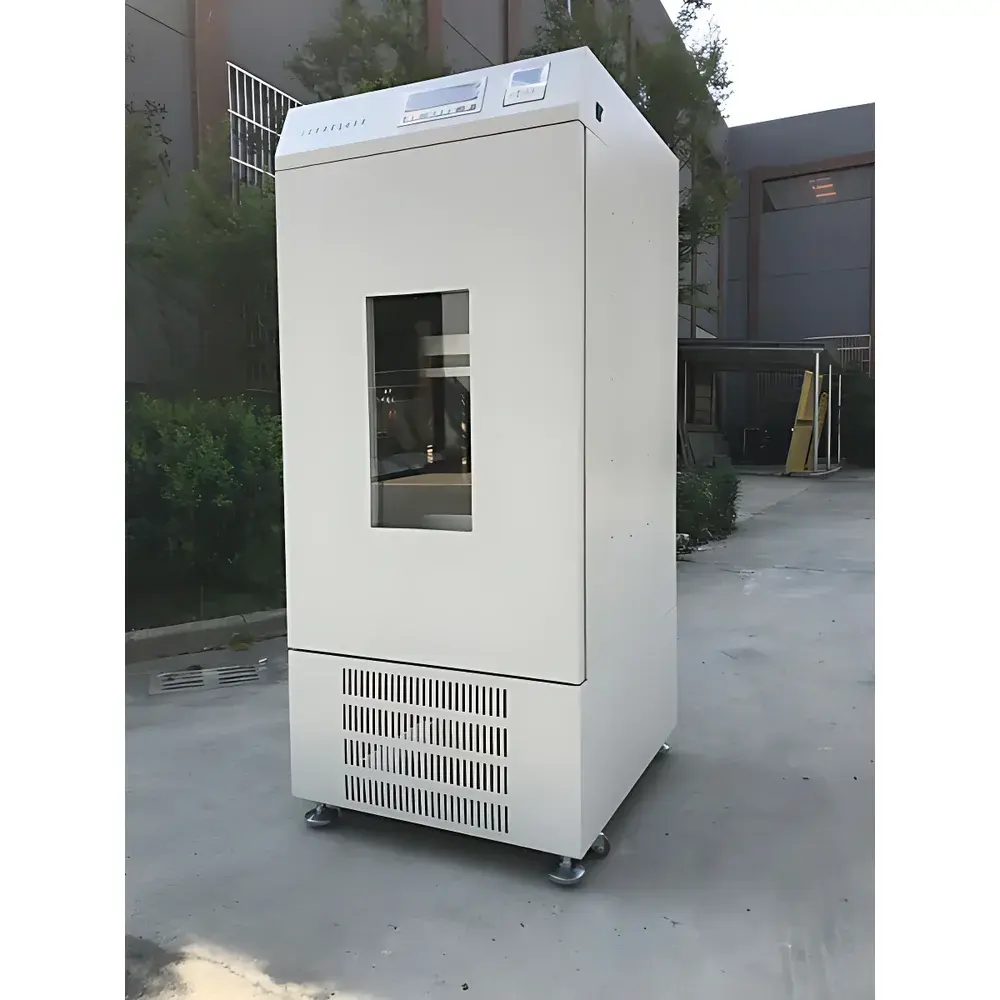
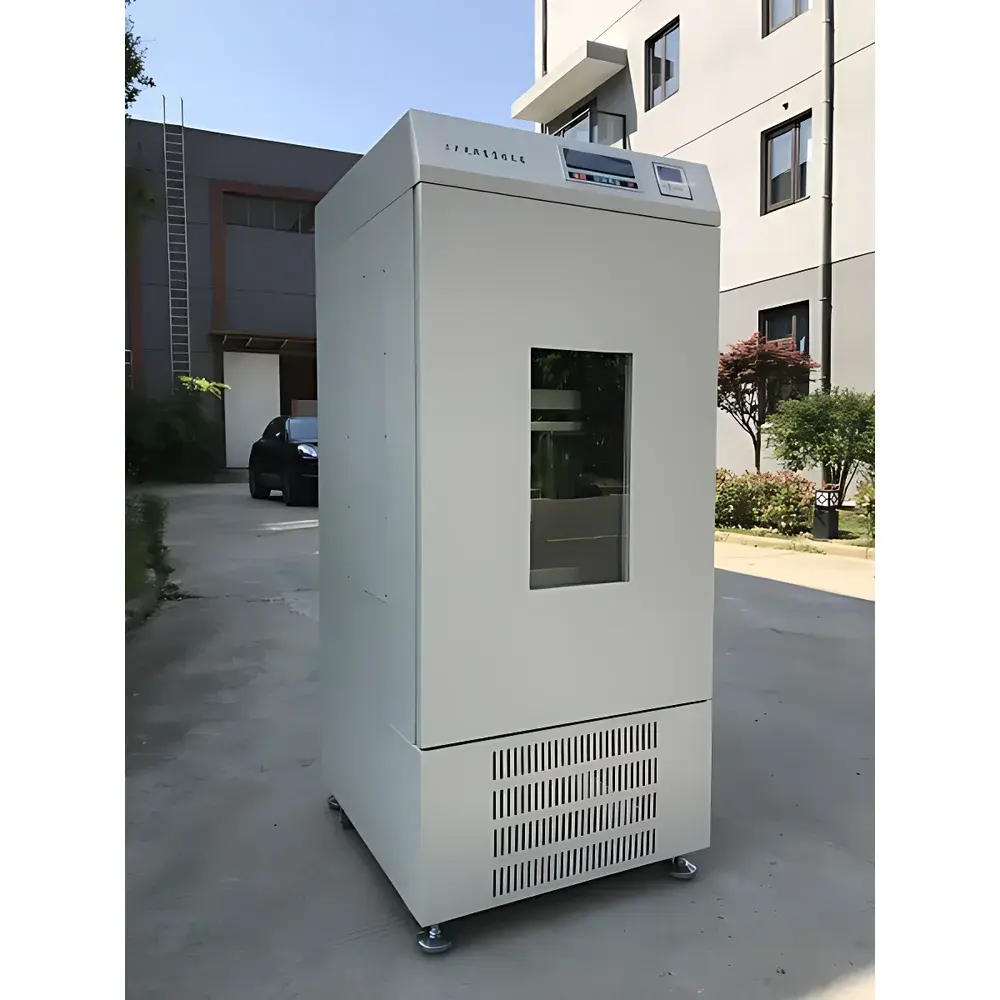
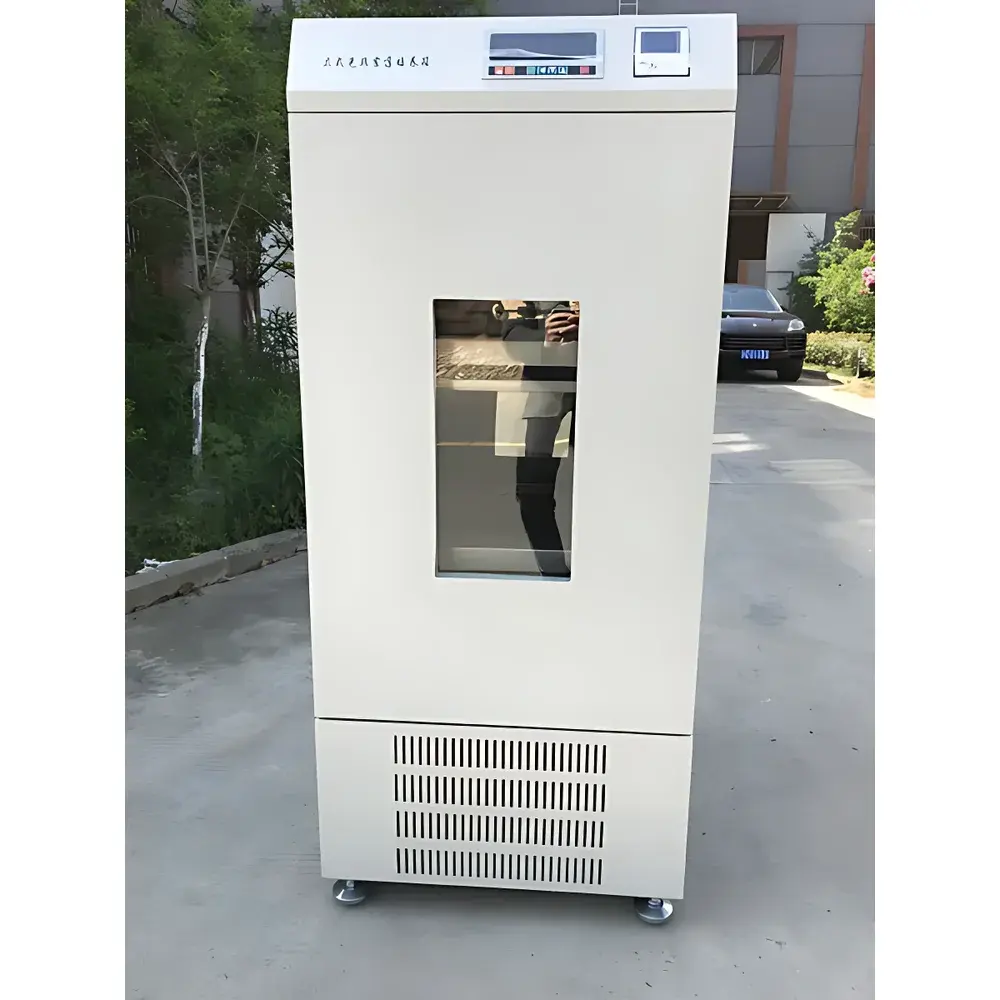
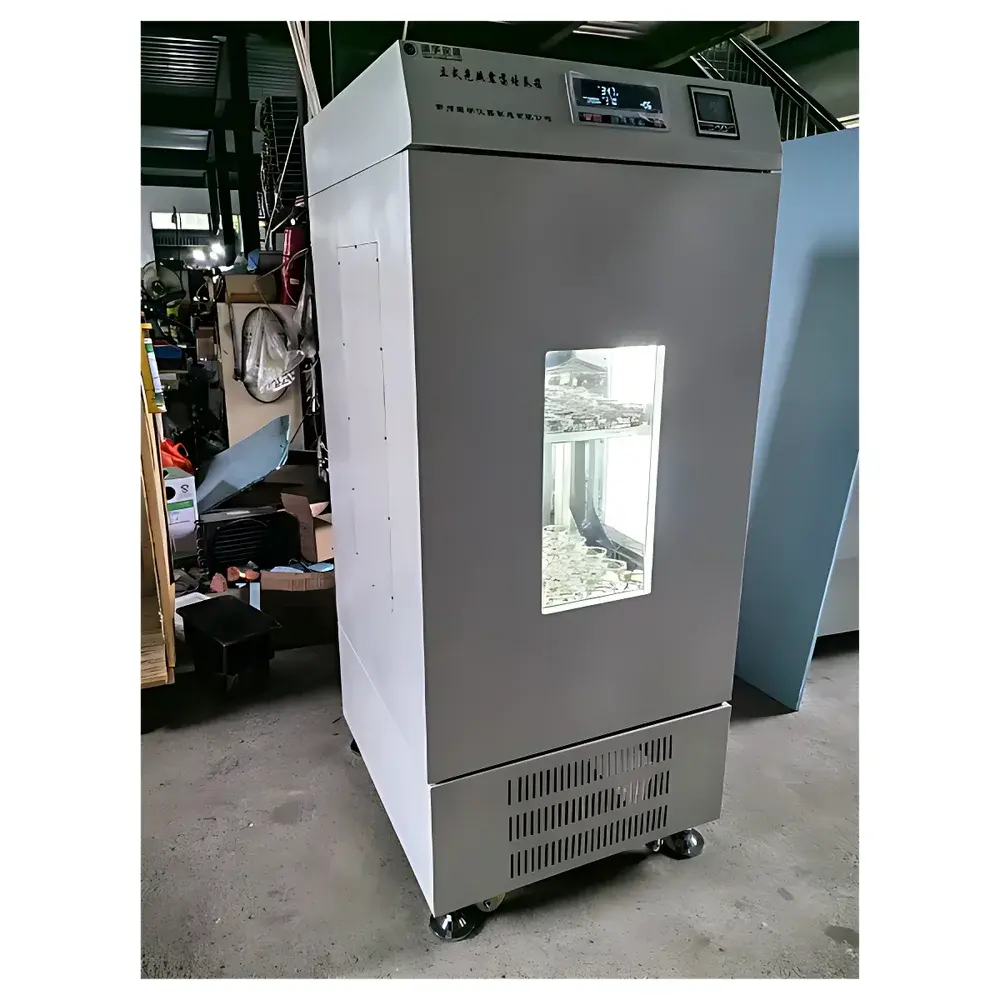
CZGY GYGZ-2F Vertical Illuminated Orbital Shaker Incubator
| Brand | CZGY |
|---|---|
| Origin | Jiangsu, China |
| Manufacturer Type | Direct Manufacturer |
| Instrument Category | Domestic |
| Model | GYGZ-2F |
| Price Range | USD 1,400–2,800 |
| Instrument Type | Full-Temperature Orbital Shaker Incubator |
| Timer Range | 0–9999 min or hr |
| Oscillation Frequency | 30–300 rpm |
| Orbit Diameter | 20 mm |
| Temperature Range | 5–60 °C (dark), 10–60 °C (with illumination) |
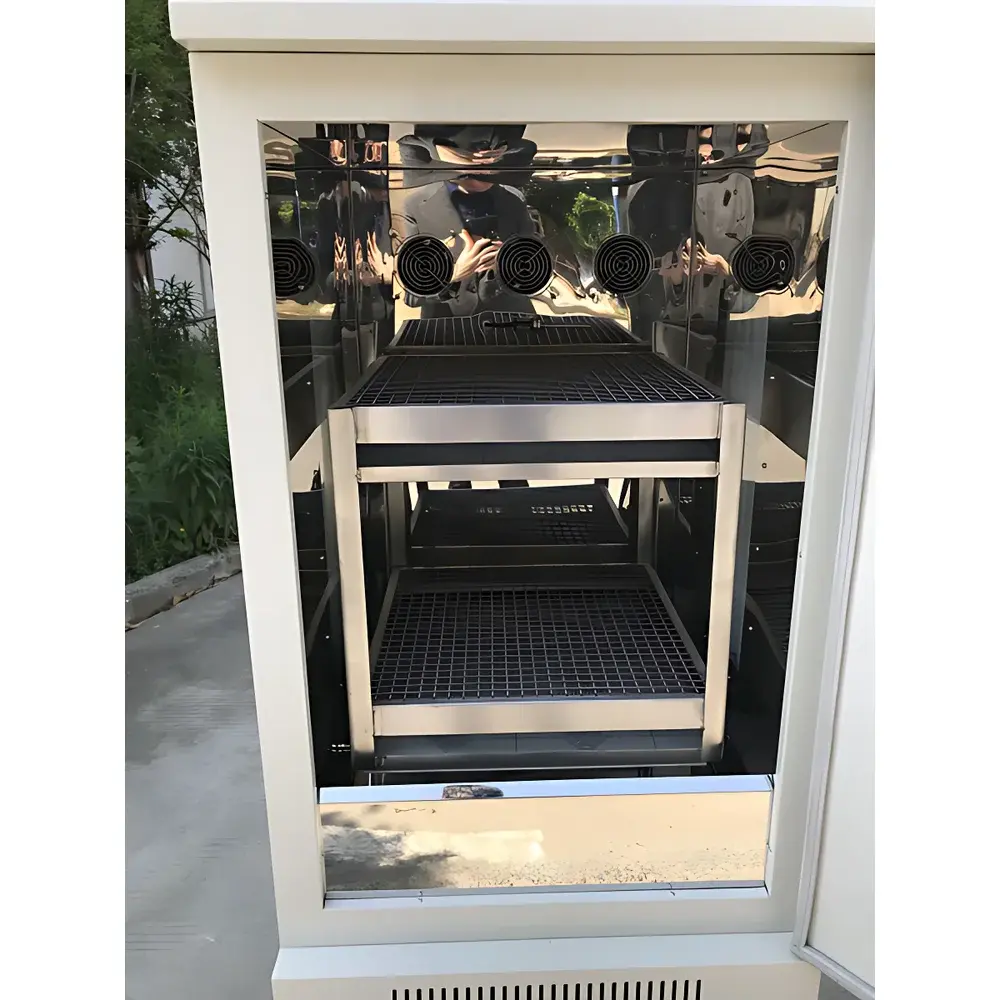
| Number of Shaking Platforms | 2 |
| Power Supply | 220 V, 50 Hz |
| Heating Power | 900 W |
| Shaking Motor Power | 250 W |
| Compressor Power | 360 W |
| Platform Dimensions | 490 × 490 mm |
| Illuminance | ≥5000 lx (6-level adjustable) |
| Illumination & Temperature Programming | 30-segment programmable |
| External Dimensions | 720 × 820 × 1680 mm |
| Construction | Stainless steel interior chamber, cold-rolled steel exterior with epoxy powder coating |
| Display | LCD control panel |
| Standard Fixture | Stainless steel spring clamps |
| Temperature Uniformity | ±0.5 °C (at 37 °C, mid-platform) |
| Temperature Accuracy | ±0.3 °C (calibrated at 37 °C) |
| Humidity Control | Uncontrolled (non-humidified design) |
Overview
The CZGY GYGZ-2F Vertical Illuminated Orbital Shaker Incubator is an integrated life science platform engineered for simultaneous temperature-controlled incubation and orbital shaking under programmable visible-light conditions. Designed for photobiological applications—including algal culture, plant tissue growth, circadian rhythm studies, and light-dependent microbial fermentation—the system employs a dual-platform vertical architecture to maximize workspace efficiency in constrained laboratory environments. Its core operation relies on precision DC motor-driven orbital motion (20 mm diameter orbit) combined with Peltier-assisted refrigeration and resistive heating, enabling stable thermal regulation across a broad operational envelope. The instrument operates on a closed-loop PID temperature control algorithm with real-time feedback from multiple NTC sensors distributed across chamber walls and platforms. Unlike ambient-air shakers, the GYGZ-2F maintains active thermal management during both static incubation and dynamic shaking—ensuring reproducible physiological conditions for light-sensitive biological samples.
Key Features
- Dual independent shaking platforms (490 × 490 mm each), each with fully adjustable speed (30–300 rpm) and synchronized or decoupled operation modes
- Programmable illumination system delivering ≥5000 lux at platform surface, adjustable across six discrete intensity levels and integrated into 30-segment time-temperature-light profiles
- LCD interface with intuitive menu navigation, real-time parameter display, and password-protected configuration access
- Stainless steel inner chamber (corrosion-resistant, easy-clean finish) housed within a rigid cold-rolled steel frame with epoxy powder coating for chemical resistance and structural integrity
- High-efficiency cooling module (360 W compressor) and rapid-response heating system (900 W) enabling precise ramp-and-soak thermal protocols from 5 °C to 60 °C
- Comprehensive safety architecture including over-temperature cutoff, motor overload protection, door-open alarm, and automatic restart after power recovery
Sample Compatibility & Compliance
The GYGZ-2F accommodates standard microbiological and botanical vessels—including Erlenmeyer flasks (50–2000 mL), Petri dishes, multi-well plates, and custom bioreactor sleeves—via its universal stainless steel spring clamp system. Chamber geometry supports stacked configurations without airflow obstruction. While not certified to IEC 61000-6-3 (EMC) or ISO 13485 out-of-the-box, the unit meets fundamental electrical safety requirements per GB 4793.1 (China’s equivalent to IEC 61010-1) and incorporates design elements aligned with GLP documentation practices: event logging (power loss, door opening, setpoint deviation >2 °C), user-accessible audit trail export via USB, and non-volatile memory retention for all programmed profiles. It is suitable for research-use-only (RUO) applications in academic, industrial R&D, and contract testing laboratories operating under internal quality management systems.
Software & Data Management
The onboard firmware supports 30-step programmable cycles combining temperature, illumination intensity, shaking speed, and duration—each step independently defined with ramp rates and dwell times. All parameters are stored in non-volatile EEPROM with timestamped modification history. Data export is facilitated through a USB-B port; exported CSV files include date/time stamps, setpoints, actual sensor readings (chamber air, platform surface), and system status flags. No proprietary PC software is required—raw logs are human-readable and compatible with common statistical analysis tools (e.g., Python pandas, JMP, GraphPad Prism). For regulated environments, optional firmware upgrade paths support 21 CFR Part 11-compliant electronic signatures and role-based access control (admin/operator), though validation documentation must be performed by end users per local SOPs.
Applications
- Photosynthetic microorganism cultivation (Chlorella, Synechocystis) under controlled diurnal light cycles
- Light-regulated secondary metabolite production in plant cell suspension cultures
- Phototactic bacterial motility assays requiring synchronized illumination and agitation
- Seed germination kinetics studies with variable photoperiod and temperature gradients
- Pre-incubation of light-activated biosensors prior to analytical measurement
- Quality control of light-sensitive reagents and enzyme formulations during stability testing
FAQ
Is the GYGZ-2F suitable for CO2-controlled cell culture?
No. This model lacks CO2 supply, monitoring, or humidification subsystems and is intended for non-mammalian, non-CO2-dependent applications.
Can both platforms operate at different temperatures simultaneously?
No. A single thermal control loop regulates the entire chamber; temperature uniformity is maintained across both platforms per ISO 2768-1 standards.
What is the maximum flask size supported per platform?
Up to four 1000 mL Erlenmeyer flasks (with proper balancing) or eight 500 mL flasks using the standard spring clamp array.
Does the unit include validation documentation for IQ/OQ protocols?
Factory calibration certificates (temperature, speed, illuminance) are provided. Full qualification packages (IQ/OQ/PQ) must be developed and executed by the end user in accordance with local regulatory expectations.
Is remote monitoring or Ethernet connectivity available?
Not natively. Communication is limited to local USB data export. RS-485 or Ethernet modules may be added as custom OEM options upon request.





