Mancang MC-NFS-II In Vitro Rumen Simulation Incubator
| Brand | Mancang |
|---|---|
| Origin | Beijing, China |
| Manufacturer Type | Direct Manufacturer |
| Model | MC-NFS-II |
| Reactor Volume | 1 L per vessel |
| Max. Simultaneous Reactors | 4 |
| Sample Batch Capacity | ≤100 bags |
| Measurement Resolution | 3.5 (unitless, dimensionless digestibility index) |
| Detection Range | 0–6000 (arbitrary units correlating to gas production or metabolite accumulation) |
| Temperature Control Range | Ambient to 45 °C |
| Standard Setpoint | 39.5 °C |
| Accuracy | ±0.1 °C |
| Oscillation | 3D spatial shaking |
| Filtration Pore Size | 25–30 µm |
| Sample Mass per Bag | 0.25–1.5 g |
| Digestibility Range | 0–100% |
| Reproducibility (RSD) | ≤0.2% |
| Data Logging Intervals | 1/5/10/30 min |
| Output Format | Excel (.xlsx) via USB export |
Overview
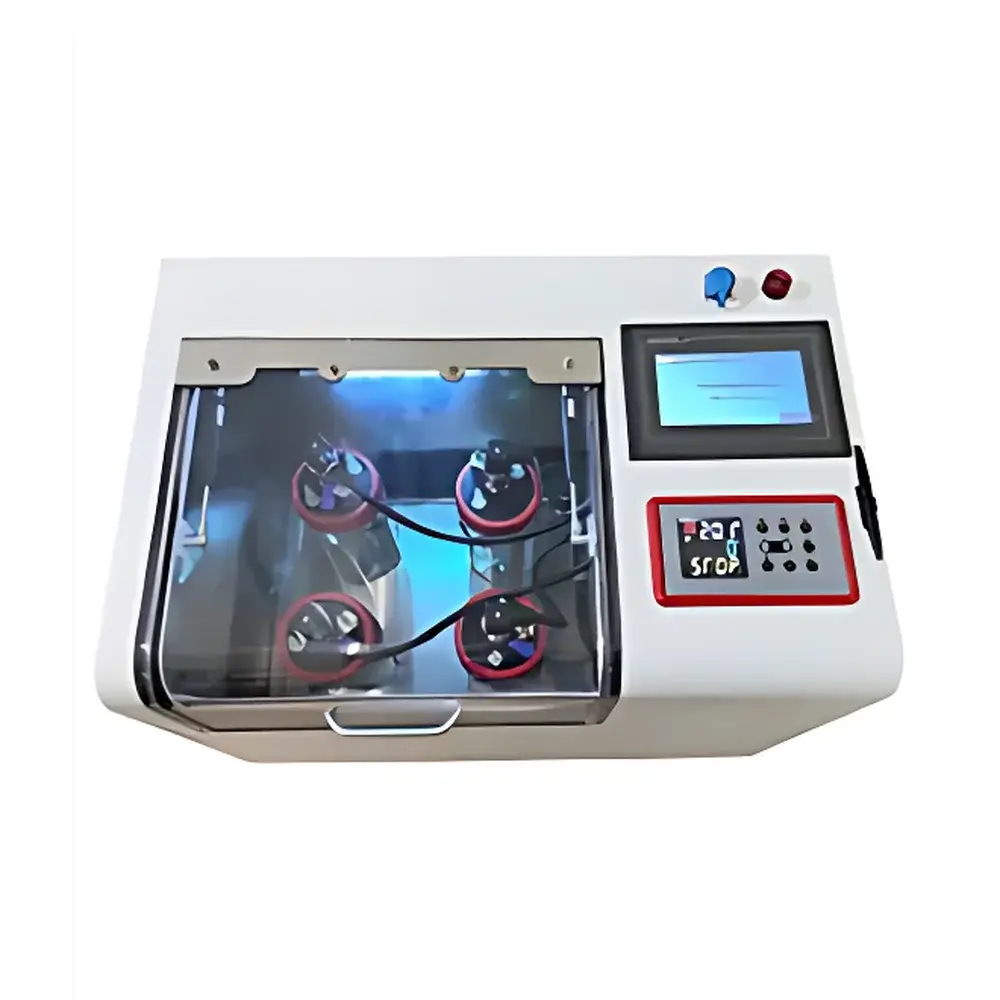
The Mancang MC-NFS-II In Vitro Rumen Simulation Incubator is a purpose-engineered bioreaction simulator designed for high-fidelity in vitro modeling of ruminant gastrointestinal digestion. It operates on the principle of controlled anaerobic fermentation within sealed, temperature-regulated reactors that replicate key physiological parameters of the bovine rumen—including stable thermoregulation at 39.5 °C, dynamic mixing via programmable 3D oscillation, and precise headspace gas management. Unlike generic incubators, the MC-NFS-II integrates real-time environmental control with biochemical process simulation, enabling quantitative assessment of feedstuff degradability, nutrient release kinetics, and microbial metabolic output under standardized, animal-free conditions. Its architecture supports GLP-aligned experimental workflows in nutrition research, feed formulation development, and regulatory pre-screening—reducing reliance on live animal trials while maintaining methodological rigor consistent with AOAC 2007.03, ISO 13905, and FAO/ILCA guidelines for in vitro digestibility assays.
Key Features
- Four independent 1-L reaction vessels with synchronized or individual parameter control, enabling parallel multi-treatment studies.
- MCBIO-8000 intelligent control system: Industrial-grade Siemens PLC core with 7″ capacitive touchscreen HMI, featuring animated operational guidance, on-screen calculation modules, and real-time parameter visualization.
- Automated pressure monitoring and overpressure alarm system with user-configurable thresholds via touch interface.
- High-stability thermal regulation: PID-controlled heating with ±0.1 °C accuracy at 39.5 °C setpoint—certified per manufacturer validation protocol (Certificate of Conformance available upon request).
- 3D orbital oscillation mechanism ensuring homogeneous slurry suspension and consistent substrate–microbe contact, mimicking natural ruminal motility.
- Micro-porous filtration support: 25–30 µm pore-size synthetic mesh compatible with standard nylon digestion bags (e.g., ANKOM F57/F58), validated for retention of protozoal and bacterial biomass.
- Full remote operability: Windows-based upper-computer software and cross-platform mobile application (iOS/Android) for real-time monitoring, parameter adjustment, and alarm notification from off-site locations.
Sample Compatibility & Compliance
The MC-NFS-II accommodates solid and semi-solid feed samples—including forages, concentrates, silages, and novel protein sources—with mass loading between 0.25 g and 1.5 g per digestion bag. Up to 100 sample bags can be processed per run across four reactors. The system complies with internationally recognized in vitro fermentation protocols, including the two-stage Tilley–Terry method and modified Menke techniques. All hardware components meet IP54 ingress protection standards; reactor vessels are constructed from autoclavable, chemically inert borosilicate glass and food-grade stainless steel. Firmware and software adhere to data integrity principles aligned with FDA 21 CFR Part 11 requirements, supporting electronic signatures, audit trails, and version-controlled method storage.
Software & Data Management
The embedded MCBIO-8000 software platform provides integrated process modeling capabilities beyond basic parameter logging. It includes three configurable simulation modules: (1) Rumen environment emulation (temperature, pH trajectory, redox potential proxy), (2) Substrate degradation kinetics engine for estimating effective degradability (ED) and rate constants (kd, kp), and (3) Metabolite correlation framework linking gas production profiles to volatile fatty acid (VFA) yield and microbial protein synthesis predictions. Raw sensor data (temperature, pressure, time) is timestamped and stored locally with user-selectable intervals (1/5/10/30 minutes). Export functionality supports direct USB transfer of Excel-compatible .xlsx files containing both raw measurements and derived digestibility percentages. All data files include embedded metadata: operator ID, batch ID, calibration timestamps, and instrument firmware revision.
Applications
- Undergraduate and graduate teaching laboratories: Standardized delivery of AOAC-approved digestibility assays for animal nutrition curricula.
- Feed mill R&D: Rapid screening of novel ingredients (e.g., insect meal, single-cell proteins, tannin-rich legumes) for inclusion rate optimization.
- Veterinary pharmacology: Assessment of drug or additive bioavailability under simulated ruminal conditions.
- Sustainability research: Quantification of methane precursor potential (e.g., propionate-to-acetate ratios) and nitrogen utilization efficiency.
- Regulatory dossier preparation: Generation of reproducible, auditable datasets supporting EFSA, FDA CVM, or AAFCO submissions.
FAQ
What is the certified temperature stability specification at 39.5 °C?
The system maintains ±0.1 °C deviation from setpoint under steady-state operation, verified by NIST-traceable PT100 sensors and documented in the Factory Calibration Report (available upon order confirmation).
Can the MC-NFS-II simulate post-ruminal digestion stages (e.g., abomasum or intestine)?
No—the system is specifically validated for rumen-phase fermentation only. For sequential digestion modeling, users must integrate external enzymatic hydrolysis modules post-incubation.
Is third-party software integration (e.g., LabVIEW, MATLAB) supported?
Yes—via TCP/IP API documentation provided under NDA; RESTful endpoints enable bidirectional communication for custom data pipelines and LIMS synchronization.
What maintenance is required for long-term reliability?
Quarterly verification of seal integrity, annual recalibration of pressure transducers, and routine cleaning of oscillation drive components using isopropyl alcohol—full procedures detailed in the GLP-compliant Maintenance Logbook included with shipment.