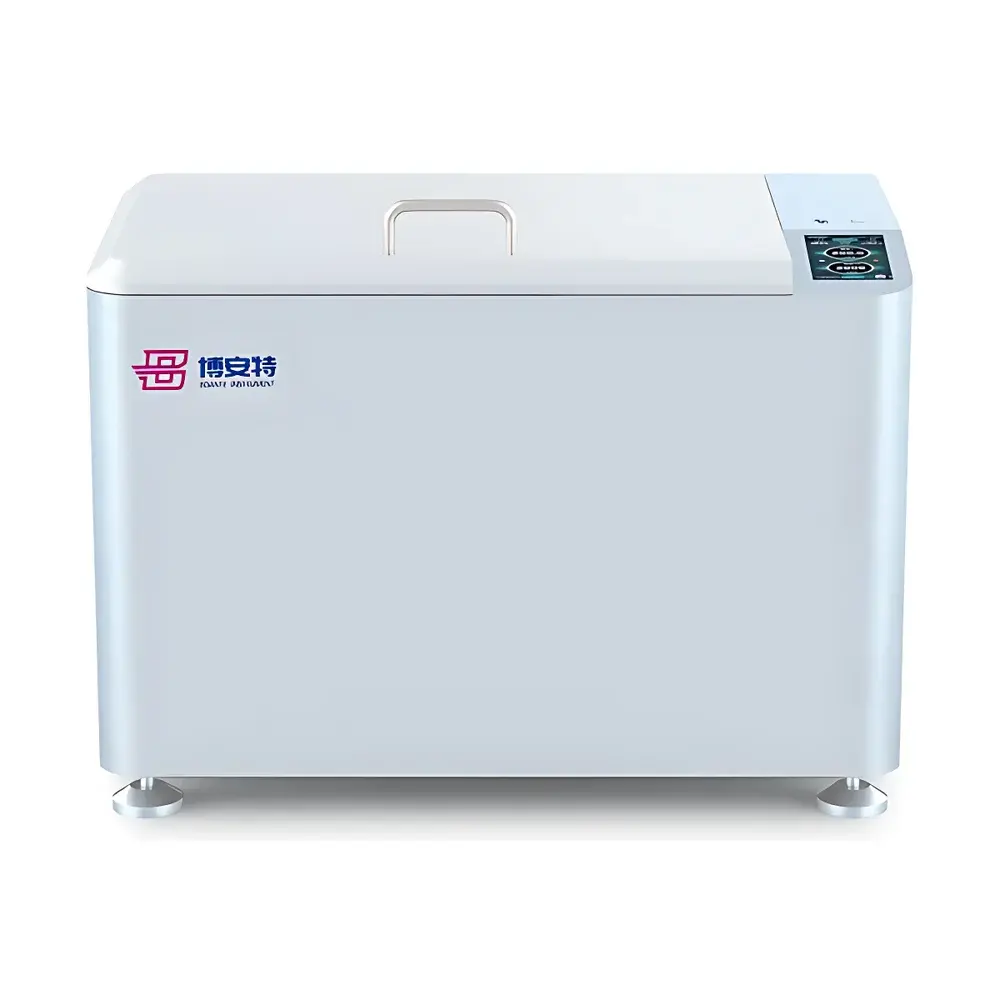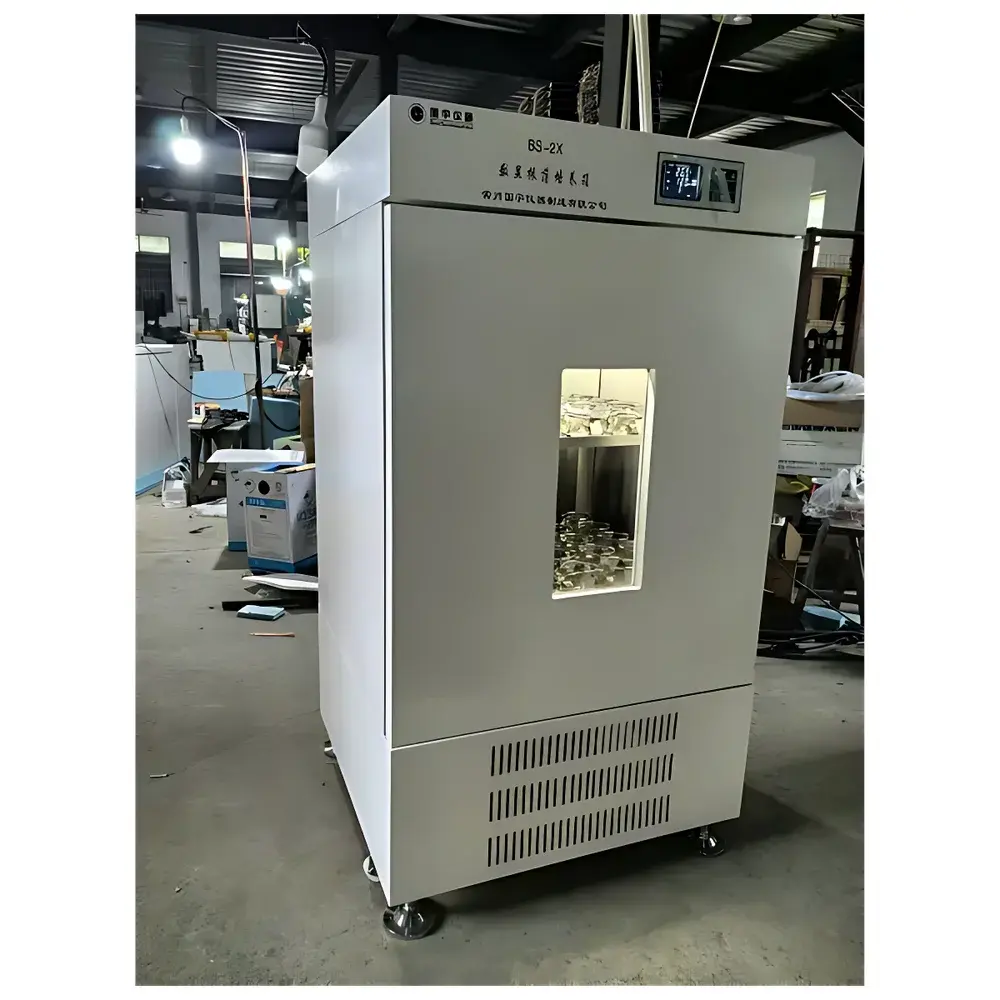
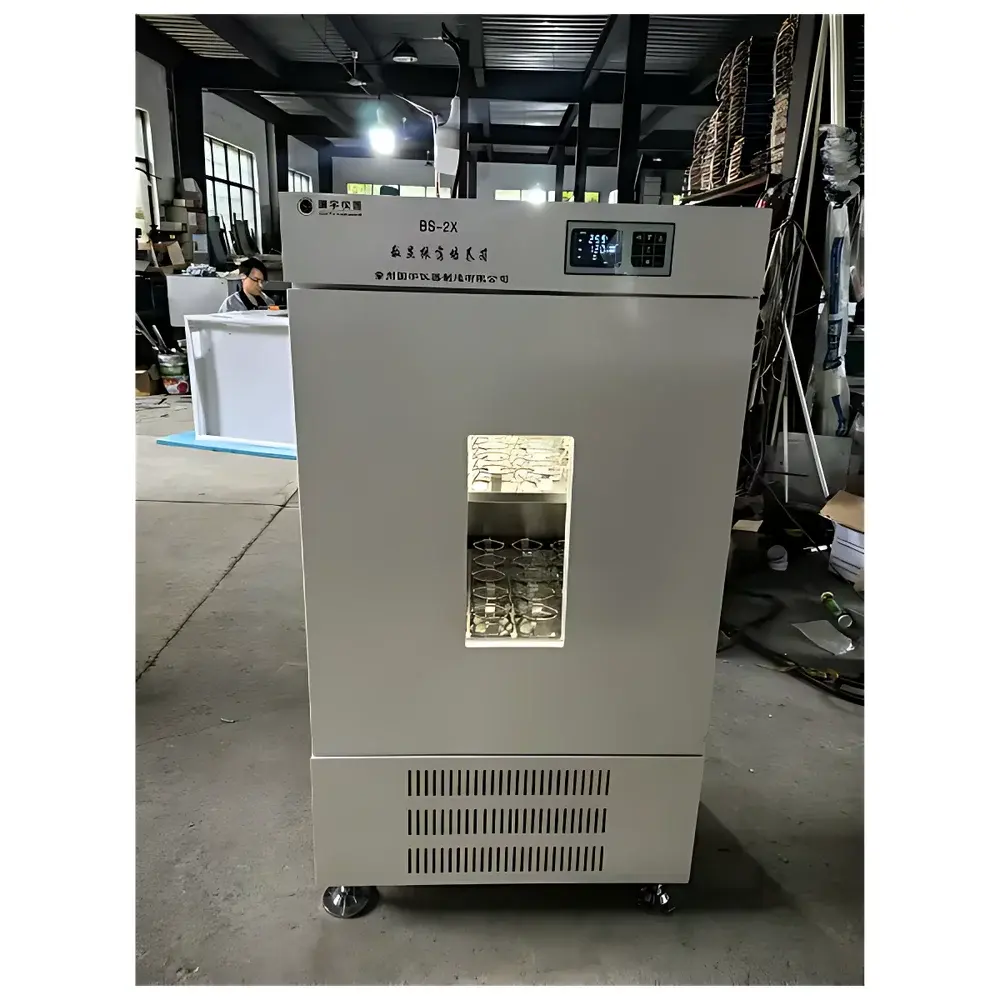
CZGY BS-2X Digital Display Incubator Shaker
| Brand | CZGY |
|---|---|
| Origin | Jiangsu, China |
| Manufacturer Type | Direct Manufacturer |
| Instrument Type | Full-Temperature Orbital Shaker |
| Timer Range | 0–9999 min |
| Oscillation Frequency | 30–300 rpm |
| Amplitude | 26 mm |
| Temperature Range | 5–60 °C |
| Shelf Quantity | 2 shelves |
| Control Display | LCD with PID temperature control |
| Temperature Accuracy | ±0.5 °C |
| Speed Accuracy | ±1 rpm |
| Drive Motor | Brushless DC motor |
| Operation Mode | Orbital (interchangeable to reciprocating upon request) |
| Platform Dimensions | 575 × 480 mm (per shelf) |
| Construction | Cold-rolled steel exterior with stainless steel interior chamber and shelves |
| UV Sterilization | Built-in |
| Power Supply | 220 V, 50 Hz |
| Total Power Consumption | 1000 W |
| Certifications | Compliant with GB/T 28001 (OHSAS 18001 equivalent), ISO 9001 manufacturing system |
Overview
The CZGY BS-2X Digital Display Incubator Shaker is an integrated laboratory instrument engineered for simultaneous temperature-controlled incubation and orbital shaking—designed specifically for life science applications requiring precise environmental regulation and mechanical agitation. It operates on convection-based air-heating principle, ensuring uniform thermal distribution across dual-tier stainless steel platforms. The unit employs a brushless DC motor to deliver stable, low-vibration rotational motion at speeds ranging from 30 to 300 rpm, with amplitude fixed at 26 mm for optimal mixing efficiency in Erlenmeyer flasks, culture tubes, and multi-well plates. Its PID-controlled temperature system maintains setpoints within ±0.5 °C across the full operational range of 5–60 °C, supporting both mesophilic and psychrophilic cultivation protocols. This architecture meets functional requirements for aerobic microbial growth, protein expression in liquid media, cell suspension maintenance, and enzymatic reaction kinetics studies under controlled physiological conditions.
Key Features
- Two independently accessible stainless steel shaker platforms (575 × 480 mm each), enabling parallel processing of heterogeneous sample sets
- Brushless DC drive motor ensures continuous operation without carbon wear, delivering high reproducibility and extended service life (>20,000 hr MTBF)
- LCD interface with intuitive menu navigation supports real-time monitoring and adjustment of temperature, speed, and timer settings
- Integrated UV-C germicidal lamp (254 nm) facilitates routine chamber decontamination between runs—critical for aseptic workflows in QC labs and cell culture facilities
- Double-wall insulation with stainless steel inner chamber and cold-rolled steel outer housing provides thermal stability and corrosion resistance
- Orbital motion mode is standard; optional reciprocating conversion kits available for shear-sensitive applications such as mammalian cell dissociation or tissue homogenization
- Compliance-ready design includes non-volatile parameter logging and manual calibration access points aligned with GLP documentation practices
Sample Compatibility & Compliance
The BS-2X accommodates common labware including 250 mL Erlenmeyer flasks (60 units per shelf using dedicated clamps), 50 mL conical tubes, microtiter plates (up to 96-well format with adapter), and custom bioreactor vessels up to 2 L volume. Its internal geometry allows unobstructed airflow circulation, minimizing thermal gradients during long-term incubations. From a regulatory standpoint, the instrument conforms to ISO 9001:2015 certified production processes and adheres to GB/T 28001 occupational health and safety standards. While not FDA 21 CFR Part 11–validated out-of-the-box, its deterministic control logic, audit-trail-capable firmware (via optional RS-232/USB data export), and mechanical traceability support qualification under GMP Annex 11 and USP analytical instrument qualification frameworks.
Software & Data Management
The BS-2X features embedded firmware with local data retention for up to 100 program profiles, each storing temperature ramp rates, dwell times, oscillation parameters, and duration settings. Though it does not include proprietary PC software, all operational parameters—including actual vs. setpoint deviations over time—are accessible via serial output (RS-232) for integration into LIMS or ELN systems. Optional USB-to-serial adapters enable direct CSV export of timestamped logs for trend analysis in Excel or MATLAB. Firmware updates are performed via secure bootloader protocol, preserving calibration constants and user-defined configurations during revision cycles.
Applications
- Microbial fermentation optimization (e.g., E. coli, S. cerevisiae) under variable temperature and aeration regimes
- Recombinant protein expression in shake-flask cultures with synchronized induction timing
- Cell line expansion for bioprocess development, including CHO and HEK293 suspension cultures
- Enzyme activity assays requiring consistent agitation to prevent sedimentation-induced kinetic artifacts
- Environmental microbiology studies involving soil slurry enrichment or waterborne pathogen recovery
- Pharmaceutical stability testing per ICH Q1A(R2) guidelines where agitation mimics transport-induced stress
FAQ
What is the maximum flask capacity per shelf?
Each stainless steel platform supports up to 60 × 250 mL Erlenmeyer flasks using factory-installed dedicated clamps; alternative spring clamp configurations accommodate varied vessel geometries.
Can the BS-2X operate continuously for 72+ hours?
Yes—the brushless DC motor and thermally optimized heat dissipation system allow uninterrupted operation at any combination of 5–60 °C and 30–300 rpm within rated power limits.
Is UV sterilization automated or manually triggered?
UV lamp activation is manual via front-panel toggle switch; exposure duration must be externally timed per biosafety protocol requirements.
Does the unit support external temperature probe input for chamber validation?
No native analog input port exists; however, third-party PT100 probes can be mounted internally and monitored independently using calibrated handheld readers during IQ/OQ procedures.
What maintenance intervals are recommended for optimal performance?
Biannual inspection of fan filters, quarterly verification of temperature uniformity (per ISO 15189 Annex B), and annual recalibration of speed and thermal sensors are advised for regulated environments.
Related Products