
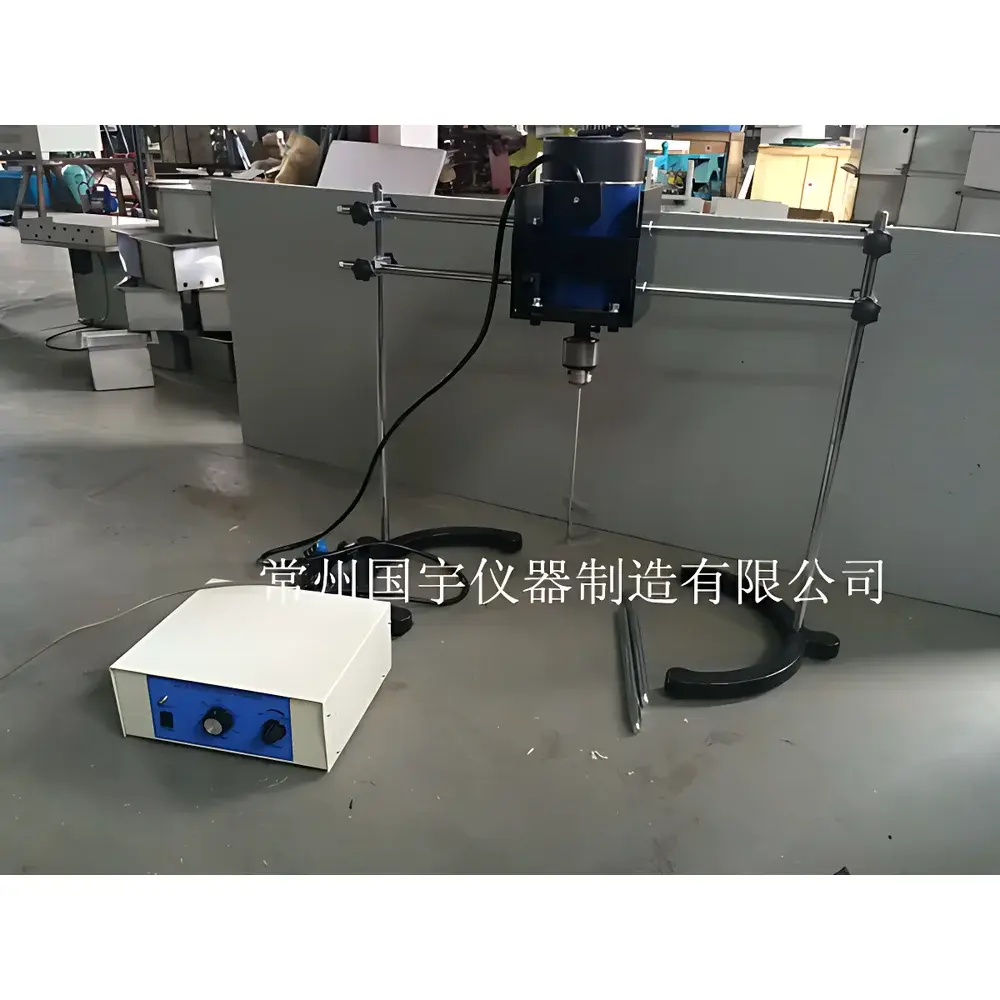
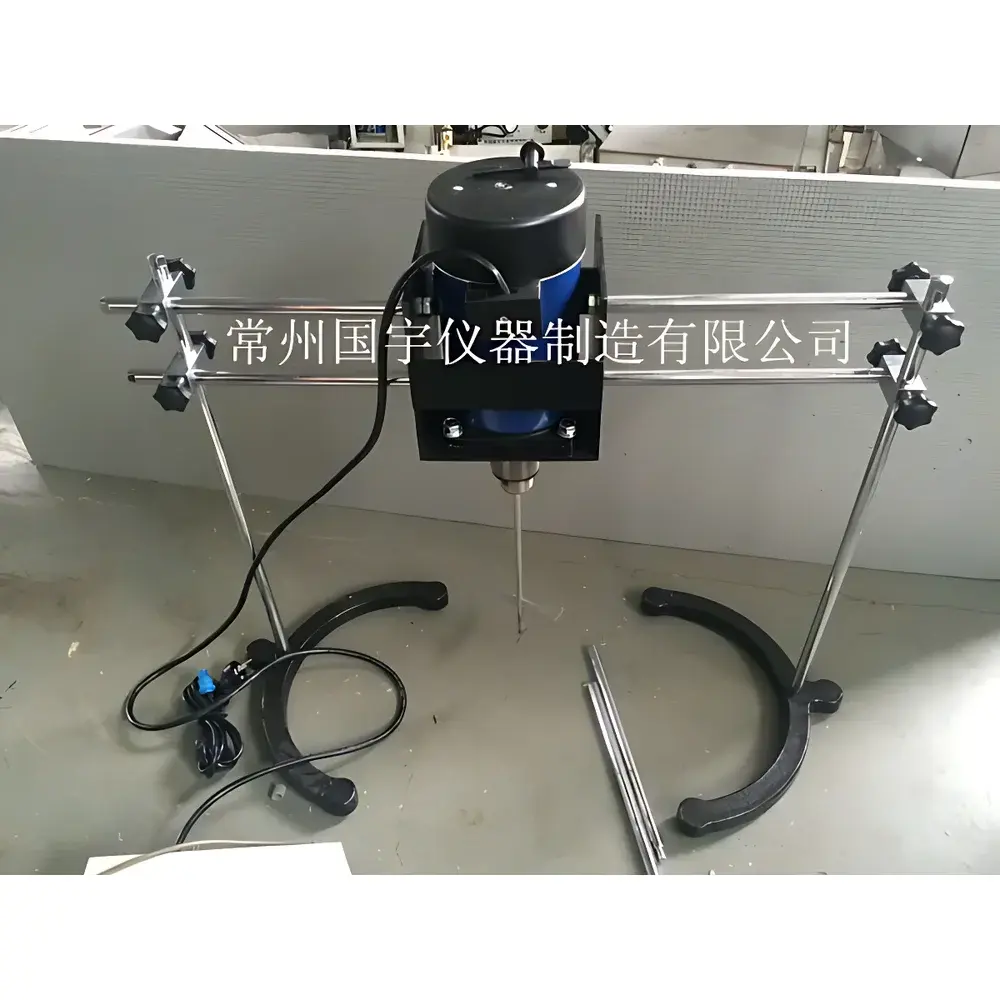
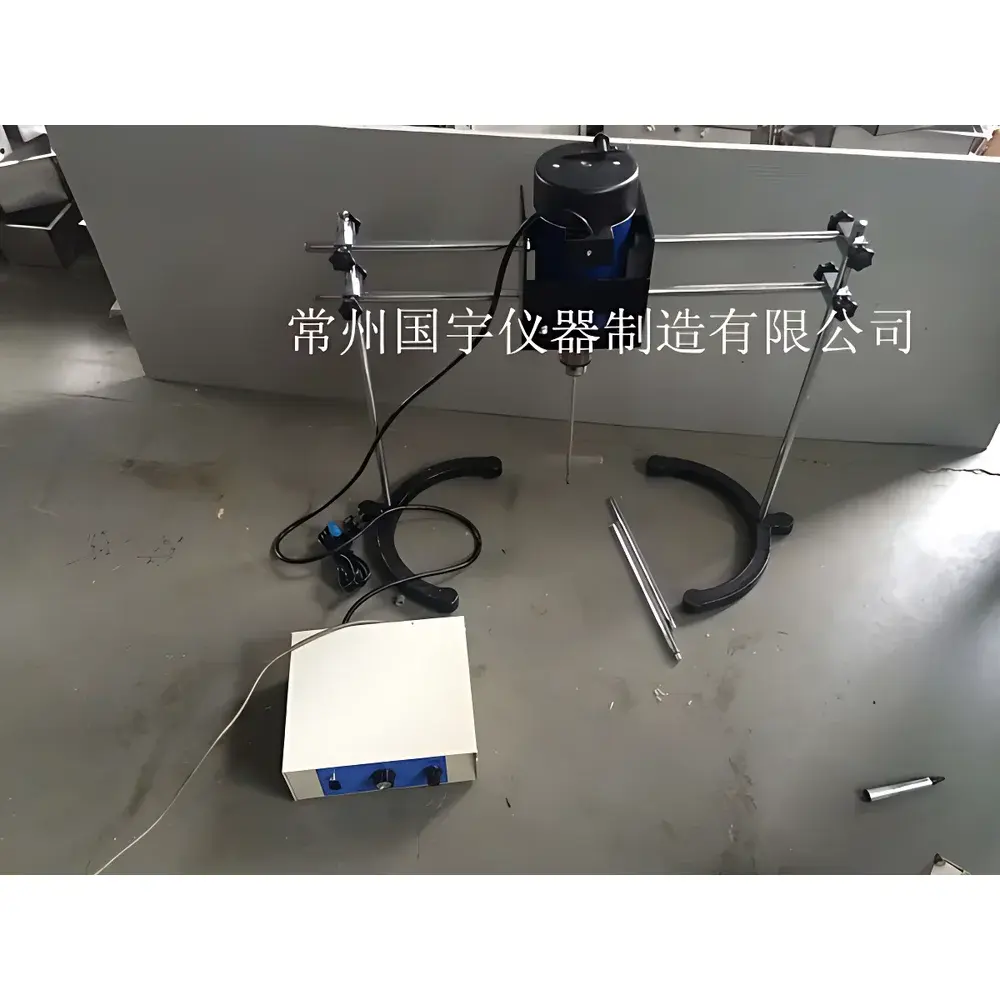
CZGY DJ-3 High-Power Electric Stirrer
| Brand | CZGY |
|---|---|
| Model | DJ-3 |
| Power | 1200 W |
| Max. Mixing Volume | 50 L |
| Speed Range | 0–3000 rpm |
| Timer Range | 0–120 min |
| Input Voltage | 220 V, 50 Hz |
| Control Type | Analog PWM Speed Regulation |
| Protection Features | Current Limiting, Short-Circuit Protection, Stall Protection, Motor Overspeed/Underspeed Detection |
| Operating Mode | Continuous Duty |
| Compliance | CE-marked design principles (IEC 61010-1), GLP-supportive operational logging capability |
Overview
The CZGY DJ-3 High-Power Electric Stirrer is an industrial-grade laboratory stirring system engineered for demanding mixing, homogenization, and suspension tasks in chemical synthesis, pharmaceutical formulation development, polymer dispersion, and large-scale sample preparation. Built around a high-torque, brushless DC motor architecture with pulse-width modulation (PWM) speed control, the DJ-3 delivers precise rotational energy transfer across its full 0–3000 rpm range — enabling reproducible shear application in viscous media up to 50 L volume capacity. Unlike entry-level stirrers relying on AC induction motors or gear-driven reduction systems, the DJ-3 employs direct-drive electromagnetic coupling with dynamic current feedback, ensuring stable rotational velocity under variable load conditions (e.g., sudden viscosity changes during emulsion formation or precipitate suspension). Its robust mechanical design supports vertical and horizontal positioning flexibility via dual-axis adjustable support column and reinforced cross-arm assembly — critical for alignment-sensitive applications such as jacketed reactor integration or multi-vessel parallel stirring setups.
Key Features
- 1200 W continuous-duty DC motor with wide-speed torque curve: delivers >1.8 N·m stall torque at low speeds (≤200 rpm) and maintains ±1.5% speed stability across full range under constant load
- PWM-based analog speed control: infinitely variable adjustment via front-panel rotary encoder; no stepwise increments or digital quantization artifacts
- Integrated safety architecture: real-time current monitoring triggers automatic shutdown during overload, short circuit, rotor stall, or thermal excursion beyond 85 °C internal winding temperature
- Mechanically decoupled drive head: minimizes transmission vibration; enables silent operation (<45 dB(A) at 1 m distance) even at 3000 rpm with properly balanced impellers
- Tool-free height and angle adjustment: stainless steel support column with dual-locking collar system allows rapid repositioning for compatibility with vessels ranging from 50 mL beakers to 50 L glass or stainless steel reactors
- Timer function with mechanical dial interface: 0–120 minute countdown with audible end-of-cycle alert and auto-shutdown; “ON” position bypasses timing for uninterrupted operation
Sample Compatibility & Compliance
The DJ-3 accommodates standard laboratory agitators including propeller, paddle, anchor, and turbine impellers (shaft diameter: 8–12 mm, max. length 450 mm). It is validated for use with aqueous, organic, and mildly corrosive solutions (pH 2–12); optional PTFE-coated shafts and Hastelloy-C276 impellers are available for aggressive media. While not intrinsically rated for explosion-proof environments, its non-sparking motor design and grounded chassis meet IEC 61010-1 requirements for electrical safety in laboratory settings. The unit supports GLP-compliant workflows through repeatable parameter setting (speed/timer) and absence of firmware-dependent configuration — eliminating software validation burdens. Though not FDA 21 CFR Part 11 certified (as it contains no electronic data storage), its analog control interface ensures audit-trail simplicity for regulated QC laboratories performing routine dissolution testing or buffer blending.
Software & Data Management
The DJ-3 operates exclusively via hardware-based controls — no embedded microprocessor, firmware, or digital communication ports. This architecture eliminates cybersecurity risks, firmware update dependencies, and calibration drift associated with digital controllers. All operational parameters (speed setpoint, timer duration, power-on state) are retained solely through mechanical positioning of dials and switches — facilitating straightforward IQ/OQ documentation per ISO/IEC 17025 and ASTM E2500-13 guidelines. For labs requiring traceable speed verification, third-party tachometer validation (e.g., using Keysight 53230A universal counter with optical sensor) is recommended prior to each qualification cycle. No proprietary drivers, cloud connectivity, or vendor-specific software are required or supported.
Applications
- High-viscosity polymer solution blending (e.g., PVDF/NMP slurries for battery electrode coating)
- Long-duration suspension of insoluble APIs in preformulation studies (USP compliance achievable with validated impeller geometry)
- Cell culture media deaeration and pH buffer equilibration in bioprocess development
- Catalyst slurry homogenization for heterogeneous reaction screening (e.g., Pd/C in Suzuki couplings)
- Standardized dissolution medium agitation per USP Apparatus II protocols (when paired with calibrated 5-cm-diameter paddles)
- Preparation of reference standards for ICP-MS and AAS analysis requiring particle-free homogeneous matrices
FAQ
Does the DJ-3 support RS-232 or USB remote control?
No. The DJ-3 is an analog-only instrument with no digital interfaces, firmware, or programmable logic.
Can it be used with jacketed reactors requiring cooling/heating circulation?
Yes — its rigid support column and adjustable cross-arm allow secure mounting above or beside jacketed vessels; ensure impeller clearance avoids contact with internal cooling coils.
What impeller types are recommended for 50 L mixing volumes?
Three-blade marine propellers (diameter ≥150 mm) or pitched-blade turbines (diameter ≥120 mm) mounted on 10 mm shafts provide optimal bulk flow and top-to-bottom turnover in tall-form vessels.
Is calibration certificate included with shipment?
A factory-verified speed accuracy report (±2% tolerance at 100/1000/3000 rpm) is provided; formal metrological calibration per ISO/IEC 17025 requires external accredited service.
What maintenance intervals are recommended for continuous 8-hour/day operation?
Inspect motor ventilation grilles weekly; clean dust accumulation with compressed air. Lubricate elevation screw threads quarterly with silicone-based grease. Verify impeller balance annually using a dynamic balancer.



