
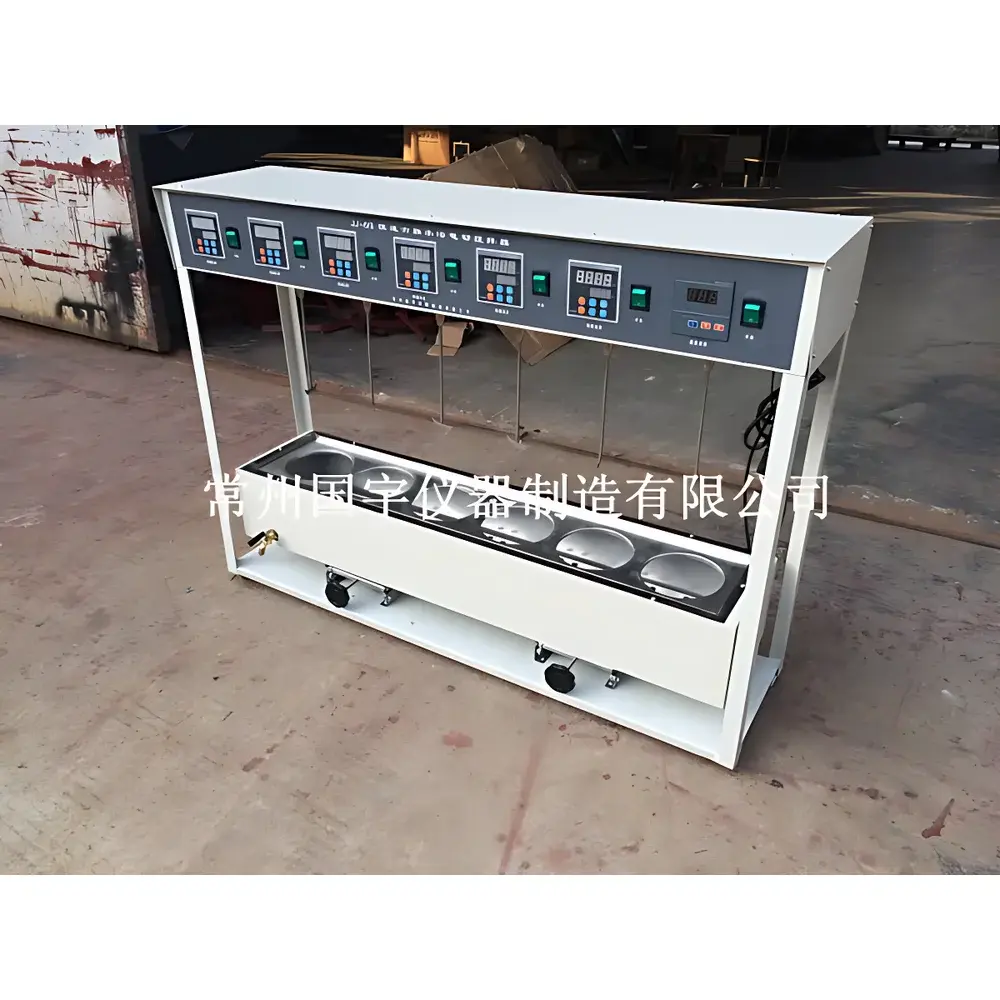
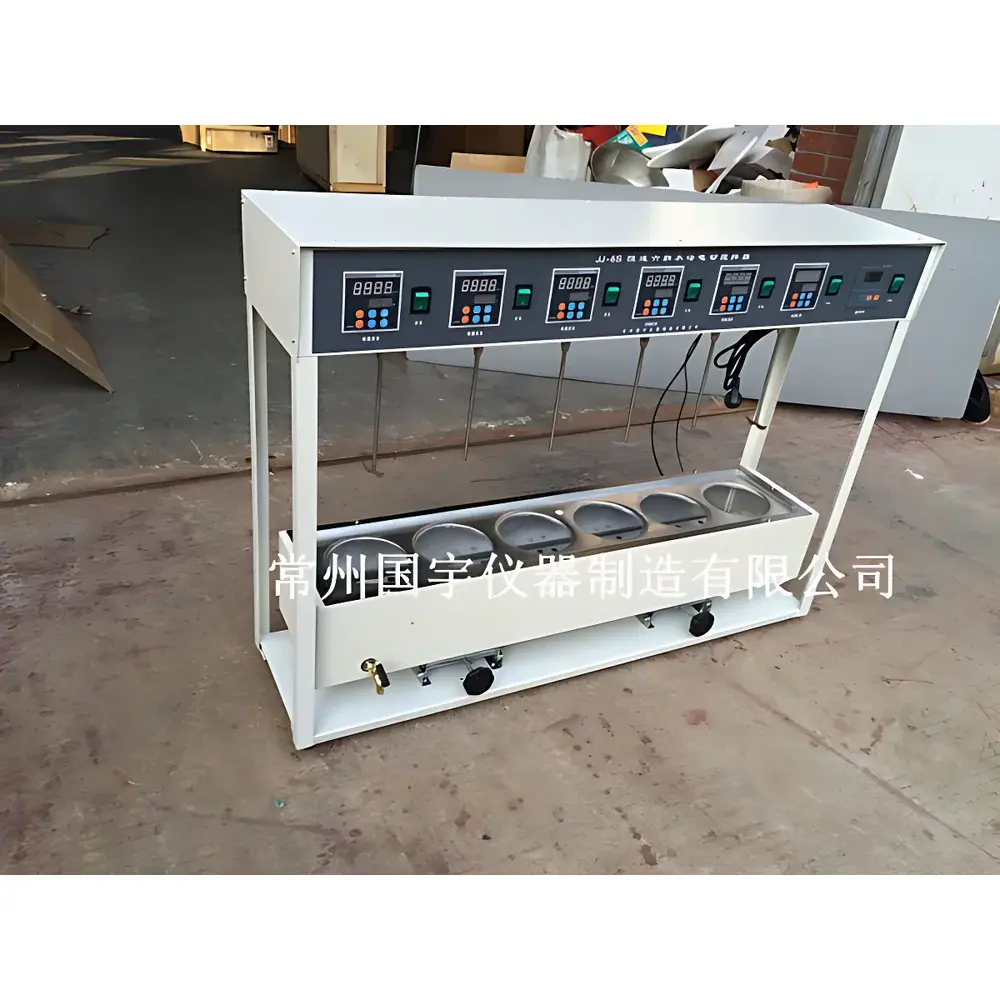
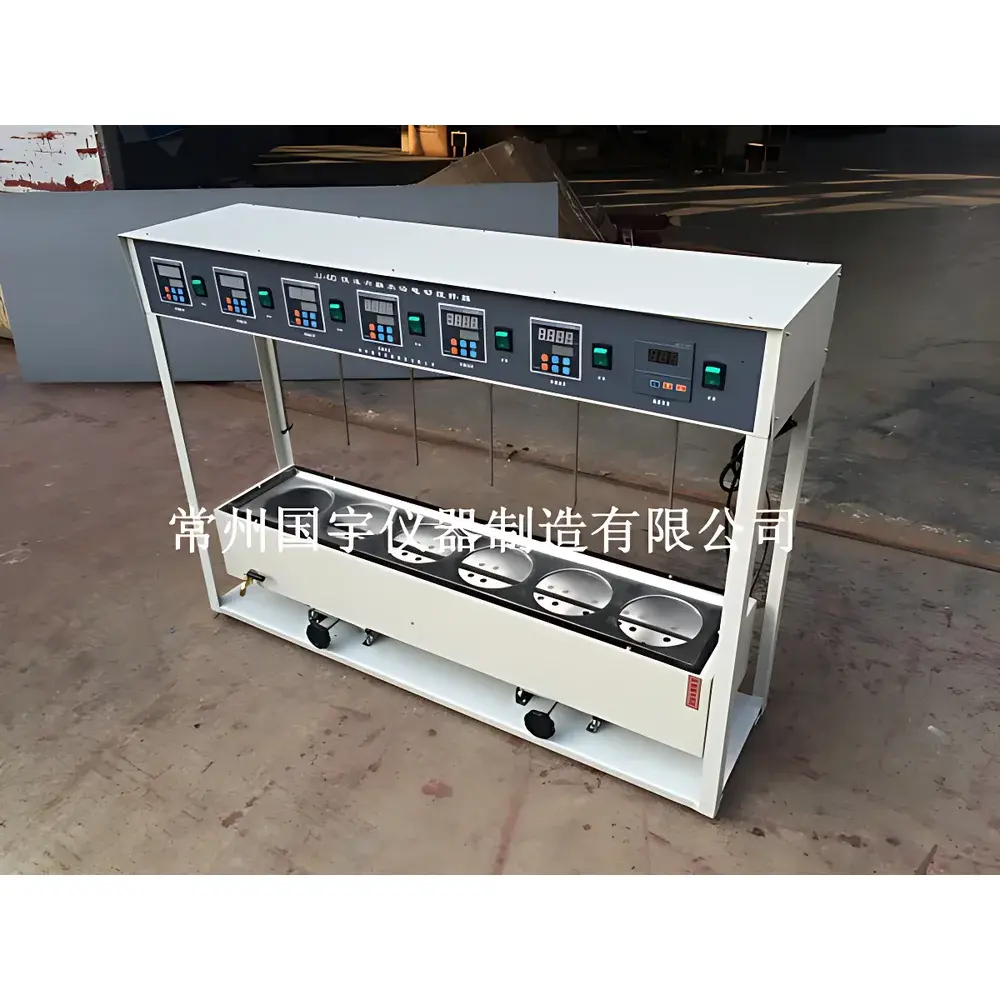
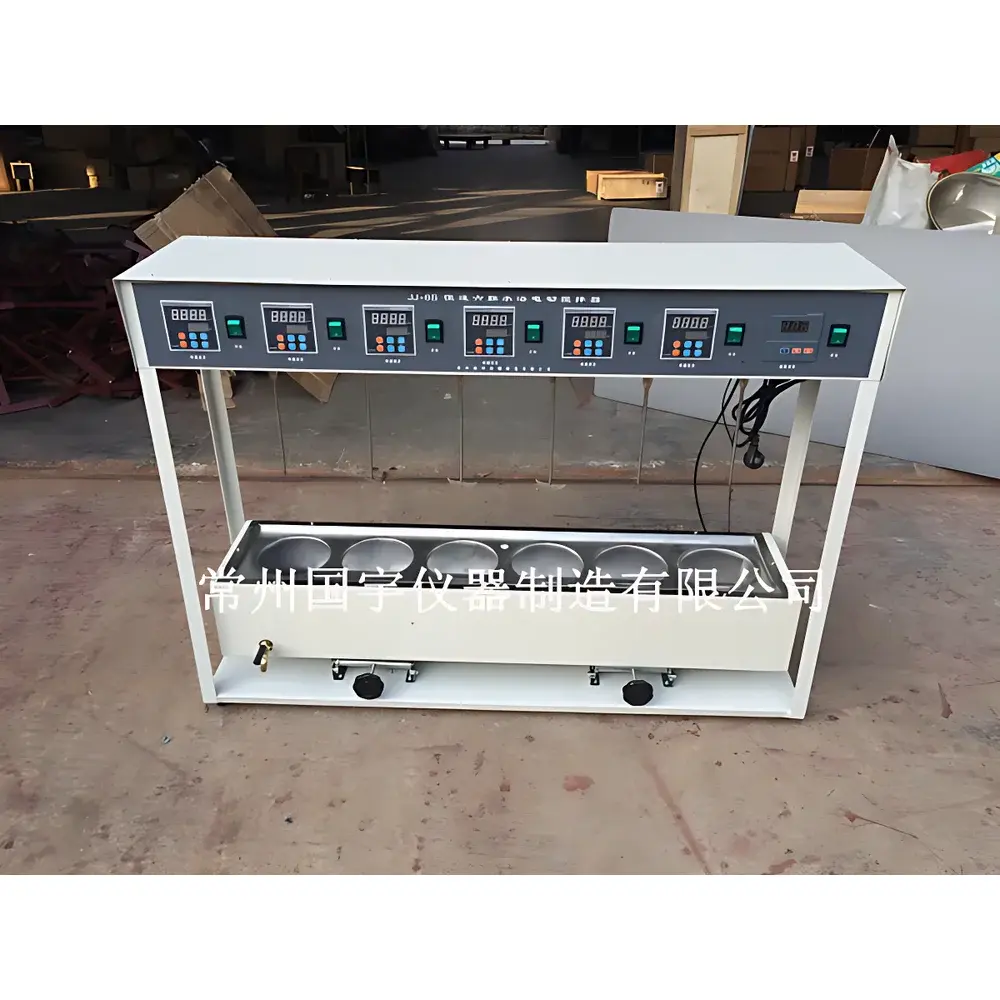
CZGY JJ-6S Constant-Speed Six-Station Water-Bath Magnetic Stirrer
| Brand | CZGY |
|---|---|
| Origin | Jiangsu, China |
| Manufacturer Type | Direct Manufacturer |
| Instrument Type | Electric Stirrer |
| Max. Stirring Capacity | 6 × 1 L |
| Speed Range | 200–3000 rpm |
| Temperature Control Range | RT + 5°C to 99.9°C |
| Heating Power | 1000 W |
| Motor Power | 6 × 60 W |
| Speed Accuracy | ±1 rpm |
| Temp. Accuracy | ±0.5°C |
| Temp. Resolution | 0.1°C |
| Timer Range | 0–9990 min |
| Power Supply | AC 220 V, 50 Hz |
Overview
The CZGY JJ-6S Constant-Speed Six-Station Water-Bath Magnetic Stirrer is an engineered laboratory platform designed for simultaneous, precise agitation and temperature-controlled incubation of up to six independent liquid samples. Unlike conventional single-station stirrers or standalone water baths, this integrated system combines high-torque DC motor-driven stirring with microprocessor-based PID temperature regulation in a single stainless-steel water bath chamber. Its operational principle relies on direct mechanical coupling between six independently controllable stir motors and stainless-steel stirring rods, immersed within a thermally uniform water medium. This configuration ensures consistent shear application across replicate samples—critical for standardized protocols in wastewater treatment analysis, environmental sample digestion, pharmaceutical dissolution testing, and polymer solution homogenization where inter-sample reproducibility is governed by GLP-compliant experimental design.
Key Features
- Six-channel independent or synchronized operation: Each station supports individual speed setting (200–3000 rpm) or collective control via unified parameter input—enabling comparative kinetic studies under identical hydrodynamic conditions.
- Precision-engineered permanent-magnet DC motors: Deliver stable torque output across the full speed range with <±1 rpm speed stability and minimal acoustic emission (<55 dB at 1 m), suitable for noise-sensitive lab environments.
- Dual-mode digital timer: Configurable from 0 to 9990 minutes with continuous-run option (0h 0m); timing function operates independently of temperature control, supporting time-resolved reaction monitoring.
- Microcomputer PID temperature controller: Features auto-tuning capability, adjustable P/I/D parameters (accessible via hidden menu), and real-time display of setpoint, actual bath temperature, and heating status; maintains thermal uniformity ±0.5°C across the working volume (depth ≥120 mm).
- Corrosion-resistant construction: 304 stainless-steel water bath tank (interior) and stirring rods; reinforced silicone rubber gaskets prevent leakage; non-slip base with leveling feet ensure mechanical stability during extended operation.
- Safety-integrated design: Over-temperature cut-off protection (105°C), ground-fault detection circuitry, and automatic power disconnection upon lid removal or abnormal current draw.
Sample Compatibility & Compliance
The JJ-6S accommodates standard laboratory glassware including 1 L beakers, Erlenmeyer flasks (up to 2 L), and digestion vessels with diameters ≤120 mm. Its open-bath geometry permits easy insertion/removal of samples without mechanical obstruction. The system complies with IEC 61010-1:2010 safety standards for electrical equipment used in laboratory settings. While not certified for GMP production environments, its traceable temperature and speed logging (via optional RS232 interface) supports audit-ready documentation for ISO/IEC 17025-accredited testing laboratories performing ASTM D1209 (color), EPA Method 300.0 (anions), or USP (dissolution) pre-validation studies. All firmware logic adheres to deterministic real-time response requirements, ensuring no race conditions during concurrent timer, temperature, and motor control execution.
Software & Data Management
The JJ-6S operates as a standalone instrument with embedded firmware; no host PC is required for basic functionality. For advanced data capture, an optional RS232 serial interface (DB9 male) enables connection to external logging systems or LIMS platforms. ASCII-formatted output includes timestamped records of setpoint temperature, actual bath temperature, motor speed per channel (Ch1–Ch6), and timer status. Firmware supports configurable baud rates (9600–115200 bps) and implements XON/XOFF flow control to prevent buffer overflow. Audit trail features include immutable event logging of power-on/reset cycles, parameter changes, and safety-triggered shutdowns—aligned with FDA 21 CFR Part 11 principles when paired with validated third-party acquisition software.
Applications
- Wastewater treatment plant (WWTP) effluent analysis: Standardized coagulation/flocculation trials per APHA 2130B using six parallel jar tests under identical shear history.
- Environmental chemistry: Acid digestion of soil/sediment samples (EPA SW-846 Method 3050B) requiring simultaneous heating (95°C) and vigorous stirring (1200 rpm) across replicates.
- Pharmaceutical QC: Dissolution profile comparison of generic drug formulations under USP Apparatus 2 (paddle) conditions, leveraging synchronized speed control for inter-batch consistency.
- Materials science: Dispersion stabilization of nanomaterial suspensions (e.g., TiO₂ in aqueous media) where viscosity-dependent shear rate must be maintained across concentration gradients.
- Academic research: Kinetic modeling of enzyme-catalyzed reactions where temperature ramping (e.g., 25°C → 45°C at 0.5°C/min) is coupled with constant agitation to eliminate mass-transfer limitations.
FAQ
Can the JJ-6S operate without water in the bath?
No. The water bath is integral to both thermal regulation and mechanical damping; dry operation will trigger over-temperature safety cutoff and may damage the heating element.
Is speed calibration traceable to NIST standards?
The unit includes factory-calibrated tachometric feedback; users may perform in-house verification using an optical tachometer (recommended annually per ISO/IEC 17025 Clause 6.5).
What is the maximum allowable viscosity for reliable stirring at 3000 rpm?
For optimal performance and motor longevity, viscosity should remain below 10,000 mPa·s (e.g., 30% w/v glycerol/water at 25°C); higher viscosities require reduced speed or use of high-torque stir bars.
Does the system support remote start/stop via digital I/O?
Not natively; only RS232 communication is provided. External relay control requires custom integration using the STOP/RUN signal lines accessible via terminal block (optional accessory kit).
How often should the water bath be descaled?
In hard-water regions, descaling with 5% citric acid solution is recommended every 200 operating hours or quarterly—whichever occurs first—to maintain thermal efficiency and prevent sensor drift.



