
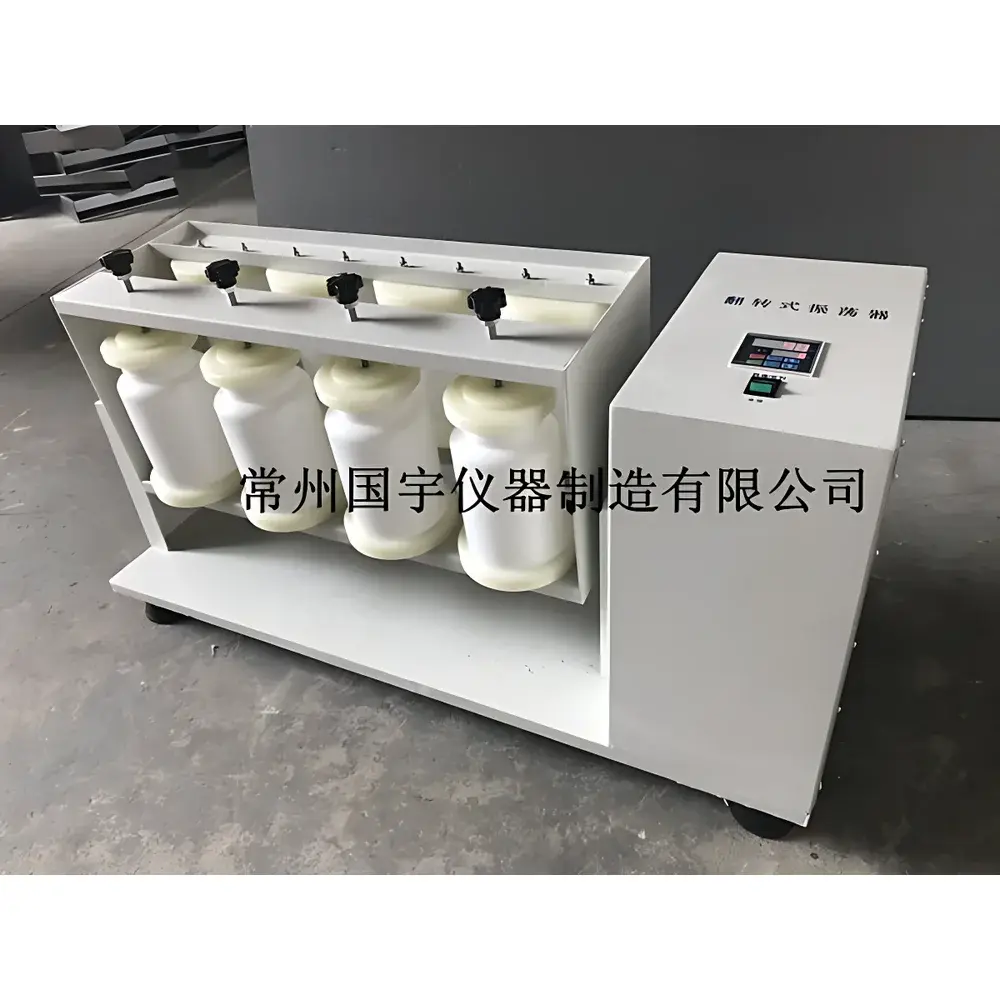
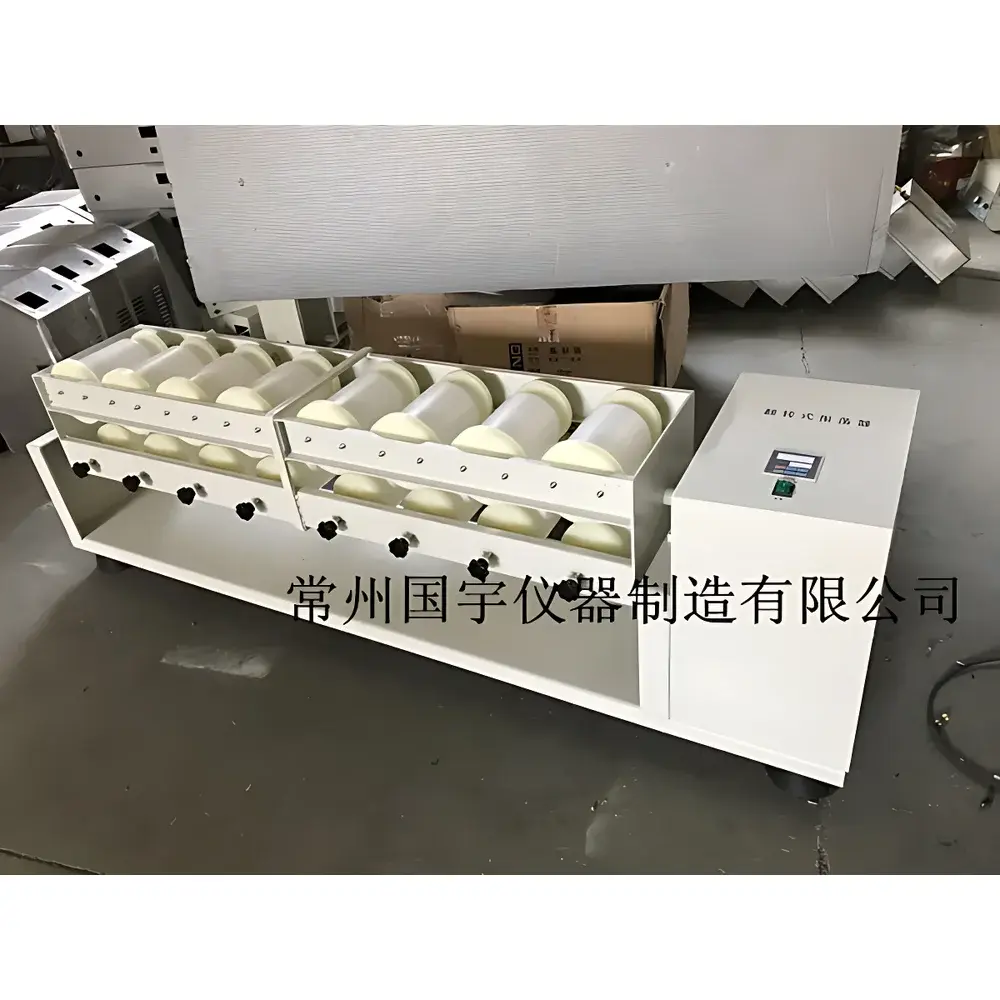
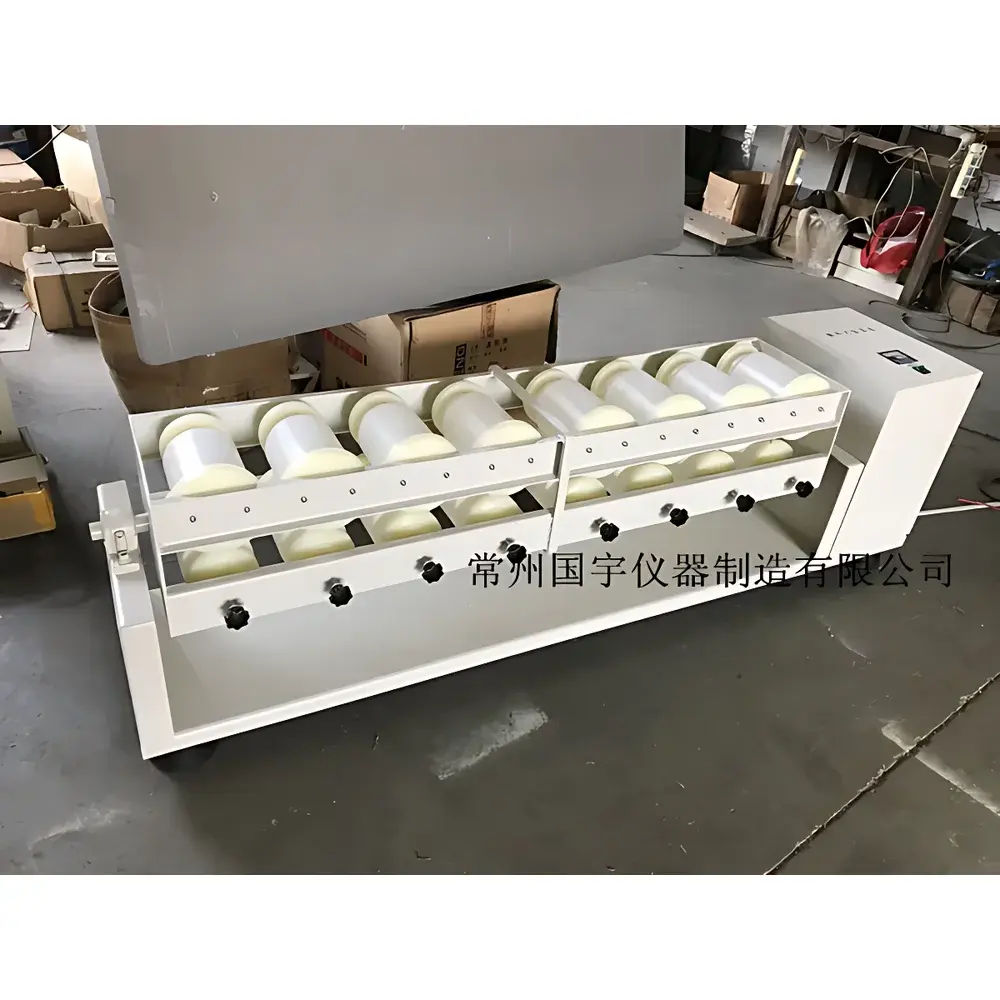
CZGY GY-FZ Tumbling Shaker
| Brand | CZGY |
|---|---|
| Origin | Jiangsu, China |
| Manufacturer Type | Direct Manufacturer |
| Instrument Type | Tumbling Shaker |
| Timer Range | 0–9999 min |
| Oscillation Speed | 0–90 rpm |
| Stroke Amplitude | 20 mm |
| Temperature Control | Ambient Only |
| Platform Configurations | 4-, 6-, 8-, 10-, 12-, or 16-bottle capacity (for 2 L bottles) |
| Power Supply | 220 V, 50 Hz |
| Compliance | HJ/T 299–2007, HJ/T 300–2007, EPA Method 1311 |
| Contact Surface Material | Chemically inert (PE, glass, PTFE, Teflon-compatible) |
| Default Operating Speed | 30 ± 2 rpm |
| Cycle Mode | Alternating forward/reverse (2 min each) with 5-sec pause per direction |
| Control Interface | Microprocessor-based keypad with digital display |
| Optional Accessories | Zero-headspace extraction vessels, high-pressure filtration systems, leachate collection manifolds, peristaltic reagent delivery modules, 0.45 µm membrane filters |
Overview
The CZGY GY-FZ Tumbling Shaker is a precision-engineered laboratory instrument designed specifically for regulatory-compliant leaching toxicity testing of solid waste matrices. It operates on the tumbling principle—where sample containers are rotated end-over-end along a horizontal axis—to simulate field-scale leaching dynamics under controlled, reproducible conditions. This mechanical action ensures uniform contact between the solid phase and leachant while minimizing particle segregation and channeling effects common in static or orbital agitation systems. The device meets the stringent mechanical and operational requirements specified in China’s environmental standards HJ/T 299–2007 (Sulfuric-Nitric Acid Leaching Method) and HJ/T 300–2007 (Acetic Acid Buffer Leaching Method), as well as U.S. EPA Method 1311 (Toxicity Characteristic Leaching Procedure, TCLP). Its design supports both regulatory compliance testing and method development for hazardous waste classification, landfill leachate modeling, and contaminant mobility assessment.
Key Features
- Regulatory-grade tumbling motion: Precisely programmable alternating forward/reverse rotation (2 min per direction, 5-sec dwell) or continuous unidirectional operation—ensuring full adherence to HJ/T 299–2007 and EPA 1311 protocols.
- Digital microprocessor control: Full-keypad interface with real-time rpm and timer display; speed resolution ±1 rpm; time resolution to the minute across 0–9999 min range.
- Robust mechanical architecture: Heavy-duty drive train and balanced eccentric cam system engineered for uninterrupted operation over 18+ hours at rated load (e.g., 16 × 2 L bottles).
- Inert wetted surfaces: All sample-contact components constructed from non-reactive, non-leaching materials compatible with aggressive leachants—including concentrated sulfuric/nitric acid mixtures, acetic acid buffers, and organic solvents.
- Modular platform configurations: Interchangeable shaker decks supporting 4, 6, 8, 10, 12, or 16 standard 2 L containers (glass, PE, PTFE, or Teflon); custom bottle-size adapters available (100 mL–500 mL).
- Thermal stability: Ambient-only operation eliminates thermal drift artifacts during extended leaching cycles—critical for preserving analyte integrity in volatile organic compound (VOC) and semi-VOC extractions.
Sample Compatibility & Compliance
The GY-FZ accommodates a broad range of container types and chemistries essential for multi-analyte leaching studies: borosilicate glass bottles (ASTM D5233-compliant), high-density polyethylene (HDPE), fluoropolymer-lined vessels (PTFE/Teflon), and zero-headspace extraction (ZHE) chambers. Its mechanical consistency enables reliable recovery of inorganic metals (e.g., Pb, Cd, Cr, As), anions (e.g., fluoride, sulfate), and organic contaminants (e.g., PAHs, PCBs, phthalates) under standardized leaching conditions. The instrument satisfies data integrity requirements for GLP-compliant laboratories: all operational parameters (speed, duration, cycle mode) are digitally recorded and non-volatile memory retains last-used settings. While not equipped with integrated audit trail or electronic signature functionality, its deterministic behavior supports 21 CFR Part 11–aligned procedural documentation when used within validated SOP frameworks.
Software & Data Management
The GY-FZ operates via embedded firmware without external PC dependency—ensuring operational continuity in resource-constrained labs. All user inputs (rpm, timer, direction mode) are stored in non-volatile memory and recalled on power-up. Though no proprietary software suite is provided, the device generates repeatable, traceable physical outputs suitable for integration into LIMS environments via manual entry or optional RS-232/USB data logging modules (available upon request). For regulatory submissions, users are advised to document run parameters—including batch ID, container count, leachant volume, and observed mechanical stability—in accordance with ISO/IEC 17025 Clause 7.7 (Reporting of Results) and USP Analytical Instrument Qualification guidelines.
Applications
- Hazardous waste characterization per China’s National Hazardous Waste Catalog and U.S. RCRA Subtitle C criteria.
- Landfill liner compatibility testing and long-term leachate generation modeling.
- Soil and sediment risk assessment for metal bioavailability and organic contaminant mobilization.
- Leaching behavior evaluation of construction and demolition debris, coal ash, and industrial sludges.
- Method validation and inter-laboratory comparison studies under ISO 5725 or ASTM D5233 protocols.
- Research on pH-dependent metal speciation and redox-sensitive element release kinetics.
FAQ
What regulatory methods does the GY-FZ explicitly support?
It is certified for HJ/T 299–2007, HJ/T 300–2007, and EPA Method 1311—covering both acidic and buffered leaching procedures required for TCLP and China’s solid waste toxicity identification.
Can the GY-FZ be used for volatile organic compound (VOC) analysis?
Yes—when paired with zero-headspace extraction (ZHE) vessels and appropriate cold-chain handling, it maintains VOC integrity during tumbling; users must follow EPA Method 5035A or HJ 955–2018 sampling protocols.
Is temperature control available?
No—the unit operates at ambient temperature only, which aligns with standard leaching protocols where thermal acceleration is not permitted.
What maintenance is required for long-term reliability?
Routine cleaning of the platform and drive mechanism; periodic inspection of belt tension and cam alignment; lubrication of pivot points every 6 months under continuous use.
Are calibration certificates provided?
Factory calibration verification is included; NIST-traceable speed and timer calibration services are available through authorized CZGY service centers upon request.
Related Products



