
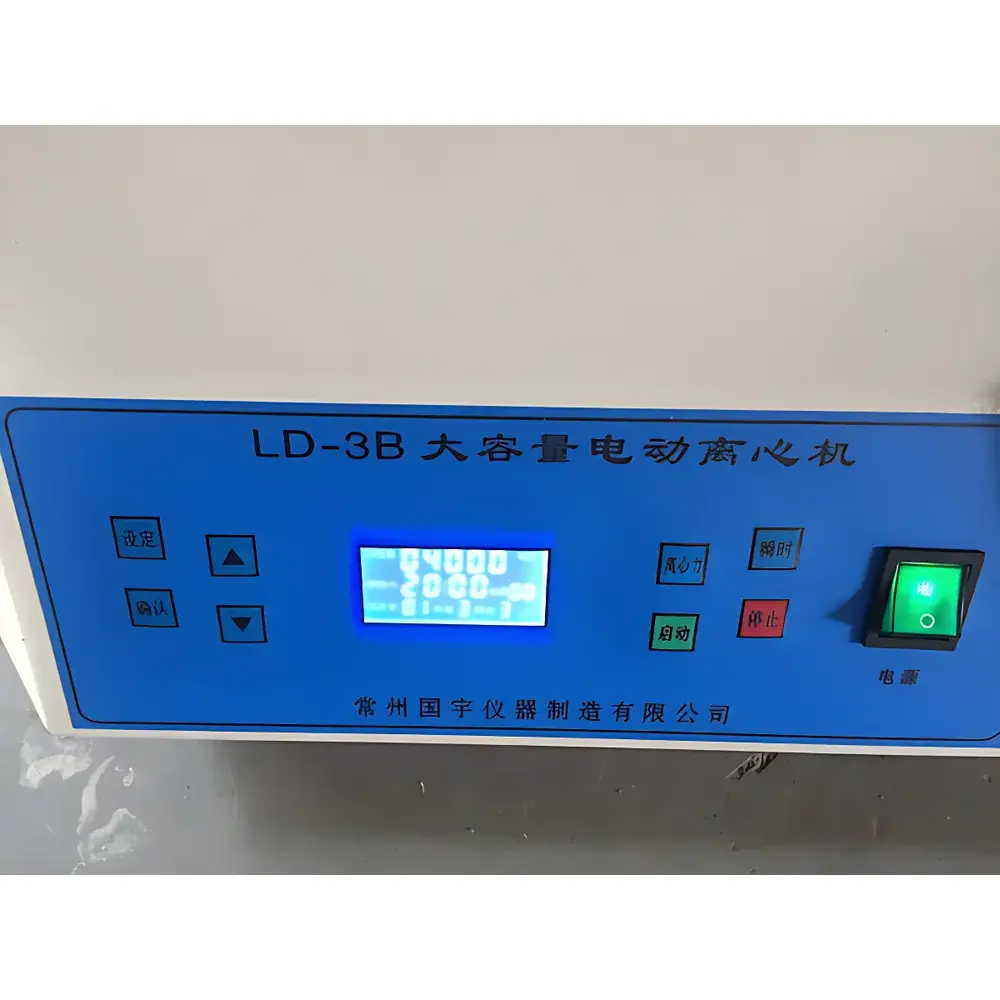
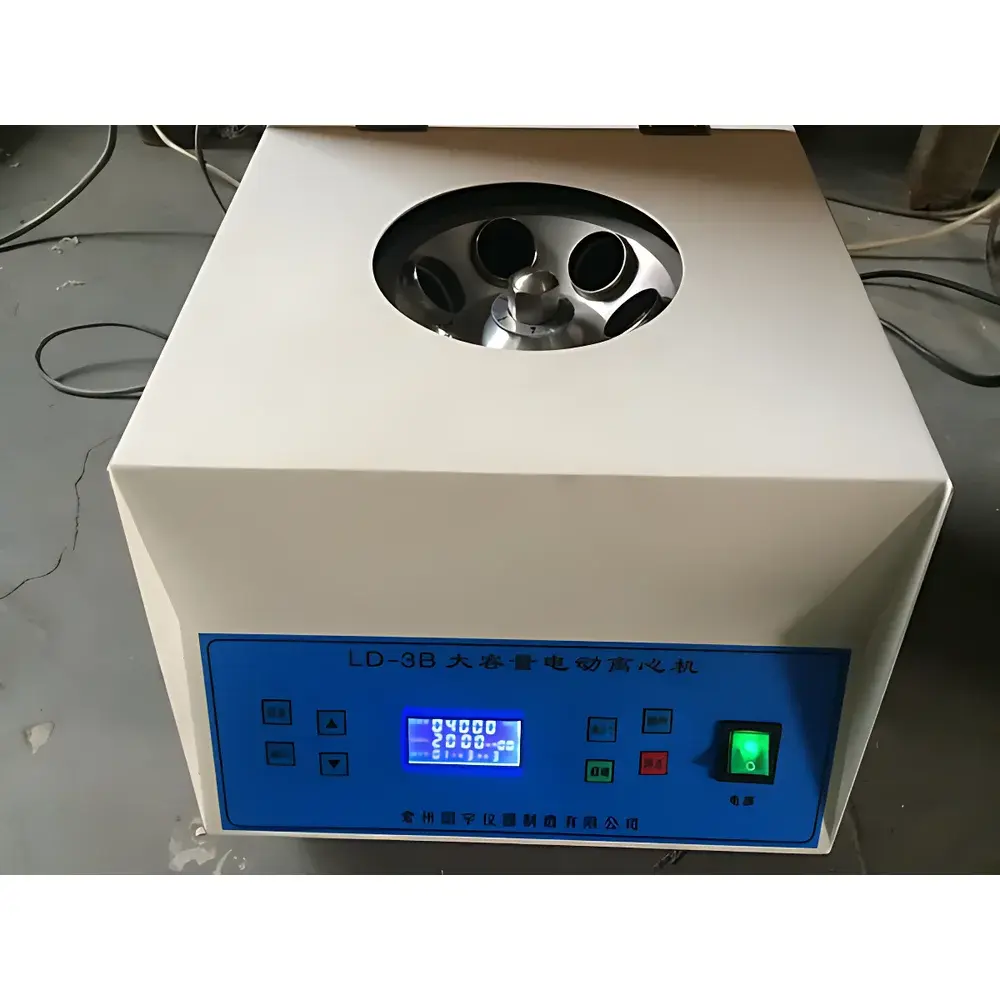
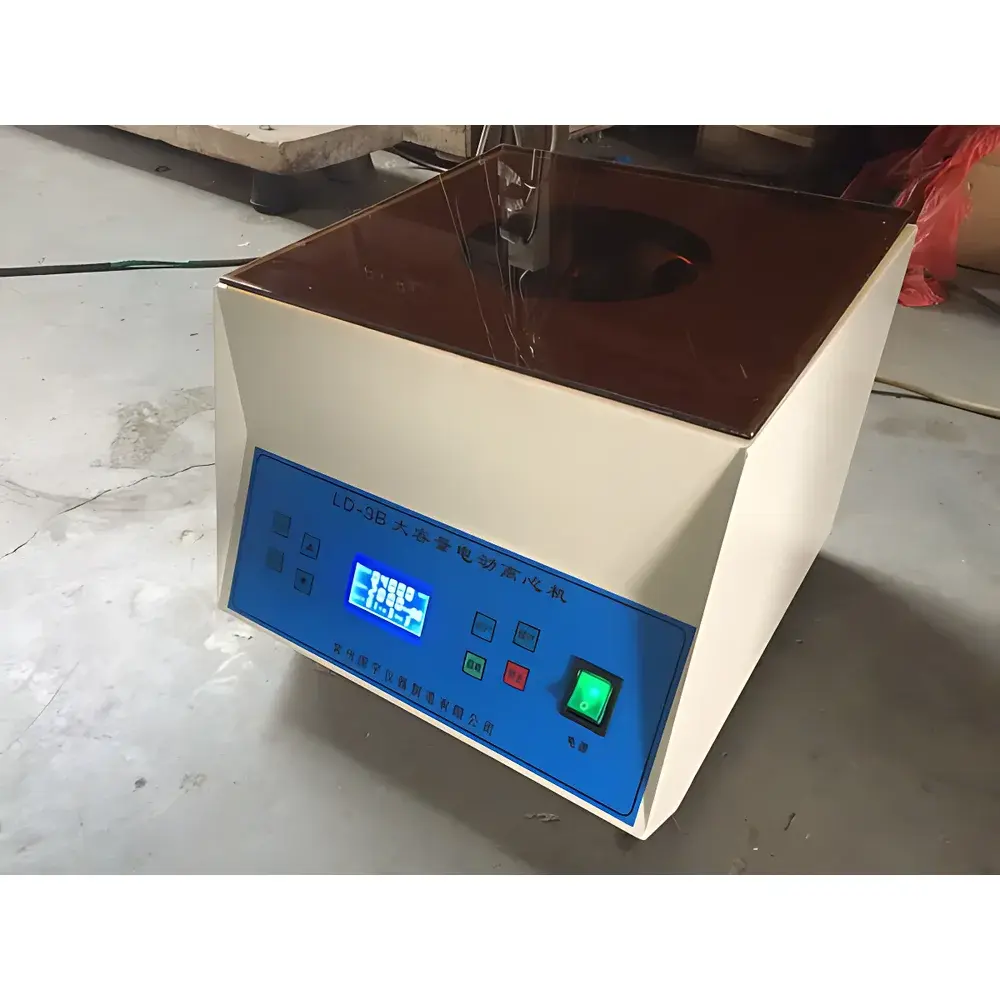
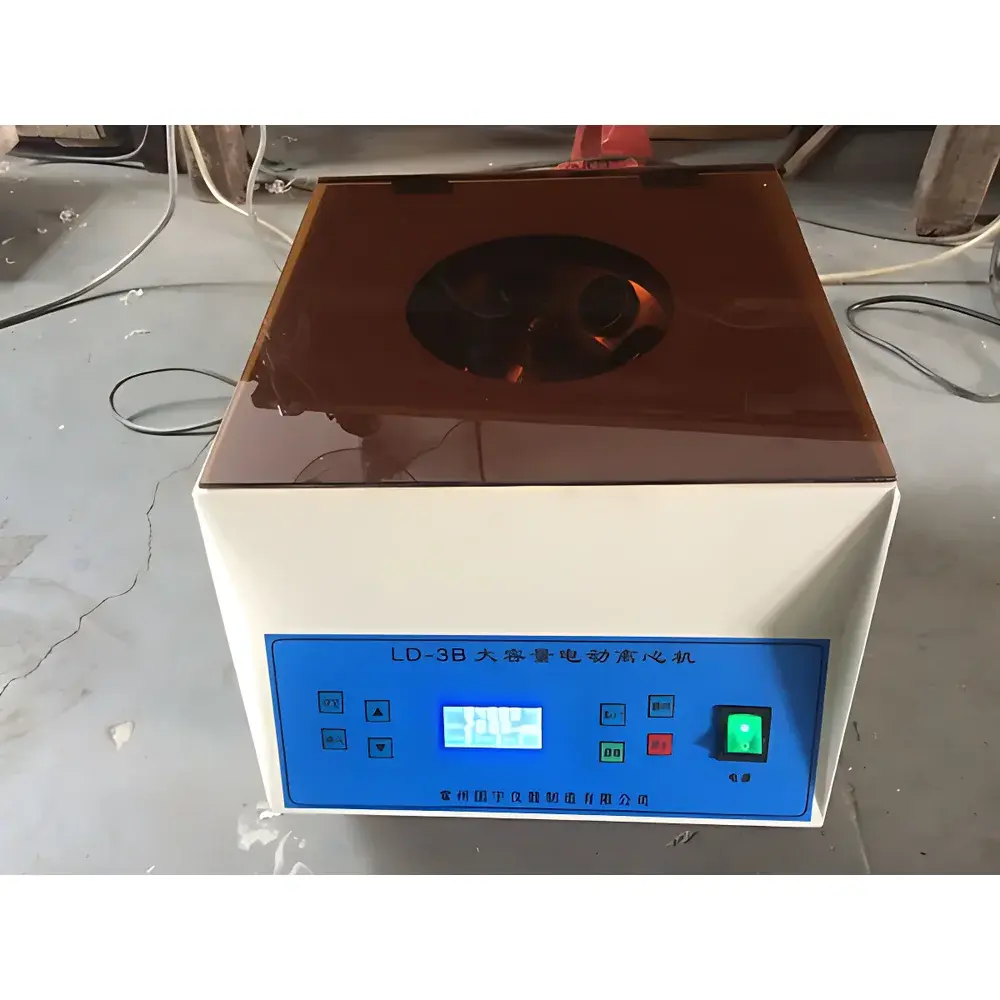
CZGY LD-3B Digital Benchtop Low-Speed Centrifuge
| Brand | CZGY |
|---|---|
| Origin | Jiangsu, China |
| Manufacturer Type | Direct Manufacturer |
| Instrument Type | Benchtop Centrifuge |
| Speed Range | 0–4000 rpm |
| Max. Capacity | 6 × 50 mL |
| Max. RCF | 1960 × g |
| Dimensions | 290 × 330 × 260 mm |
| Power Supply | 220 V, 50 Hz |
| Rated Power | 300 W |
| Timer Range | 0–9999 min |
| Drive System | Brushless DC Motor |
| Rotor Type | Fixed-Angle Rotor |
| Compliance | CE-marked design principles (IEC 61010-1), GLP-ready operation |
Overview
The CZGY LD-3B Digital Benchtop Low-Speed Centrifuge is an engineered solution for routine sedimentation and phase separation tasks in clinical diagnostics, biomedical research, and quality control laboratories. Designed around a brushless DC motor architecture, it delivers stable rotational performance with minimal thermal drift and mechanical wear—enabling extended duty cycles without degradation in speed accuracy or torque consistency. Operating within a defined low-speed regime (0–4000 rpm), the LD-3B generates a maximum relative centrifugal force (RCF) of 1960 × g, making it suitable for applications requiring gentle yet effective particle pelleting, including whole blood fractionation, cell harvesting, precipitate recovery, and vaccine intermediate processing. Its compact footprint (290 × 330 × 260 mm) and lightweight construction facilitate integration into space-constrained environments such as hospital satellite labs, teaching facilities, and field-deployable diagnostic units.
Key Features
- Brushless DC motor drive ensures maintenance-free operation, high efficiency, and noise reduction compared to brushed alternatives—critical for prolonged unattended runs.
- Digital microprocessor-based speed control provides precise setpoint retention and real-time feedback, with resolution down to ±10 rpm across the full 0–4000 rpm range.
- Integrated LCD display presents simultaneous readouts of actual speed (rpm), elapsed/remaining time, and calculated RCF—eliminating manual conversion errors.
- Programmable timer supports durations from 1 minute to 9999 minutes (up to 166.6 hours), enabling overnight or multi-shift protocols without operator intervention.
- Fixed-angle rotor configuration (6 × 50 mL capacity) is optimized for rapid pelleting of moderate-density suspensions; rotor balance tolerance adheres to ISO 15887:2016 guidelines for low-speed centrifugation.
- Interlocked transparent polycarbonate lid ensures automatic motor cutoff upon opening—complying with IEC 61010-2-020 safety requirements for laboratory centrifuges.
- Dual-mode operation: continuous run mode and momentary (‘pulse’) mode activated via dedicated key—ideal for quick settling checks or layered sample preparation.
Sample Compatibility & Compliance
The LD-3B accommodates standard polypropylene or glass conical tubes (15–50 mL) in its fixed-angle rotor. It is routinely deployed in CLIA-waived and CAP-accredited settings for serum/plasma separation (e.g., post-phlebotomy processing), urinary sediment concentration, and bacterial pellet collection prior to Gram staining or PCR template preparation. While not certified under FDA 21 CFR Part 11, its electronic timer and non-volatile parameter storage support audit-trail–capable documentation when integrated into GLP-compliant workflows. All electrical components conform to IEC 61010-1 safety standards for laboratory equipment, and mechanical design follows ISO 15887:2016 recommendations for low-speed centrifuge classification.
Software & Data Management
The LD-3B operates as a standalone instrument with no external software dependency. All operational parameters—including speed, time, and RCF—are stored in non-volatile memory and retained after power cycling. The system logs the last five executed run configurations, accessible via front-panel navigation. Though lacking network connectivity or USB export, its deterministic behavior and reproducible timing make it compatible with LIMS-integrated lab environments where manual entry of centrifugation metadata (e.g., rpm, duration, rotor ID) satisfies traceability requirements per ISO/IEC 17025:2017 Clause 7.7.
Applications
- Clinical chemistry: Separation of serum from clotted blood specimens (e.g., for electrolyte, enzyme, or hormone assays).
- Microbiology: Pelleting of bacterial cultures for downstream DNA extraction or antibiotic susceptibility testing.
- Virology & vaccine development: Clarification of virus-containing supernatants and concentration of inactivated antigen preparations.
- Urinalysis: Sediment concentration for microscopic examination of casts, crystals, and cellular elements.
- Biochemistry education: Demonstration of differential centrifugation principles using model suspensions (e.g., yeast lysates, milk emulsions).
- Pharmaceutical QC: Recovery of insoluble excipients or active pharmaceutical ingredient (API) precipitates during formulation development.
FAQ
What is the maximum recommended tube volume per position?
Each rotor position accepts one standard 50 mL conical tube. Overfilling beyond 45 mL may compromise balance and increase vibration risk.
Does the LD-3B support rotor calibration or speed verification?
Yes—speed accuracy can be independently verified using a certified handheld tachometer; the instrument’s displayed rpm value is traceable to internal encoder feedback with ±1% linearity over its operating range.
Is the rotor autoclavable?
No—the fixed-angle rotor is constructed from anodized aluminum alloy and is not designed for steam sterilization; wipe-down with 70% ethanol or isopropanol is recommended between uses.
Can this centrifuge be used for density gradient separations?
It is not recommended for continuous sucrose or Percoll gradients due to absence of swing-out rotor options and limited RCF ceiling; however, shallow step gradients (e.g., 10–30% Ficoll) may be performed with careful layering and reduced acceleration/deceleration rates.
What safety certifications does the LD-3B meet?
While not individually CE-certified, its design implements core safeguards aligned with IEC 61010-1 (electrical safety) and IEC 61010-2-020 (centrifuge-specific mechanical safety), including lid interlock, imbalance detection shutdown, and thermal overload protection.



