
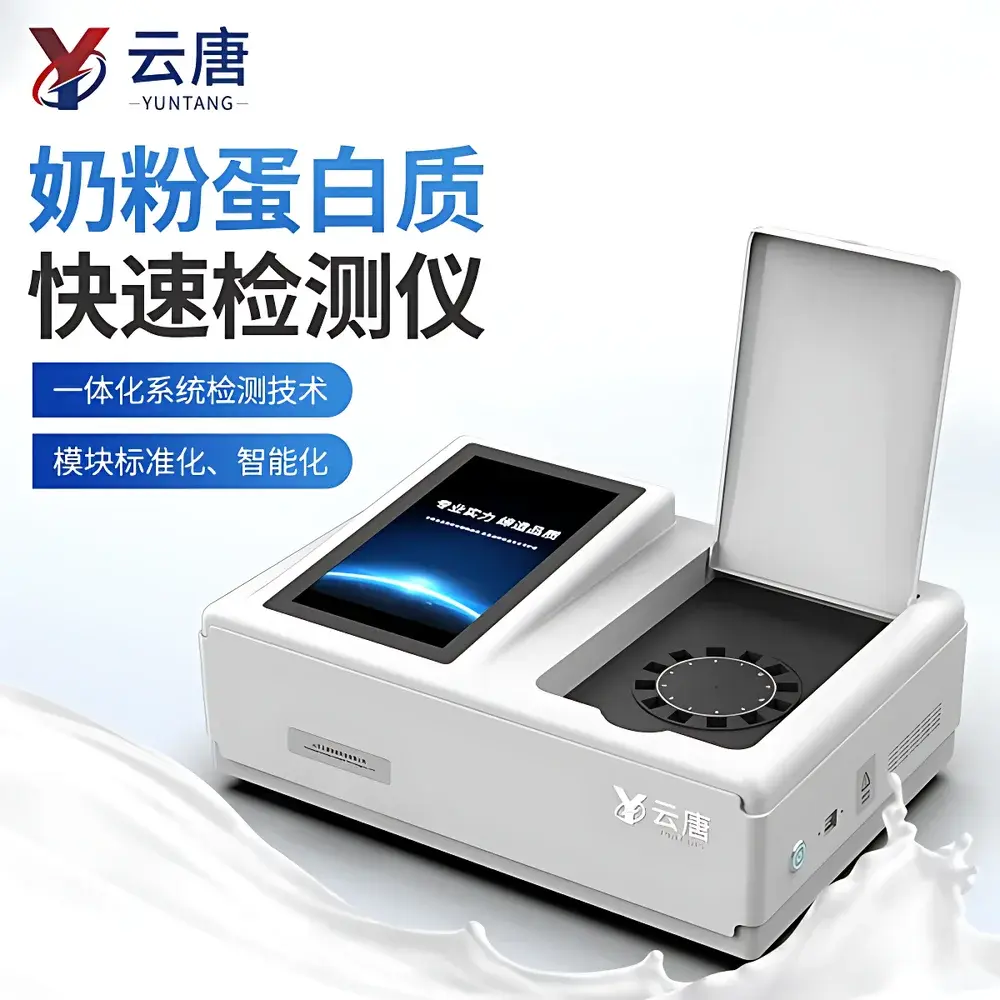
Yuntang YT-MP12 Milk Protein Analyzer
| Brand | Yuntang |
|---|---|
| Origin | Shandong, China |
| Manufacturer Type | Direct Manufacturer |
| Product Category | Domestic |
| Model | YT-MP12 |
| Pricing Range | USD 430–1,050 (FOB) |
| Instrument Type | Protein Rapid Determinator |
| Measurement Principle | Colorimetric Bradford/Lowry-Style Assay (Kjeldahl-Validated Correlation) |
| Sample Matrix | Liquid milk, reconstituted milk powder, whey liquid, whey protein concentrate (WPC), whey protein isolate (WPI) |
| Repeatability | < ±1% RSD (n=10, 3.0–4.5% w/v protein) |
| Limit of Detection | 0.1 mg protein per assay |
| Recovery Rate | >99.5% (spike recovery in certified reference milk matrices, ISO 8968-1:2014 compliant validation) |
Overview
The Yuntang YT-MP12 Milk Protein Analyzer is a CE-compliant, benchtop-integrated rapid determination system engineered for precise, high-throughput quantification of total protein in dairy matrices. It operates on a standardized colorimetric principle—optimized for Bradford- and Lowry-style chromogenic reactions—calibrated against Kjeldahl reference methodology (ISO 8968-1:2014) to ensure regulatory traceability in food quality control environments. Unlike standalone spectrophotometers, the YT-MP12 integrates optical detection, data management, and regulatory compliance logic into a single embedded platform. Its architecture supports routine analysis of liquid milk, reconstituted infant formula, fluid whey, and dry whey protein powders (WPC/WPI), delivering results in under 8 minutes per 12-sample batch without requiring wet chemistry expertise or external calibration standards.
Key Features
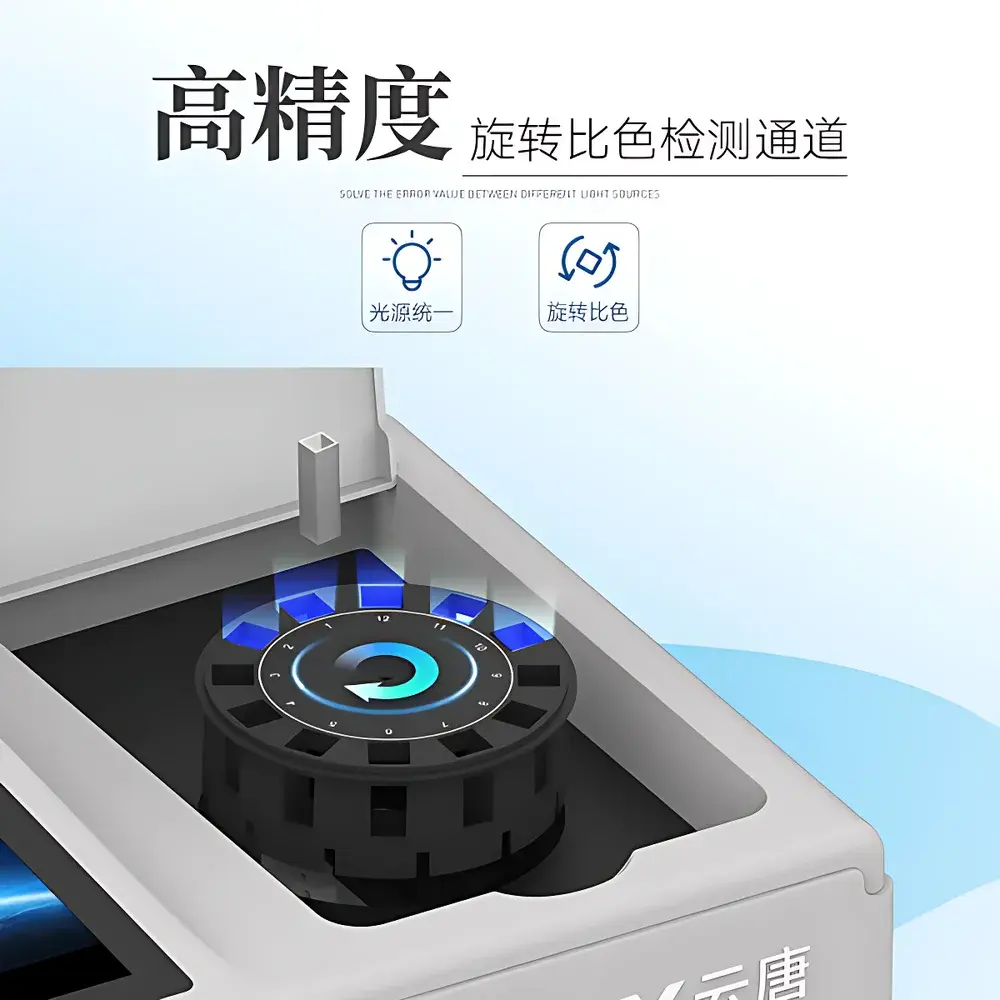
- 12-channel precision rotating cuvette carousel with patented optical alignment (ZL202022821055.2), ensuring inter-channel deviation ≤0.1% — critical for multi-lot comparative analysis across production shifts.
- Quadruple-wavelength cold LED light source per channel (410 nm, 520 nm, 590 nm, 630 nm), with dynamic optical path switching enabling up to 64 programmable wavelengths; eliminates lamp drift and cross-channel spectral interference.
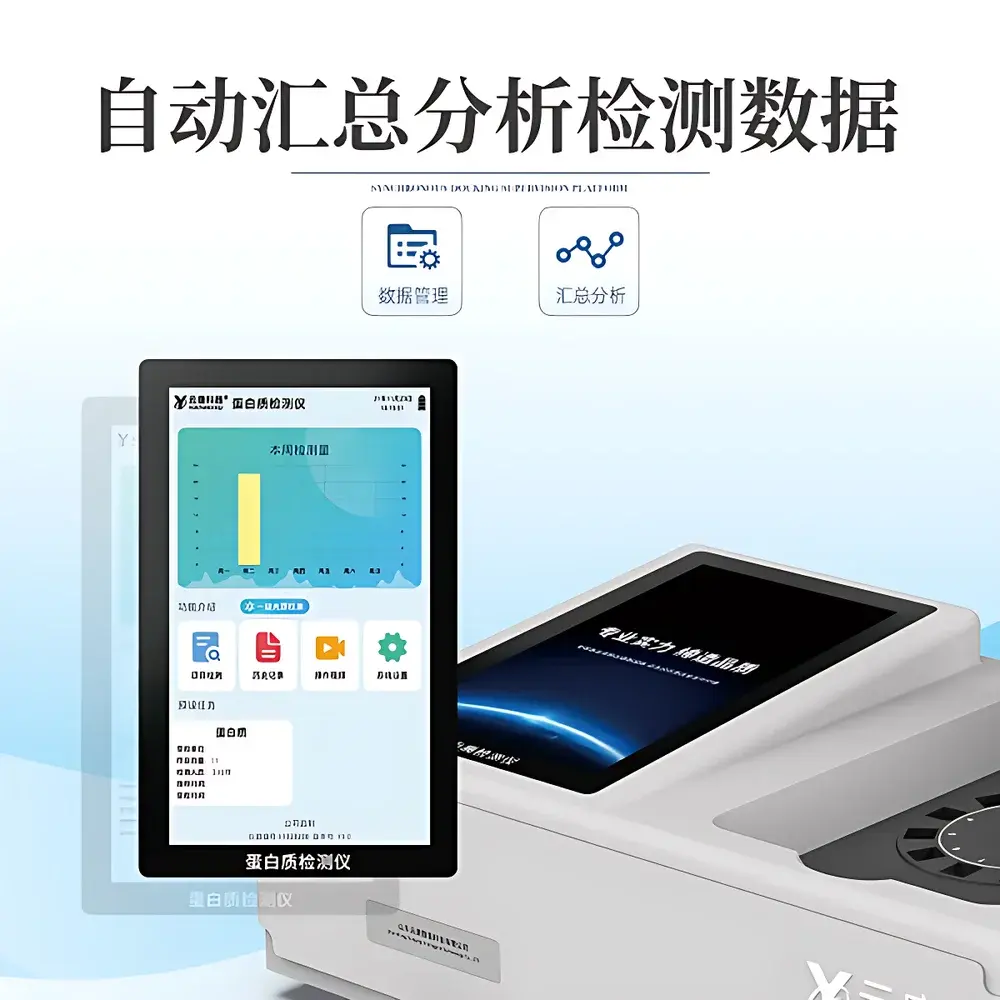
- 10.1-inch vertical capacitive touchscreen running Android OS on ARM Cortex-A7 RK3288 quad-core processor (1.88 GHz), supporting concurrent multi-tasking and real-time UI responsiveness during parallel sample processing.
- Triple-layer data persistence: local SQLite database + secure file-based logging + SP (system parameter) shadow storage — guarantees full audit trail integrity per GLP/GMP requirements.
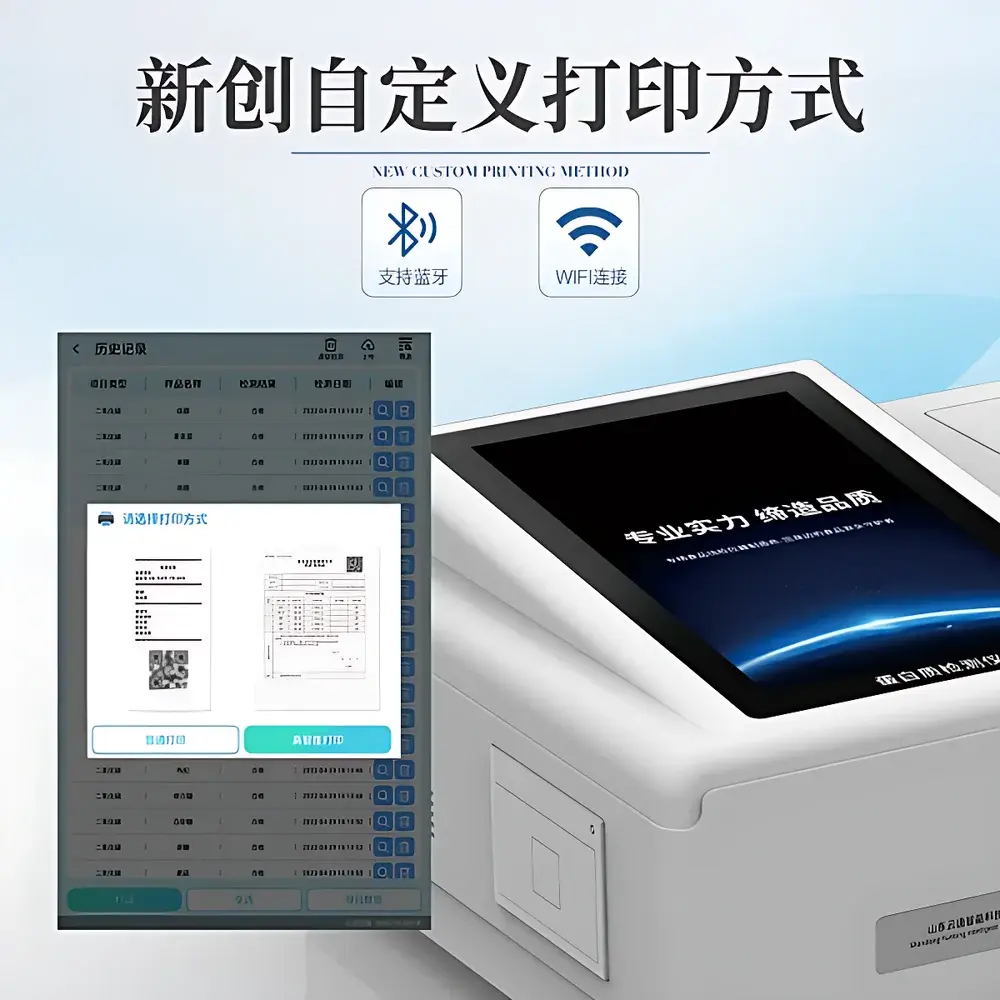
- Integrated dual-mode printing: built-in thermal printer (customizable ticket layout) + A4 report generation (PDF/Excel export via WiFi/Ethernet) with configurable fields including sampling ID, analyst signature, instrument serial, and compliance status flags.
- Remote firmware update capability via encrypted OTA (Over-The-Air) protocol; version-controlled deployment enables targeted updates per customer site without hardware return or downtime.
Sample Compatibility & Compliance
The YT-MP12 is validated for use with homogenized whole milk, skim milk, UHT-treated dairy liquids, reconstituted non-fat dry milk (NFDM), and whey-derived products ranging from 0.5% to 5.0% (w/v) total protein. All assay protocols align with AOAC Official Method 984.13 (crude protein by Kjeldahl) correlation benchmarks and meet the performance criteria specified in ISO/IEC 17025:2017 for in-house method verification. The instrument’s automated limit-check engine references embedded regulatory libraries—including GB 19301-2010 (China), EU Regulation (EC) No 1223/2009 Annex III (cosmetic-grade whey), and Codex Alimentarius STAN 206-1999—for real-time pass/fail classification. Data export formats comply with FDA 21 CFR Part 11 requirements for electronic records and signatures when configured with user authentication and audit log retention.
Software & Data Management
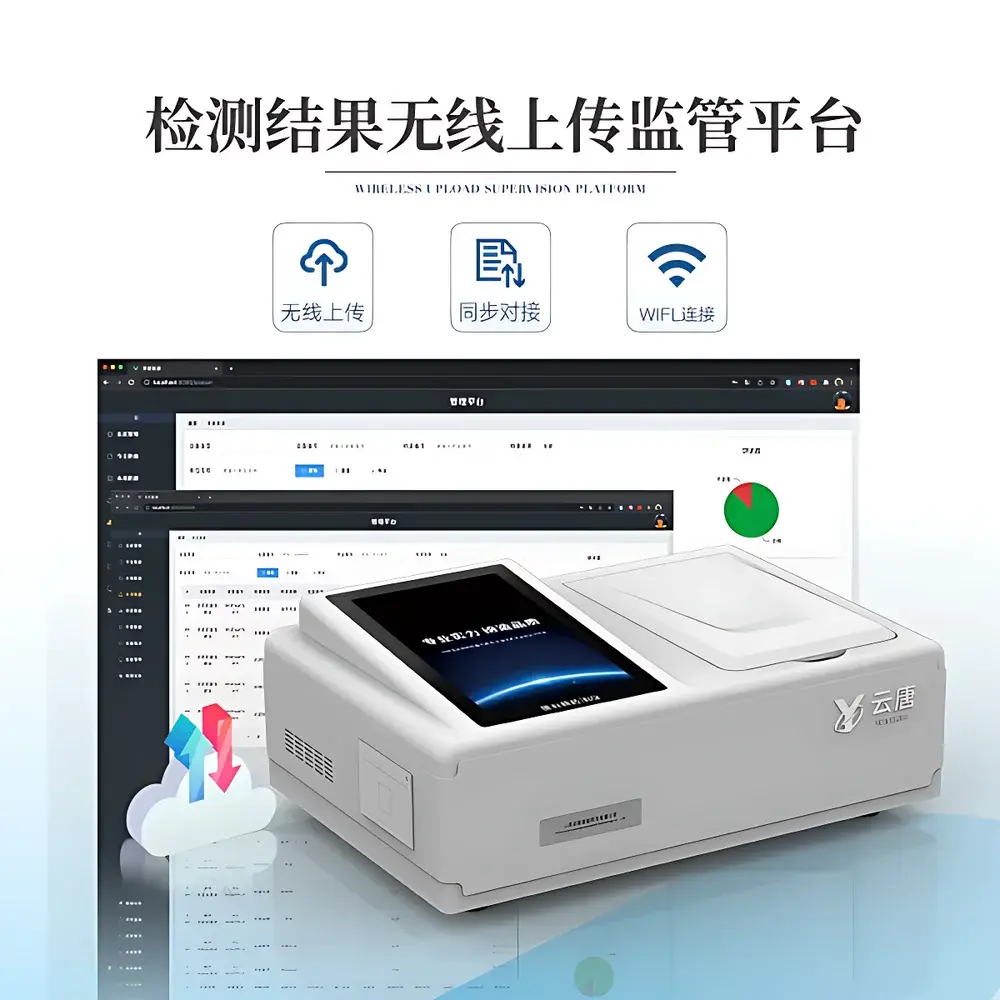
The embedded software suite implements a modular database architecture with 14 interlinked schema domains: project metadata, assay curves, raw absorbance logs, sample provenance, regulatory thresholds, calibration history, and reporting templates. Each test generates a timestamped, digitally signed record containing wavelength-specific OD values, blank subtraction traces, and recovery-corrected concentration outputs. Data synchronization supports both LAN-based upload to centralized LIMS (e.g., LabWare, STARLIMS) and secure HTTPS transmission to national food safety surveillance platforms (e.g., China’s NIFDC Food Safety Monitoring System). All stored records include cryptographic hash verification to prevent tampering, and the system enforces role-based access control (RBAC) with three-tier permission levels (operator, supervisor, administrator).
Applications
The YT-MP12 serves as a primary screening tool in dairy processing QA/QC laboratories, enabling rapid verification of protein content prior to pasteurization, spray drying, or blending operations. It is routinely deployed at intake points for raw milk collection centers to reject non-conforming batches (e.g., water adulteration), within infant formula manufacturing lines for final product release testing, and in third-party contract labs performing routine surveillance for provincial food and drug administration agencies. Its portability (12 V DC operation + 6 Ah Li-ion battery) also supports mobile inspection units conducting unannounced audits at retail distribution hubs and wholesale dairy markets.
FAQ
Does the YT-MP12 require external calibration standards for daily use?
No — the system performs automatic self-calibration using internal reference tiles and stores calibration coefficients with cryptographic checksums. Only initial factory calibration requires traceable NIST-standard reference materials.
Can the instrument validate protein content in hydrolyzed whey or plant-dairy blends?
It is validated for intact casein/whey proteins. Hydrolyzed or mixed-protein matrices require method adaptation and in-house verification per ISO 17025 Clause 7.2.2; default curves do not apply.
Is raw spectral data export supported for independent reprocessing?
Yes — full absorbance spectra (340–750 nm, 1 nm resolution) and time-resolved kinetic traces are exportable in CSV format via USB or network interface.
What cybersecurity protocols govern remote updates and data transmission?
All OTA updates use AES-256 encryption and RSA-2048 signature verification; data uploads employ TLS 1.3 with certificate pinning and optional client-side PKI authentication.






