
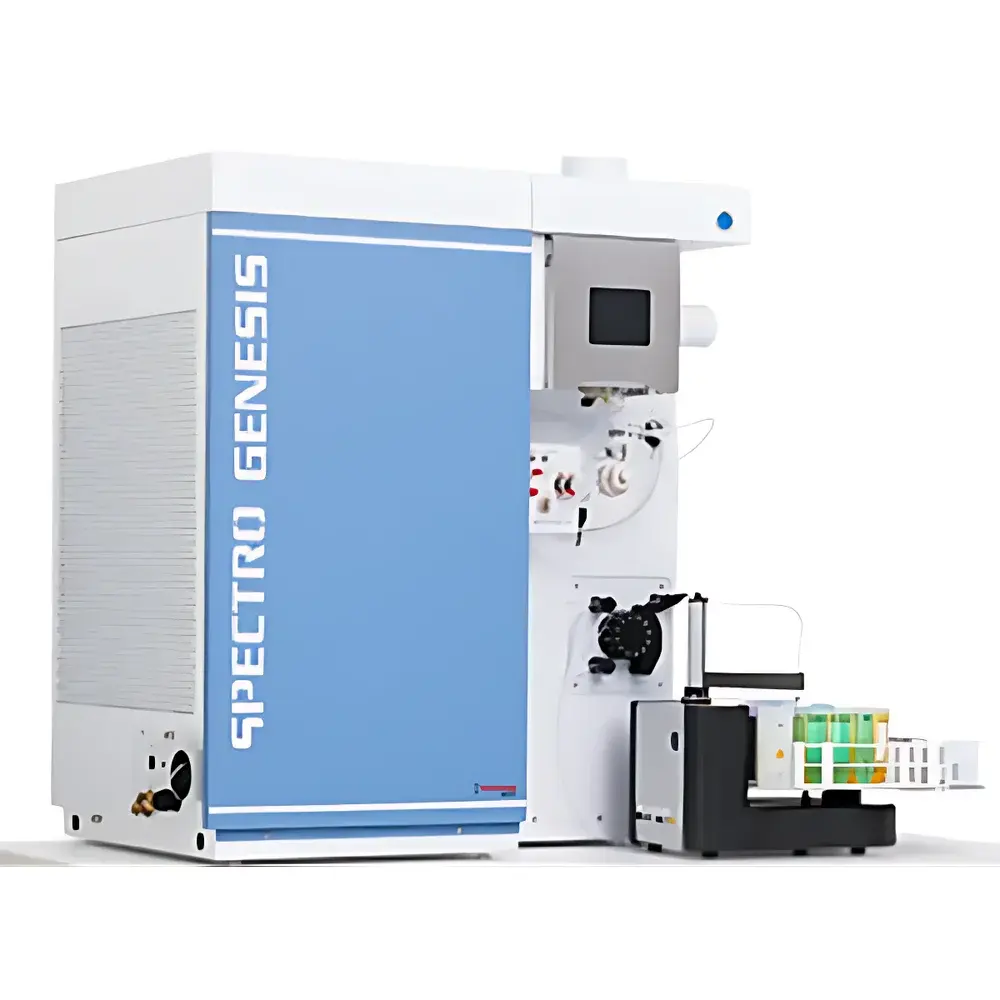
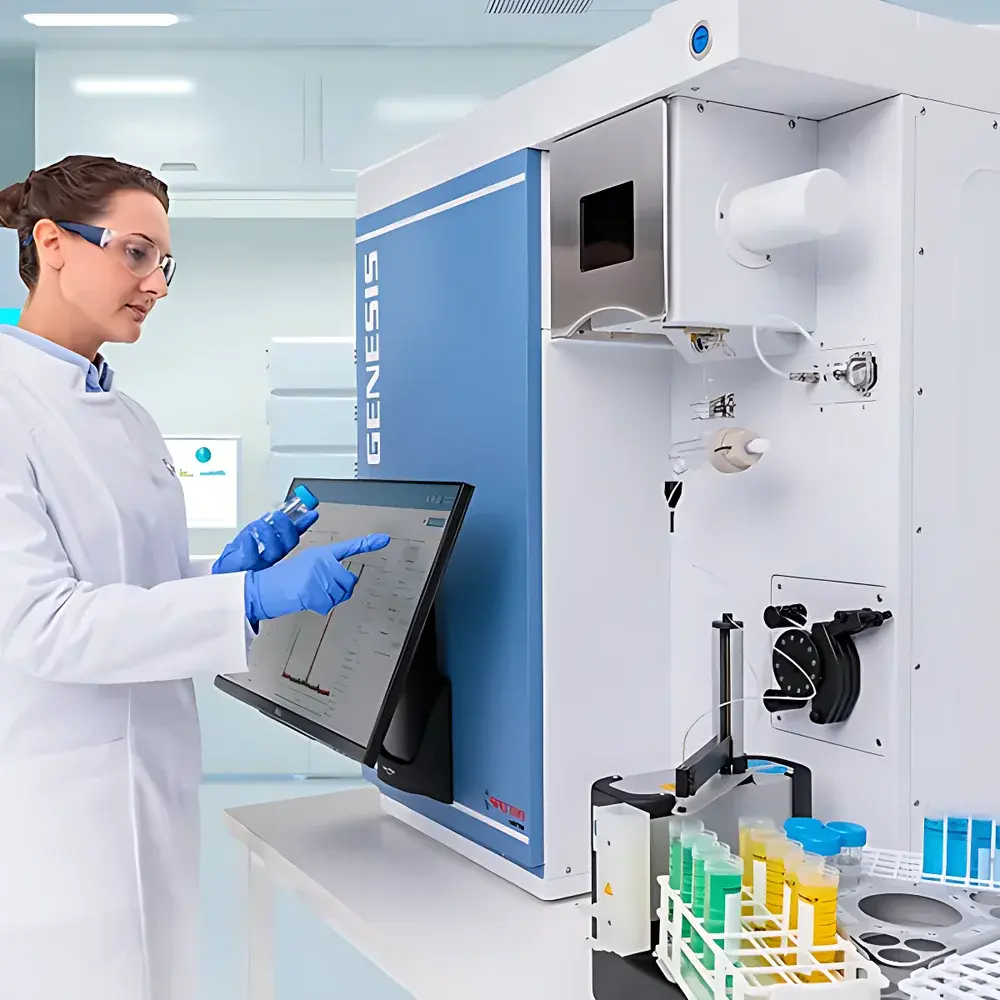
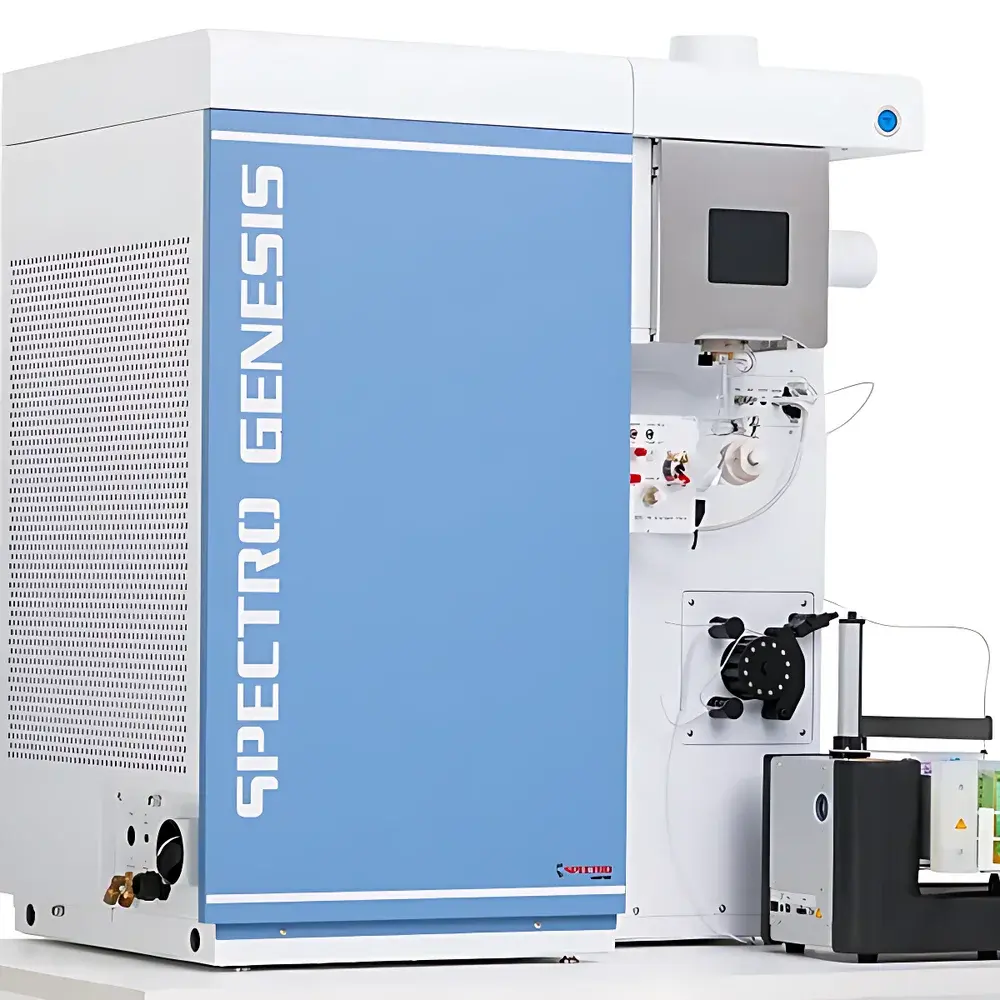
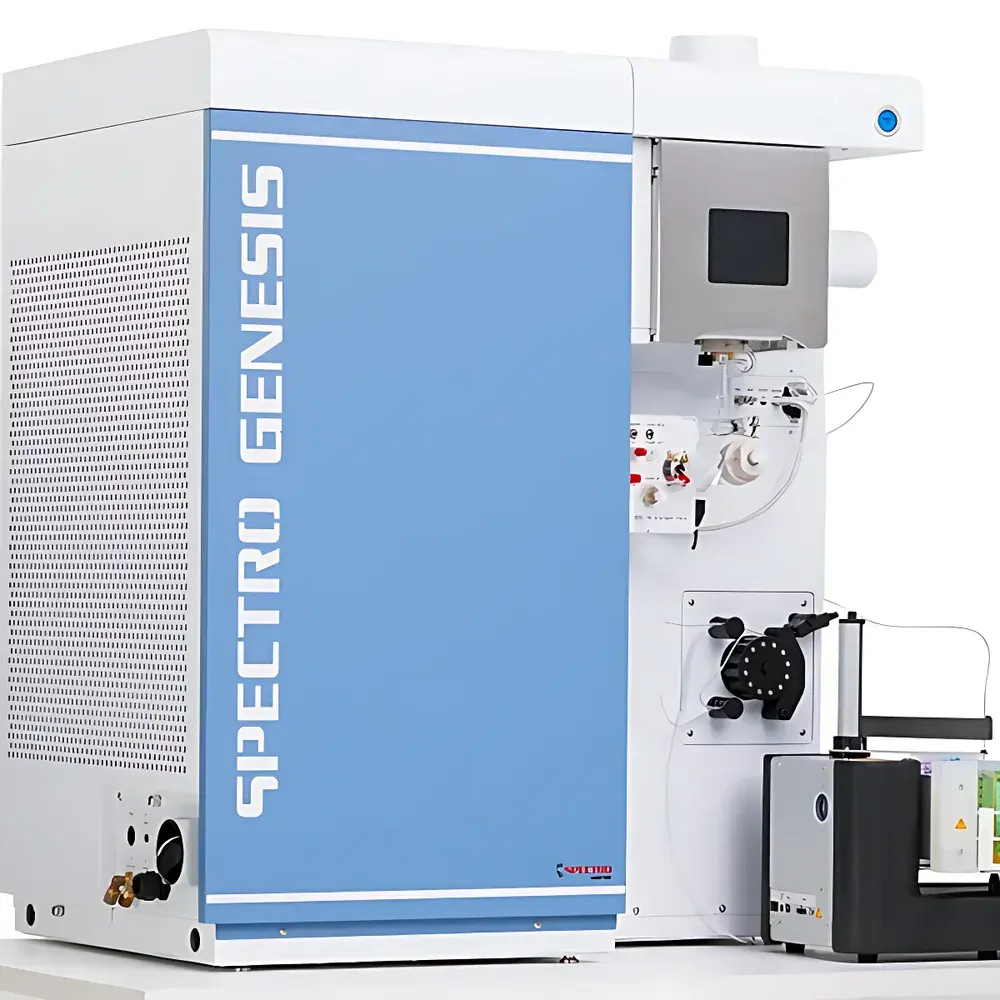
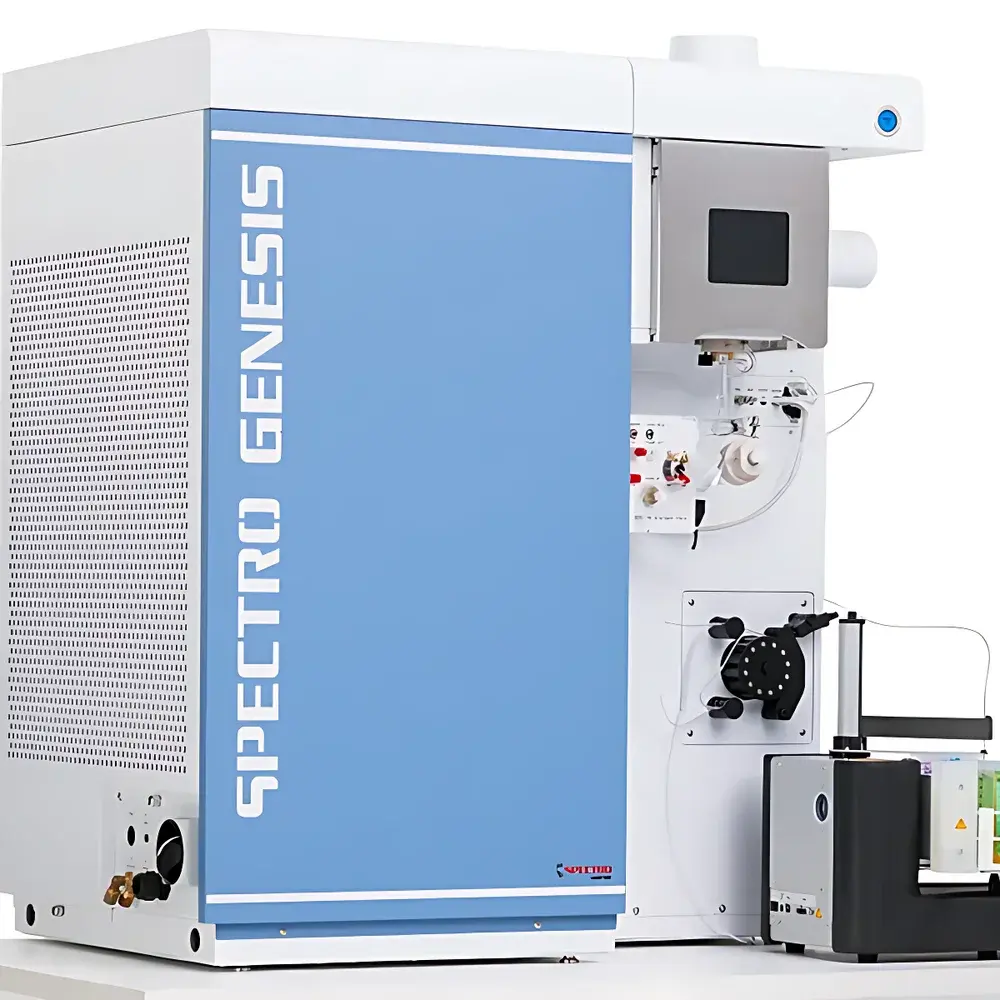
SPECTRO GENESIS Full-Spectrum CCD ICP-OES Spectrometer
| Brand | SPECTRO |
|---|---|
| Origin | Germany |
| Model | SPECTRO GENESIS |
| Instrument Type | Full-Spectrum Direct-Reading ICP-OES |
| Optical Detection | Dual-View Vertical Torch Configuration |
| Cooling | Air-Cooled Only |
| Purge Gas Flow | As Low as 0.5 L/min |
| Linear Dynamic Range | Sub-ppb to Percent Level |
| Sample Throughput | Up to 700 Samples per Day |
| Optical Architecture | DSOI (Dual-Spectrometer Optimized Imaging) |
Overview
The SPECTRO GENESIS is a full-spectrum, direct-reading inductively coupled plasma optical emission spectrometer (ICP-OES) engineered for precision elemental analysis across environmental, industrial, and research laboratories. It employs a vertically oriented dual-view plasma torch configuration—measuring emissions simultaneously from both axial and radial positions within a single plasma observation zone—eliminating mechanical repositioning between views and thereby ensuring measurement continuity, enhanced reproducibility, and reduced matrix interference. This architecture significantly improves sensitivity (approximately 2× over conventional radial-only systems) while maintaining robustness against complex sample matrices such as wastewater digests, petrochemical feedstocks, and high-salt industrial process streams. The instrument utilizes a newly developed DSOI (Dual-Spectrometer Optimized Imaging) optical design, integrating two compact echelle spectrometers with high-resolution CCD detectors to capture the entire UV–VIS spectral range (130–770 nm) in a single exposure. Its air-cooled thermal management system eliminates dependency on external chiller units, reducing infrastructure requirements and operational overhead.
Key Features
- Dual-view vertical torch geometry enabling simultaneous axial/radial plasma observation without mechanical switching or recalibration
- DSOI optical platform featuring dual echelle spectrometers and back-thinned, deep-depletion CCD detectors for high quantum efficiency across UV and visible wavelengths
- Full-spectrum acquisition at 1–5 ms integration time per readout, supporting rapid multi-element quantification without sequential wavelength scanning
- Air-cooling only—no external water chiller required; optimized thermal stability maintains wavelength calibration over extended operation
- Low argon consumption: optical purge flow adjustable down to 0.5 L/min, minimizing gas usage without compromising spectral integrity
- Compact footprint (≤ 1.2 m²) designed for space-constrained lab environments while retaining full ICP-OES performance
- Integrated RF generator with automatic impedance matching and real-time plasma monitoring for stable, low-drift operation
Sample Compatibility & Compliance
The SPECTRO GENESIS accommodates liquid samples introduced via standard nebulizers (e.g., Meinhard, SeaSpray) and supports common sample introduction accessories including ultrasonic nebulizers, microflow systems, and hydride generation modules. It is validated for analysis of aqueous digests (EPA Methods 200.7, 200.8, 6010D), organic solvents (ASTM D5185, D7260), and high-TDS matrices (up to 25% w/v total dissolved solids with optional dilution or matrix-matching protocols). The system complies with ISO/IEC 17025 requirements for analytical competence and supports audit-ready data handling under GLP and GMP frameworks. Optional software modules provide 21 CFR Part 11 compliance—including electronic signatures, audit trails, and user access control—for regulated environments in pharmaceuticals and environmental testing laboratories.
Software & Data Management
SPECTRO’s proprietary Sparkvue software provides intuitive method development, real-time spectral visualization, and automated background correction using polynomial and iterative algorithms. All spectra are stored in raw format (including intensity vs. pixel maps), enabling retrospective reprocessing without reanalysis. Quantitative workflows support internal standardization, matrix-matched calibration, and standard addition techniques. Data export conforms to ASTM E1382 and ASTM E1490 formats for seamless integration into LIMS platforms. Version-controlled method libraries, instrument log files with timestamped event tracking, and configurable reporting templates ensure traceability and regulatory readiness.
Applications
The SPECTRO GENESIS delivers reliable quantitative analysis for trace metals and major elements in diverse sample types: municipal and industrial wastewater (Cd, Cr, Pb, As, Ni, Cu, Zn), petroleum products (V, Ni, Na, Fe), catalysts and battery materials (Co, Mn, Li, Al), geological digests (rare earth elements), and food safety screening (As, Cd, Pb in rice flour or infant formula). Its wide linear dynamic range—from sub-ppb detection limits to percent-level concentrations—enables single-method analysis across concentration gradients typical in environmental monitoring and production QC. The instrument is routinely deployed in EPA-certified labs, ISO 17025-accredited testing facilities, and university core analytical services.
FAQ
Does the SPECTRO GENESIS require liquid nitrogen or external cooling water?
No. It operates exclusively with forced-air cooling and requires no cryogenic gases or chilled water circuits.
Can it analyze organic solvents directly?
Yes—when equipped with appropriate sample introduction hardware (e.g., quartz torch, specialized nebulizer) and optimized RF power settings per ASTM D5185.
Is spectral interference correction automated?
Yes. Sparkvue includes built-in inter-element correction (IEC) coefficients and allows user-defined interference models based on reference spectra.
What is the typical detection limit for key elements like Cd and Pb?
Under standard operating conditions (axial view, 15 s integration), typical 3σ detection limits are ≤ 0.02 µg/L for Cd and ≤ 0.03 µg/L for Pb in 2% HNO₃ matrix.
How does the DSOI optical design improve long-term stability?
DSOI minimizes optical path drift through rigid monolithic mounting of gratings and detectors, combined with real-time wavelength calibration using internal Hg/Ar reference lines every 30 minutes.
Related Products




