
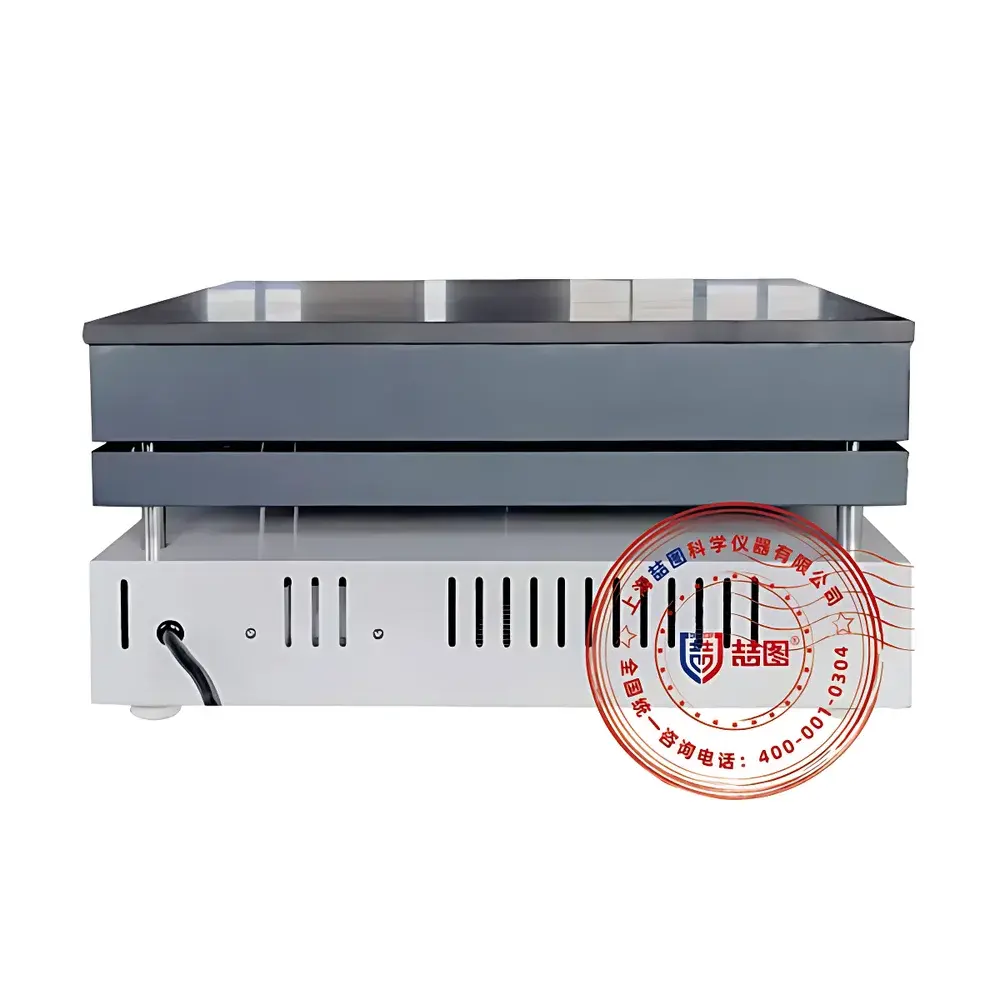
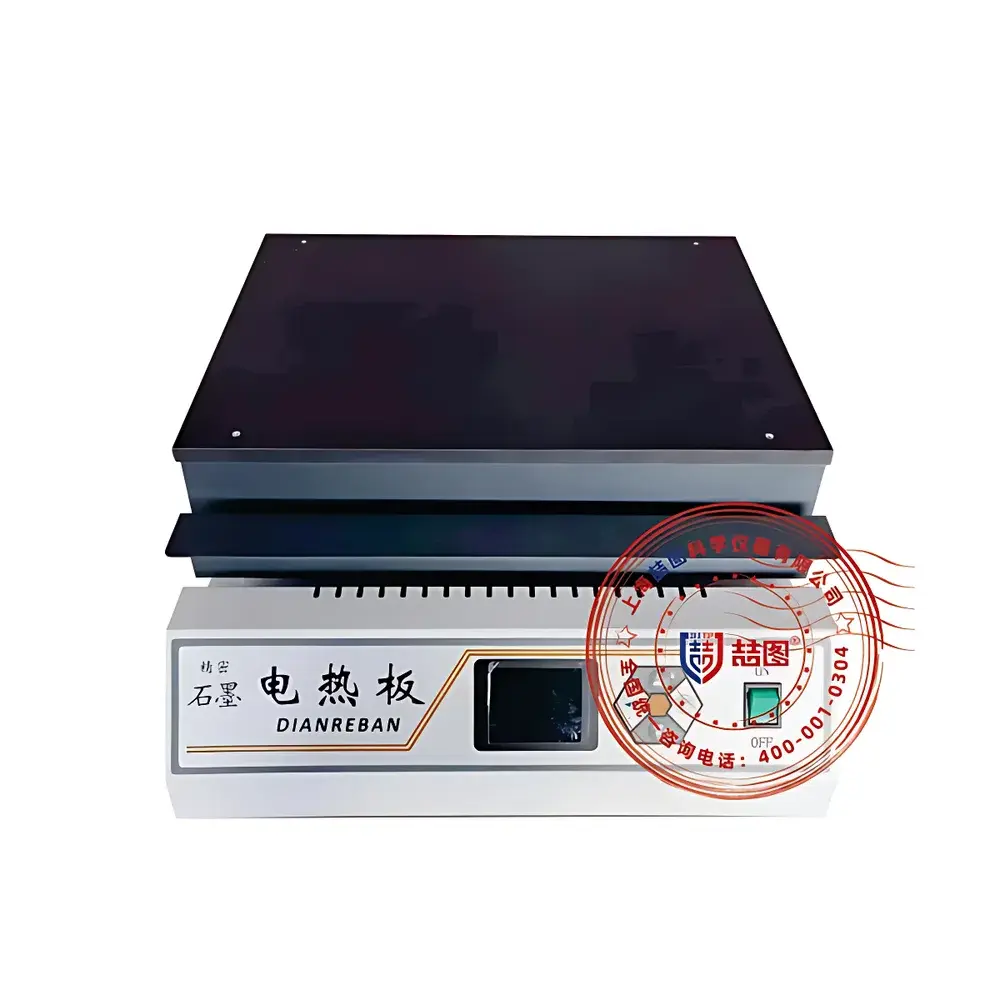
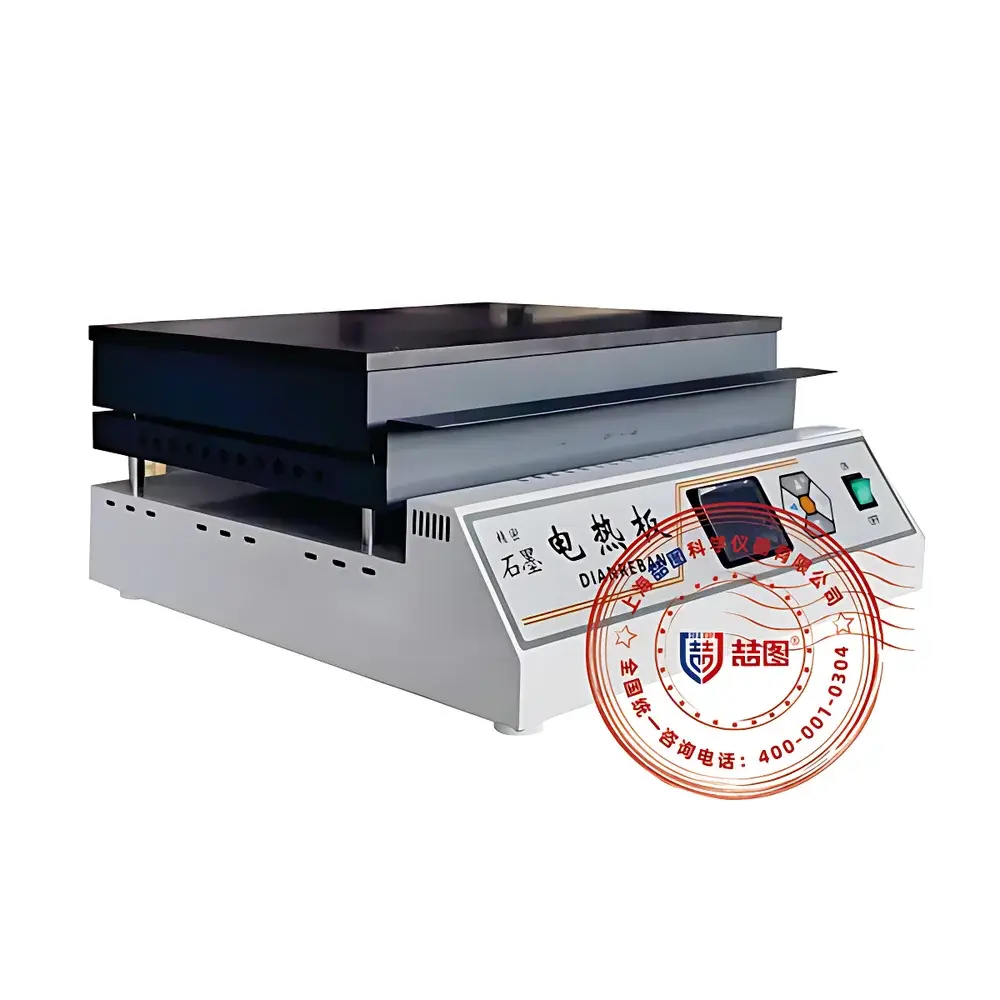
DRETOP EH40-3020 Graphite Heating Block
| Brand | DRETOP |
|---|---|
| Origin | Shanghai, China |
| Manufacturer Type | Direct Manufacturer |
| Model | EH40-3020 |
| Heating Power | 1500 W |
| Temperature Controller | PID Digital Display |
| Max Operating Temperature | 400 °C |
| Temperature Uniformity | ±5–10 °C |
| Heating Surface Dimensions | 300 × 200 mm |
| Heating Zone Dimensions | 300 × 200 mm |
Overview
The DRETOP EH40-3020 Graphite Heating Block is a precision-engineered laboratory heating platform designed for reproducible, corrosion-resistant thermal treatment of samples during sample preparation, acid digestion, evaporation, concentration, and controlled thermal reactions. Unlike conventional metal-sheathed electric hot plates, this unit employs a monolithic isostatically pressed high-purity graphite heating block as its core thermal mass—offering exceptional thermal conductivity, chemical inertness, and long-term dimensional stability under aggressive laboratory conditions. Its operation relies on resistive heating via embedded alloy resistance wire, with temperature feedback provided by a calibrated Pt100 sensor embedded directly within the graphite matrix. The system is optimized for use in analytical laboratories requiring compliance with standardized digestion protocols (e.g., EPA Method 3050B, ISO 11466, ASTM D3682), particularly where exposure to concentrated mineral acids (HNO₃, HCl, HF, H₂SO₄) or alkaline melts demands non-reactive surface integrity.
Key Features
- Isostatically pressed high-purity graphite heating block — resistant to strong acids, alkalis, and oxidizing agents; non-porous surface minimizes contamination and simplifies cleaning.
- PID digital temperature controller with self-diagnostic capability — enables precise setpoint programming, automatic ramp/soak profiling, and real-time deviation monitoring.
- Temperature accuracy of ±0.1 °C and thermal stability (uniformity) of ±5–10 °C across the full 300 × 200 mm heating zone — verified per ISO/IEC 17025 calibration traceability guidelines.
- Zero-contact solid-state relay (SSR) power control — eliminates mechanical wear, ensures stable voltage delivery, and suppresses electromagnetic interference in sensitive instrumentation environments.
- Microprocessor-based thermal management architecture — supports unattended operation up to 72 hours; integrated over-temperature cut-off, thermocouple break detection, and audible/visual fault alerts.
- Full perimeter heating configuration — delivers rapid thermal response and improved spatial uniformity compared to center-only or segmented heating designs.
- Compact footprint (340 × 300 × 200 mm) and low-profile design — compatible with fume hood installation without airflow obstruction or clearance issues.
Sample Compatibility & Compliance
The EH40-3020 accommodates standard digestion vessels including PTFE (Teflon®), quartz, borosilicate glass, and quartz-lined stainless steel crucibles — supporting both open-vessel and semi-closed digestion workflows. Its graphite surface remains chemically stable during prolonged exposure to 65% nitric acid, 37% hydrochloric acid, 49% hydrofluoric acid (with appropriate safety controls), and 98% sulfuric acid at temperatures up to 400 °C. The device meets general safety requirements per IEC 61010-1:2010 (Safety Requirements for Electrical Equipment for Measurement, Control, and Laboratory Use) and complies with electromagnetic compatibility standards EN 61326-1:2013. While not inherently 21 CFR Part 11 compliant, audit-ready operation is achievable when paired with validated LIMS-integrated data logging software and documented calibration SOPs aligned with GLP/GMP frameworks.
Software & Data Management
The EH40-3020 operates as a standalone instrument with local digital interface only; no proprietary software or USB/RS232 connectivity is included. However, its analog 4–20 mA or 0–5 V output (optional upon request) allows integration into centralized laboratory automation systems (e.g., SCADA, LabVantage, Thermo Fisher SampleManager) for remote parameter logging and alarm notification. Users may implement external data acquisition using third-party DAQ hardware and compliant software (e.g., LabVIEW, MATLAB, or certified ELN platforms) to satisfy FDA 21 CFR Part 11 requirements—including electronic signatures, audit trails, and user access controls—provided all validation documentation is maintained per organizational quality procedures.
Applications
- Acid digestion of environmental soils, sediments, and sludges prior to ICP-OES/MS analysis.
- Wet ashing of biological tissues (plant, animal, clinical specimens) for trace metal quantification.
- Controlled evaporation and concentration of aqueous extracts in food safety and pharmaceutical QC labs.
- Preparation of calibration standards and reference materials under thermally stable conditions.
- Thermal pretreatment of catalysts, polymers, and nanomaterials in materials science research.
- Supporting AOAC, USP , and Ph. Eur. 2.2.41 dissolution method development and validation studies.
FAQ
What is the maximum safe operating temperature for continuous use?
The EH40-3020 is rated for continuous operation at up to 400 °C. Sustained use above 350 °C requires periodic verification of graphite block integrity and sensor calibration.
Can this unit be used with hydrofluoric acid (HF)?
Yes—the graphite surface is inert to HF at concentrations ≤49% and temperatures ≤200 °C. Always observe strict PPE and fume extraction protocols when handling HF.
Is the temperature uniformity specification measured at surface level or at sample bottom?
Uniformity values (±5–10 °C) refer to surface temperature variation across the 300 × 200 mm zone, as measured by a calibrated infrared thermometer or contact probe array per ISO 13528 Annex B.
Does the unit include NIST-traceable calibration documentation?
Factory calibration is performed using metrology-grade references; full NIST-traceable certificates are available as an optional add-on service with documented uncertainty budgets.
How often should the temperature sensor be recalibrated?
Annual recalibration is recommended for routine QC applications; high-frequency or high-temperature usage may necessitate biannual verification per internal SOP or ISO/IEC 17025 accreditation requirements.



