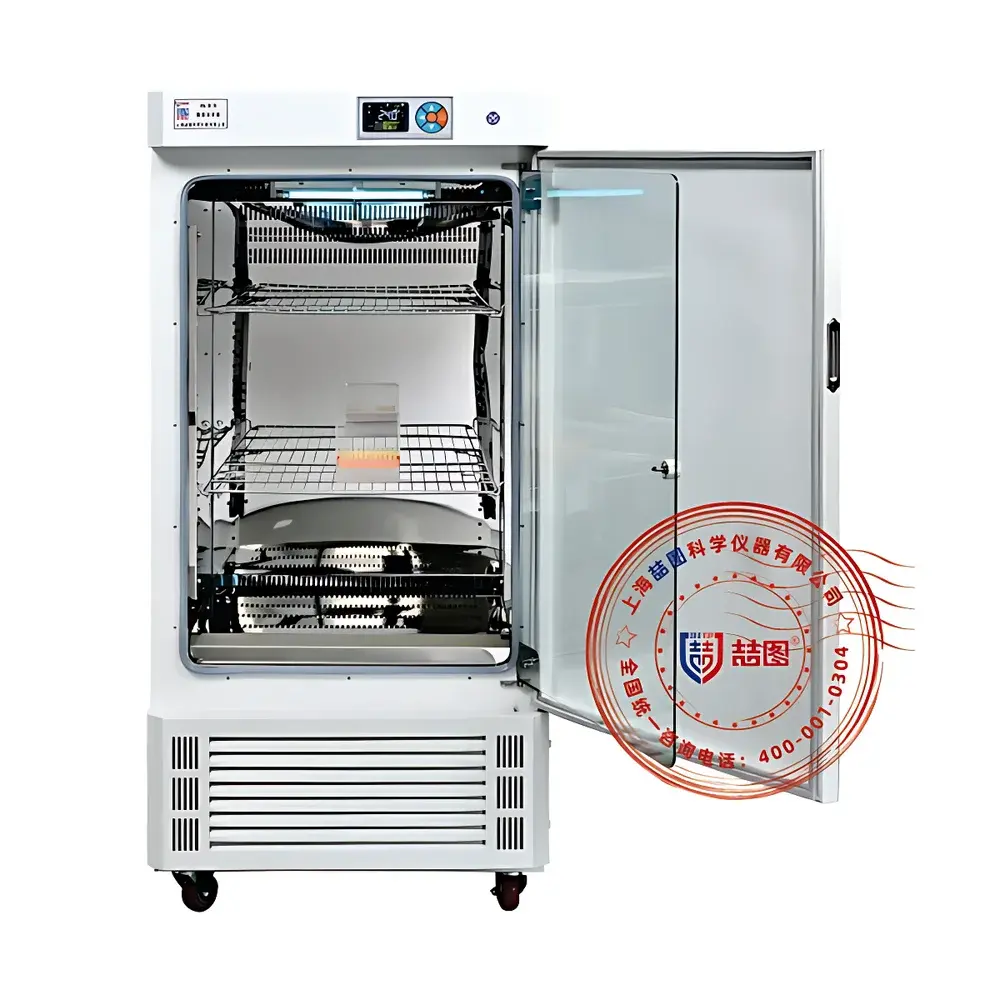
DRETOP ZMJ-350F-I Mold Incubator
| Brand | DRETOP |
|---|---|
| Origin | Shanghai, China |
| Manufacturer Type | Direct Manufacturer |
| Product Category | Domestic |
| Model | ZMJ-350F-I |
| Control Method | Digital Touchscreen Interface |
| Air Circulation | Forced Convection |
| Temperature Range | 0–65 °C |
| Temperature Fluctuation | ±0.5 °C |
| Temperature Uniformity | ±1 °C (empty chamber, at 25 °C) |
| Humidity Control | Not equipped |
| Capacity | 350 L |
| External Dimensions (W×D×H) | 820 × 835 × 1650 mm |
| Internal Dimensions (W×D×H) | 680 × 550 × 950 mm |
Overview
The DRETOP ZMJ-350F-I Mold Incubator is a purpose-engineered environmental chamber designed for the controlled cultivation of filamentous fungi, yeasts, and other eukaryotic microorganisms under precisely regulated thermal conditions. Unlike general-purpose incubators, this model is optimized for mold propagation protocols—particularly those requiring extended exposure to elevated temperatures (up to 65 °C) without humidity control, aligning with standardized mycological testing methods used in regulatory microbiology, pharmaceutical stability studies, and environmental monitoring. Its forced-air convection system ensures rapid thermal equilibration and high spatial uniformity across the 350 L working volume, while the P.I.D. temperature controller delivers stable setpoint maintenance with ±0.5 °C fluctuation tolerance—critical for reproducible colony morphology assessment and spore germination kinetics. The unit complies with fundamental design principles outlined in ISO 11133:2014 (microbiological culture media preparation), ASTM D3273 (mold resistance testing of building materials), and USP / (microbial enumeration and absence testing), supporting GLP-compliant documentation when integrated with external data loggers.
Key Features
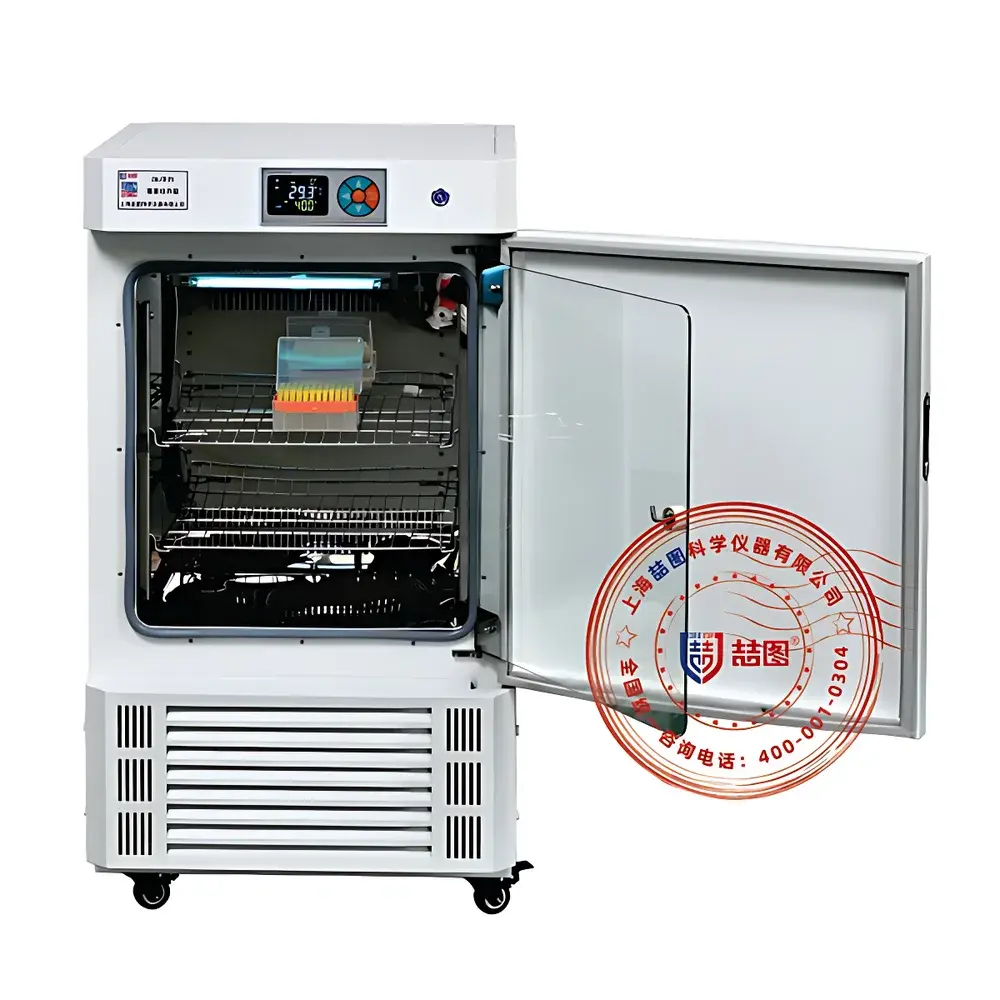
- Microprocessor-based P.I.D. temperature controller with large-backlit LCD touchscreen interface; intuitive navigation and real-time display of setpoint, actual temperature, elapsed time, and alarm status.
- Robust thermal architecture: high-efficiency hermetic compressor with eco-friendly R134a refrigerant (F-series designation), integrated start-delay and cycle-interval protection to extend service life.
- Optimized airflow design using axial贯流 (cross-flow) fan and engineered internal ducting to achieve ±1 °C uniformity (measured at nine points per IEC 60068-3-5) under no-load conditions at 25 °C.
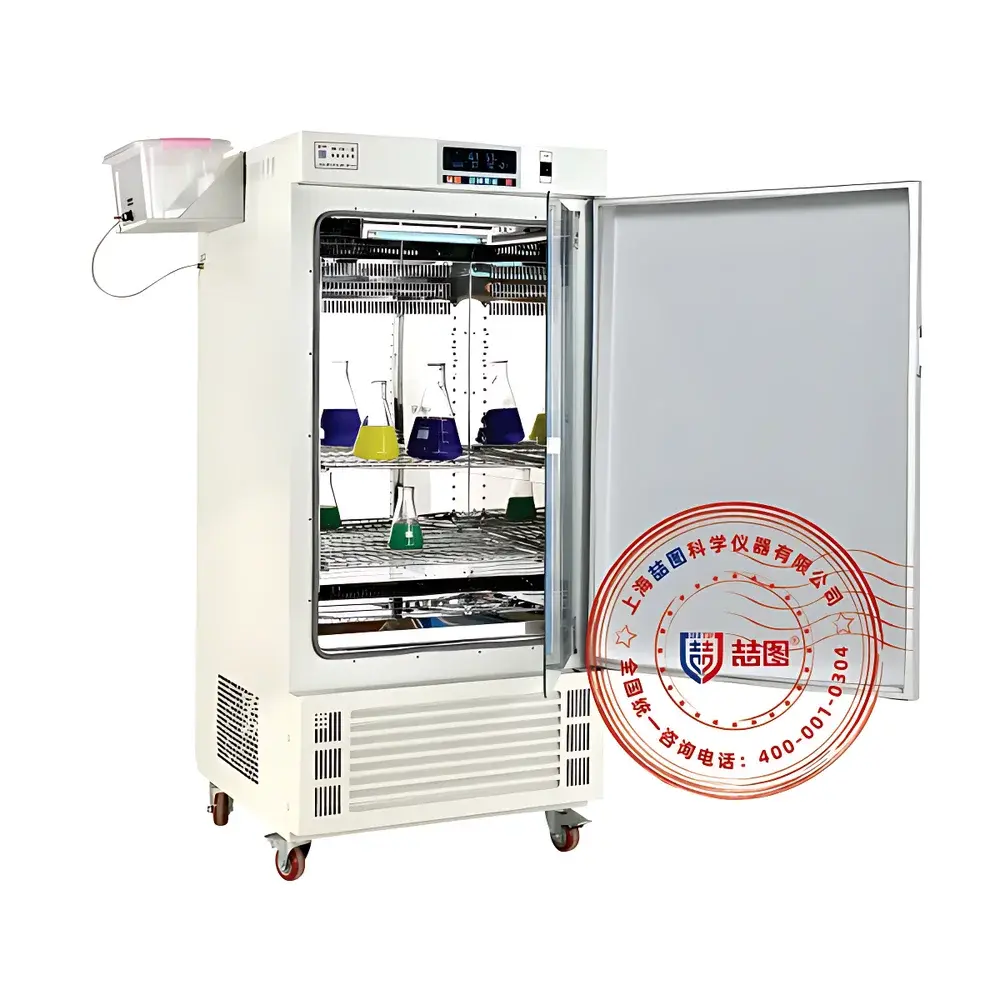
- Stainless steel interior chamber (304 grade) with removable, height-adjustable stainless steel shelves; smooth-welded corners and seamless construction eliminate microbial harborage zones.
- Dual-door observation window: outer magnetic seal door with thermal insulation layer; inner tempered glass door for visual monitoring without compromising chamber integrity.
- Integrated UV-C germicidal lamp (254 nm) mounted in the ceiling plenum, programmable for periodic decontamination cycles to suppress airborne contaminants during non-operational periods.
- Fail-safe operation: automatic parameter retention after power interruption; configurable over-temperature alarm with audible/visual alert and relay output for external shutdown integration.
Sample Compatibility & Compliance
The ZMJ-350F-I accommodates standard microbiological sample formats including Petri dishes (up to 150 mm diameter), slant tubes, multi-well plates, and culture flasks—supported by three adjustable shelf levels (standard configuration). Its temperature-only operational envelope makes it suitable for assays where moisture interference must be avoided, such as thermotolerant mold screening (e.g., Aspergillus fumigatus, Paecilomyces variotii), accelerated aging of fungal spores, or BOD5 incubation per APHA Standard Methods 5210B. The unit meets structural and electrical safety requirements per IEC 61010-1:2010 (Laboratory Equipment Safety) and EMC compliance per IEC 61326-1:2020. While not certified for GMP manufacturing environments, its design supports audit readiness for ISO/IEC 17025-accredited labs performing environmental monitoring or method validation.
Software & Data Management
The ZMJ-350F-I operates via embedded firmware without proprietary PC software. However, optional RS485 serial interface (Modbus RTU protocol) enables connection to third-party SCADA systems or centralized lab monitoring platforms for remote parameter readout, event logging, and alarm forwarding. When paired with compliant data loggers (e.g., Eurotherm 2408 or Omega OM-DAQPRO-5300), full traceability—including timestamped temperature profiles, alarm triggers, and UV cycle logs—can be maintained in accordance with FDA 21 CFR Part 11 requirements, provided appropriate user access controls and electronic signature workflows are implemented externally.
Applications
- Mycological research: strain isolation, sporulation induction, and thermal tolerance profiling of industrial or clinical isolates.
- Pharmaceutical quality control: sterility test incubation per USP , preservative efficacy testing (PET), and environmental monitoring of cleanroom support areas.
- Materials science: ASTM D3273 and ISO 846-compliant mold resistance evaluation of polymers, coatings, and HVAC insulation.
- Environmental testing: wastewater BOD5 incubation, activated sludge respiration assays, and sediment toxicity screening.
- Educational laboratories: undergraduate microbiology courses requiring reliable, maintenance-minimal incubation platforms for fungal taxonomy modules.
FAQ
Does the ZMJ-350F-I include humidity control?
No. This model is a temperature-only incubator. Humidity regulation is not available; for combined temp/humidity applications, consider the ZMJ-350-II series.
Is the UV sterilization system automated or manual?
The UV lamp operates manually via front-panel toggle switch; no built-in timer or scheduling function is included in the base configuration.
Can the incubator be validated for IQ/OQ/PQ protocols?
Yes—the unit’s mechanical and thermal specifications support installation qualification (IQ) and operational qualification (OQ) using calibrated reference probes; performance qualification (PQ) requires user-defined acceptance criteria aligned with application-specific standards.
What is the maximum ambient operating temperature for this unit?
Rated for continuous operation in ambient environments up to 32 °C; derating is recommended above this threshold to maintain specified temperature stability.
Are calibration certificates provided with shipment?
Factory calibration verification is performed prior to dispatch; NIST-traceable calibration certificates are available upon request at additional cost.