
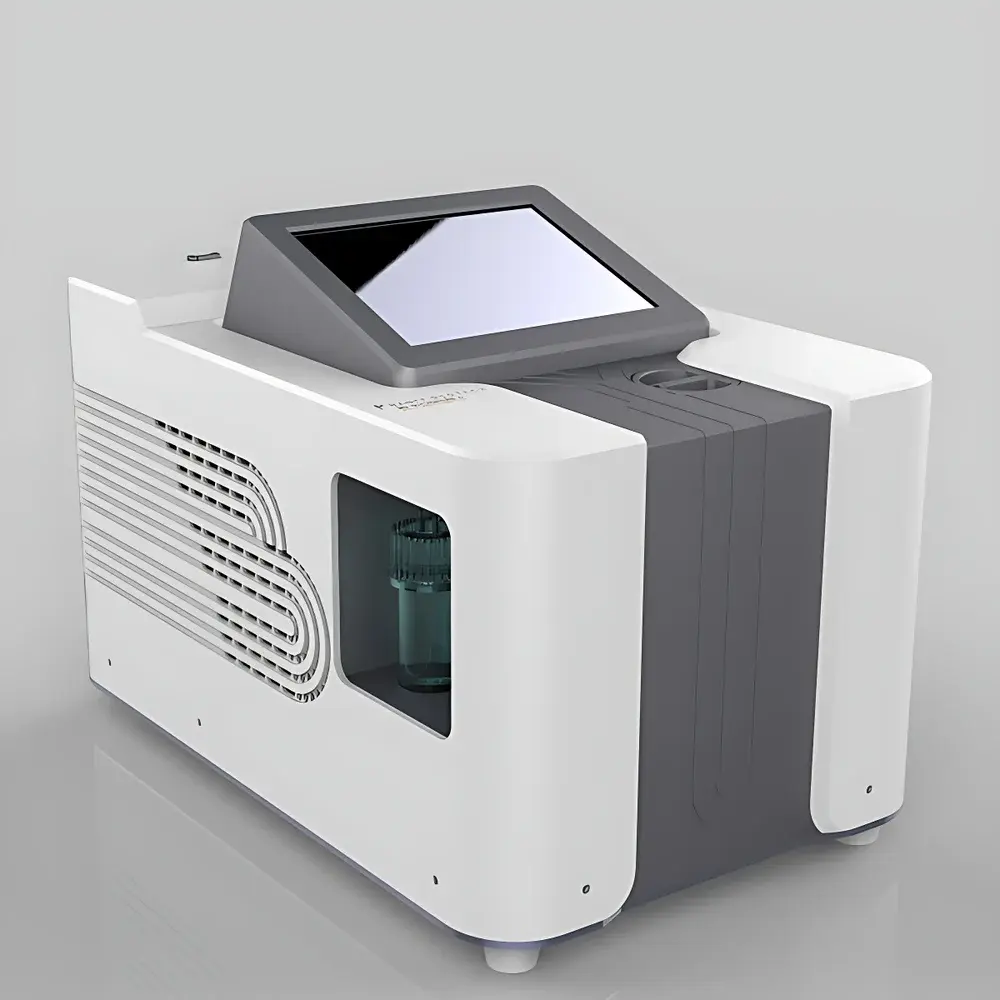
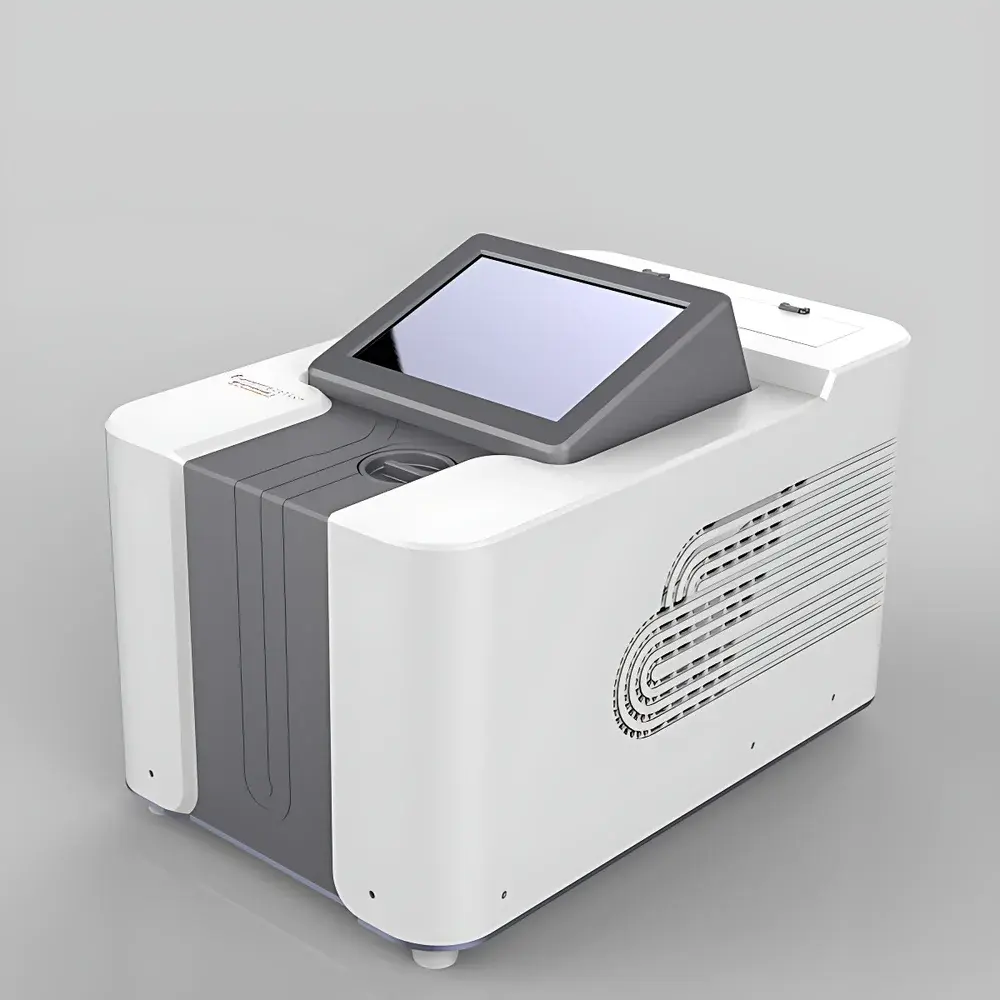
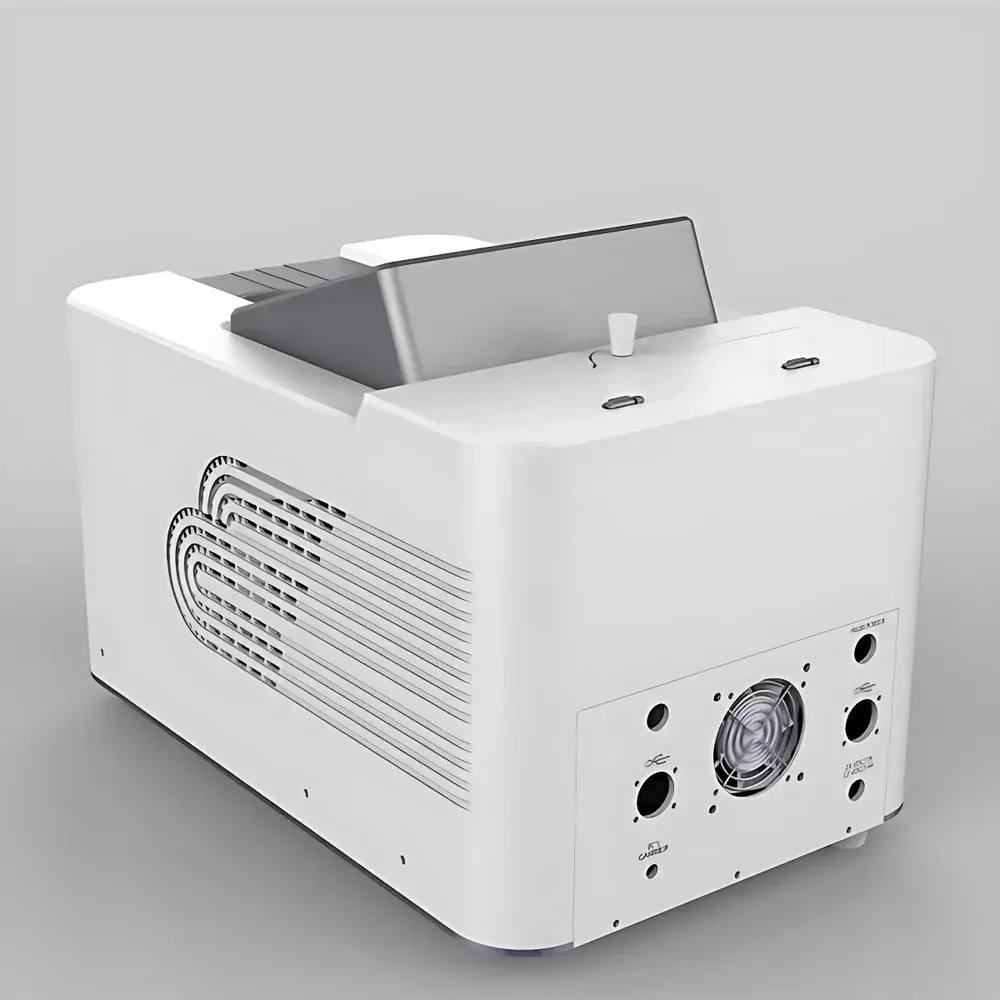
Banff QitVenture 6 E Portable Field-Deployable GC-MS System
| Brand | Banff |
|---|---|
| Origin | Zhejiang, China |
| Manufacturer Type | OEM Manufacturer |
| Regional Classification | Domestic (China) |
| Model | QitVenture 6 E |
| Instrument Type | Portable GC-MS |
| Ionization Sources | ESI, TD-ESI, APCI |
| Mass Analyzer | Quadrupole |
| Mass Range | 10–1000 m/z |
| Battery Runtime | >4 hours (typical operational mode) |
| Dimensions | <38 × 28 × 18 cm |
| Weight | <12 kg |
| Sample Introduction | Gas, Liquid, Solid (via integrated thermal desorption and direct probe options) |
Overview
The Banff QitVenture 6 E is a field-deployable portable gas chromatography mass spectrometry (GC-MS) system engineered for rapid, on-site qualitative screening of organic compounds in complex matrices. Unlike benchtop GC-MS platforms, the QitVenture 6 E integrates miniaturized quadrupole mass spectrometry with compact capillary GC separation and a versatile atmospheric-pressure ionization architecture—enabling real-time molecular identification without laboratory infrastructure. Its core measurement principle relies on retention time alignment coupled with unit-mass resolution electron ionization (EI) or soft-ionization spectra (ESI/APCI), supported by spectral library matching against reference standards. Designed for operational resilience in uncontrolled environments, the system maintains analytical integrity under variable ambient temperature (5–40 °C), humidity (<85% RH, non-condensing), and mechanical vibration—making it suitable for mobile forensic units, border inspection vehicles, emergency response vessels, and point-of-care clinical deployments.
Key Features
- Triple-mode ionization capability: Electrospray Ionization (ESI), Thermal Desorption–Electrospray Ionization (TD-ESI), and Atmospheric Pressure Chemical Ionization (APCI) — enabling universal compatibility across volatile, semi-volatile, and thermally labile analytes including drugs of abuse, explosives, mycotoxins, and metabolites.
- Integrated GC module with low-thermal-mass (LTM) column oven and programmable temperature ramping (35–300 °C at up to 30 °C/s), supporting <10-minute method cycles for targeted screening.
- Quadrupole mass analyzer with mass range 10–1000 m/z and unit mass resolution (FWHM ≤ 0.7 Da at m/z 502), optimized for high signal-to-noise ratio in trace-level detection.
- Touch-enabled graphical user interface (GUI) with context-aware workflow templates—preconfigured for narcotics confirmation, explosive residue analysis, pesticide screening, and clinical toxicology panels.
- Built-in spectral library compliant with NIST MS Search 2.4 format; supports user-defined libraries with retention index calibration and collision-induced dissociation (CID) spectral annotation for MS/MS-enabled verification.
- Rechargeable lithium-ion battery pack delivering ≥4 hours of continuous operation under typical acquisition parameters (scan rate: 2 scans/s, dwell time: 50 ms/peak), with hot-swap capability and external DC input support (12–24 V).
Sample Compatibility & Compliance
The QitVenture 6 E accommodates direct analysis of gaseous headspace, liquid extracts (e.g., urine, serum, food homogenates), and solid-phase samples (e.g., swabs, filter papers, hair segments) via its modular inlet system. Solid samples are introduced using a heated thermal desorption probe (200–400 °C), while liquids are injected via syringe-assisted micro-introduction. The instrument meets electromagnetic compatibility (EMC) requirements per IEC 61326-1:2023 and environmental robustness criteria aligned with MIL-STD-810H for shock, vibration, and ingress protection (IP54 equivalent). While not certified for regulated GMP/GLP environments out-of-the-box, its audit-ready data handling architecture—including timestamped raw data files (.RAW), full metadata logging, and user-access logs—supports compliance with FDA 21 CFR Part 11 when deployed within validated workflows. Method transfer to laboratory-grade GC-MS systems is facilitated through standardized .CDF and mzML export formats.
Software & Data Management
QitVenture Control Suite (v3.2+) provides instrument control, real-time spectral visualization, automated peak detection, and library search scoring (Probability-Based Matching, PBM ≥ 80% threshold). All acquisitions are stored in vendor-neutral HDF5 containers with embedded calibration curves, detector gain settings, and ion source operating parameters. Data integrity is enforced via SHA-256 checksums and write-once-read-many (WORM) archive options. Remote diagnostics and firmware updates are supported over Wi-Fi or Ethernet; optional cloud synchronization enables centralized spectral repository management across multi-unit deployments. Software validation documentation (IQ/OQ protocols) is available upon request for regulated applications.
Applications
- Forensic Toxicology & Narcotics Enforcement: Rapid identification of opioids, stimulants, synthetic cannabinoids, and novel psychoactive substances (NPS) in oral fluid, blood, wastewater influent, and surface wipes—aligned with UNODC guidelines and national forensic standards (e.g., ISO/IEC 17025:2017).
- Food Safety Monitoring: Screening for chlorinated pesticides (e.g., chlorpyrifos), veterinary drug residues (e.g., sulfonamides), and Fusarium-derived mycotoxins (e.g., deoxynivalenol) in grain, dairy, and produce matrices.
- Homeland Security & CBRNE Response: Detection of nitroaromatic explosives (TNT, DNT), peroxide-based initiators (TATP), and nitrogen-rich compounds (RDX, HMX) at trace levels (<1 ng) on personnel, luggage, or cargo surfaces.
- Clinical Point-of-Care Testing (POCT): Targeted metabolic profiling for inborn errors of metabolism (e.g., phenylketonuria, maple syrup urine disease), therapeutic drug monitoring (e.g., antiepileptics), and exhaled volatile organic compound (VOC) biomarker analysis in pulmonary disease assessment.
FAQ
Is the QitVenture 6 E compliant with ISO/IEC 17025 for accredited testing laboratories?
It supports ISO/IEC 17025 implementation through documented calibration procedures, traceable reference standards, and full audit trail functionality—but formal accreditation requires site-specific validation per ILAC-G8:2022.
Can the system perform quantitative analysis?
Yes—when used with internal standard calibration curves and matrix-matched reference materials, it achieves RSD <15% for semi-quantitative reporting; full quantitation requires method validation per ICH Q2(R2).
What maintenance is required for field operation?
Ion source cleaning every 50–100 analyses; GC column trimming every 200 runs; annual mass calibration using perfluorotributylamine (PFTBA); no vacuum pump oil changes due to dry scroll pump design.
Does it support remote data transmission to central command centers?
Yes—via encrypted TLS 1.3 API endpoints; compatible with common incident management platforms (e.g., ESRI ArcGIS Field Maps, Palantir Foundry) through JSON-based data ingestion modules.






