
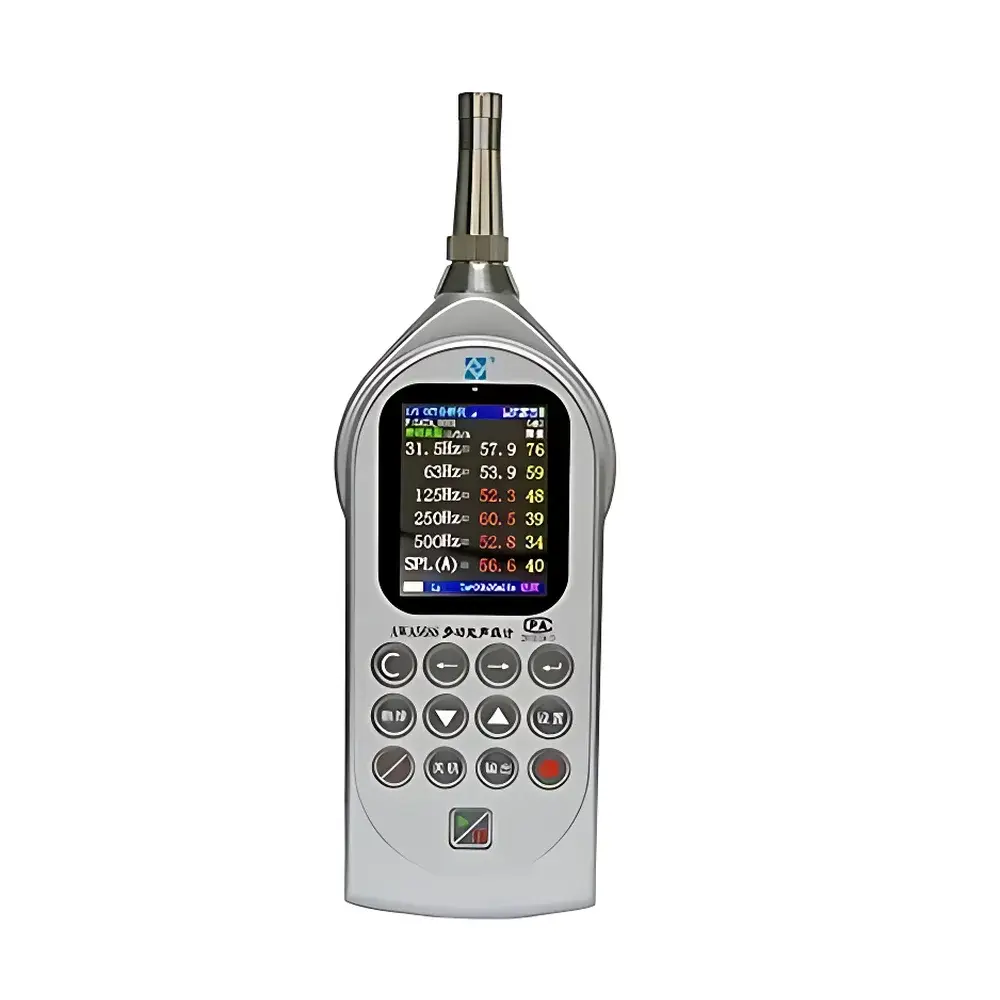
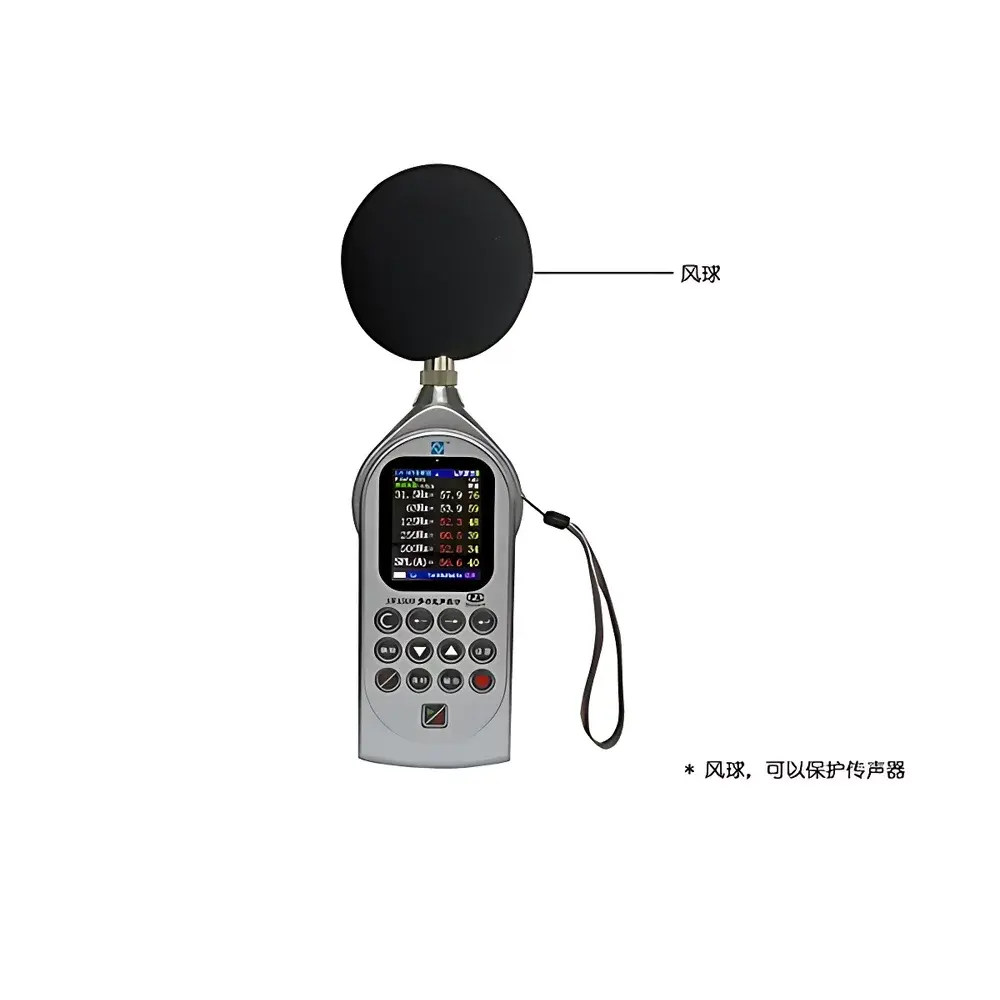
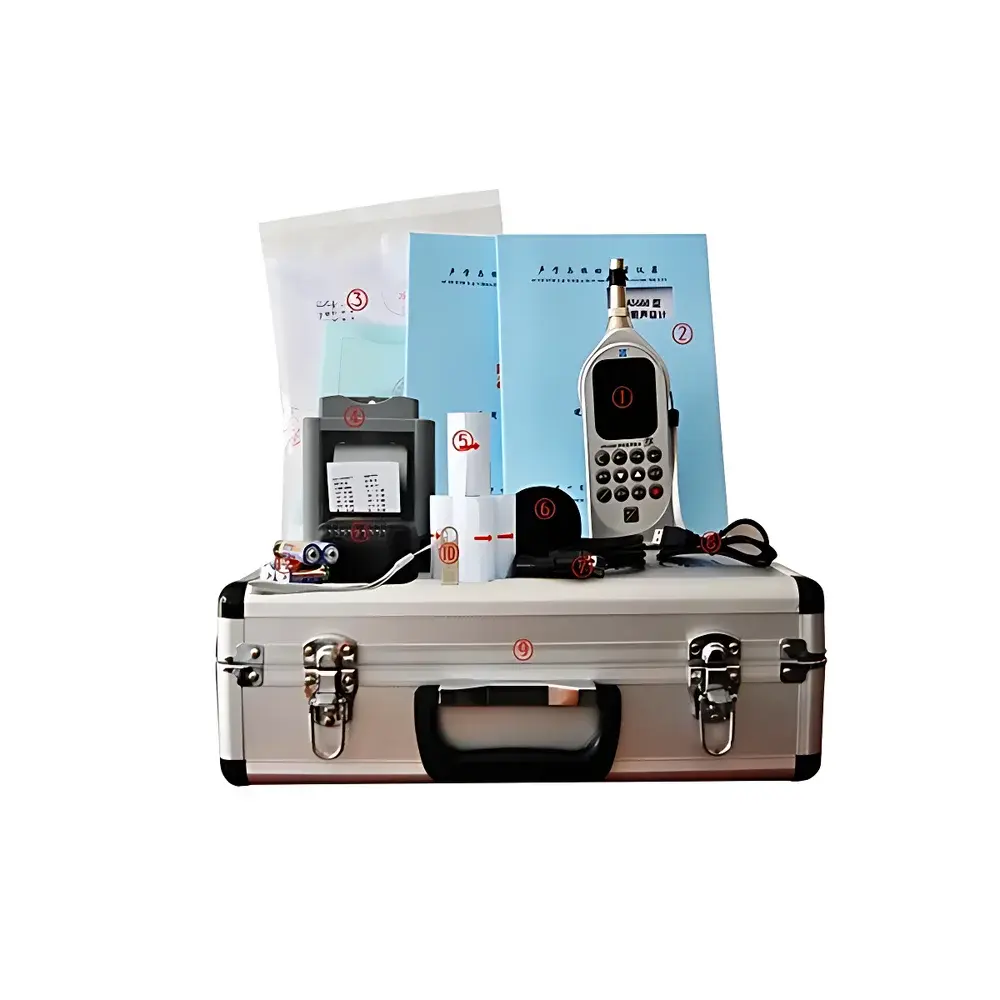
AWA AWA5688 Advanced Digital Sound Level Meter
| Brand | AWA |
|---|---|
| Origin | Zhejiang, China |
| Model | AWA5688 |
| Price | USD 1,050 (FOB) |
| Frequency Range | 20 Hz – 12.5 kHz |
| Measurement Range | 28 dBA – 133 dBA |
| LCPeak | 66–136 dB |
| Self-Noise | <12 dB(A) |
| Sensitivity | −40 dB re 1 V/Pa |
| A/D Resolution | 24-bit |
| Sampling Rate | 32 kHz |
| Linear Dynamic Range | 105 dB (A-weighted) |
| Time Weightings | Fast (F), Slow (S), Impulse (I), all parallel |
| Frequency Weightings | A, C, Z, all parallel |
| Detector | True RMS digital detection |
| Compliance | GB/T 3785–2010 Class 2, IEC 61672:2013 Class 2, GB/T 3241–2010 Class 2, IEC 61260:2014 Class 2 |
| Display | 2.6″ color TFT LCD, 240 × 320 px, auto/manual backlight (46 levels) |
| Data Storage | 32 MB Flash (3,300 single-statistic sets with histogram), optional SD card (up to 32 GB) |
| Power | 4 × AA alkaline batteries or 4.5–6.0 V DC external supply with seamless auto-switching |
| Operating Temperature | −10 °C to +50 °C |
| Relative Humidity | 20–90 % RH (non-condensing) |
| Dimensions | 260 × 80 × 30 mm |
| Weight | 350 g (without accessories) |
Overview
The AWA AWA5688 Advanced Digital Sound Level Meter is a Class 2 compliant, microprocessor-based acoustic measurement instrument engineered for high-fidelity environmental and occupational noise assessment. It implements real-time digital signal processing (DSP) to simultaneously execute A-, C-, and Z-frequency weightings alongside F-, S-, and I-time weightings—enabling concurrent evaluation of multiple standardized metrics without manual range switching. Its 105 dB linear dynamic range (A-weighted) eliminates the need for gain staging during field measurements, ensuring integrity across low-level ambient noise and high-intensity industrial sources. The instrument adheres strictly to IEC 61672:2013 Class 2 and GB/T 3785–2010 Class 2 requirements for sound level meters, and supports octave (1/1 OCT) and third-octave (1/3 OCT) band analysis per IEC 61260:2014 Class 2, as well as real-time FFT spectral analysis up to 16 kHz (32 kHz sampling). Designed for extended unattended operation, it features automatic power source arbitration between internal alkaline cells and external DC input, along with GPS time synchronization (optional), making it suitable for long-duration monitoring campaigns in compliance with ISO 1996-2, ISO 9613-2, and EU Directive 2002/49/EC.
Key Features
- True parallel acquisition of A/C/Z frequency weightings and F/S/I time weightings—no sequential mode switching required.
- 24-bit analog-to-digital conversion at 32 kHz sampling rate ensures high-resolution waveform capture and spectral fidelity.
- 2.6-inch color TFT display (240 × 320 px) with adjustable backlight (46 levels) and sunlight-readable contrast for outdoor deployment.
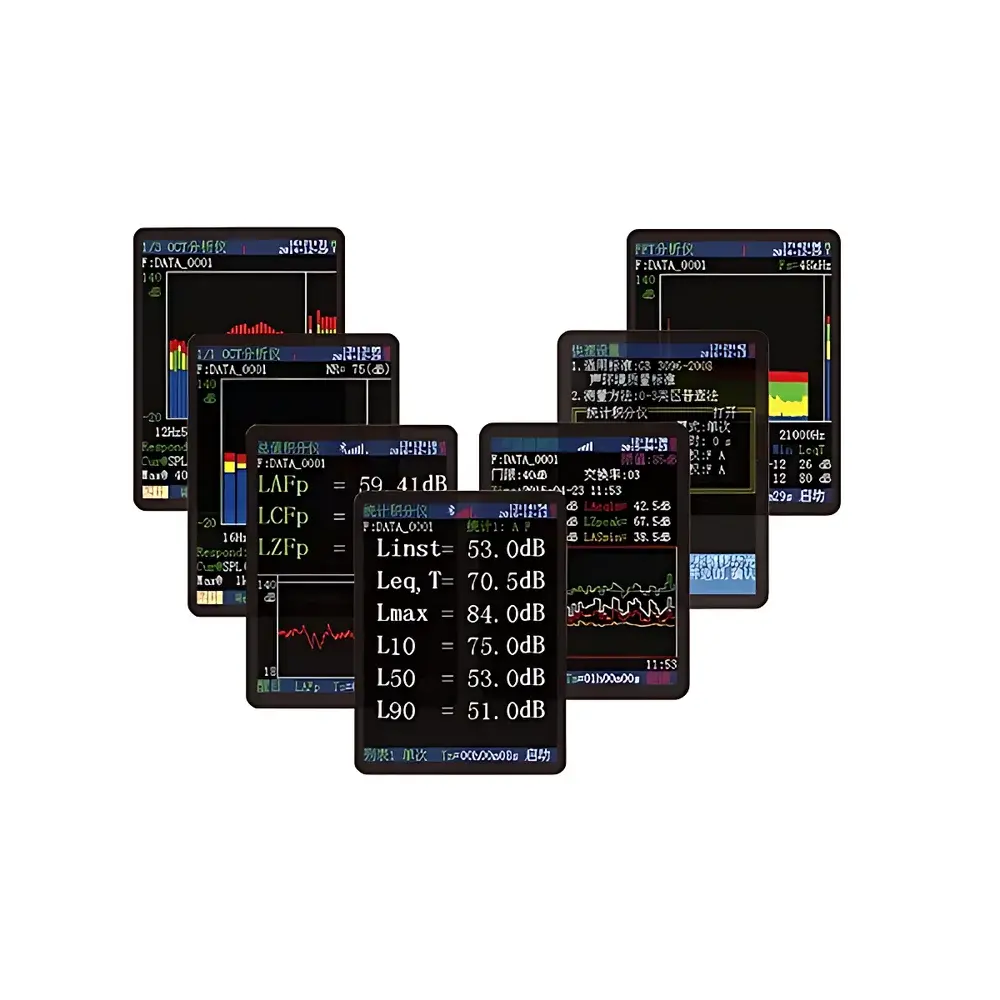
- Onboard statistical engine computes Leq, Lmax, Lmin, LN (N = 1–99), SEL, D, LCpeak, and time-history distributions—including 24-hour trend plots, cumulative histograms, and real-time bar graphs.
- Integrated FFT engine supports up to 1024-point spectra with configurable windowing (Hanning, Flat Top, Rectangular) and real-time magnitude/phase display.
- Modular expansion architecture: optional GPS module (position + velocity tagging), Bluetooth 4.2 (wireless control & data streaming), GSM SMS transmitter (remote alerting), solar charging interface, and thermal printer support.
- Robust data management: 32 MB embedded Flash stores ≥3,300 single-statistic records with full distribution graphics; expandable via standard SD card (up to 32 GB, FAT32 formatted).
- Configurable trigger modes: manual, threshold-triggered (over/under limit), scheduled start/stop, and periodic interval logging (1 s to 99 h).
- Full USB 1.1/2.0 compatibility for firmware updates, bulk data export, and host-controlled operation via virtual COM port.
Sample Compatibility & Compliance
The AWA5688 is optimized for use with standard 1/2″ pre-polarized condenser microphones (e.g., AWA14602 + Φ12.7 mm capsule), delivering calibrated acoustic sensitivity of −40 dB re 1 V/Pa. Its self-noise floor (<12 dB(A)) enables reliable measurement down to 28 dB(A) in quiet environments such as residential zones or anechoic chambers. All acoustic calibrations are traceable to national standards via built-in calibration memory (256 entries stored with date/time stamp, reference level, and transducer ID). The device meets mandatory conformity requirements for environmental noise monitoring under Chinese HJ 640–2012 and international frameworks including ISO 1996 (acoustics — description, measurement and assessment of environmental noise), ISO 9612 (determination of occupational noise exposure), and EU Environmental Noise Directive (END) Annex II reporting templates. Optional GPS integration satisfies georeferenced data logging requirements for municipal noise mapping and regulatory submissions.
Software & Data Management
Data export follows standardized formats compatible with common environmental analytics platforms: CSV for spreadsheet integration, TXT for legacy systems, and proprietary .SLM binary files containing raw time-series waveforms, FFT bins, and metadata (GPS coordinates, timestamp, instrument configuration). The included PC software (AWA6290T) provides post-processing capabilities including spectral averaging, tonality analysis per ANSI S1.4-2014, and automated report generation aligned with ISO 1996-2 Annex B. Audit-trail functionality logs all parameter changes, calibration events, and user actions with timestamps—supporting GLP-aligned workflows where traceability is mandated. Firmware updates are delivered via signed binaries over USB or SD card, preserving configuration integrity across revisions. All stored data includes embedded UTC timestamps synchronized via GPS or NTP-compatible network time servers when connected.
Applications
The AWA5688 serves as a primary measurement tool across regulatory, industrial, and academic domains. In environmental monitoring, it performs continuous roadside, airport perimeter, and urban noise mapping per ISO 1996-2, supporting noise action planning under the EU END. For occupational health and safety, it quantifies worker exposure against OSHA 29 CFR 1910.95 and EU Directive 2003/10/EC, calculating daily noise dose (LEX,8h) and peak C-weighted levels. In building acoustics, it verifies airborne and impact sound insulation (ISO 140 series) and room reverberation (ISO 3382). Educational laboratories use its FFT and OCT modules for vibration-source identification, machinery fault diagnosis, and psychoacoustic research. Its modular design allows adaptation to specialized tasks: wind turbine noise assessment (IEC 61400-11), railway noise (EN 15663), and community noise complaint investigations requiring geo-tagged evidence.
FAQ
Is the AWA5688 compliant with IEC 61672:2013 Class 2?
Yes. It is fully certified to IEC 61672:2013 Class 2 and GB/T 3785–2010 Class 2, with test reports available upon request.
Can the instrument perform real-time 1/3-octave analysis?
Yes. It supports simultaneous 1/1 and 1/3-octave band analysis per IEC 61260:2014 Class 2, with center frequencies from 25 Hz to 10 kHz.
What is the maximum recording duration on internal memory?
With default 1-second statistical intervals, the 32 MB Flash stores up to 3,300 single-statistic records with histograms; with optional 32 GB SD card, duration extends to >1 year at 1-minute intervals.
Does the device support remote data transmission?
Yes—via optional GSM module (SMS-based alerts), Bluetooth (to mobile apps), or USB/Ethernet-connected PC gateways for cloud upload.
Is GPS positioning accuracy sufficient for regulatory reporting?
The optional GPS module delivers ≤3 m CEP horizontal accuracy under open-sky conditions and embeds NMEA 0183-compliant position, altitude, speed, and UTC time into every measurement record.







