
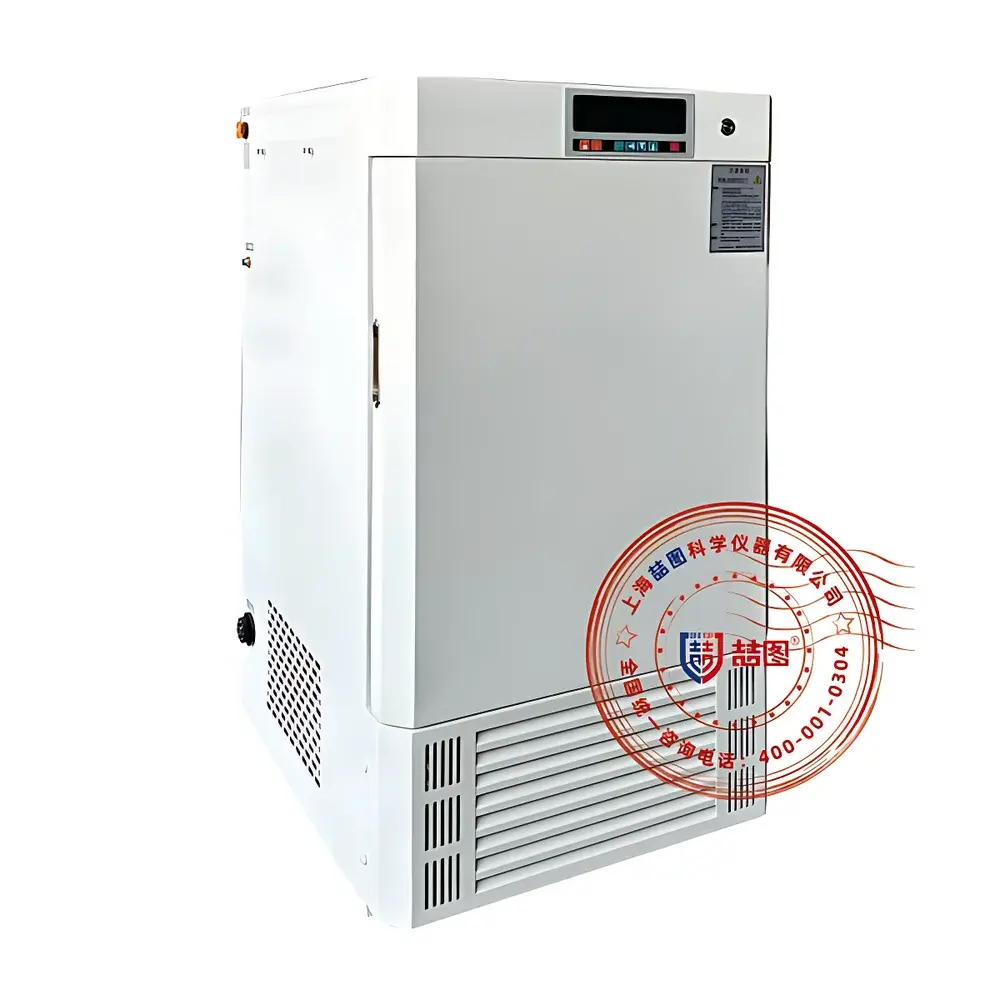
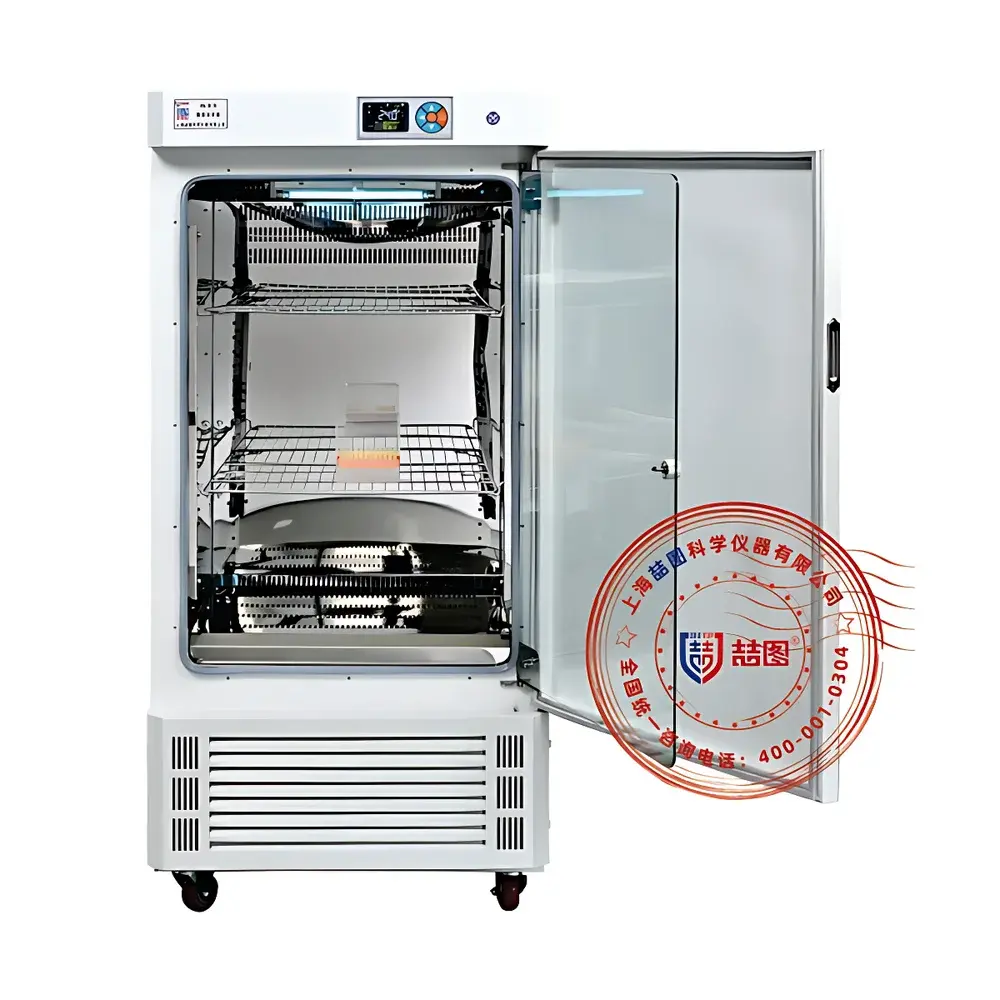
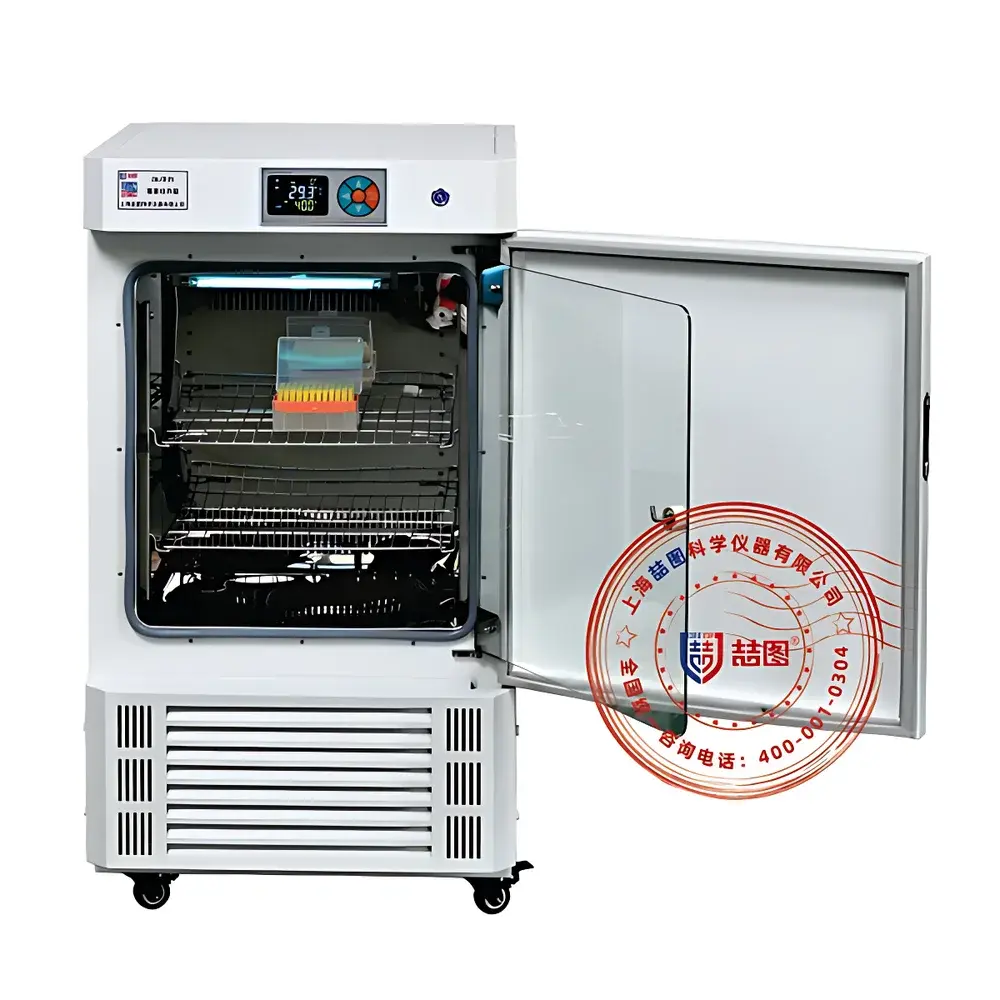
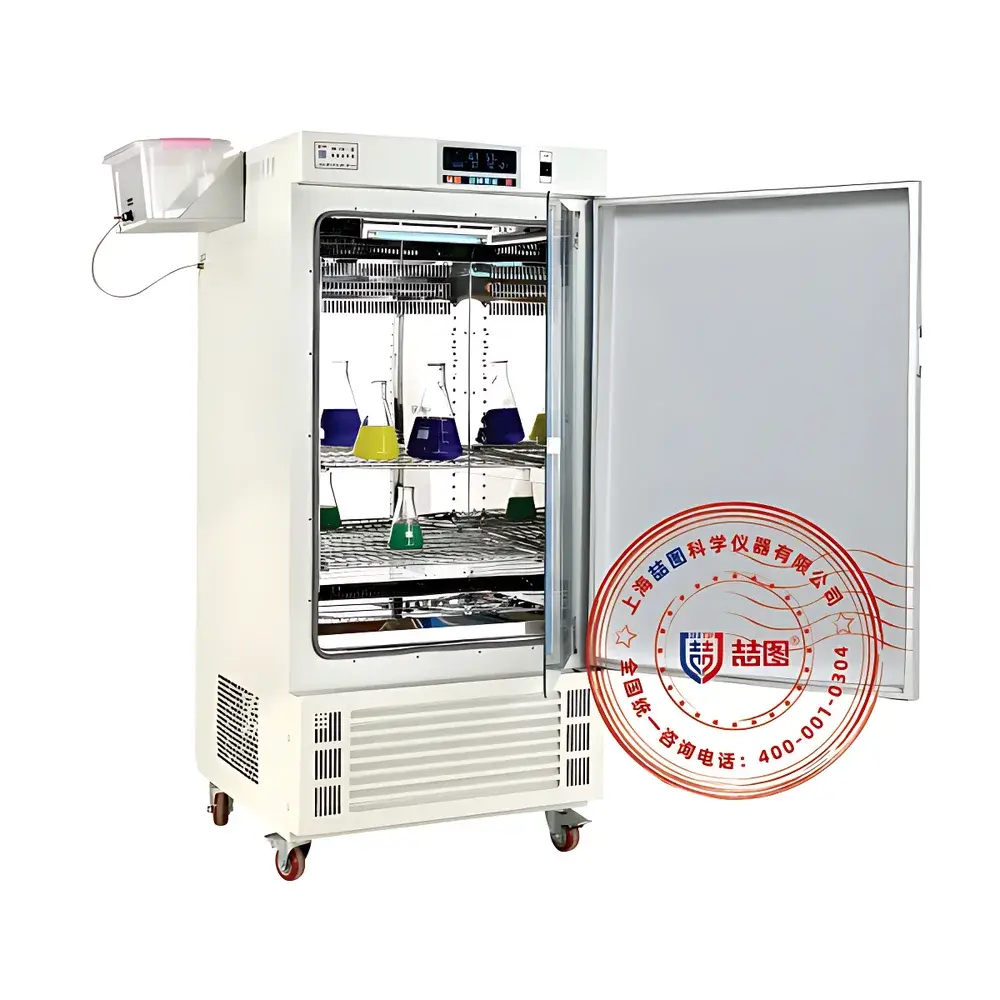
DRETOP ZMJ-250-II Mold Incubator
| Brand | DRETOP |
|---|---|
| Origin | Shanghai, China |
| Manufacturer Type | Direct Manufacturer |
| Model | ZMJ-250-II |
| Control Method | Digital Touchscreen Interface |
| Air Circulation | Forced Convection |
| Temperature Range | 15–45 °C (with humidity), 10–45 °C (without humidity) |
| Temperature Fluctuation | ±0.5 °C |
| Temperature Uniformity | ±1 °C (empty chamber @ 25 °C) |
| Humidity Range | 55–85 %RH |
| Humidity Fluctuation | ±5 %RH |
| Capacity | 250 L |
| External Dimensions (W×D×H) | 720×745×1558 mm |
| Internal Dimensions (W×D×H) | 580×500×850 mm |
Overview
The DRETOP ZMJ-250-II Mold Incubator is a purpose-engineered environmental chamber designed for the controlled cultivation of filamentous fungi, yeasts, and other hygroscopic microorganisms requiring precise regulation of both temperature and relative humidity. Unlike standard incubators, this model integrates a dedicated humidification system with programmable P.I.D. thermal control to maintain stable conditions essential for mycological research, fungal pathogenicity studies, spore germination assays, and stability testing under wet-heat stress. Its operational principle relies on forced-air convection combined with intelligent moisture delivery via ultrasonic misting—ensuring rapid equilibration and minimal spatial gradients across the 250 L working volume. The unit complies with foundational requirements for laboratory-grade environmental simulation as referenced in ISO 8573-1 (compressed air quality), ASTM D3273 (mold resistance testing), and USP (microbiological control of pharmaceutical environments), making it suitable for GLP-compliant workflows in academic, biopharmaceutical, and regulatory testing laboratories.
Key Features
- Intelligent digital touchscreen interface with real-time display of setpoints, actual values, elapsed time, and alarm status—supporting intuitive navigation without external software.
- Microprocessor-based P.I.D. temperature controller with 0.1 °C resolution, over-temperature cut-off protection, and automatic recovery after power interruption.
- High-efficiency, low-noise centrifugal blower system optimized for uniform laminar airflow; internal duct geometry minimizes dead zones and improves thermal homogeneity to ±1 °C (empty, at 25 °C).
- Stainless steel interior chamber (304 grade) with removable, height-adjustable shelves; rounded inner corners and seamless welds eliminate microbial harborage points and facilitate autoclave-compatible cleaning protocols.
- Dual-door observation window: outer magnetic seal door with thermal insulation layer, inner tempered glass door—reducing heat loss while enabling non-invasive visual monitoring.
- Integrated UV-C germicidal lamp (254 nm) for periodic decontamination of internal air and surfaces, mitigating cross-contamination risks during sequential culture runs.
- Eco-conscious refrigeration system utilizing R134a or R600a (model-dependent), compliant with Montreal Protocol phase-out schedules; compressor features start-delay logic and duty-cycle management to extend service life.
Sample Compatibility & Compliance
The ZMJ-250-II accommodates standard Petri dishes (up to 150 mm), multi-well plates, slant tubes, liquid culture flasks (up to 2 L), and custom sample racks. Its humidity range (55–85 %RH, ±5 %RH) supports growth of Aspergillus spp., Penicillium spp., Fusarium spp., and Candida albicans under standardized conditions aligned with ISO 11133:2014 (microbiological culture media preparation) and CLSI M24-A2 (antifungal susceptibility testing). The unit meets CE marking directives for electrical safety (EN 61010-1) and electromagnetic compatibility (EN 61326-1), and its construction materials comply with RoHS 2011/65/EU restrictions on hazardous substances. Optional RS485 serial interface enables integration into centralized lab monitoring systems adhering to IEEE 11073-10201 (medical device communication standards).
Software & Data Management
While the base configuration operates via embedded firmware without external PC dependency, optional accessories include an RS485 port for Modbus RTU protocol communication, allowing connection to SCADA platforms or LIMS via industrial gateways. The onboard memory retains up to 10 user-defined programs (each with up to 99 segments), including ramp-soak profiles for accelerated aging tests. All parameter changes, alarm events, and temperature/humidity logs are timestamped and stored locally with battery-backed retention (>72 h power loss resilience). Audit trail functionality satisfies basic FDA 21 CFR Part 11 requirements when paired with validated third-party data acquisition software—though full electronic signature capability requires add-on modules.
Applications
- Mycological strain maintenance and sporulation induction in university microbiology teaching labs.
- BOD5 incubation per APHA Standard Methods 5210B, where elevated humidity prevents evaporation-related oxygen depletion artifacts.
- Environmental stress testing of medical devices per ISO 10993-12, evaluating material degradation under cyclic humid-thermal exposure.
- Pharmaceutical stability studies under ICH Q1A(R2) conditions (e.g., 25 °C/60 %RH, 30 °C/65 %RH) for solid dosage forms.
- Corrosion resistance evaluation of coatings and packaging materials using ASTM D2247 (100 % RH condensation test).
- Validation of sterilization process efficacy by monitoring microbial recovery post-exposure to sub-lethal humidity-temperature combinations.
FAQ
What is the maximum ambient operating temperature for the ZMJ-250-II?
The unit is rated for continuous operation in rooms maintained at ≤30 °C ambient temperature with adequate ventilation clearance (≥100 mm on all sides).
Can the incubator operate without humidity control enabled?
Yes—the humidification subsystem can be disabled independently while retaining full temperature regulation functionality across 10–45 °C.
Is calibration traceability available for factory-certified units?
DRETOP provides NIST-traceable calibration certificates (optional) for temperature and humidity sensors, covering initial verification against ISO/IEC 17025-accredited reference standards.
Does the UV lamp cycle automatically or require manual activation?
UV irradiation is manually initiated via front-panel command; duration is user-selectable (1–120 minutes), and interlock logic disables lamp operation when doors are open.
What maintenance intervals are recommended for optimal performance?
Compressor oil inspection every 24 months; ultrasonic humidifier transducer cleaning every 3 months; HEPA filter replacement (if installed) every 6 months; annual verification of temperature/humidity sensor drift per ISO 17025 procedures.




