
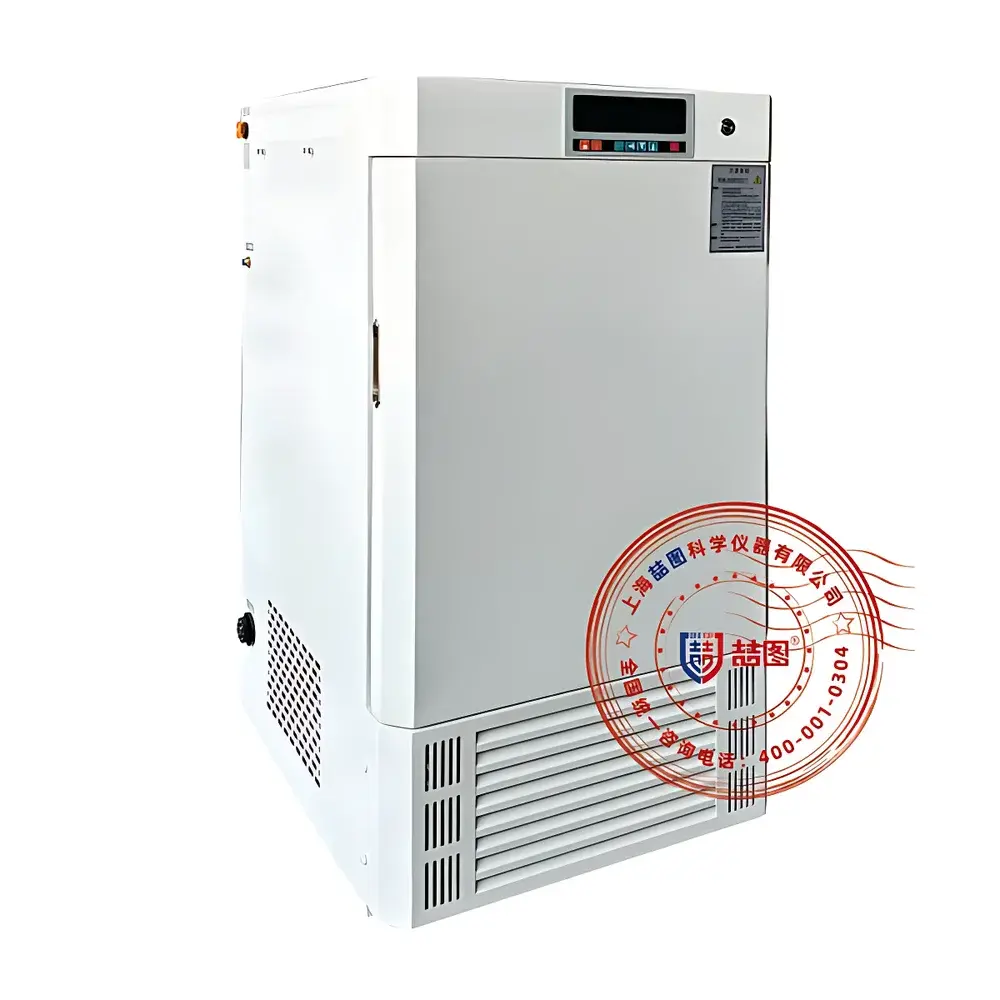
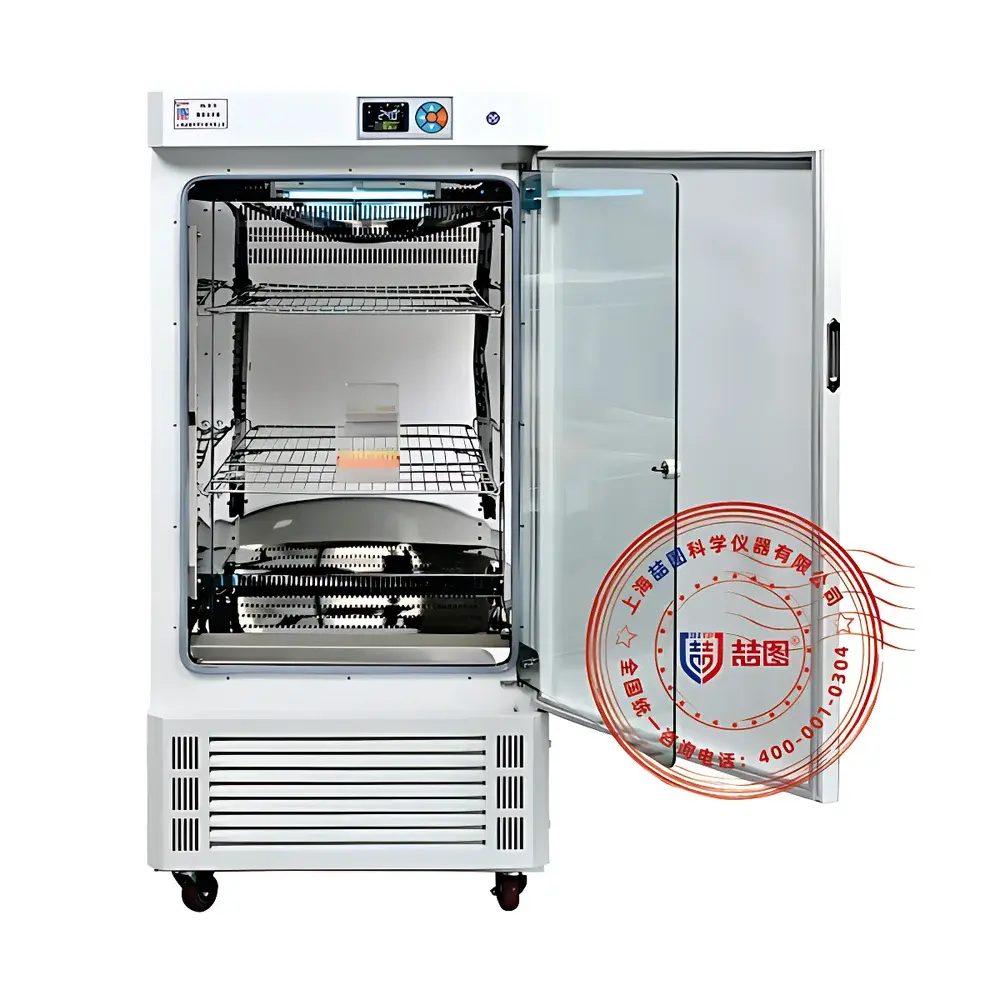
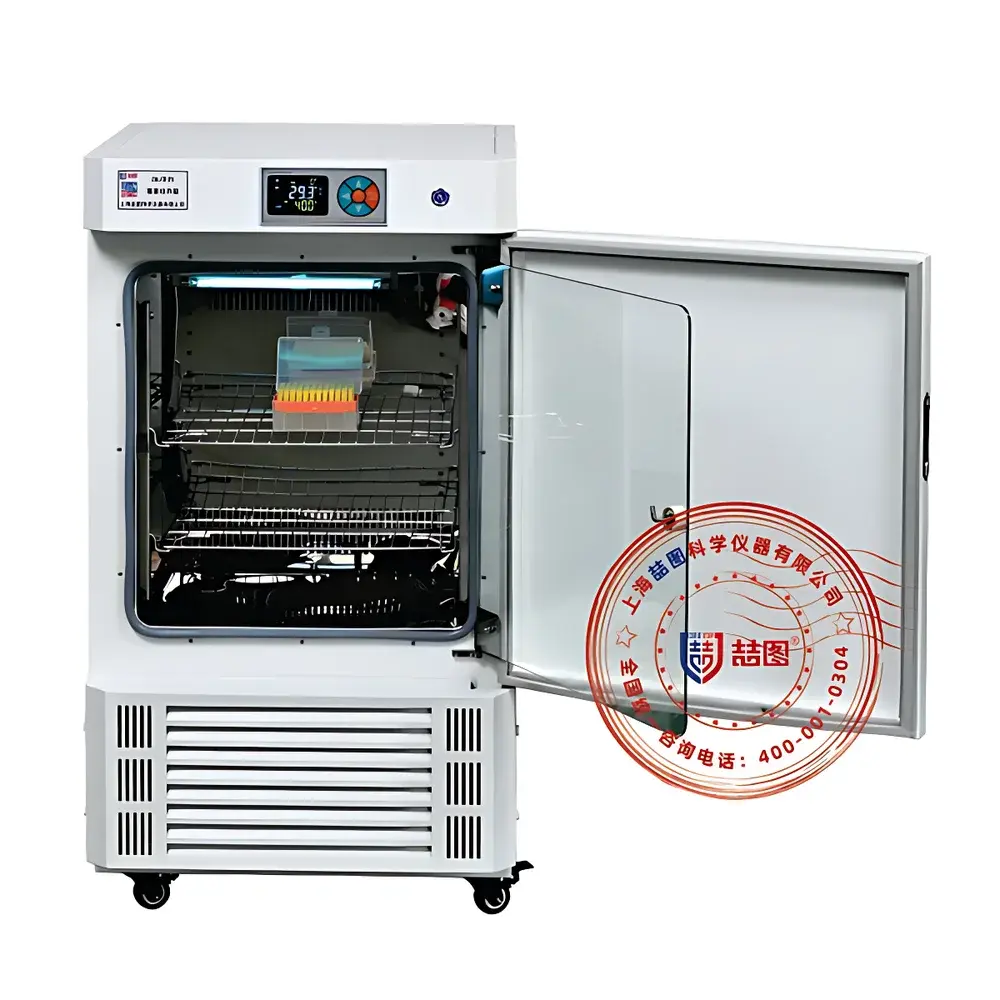
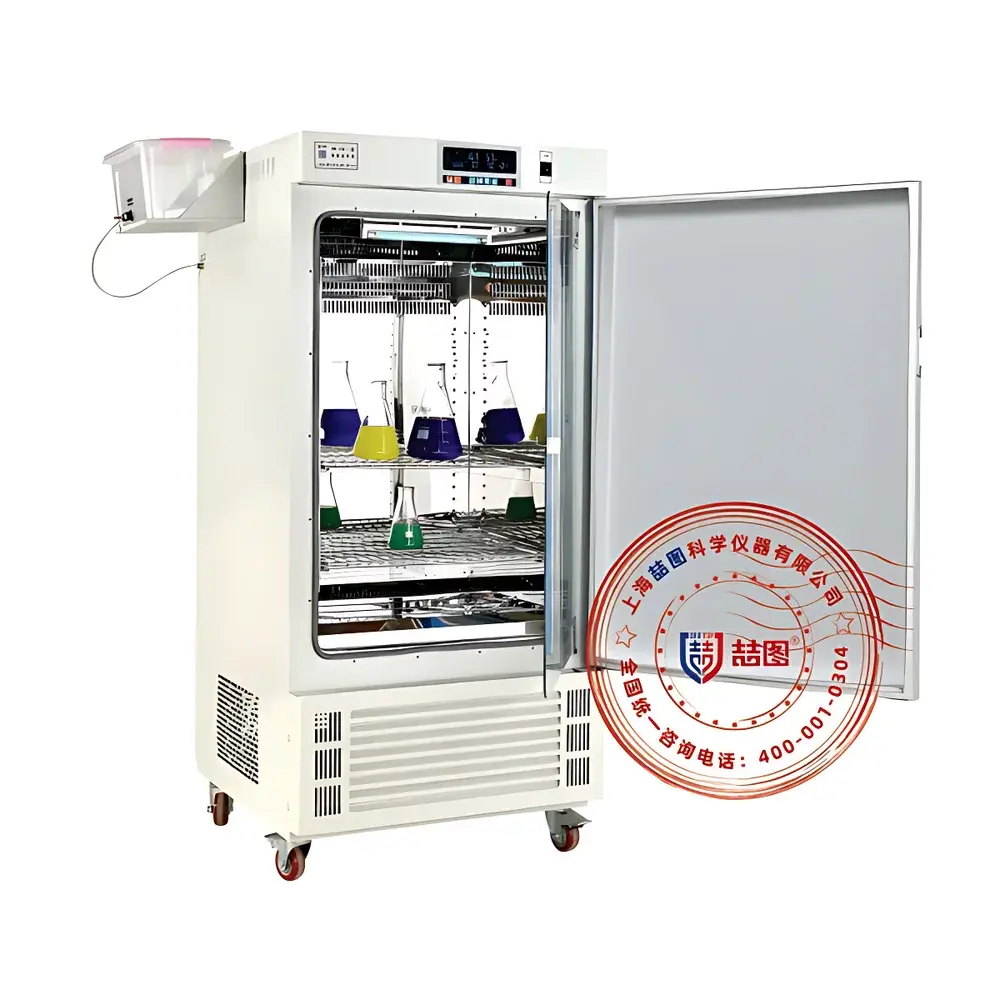
DRETOP ZMJ-250-I Mold Incubator
| Brand | DRETOP |
|---|---|
| Origin | Shanghai, China |
| Manufacturer Type | Direct Manufacturer |
| Model | ZMJ-250-I |
| Control Method | Digital Touchscreen Interface |
| Air Circulation | Forced Convection |
| Temperature Range | 0–65 °C |
| Temperature Fluctuation | ±0.5 °C |
| Temperature Uniformity | ±1 °C (empty chamber, @25 °C) |
| Humidity Control | Not equipped |
| Chamber Capacity | 250 L |
| External Dimensions (W×D×H) | 720×745×1558 mm |
| Internal Dimensions (W×D×H) | 580×500×850 mm |
Overview
The DRETOP ZMJ-250-I Mold Incubator is a precision-engineered, forced-air laboratory incubator designed specifically for the controlled cultivation of filamentous fungi, yeasts, and other eukaryotic microorganisms requiring stable thermal environments without active humidity regulation. Unlike general-purpose incubators, this model adheres to the operational requirements of mycological research—where consistent temperature maintenance, rapid thermal recovery after door opening, and minimized spatial gradients are critical for reproducible colony morphology, sporulation kinetics, and metabolic activity assessment. Its architecture follows fundamental principles of convective heat transfer optimization, utilizing a high-efficiency axial fan system and an internally baffled airflow path to ensure uniform thermal distribution across the entire 250 L working volume. The unit operates within a validated temperature range of 0–65 °C, making it suitable not only for standard fungal growth protocols but also for thermotolerance studies, accelerated aging tests, and environmental stress response assays in compliance with ISO 8573-1 (air quality), ASTM D3273 (mold resistance testing), and USP (microbiological control of pharmaceutical environments).
Key Features
- Microprocessor-based P.I.D. temperature controller with 0.1 °C resolution and real-time digital display; supports programmable ramp-hold profiles (via optional upgrade kits)
- Touchscreen human-machine interface (HMI) with intuitive navigation, multi-parameter screen view, and event logging capability
- Stainless steel interior chamber (304 grade) with removable, height-adjustable stainless steel shelves; seamless welded corners eliminate microbial harborage zones
- Double-glazed observation window with inner tempered glass and magnetic door seal—optimized for thermal insulation and condensation resistance
- High-reliability hermetic compressor with eco-friendly R134a refrigerant; integrated start-delay and cycle-interval protection circuits extend service life
- Four-point leveling feet with dual-mode operation: swivel casters for mobility + independent locking screws for vibration-dampened stability
- UV-C germicidal lamp (254 nm) mounted in ceiling panel for routine decontamination cycles—validated per IEC 62471 photobiological safety standards
- Power failure recovery function with non-volatile memory retention; automatic restart at pre-set parameters upon grid restoration
Sample Compatibility & Compliance
The ZMJ-250-I accommodates standard microbiological vessels including Petri dishes (up to 150 mm diameter), slant tubes, Erlenmeyer flasks (≤1000 mL), and multi-well plates. Its internal geometry permits unobstructed airflow around stacked or staggered sample configurations. While lacking active humidification, the chamber’s thermal mass and low air exchange rate (<0.5 air changes per minute) naturally sustain ambient relative humidity levels between 35–60% RH under typical lab conditions (20–25 °C, 40–60% RH ambient), sufficient for most Aspergillus, Penicillium, and Fusarium cultivation protocols. The device meets CE marking requirements for electrical safety (EN 61010-1) and electromagnetic compatibility (EN 61326-1). It supports GLP-compliant documentation when paired with optional RS485 serial output and external data loggers compliant with FDA 21 CFR Part 11 audit trail specifications.
Software & Data Management
Standard configuration includes local parameter storage (≥100 event logs with timestamp, setpoint, and deviation alerts). Optional accessories enable expanded functionality: an RS485 interface (Modbus RTU protocol) allows integration into centralized LabVantage or Thermo Fisher SampleManager LIMS platforms; a color touchscreen upgrade replaces the monochrome display with graphical trend visualization and multi-user access control; and a thermal printer module provides hard-copy records for QC sign-off. All firmware updates are delivered via USB port with cryptographic signature verification to prevent unauthorized modification—aligned with ISO/IEC 17025:2017 clause 7.7 on equipment software validation.
Applications
- BOD₅ and respirometric assays in environmental microbiology laboratories
- Cultivation and isolation of clinically relevant molds (e.g., Aspergillus fumigatus, Trichophyton rubrum) for antifungal susceptibility testing (CLSI M38-A3)
- Accelerated mold resistance evaluation of polymer composites, coatings, and packaging materials (ASTM G21, ISO 846)
- Long-term strain preservation at sub-optimal growth temperatures (e.g., 4–8 °C for Paecilomyces spp.)
- Validation of sterilization efficacy for cleanroom garments and filtration media using spore challenge methods (ISO 14644-3 Annex B)
- Thermal stability profiling of enzyme preparations and diagnostic reagents
FAQ
Does the ZMJ-250-I include humidity control?
No. This model is a temperature-only incubator. Humidity-sensitive applications require the ZMJ-250-II variant with integrated ultrasonic humidifier and capacitive RH sensor.
What is the maximum load capacity for shelf loading?
Each stainless steel shelf supports up to 15 kg uniformly distributed. Total recommended payload across all shelves is ≤45 kg to maintain airflow integrity and thermal uniformity.
Can the UV lamp operate while the chamber is at elevated temperature?
Yes. The UV-C lamp is interlocked with door position only—not temperature—allowing concurrent irradiation during warm-up or hold phases.
Is calibration certificate included with shipment?
A factory-issued NIST-traceable temperature calibration report (at three points: 25 °C, 37 °C, and 55 °C) is provided. On-site IQ/OQ documentation support is available as a paid service.
What maintenance intervals are recommended?
Compressor oil inspection every 24 months; condenser coil cleaning quarterly; UV lamp replacement annually (or after 8,000 hours); door gasket integrity check semiannually.
Related Products




