
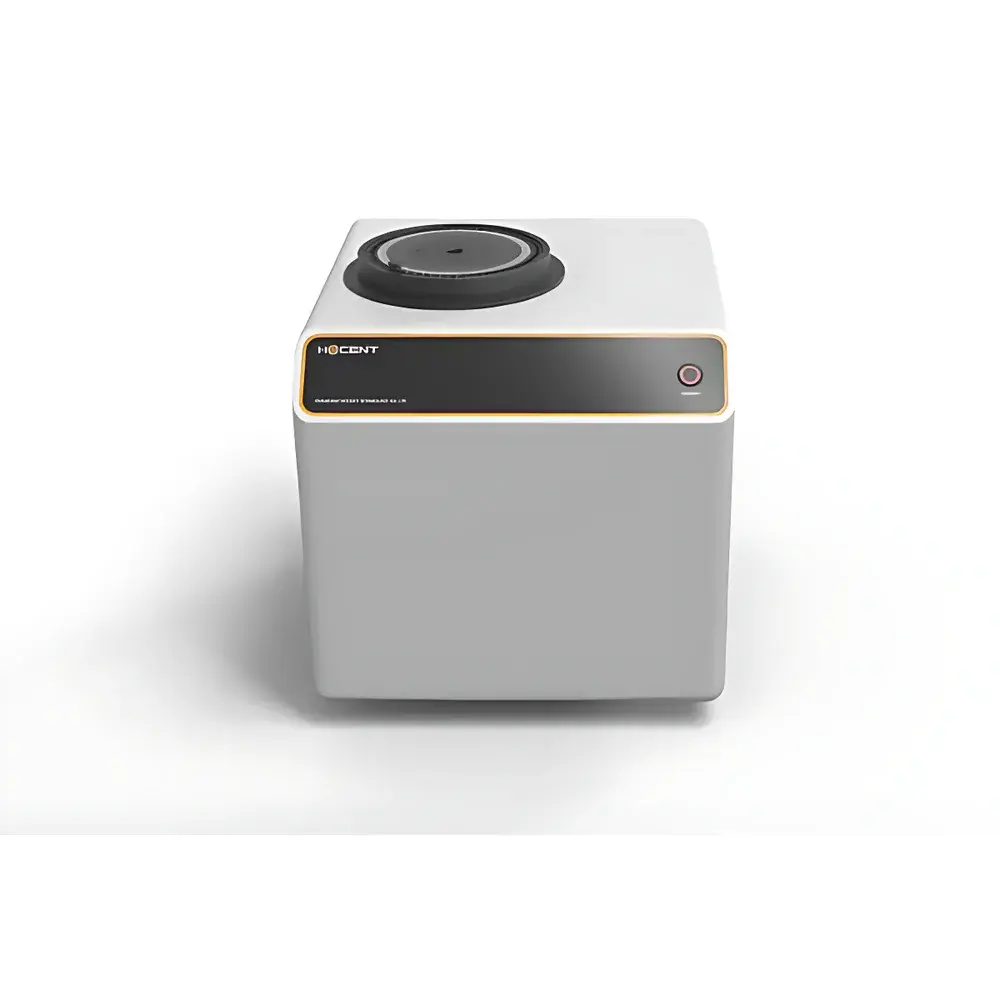
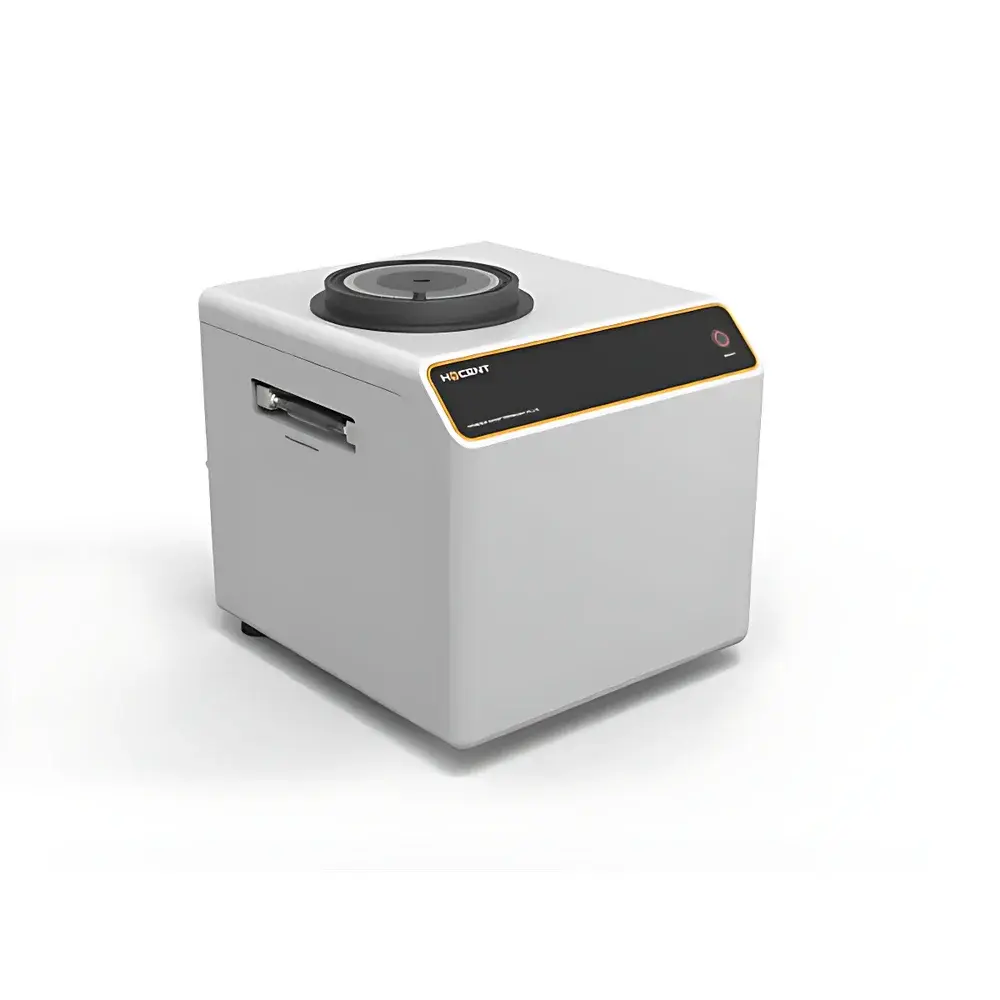
Kaiyuanhongsheng TN3000 Dumas Combustion Nitrogen Determinator
| Brand | Kaiyuanhongsheng |
|---|---|
| Origin | Hunan, China |
| Model | TN3000 |
| Principle | Dumas combustion method |
| Nitrogen range | 0.1–200 mg N |
| Sample mass | 0.01–0.5 g |
| Repeatability | RSD ≤ 0.5% at 10 mg N |
| Recovery rate | ≥ 99.5% |
| Power consumption | ≤ 3000 W |
| Dimensions (L×W×H) | 500 × 465 × 485 mm |
| Sample capacity | 120-position auto-sampler |
| Analysis time per sample | ≤ 3 min |
| Carrier gas | CO₂ (≥99.99%) |
| Oxidant | O₂ (≥99.99%) |
| Reduction medium | High-efficiency Cu furnace (≥5000 cycles) |
| Gas sampling | Six-way valve quantitative injection |
| Leak detection | Automatic & manual modes |
| Gas flow & pressure monitoring | Real-time display |
Overview
The Kaiyuanhongsheng TN3000 is a fully automated Dumas combustion nitrogen determinator engineered for high-throughput, trace-level total nitrogen quantification in solid and liquid organic samples. It operates on the internationally standardized Dumas principle—combustion of sample material at 800–1000 °C under precisely controlled oxygen flow, followed by catalytic reduction of nitrogen oxides to molecular nitrogen (N₂) over a high-activity copper furnace, and final detection via high-stability thermal conductivity detection (TCD). Unlike Kjeldahl digestion—which relies on concentrated sulfuric acid, mercury catalysts, and lengthy wet chemistry—the TN3000 eliminates hazardous reagents, reduces operator exposure, and delivers complete nitrogen recovery without matrix-dependent bias. Its design conforms to ISO 13878:1998, AOAC Official Method 992.15, and ASTM D515–18 for total nitrogen determination in fertilizers, food, feed, soil, and pharmaceutical excipients.
Key Features
- Fully automated 120-position dual-sample carousel with pneumatic/magnetic zero-blank introduction—ensuring minimal carryover and consistent sample positioning.
- Closed-loop oxygen supply system enabling stoichiometric and repeatable combustion across diverse matrices (e.g., urea, casein, corn flour, polymer blends).
- Integrated six-way valve gas sampling module for precise, reproducible transfer of combustion effluent to the reduction and detection zones.
- Long-life copper reduction furnace rated for ≥5000 analyses—validated for complete NOx → N2 conversion with no performance drift under continuous operation.
- Dual-stage gas purification train: halogen and sulfur scrubbers followed by high-capacity CO2 removal cartridges—guaranteeing baseline stability and TCD longevity.
- Real-time digital monitoring of O2 flow rate, CO2 carrier pressure, and system vacuum—accessible via intuitive front-panel interface or remote diagnostics.
- Automated leak-check protocol with configurable pressure ramp and dwell time—supporting daily verification per GLP laboratory requirements.
- Low consumables footprint: no acid digestants, no catalyst tablets, no distillation condensers—reducing per-sample cost by >80% versus classical Kjeldahl systems.
Sample Compatibility & Compliance
The TN3000 accommodates a broad spectrum of sample types—including but not limited to agricultural products (grains, forage), industrial chemicals (urea, melamine), pharmaceutical raw materials (APIs, excipients), environmental solids (soil, sludge), and polymers—without method revalidation. Sample mass flexibility (0.01–0.5 g) enables accurate analysis of both low-nitrogen matrices (e.g., purified water additives) and concentrated standards (e.g., ammonium sulfate reference material). All hardware and firmware comply with IEC 61000-6-3 (EMC) and IEC 61010-1 (safety). Data integrity features—including audit-trail-enabled user logins, electronic signatures, and immutable result archiving—align with FDA 21 CFR Part 11 and EU Annex 11 expectations for regulated environments.
Software & Data Management
Control and data acquisition are managed via Kaiyuanhongsheng’s proprietary N-Link v3.2 software, compatible with Windows 10/11 (64-bit). The platform supports external calibration via certified reference materials (CRMs), multi-point linear/non-linear regression, and internal standard correction. Raw chromatograms, TCD response curves, and system diagnostic logs are stored in vendor-neutral .csv and .pdf formats. Batch processing includes automatic outlier detection (Dixon’s Q-test), RSD calculation per run, and customizable reporting templates compliant with ISO/IEC 17025 documentation requirements. Optional LIMS integration is available through ASTM E1384-compliant HL7 or direct SQL database export.
Applications
- Quality control of nitrogenous fertilizers (urea, ammonium nitrate) per ISO 8157 and FAO specifications.
- Protein content estimation in food and feed via nitrogen-to-protein conversion factors (e.g., 6.25 for dairy, 5.70 for wheat).
- Verification of nitrogen doping in carbon-based catalysts and battery electrode materials.
- Regulatory testing of melamine adulteration in dairy products under USP <731> and Chinese Pharmacopoeia 2020 Edition.
- Environmental monitoring of total Kjeldahl nitrogen (TKN)-equivalent values in wastewater biosolids without acid digestion.
- Method validation studies requiring orthogonal confirmation of Kjeldahl results in accreditation audits.
FAQ
What is the minimum detectable nitrogen mass?
The instrument achieves reliable quantification down to 0.1 mg N with RSD ≤ 2.0% (n = 6), verified using NIST SRM 2976 (freeze-dried mussel tissue).
Can the TN3000 analyze liquid samples directly?
Yes—liquids may be introduced via weighed aliquots into quartz boats or using optional liquid autosampler modules with solvent-resistant syringes and vapor trap integration.
Is routine maintenance limited to consumables replacement?
Primary maintenance consists of periodic replacement of CO2/halogen traps and inspection of quartz combustion tubes; no optical alignment or detector recalibration is required during normal operation.
How does the system ensure compliance with ISO 13878 uncertainty requirements?
Uncertainty budgeting is supported through built-in propagation-of-error calculation, CRM traceability mapping, and documented GUM-compliant uncertainty statements in final reports.





