
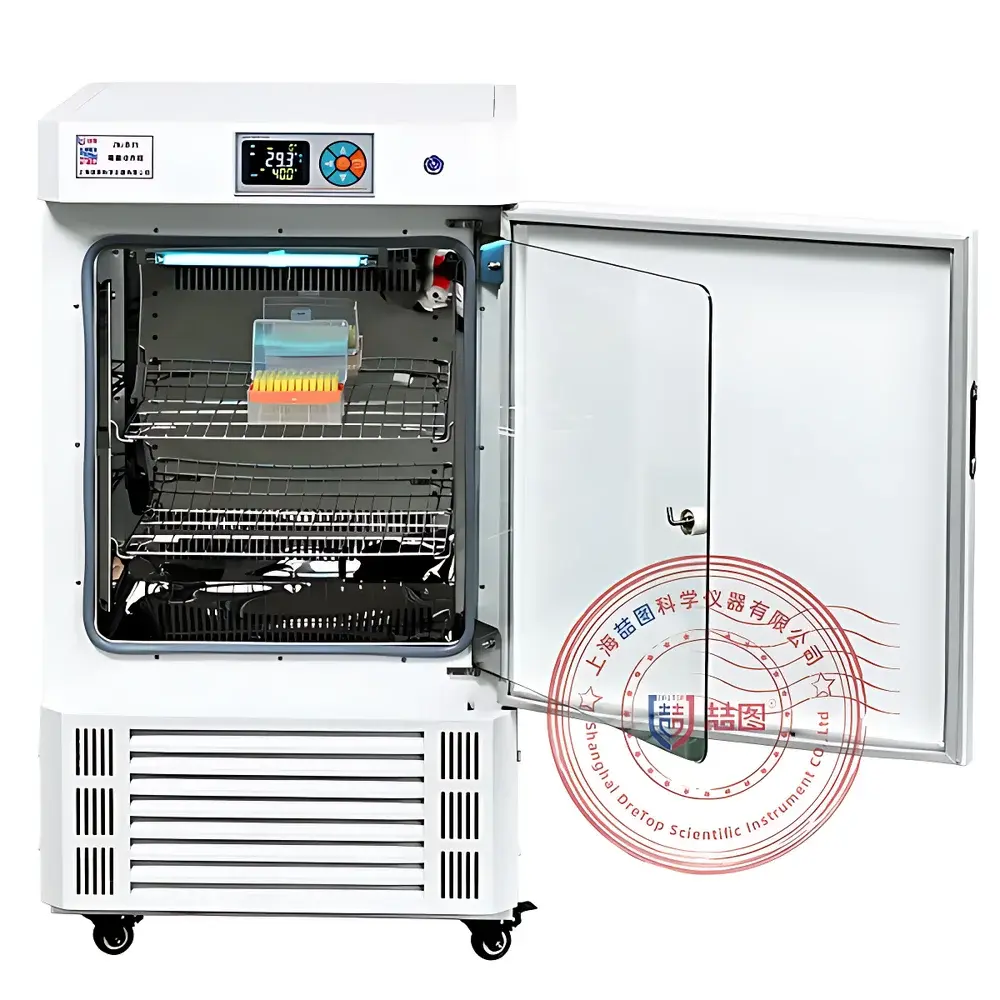
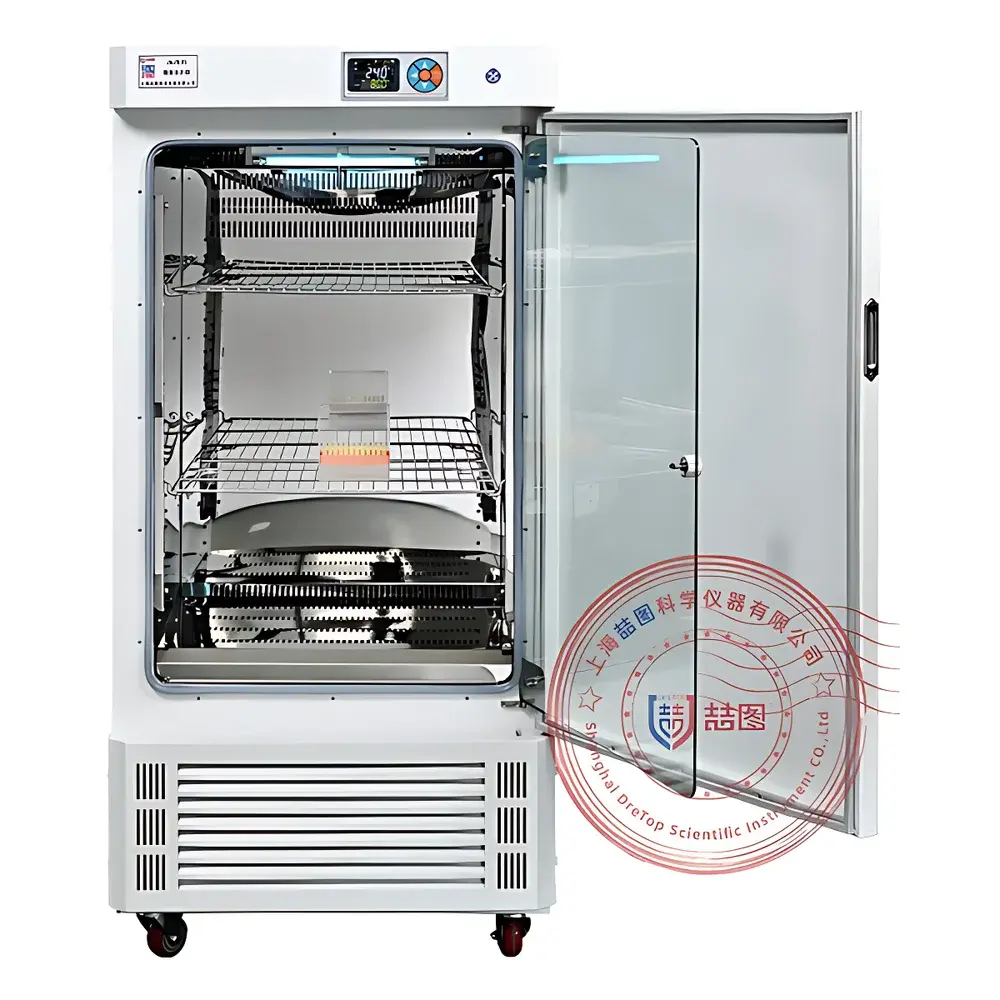
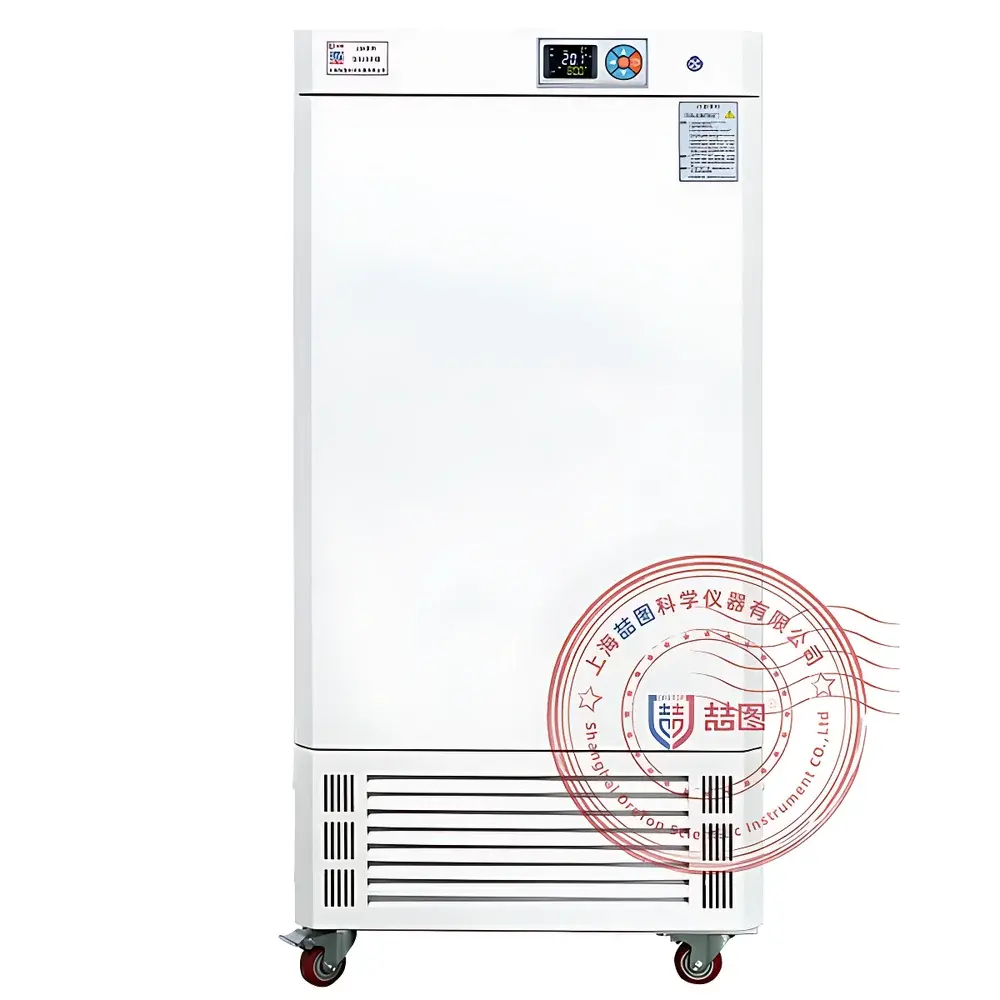
DRETOP ZMJ-100F-I Mold Incubator
| Brand | DRETOP |
|---|---|
| Origin | Shanghai, China |
| Manufacturer Type | Direct Manufacturer |
| Model | ZMJ-100F-I |
| Control Method | Mechanical Button Interface |
| Air Circulation | Forced Convection |
| Temperature Range | 0–65 °C |
| Temperature Fluctuation | ±0.5 °C |
| Temperature Uniformity | ±1 °C (empty chamber, at 25 °C) |
| Humidity Control | Not equipped |
| Capacity | 100 L |
| External Dimensions (W×D×H) | 580 × 610 × 1180 mm |
| Internal Dimensions (W×D×H) | 450 × 380 × 590 mm |
Overview
The DRETOP ZMJ-100F-I Mold Incubator is a precision-engineered, forced-air thermal incubation system designed specifically for the controlled cultivation of filamentous fungi, yeasts, and other eukaryotic microorganisms under reproducible environmental conditions. Unlike general-purpose incubators, this unit is optimized for mold propagation protocols—supporting accelerated fungal growth within 4–6 hours by maintaining stable, uniform temperature profiles across its 100 L working volume. Its operational range spans 0–65 °C, making it suitable not only for standard mycological culture but also for BOD testing, microbial stability assessment, and environmental stress evaluation of electronic components per MIL-STD-810G and IEC 60068-2-10 (fungal resistance testing). The absence of active humidity control reflects its design focus on thermally driven, low-moisture mold development—consistent with ISO 846:2019 methodologies for evaluating material resistance to fungi under defined thermal regimes.
Key Features
- Forced convection airflow system powered by a high-efficiency imported centrifugal blower, ensuring ±1 °C temperature uniformity (measured at 25 °C, empty chamber) per IEC 60068-3-5 calibration practices.
- Dual-door structure: outer magnetic door seal with nano-composite gasket and inner tempered glass door—minimizing thermal leakage while enabling full-field visual monitoring without compromising chamber integrity.
- Mirror-finish stainless steel interior (AISI 304), radius-cornered construction, and adjustable stainless steel shelving facilitate GMP-compliant cleaning and reduce microbial retention points.
- Integrated UV-C germicidal lamp (254 nm) mounted in the ceiling plenum, operating during idle cycles to decontaminate recirculated air—reducing airborne bioburden and supporting aseptic workflow continuity.
- Microprocessor-based P.I.D. temperature controller with 0.1 °C resolution, programmable timer (1–9999 min), and auto-recovery function following power interruption—retaining setpoints and operational state per GLP data integrity requirements.
- Modular refrigeration architecture featuring an international-brand hermetic compressor, optimized evaporator-condenser geometry, and non-energy-intensive defrost logic—ensuring long-term thermal stability and compressor longevity.
- Four-point leveling system with dual-mode mobility: swivel casters with locking brakes + independent adjustable feet—enabling precise horizontal alignment on laboratory-grade anti-vibration surfaces.
Sample Compatibility & Compliance
The ZMJ-100F-I accommodates standard microbiological vessels including Petri dishes (up to 150 mm diameter), slant tubes, multi-well plates, and Erlenmeyer flasks (up to 1 L). Its 100 L chamber supports up to three adjustable shelves (standard configuration), each rated for 15 kg static load. The unit complies with electrical safety standards IEC 61010-1 and GB 4793.1–2019. While not certified for ISO 14644 cleanroom integration, its UV sterilization cycle and smooth internal surfaces meet baseline requirements for Class II biosafety cabinet adjunct use. It is routinely deployed in academic microbiology labs, pharmaceutical QC units conducting USP antimicrobial effectiveness testing, and defense R&D facilities performing MIL-STD-810G fungal resistance qualification.
Software & Data Management
The base model operates via mechanical push-button interface with LED display—intentionally minimizing firmware complexity to maximize operational reliability in regulated environments where software validation burdens are prohibitive. Optional RS485 serial interface enables connection to external SCADA or LIMS platforms (e.g., LabWare, Thermo Fisher SampleManager) for real-time temperature logging, alarm event capture, and CSV export of time-stamped thermal profiles. When paired with optional 4.3″ color touchscreen controller (ZMJ-100-II upgrade path), users gain access to 30-segment programmable ramp-soak sequences, audit-trail-enabled parameter change logs, and 21 CFR Part 11–compliant electronic signatures—fully traceable through device-generated .CSV or .PDF reports.
Applications
- Routine cultivation of Aspergillus niger, Penicillium chrysogenum, and Candida albicans for industrial enzyme production and antibiotic screening.
- BOD₅ analysis per APHA Standard Methods 5210B, where consistent 20 °C incubation is required for biochemical oxygen demand quantification.
- Fungal resistance validation of polymer coatings, circuit board laminates, and military-grade enclosures per MIL-STD-810G Method 508.6.
- Strain preservation and subculturing of fungal stock collections under low-humidity, thermally stabilized conditions to minimize genetic drift.
- Environmental simulation studies assessing thermal degradation kinetics of biodegradable packaging materials under accelerated aging protocols (ASTM D5885).
FAQ
Does the ZMJ-100F-I support humidity control?
No. This model is a dry-heat mold incubator and does not include humidification hardware or RH sensing. For combined temp/RH applications, consider the ZMJ-100-II series.
Is UV sterilization continuous or timed?
UV operation is manually initiated or scheduled via optional controller; default factory setting disables automatic cycling to preserve lamp lifetime.
Can the unit be validated for IQ/OQ/PQ protocols?
Yes—its mechanical controls, documented thermal performance (±0.5 °C fluctuation, ±1 °C uniformity), and traceable calibration points support full GxP qualification when executed with third-party-certified probes (e.g., Fluke 1524 with NIST-traceable certificate).
What safety protections prevent overheating or compressor failure?
Independent mechanical overtemperature cutoff (adjustable limit switch), compressor delay-on/delay-off logic, and automatic thermal shutdown at 70 °C ensure fail-safe operation per IEC 60335-1 Annex BB.
Are calibration certificates included with shipment?
Factory calibration report is provided; NIST-traceable certification requires separate purchase and on-site verification by accredited metrology service.





