
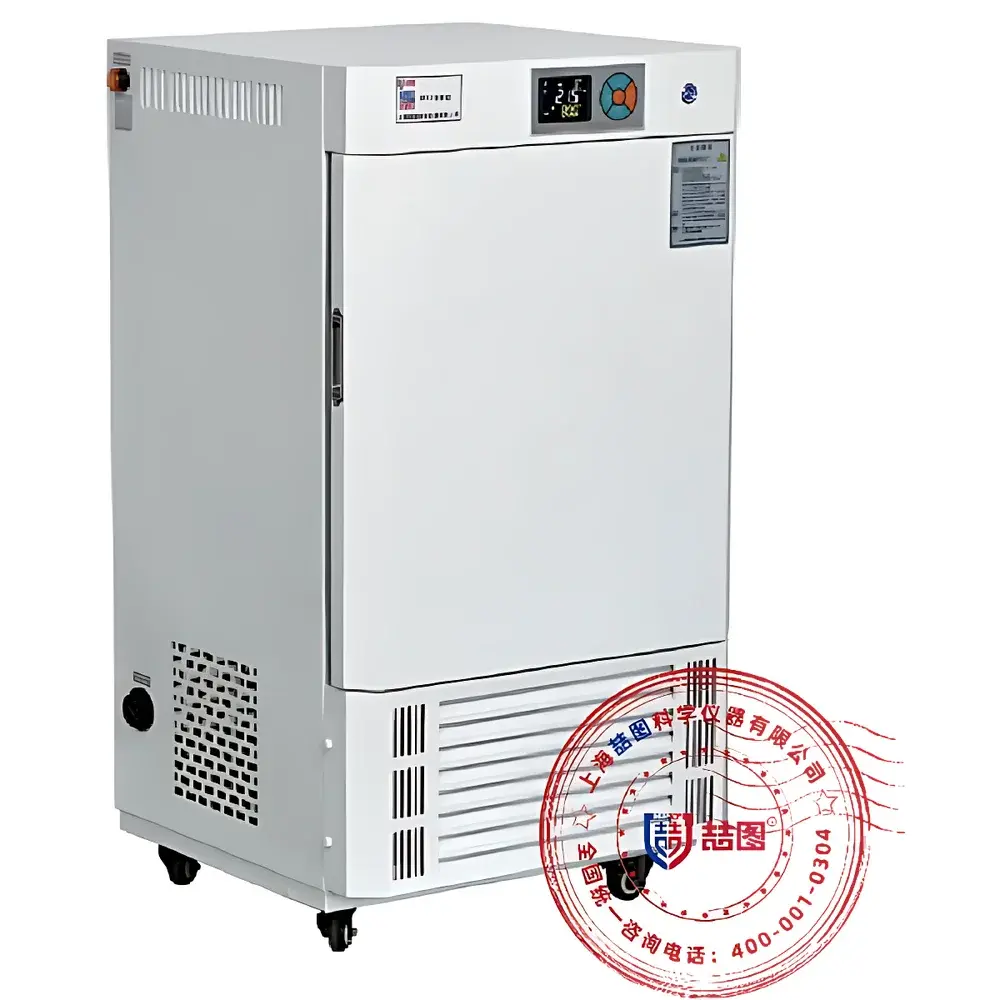
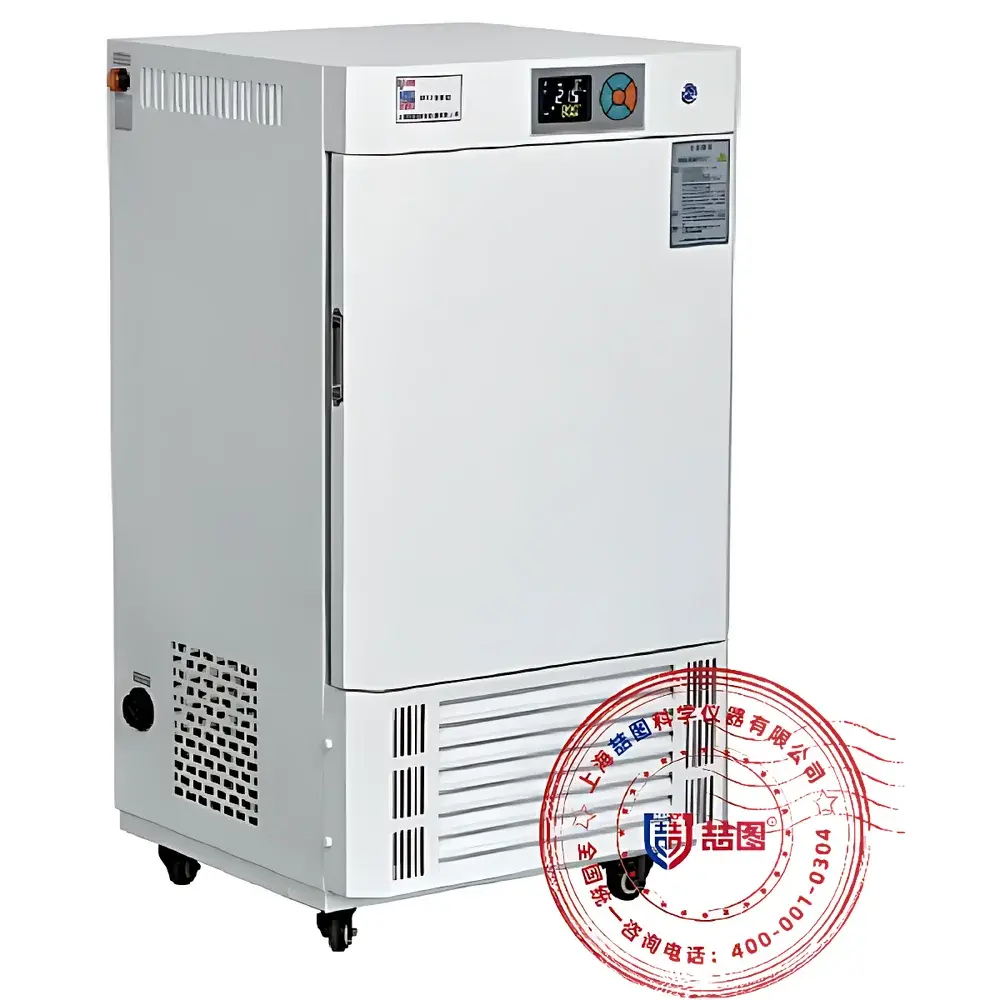
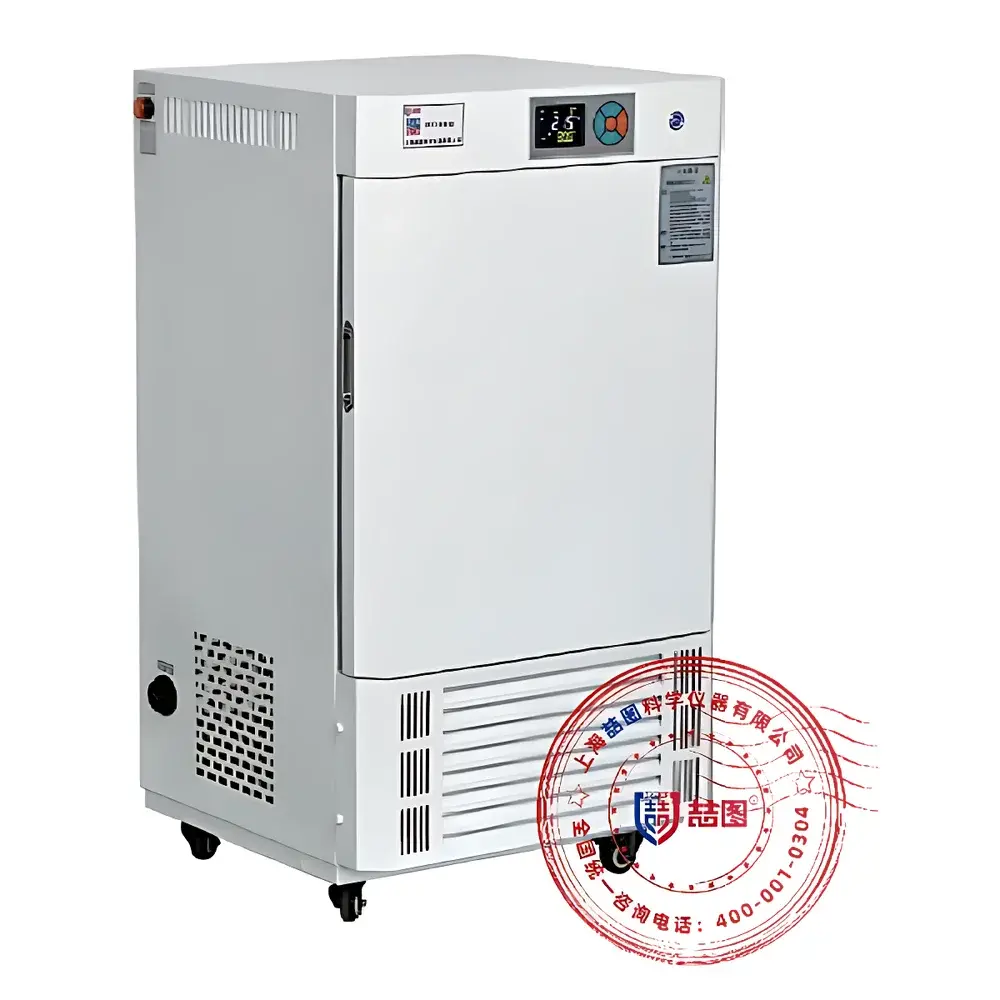
DRETOP BD6-100 Integrated BOD Incubation and Analysis System
| Brand | DRETOP |
|---|---|
| Origin | Shanghai, China |
| Manufacturer Type | Direct Manufacturer |
| Product Category | Domestic |
| Model | BD6-100 |
| Instrument Type | Laboratory BOD Analyzer |
| Measurement Principle | Manometric (Pressure-Difference) Method |
| Measurement Range | 0–4000 mg/L |
| Detection Limit | 1 mg/L |
| Accuracy | ±8% |
| Incubation Temperature | 20 °C ±1 °C |
| Temperature Control Range | 0–65 °C |
| Temperature Uniformity | ±0.5 °C |
| Temperature Resolution | 0.1 °C |
| Sample Capacity | 6 independent channels |
| BOD Vial Volume | 580 mL |
| Data Storage Duration | 10 years |
| Battery Life | ≥2 years |
| Power Supply | AC 220 V, 50 Hz |
| Dimensions (W×D×H) | 480 × 390 × 780 mm |
| Shelf Configuration | 3 adjustable stainless-steel shelves |
| Optional Accessories | RS485 interface, 25 mm test port, USB port |
Overview
The DRETOP BD6-100 Integrated BOD Incubation and Analysis System is a purpose-engineered laboratory instrument that unifies biochemical oxygen demand (BOD) measurement and precision temperature-controlled incubation in a single, compact platform. It operates on the manometric (pressure-difference) principle—measuring the consumption of dissolved oxygen by microorganisms in sealed BOD bottles via differential pressure transduction across a gas-permeable membrane. This mercury-free methodology eliminates hazardous material handling while ensuring long-term sensor stability, low drift, and minimal maintenance. Designed to meet standard regulatory requirements for wastewater, surface water, and effluent testing—including ASTM D5210, ISO 5815-1:2019, and APHA Standard Methods 5210B—the BD6-100 delivers traceable, reproducible BOD5 and extended BOD results over configurable incubation periods from 1 to 30 days. Its integrated incubator chamber maintains a stable 20 °C ±1 °C environment—aligned with the internationally mandated BOD test temperature—while supporting auxiliary microbiological applications such as bacterial culture, fungal propagation, seed germination, and algal growth studies.
Key Features
- Simultaneous operation of up to six independent BOD measurement channels, each with dedicated pressure sensing and real-time data acquisition—enabling staggered start times and asynchronous sample processing without cross-channel interference.
- Microprocessor-based incubator control with 30-segment programmable temperature profiles, enabling multi-step thermal protocols beyond standard BOD5 (e.g., nitrification inhibition studies or temperature-acclimation experiments).
- Optimized forced-air circulation system with secondary airflow engineering ensures uniform temperature distribution (±0.5 °C) and rapid thermal recovery after door opening—critical for maintaining aerobic microbial activity consistency across all vials.
- Corrosion-resistant mirror-finish stainless-steel interior chamber and electrostatically coated steel exterior provide durability, ease of decontamination, and compliance with GLP laboratory hygiene standards.
- Intelligent power management including brownout recovery, auto-resume after interruption, and compressor protection logic (start delay, off-cycle interval) extends service life and supports uninterrupted long-duration assays.
- Touchscreen BOD interface with direct mg/L readout, automatic curve generation (oxygen depletion vs. time), and on-device graphical visualization—eliminating need for external software during routine analysis.
Sample Compatibility & Compliance
The BD6-100 accommodates standard 580 mL BOD bottles conforming to EPA/ISO dimensional specifications and accepts both seeded and unseeded samples—including raw sewage, treated effluents, industrial discharges, potable water, and surface runoff. Its pressure-difference detection mechanism is insensitive to sample turbidity, color, or suspended solids, eliminating pre-filtration requirements common in optical or electrochemical methods. The system meets functional equivalency criteria outlined in US EPA Method 405.1 and supports audit-ready documentation for ISO/IEC 17025-accredited laboratories. All firmware and data handling routines are structured to support ALCOA+ data integrity principles; optional RS485 connectivity enables integration into LIMS environments compliant with FDA 21 CFR Part 11 when paired with validated third-party middleware.
Software & Data Management
Onboard firmware stores full-resolution time-series pressure and temperature logs for each channel for up to 10 years, with timestamped metadata (operator ID, sample ID, start/stop time, calibration status). Data export is supported via USB flash drive in CSV format for post-processing in Excel or statistical packages (e.g., R, Python pandas). Optional Bluetooth-enabled models (BD6-100E variant) support wireless transmission of summary reports and trend graphs to mobile devices or networked PCs. All stored datasets include cryptographic checksums to verify integrity; no data overwrite occurs unless explicitly confirmed by user authentication. Internal non-volatile memory retains configuration parameters and calibration coefficients during power loss.
Applications
- Regulatory BOD5 and BODu determination for NPDES permit compliance and wastewater treatment plant performance monitoring.
- Biodegradability screening of industrial chemicals per OECD 301 series guidelines.
- Quality control of drinking water sources and distribution systems under WHO and national drinking water standards.
- Environmental impact assessment of landfill leachate, agricultural runoff, and aquaculture discharge.
- Research-grade microbial respiration kinetics in soil/water microcosms and biofilm reactor studies.
- Teaching laboratories requiring robust, low-maintenance instrumentation for undergraduate environmental science curricula.
FAQ
What BOD standard methods does the BD6-100 support?
It complies with the operational requirements of ASTM D5210, ISO 5815-1:2019, and APHA Standard Methods 5210B for manometric BOD measurement.
Can the incubator be used independently of BOD analysis?
Yes—the temperature chamber functions as a standalone precision incubator (0–65 °C, ±0.5 °C uniformity) suitable for microbiological culture, plant tissue growth, or enzyme activity assays.
Is dilution required for high-BOD samples?
No—its 0–4000 mg/L range allows direct measurement without manual dilution; users may select sub-ranges (e.g., 0–200 mg/L, 0–1000 mg/L) to optimize resolution for low- or high-concentration samples.
How is data traceability ensured for regulatory audits?
Each measurement includes embedded timestamps, operator login ID, calibration verification flags, and immutable storage with CRC-32 integrity checks—supporting GLP/GMP and ISO/IEC 17025 documentation workflows.
What maintenance is required for long-term reliability?
Annual verification of pressure sensor linearity and incubator temperature uniformity is recommended; no consumables (e.g., electrodes, membranes, or reagents) are required due to its solid-state, mercury-free design.
Related Products







