
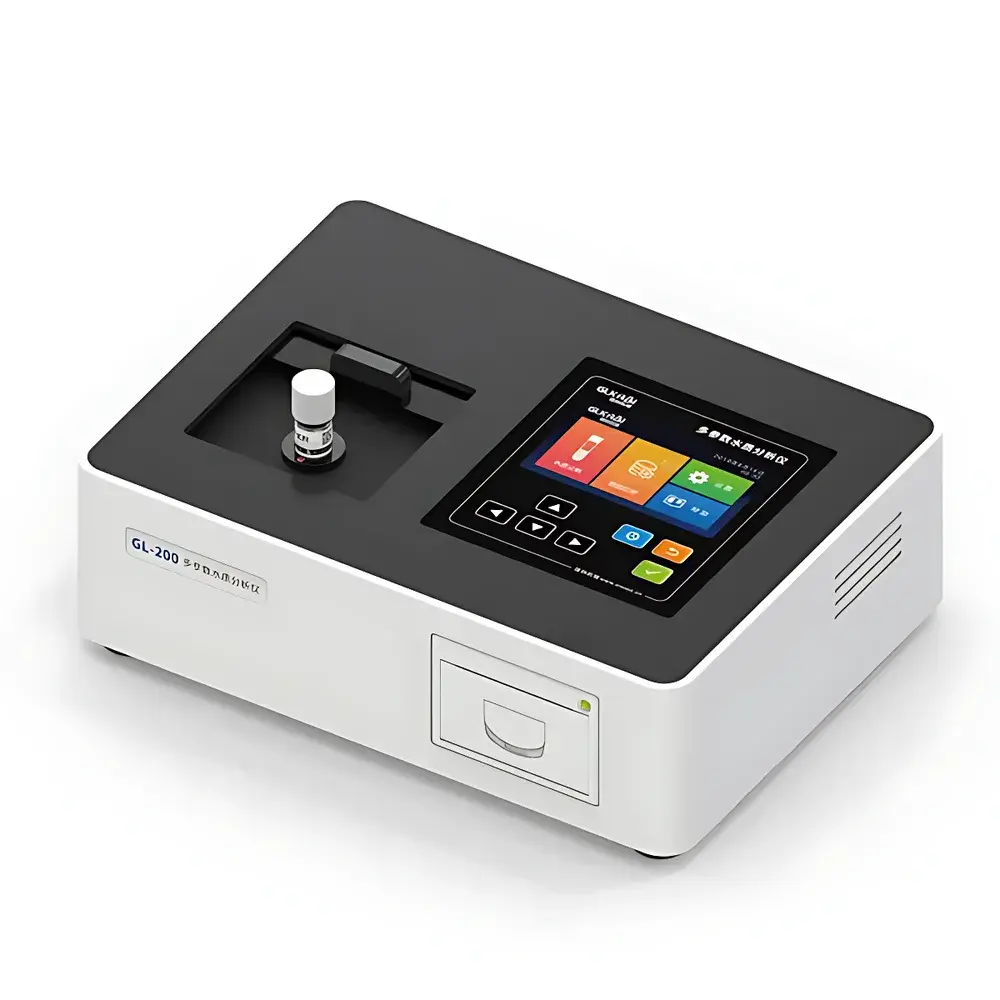
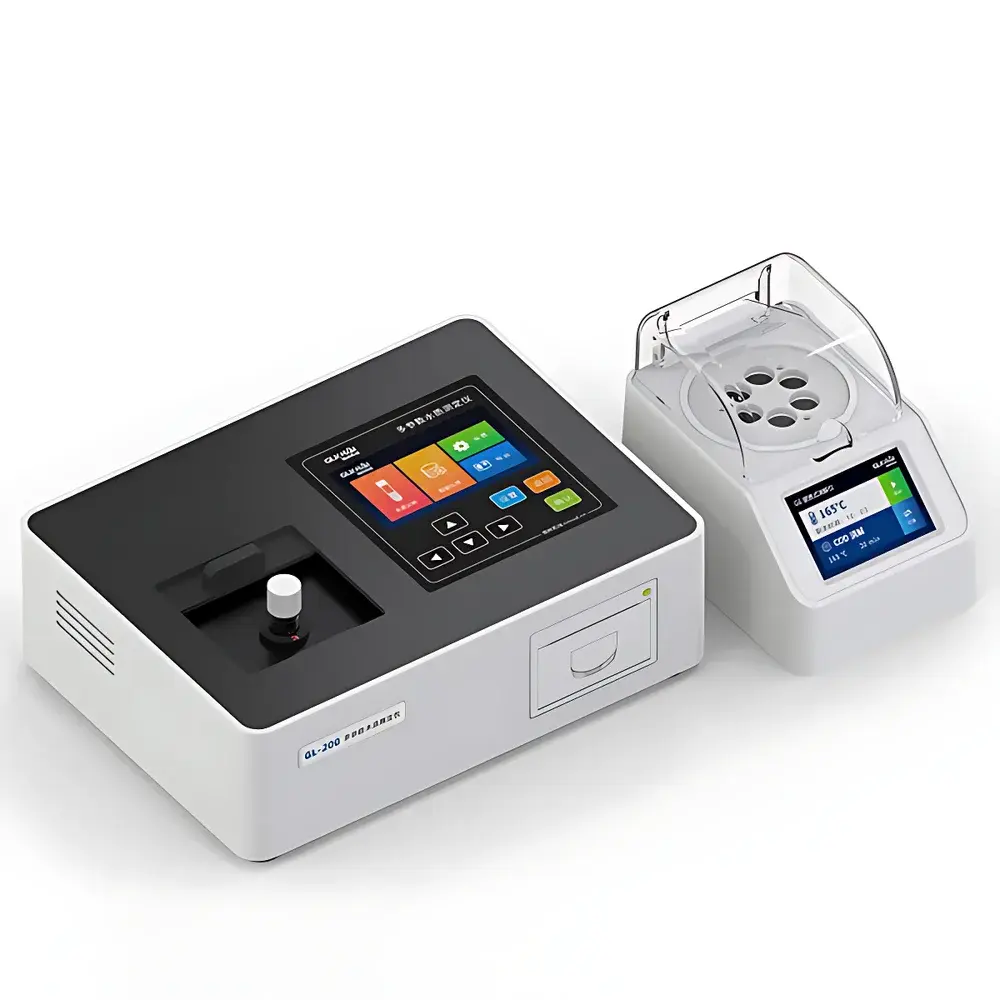
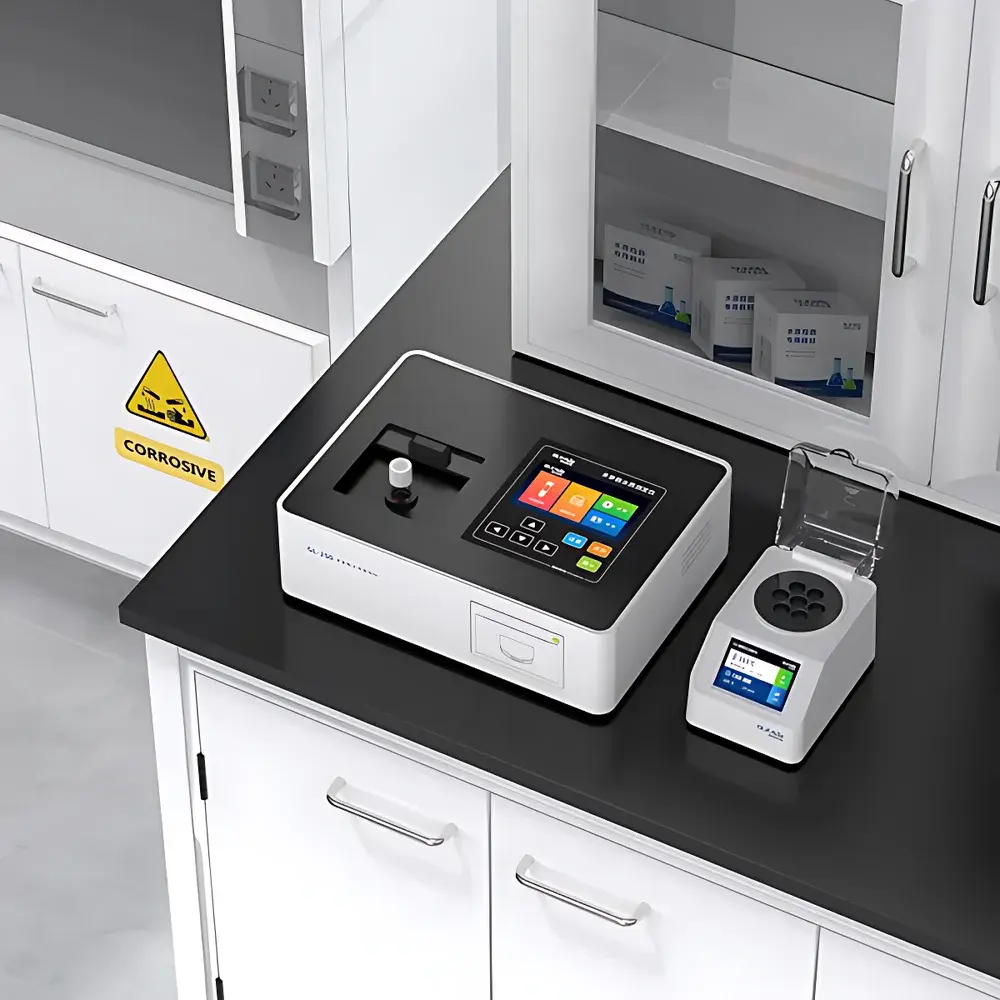
Greencarey GL-200A COD Rapid Analyzer
| Brand | Greencarey Instruments |
|---|---|
| Origin | Shandong, China |
| Manufacturer Type | Direct Manufacturer |
| Product Type | Laboratory-Grade COD Analyzer |
| Model | GL-200A |
| Detection Principle | Rapid Digestion Method (HJ/T 399–2007) |
| Wavelength Accuracy | ≤±0.001 Abs/20 min (Optical Source Lifetime: 100,000 hours) |
| Measurement Range | 0–15,000 mg/L (segmented) |
| Accuracy | ≤±5% (COD >50 mg/L) |
| Repeatability | ≤±3% |
| LOD | 5 mg/L |
| Digestion Temp/Time | 165 °C / 20 min |
| Total Cycle Time | 25 min/batch |
| Sample Throughput | 1 batch per 25 min |
| Chloride Interference Tolerance | up to 2,000 mg/L |
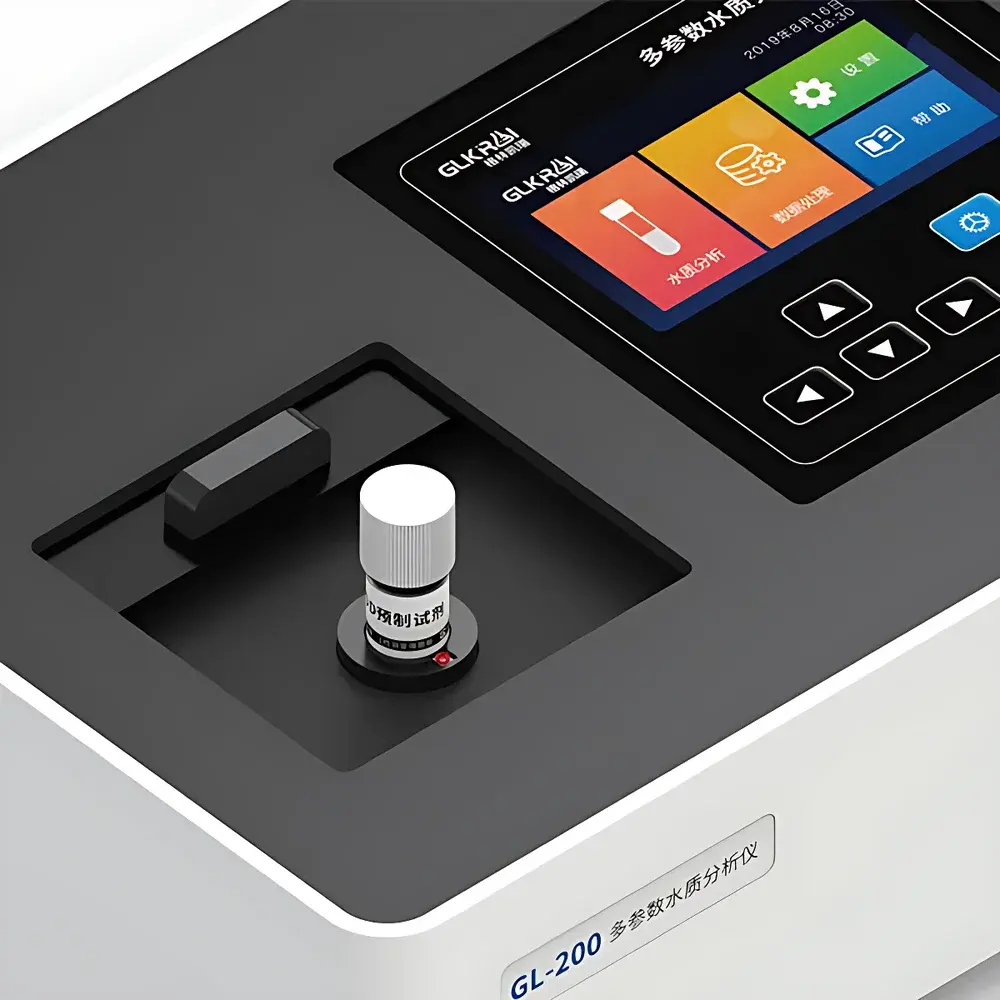
| Cuvette Format | 16 mm round digestion tube (no post-digestion transfer required) |
| Display | 4.3″ color TFT LCD |
| Data Output | USB flash drive export & built-in thermal printer |
| Optical System | Solid-state cold light source |
| Housing Material | ABS (chemical-resistant, heat-stable, impact-durable) |
| Power Supply | DC 12 V, 5 A |
| Operating Environment | 5–40 °C, ≤85% RH (non-condensing) |
| Dimensions | 300 × 222 × 88 mm |
| Weight | ~2.8 kg |
| Compliance | HJ/T 399–2007 (COD), HJ 535–2009 (NH₃-N), GB/T 11893–1989 (TP), HJ 636–2012 (TN), and 18+ additional water quality parameters with standardized photometric methods |
Overview
The Greencarey GL-200A COD Rapid Analyzer is a laboratory-grade photometric instrument engineered for precise, reproducible quantification of Chemical Oxygen Demand (COD) in aqueous samples using the rapid digestion method specified in China’s national standard HJ/T 399–2007. Unlike conventional open-reflux or titrimetric approaches, the GL-200A employs sealed-tube digestion at 165 °C for 20 minutes, followed by direct photometric measurement in the same 16 mm borosilicate digestion tube—eliminating sample transfer errors and minimizing operator exposure to hazardous reagents. The optical system integrates a solid-state cold light source with ≥100,000-hour lifetime and wavelength stability of ≤±0.001 Abs over 20 minutes, ensuring long-term calibration integrity. Designed for routine compliance monitoring and research-grade water analysis, the instrument delivers traceable results across a wide dynamic range (0–15,000 mg/L COD, segmented), with detection capability down to 5 mg/L and chloride tolerance up to 2,000 mg/L—critical for industrial wastewater matrices.
Key Features
- Seamless integrated workflow: Digestion and measurement occur in the same 16 mm tube—no pipetting between steps, reducing contamination risk and inter-operator variability.
- Compliance-certified optical architecture: Solid-state cold light source meets HJ/T 399–2007 photometric stability requirements (≤±0.003 Abs/20 min) and supports >100,000-hour operational life without lamp replacement.
- Intuitive human interface: 4.3-inch high-resolution color TFT display with guided, icon-driven operation—enabling personnel with minimal training to execute multi-step protocols consistently.
- Glos Water Quality Intelligent Detection System: Embedded firmware enables method selection, auto-zeroing, calibration curve management, and real-time QC flagging (e.g., absorbance drift, out-of-range signals).
- Regulatory-ready data handling: Built-in thermal printer supports timestamped, GLP-compliant hardcopy reports (single or batch mode); USB port allows encrypted export of raw absorbance values, calibration logs, and user audit trails.
- Robust mechanical design: ABS housing rated for chemical resistance (including concentrated sulfuric acid vapors), thermal stability (up to 60 °C surface temp during digestion), and mechanical shock absorption per IEC 60068-2-64.
- Precision fluidics: Supplied with calibrated Biohit pipettes (ISO 8655 compliant) and factory-preloaded, lot-certified reagent kits—eliminating manual sulfuric acid dilution and volumetric errors inherent in wet chemistry prep.
Sample Compatibility & Compliance
The GL-200A is validated for use with raw influent, secondary effluent, industrial process streams, and natural waters containing suspended solids, organics, and moderate halide loads. Its 2,000 mg/L chloride interference tolerance accommodates common discharge sources including electroplating, textile dyeing, and petrochemical wastewaters. All core measurements—including COD, ammonia nitrogen (HJ 535–2009), total phosphorus (GB/T 11893–1989), and total nitrogen (HJ 636–2012)—adhere to nationally accredited methodologies. The instrument’s firmware enforces method-specific digestion times, temperature profiles, and wavelength selection, ensuring procedural fidelity during internal audits or third-party verification. While not FDA 21 CFR Part 11–certified out-of-the-box, its audit trail functionality (user ID, timestamp, method version, raw absorbance) aligns with GLP/GMP documentation expectations for environmental laboratories operating under CNAS or CMA accreditation frameworks.
Software & Data Management
The Glos intelligent detection system operates as a deterministic, non-networked embedded OS—prioritizing data integrity over connectivity. It stores up to 10,000 test records locally with full metadata: sample ID, operator code, digestion start time, measured absorbance at 620 nm (COD), calibration date, and QC pass/fail status. USB export generates CSV files compatible with LIMS platforms (e.g., LabWare, STARLIMS) and statistical packages (Minitab, JMP). Each exported file includes digital signatures verifying unaltered instrument firmware version and calibration certificate expiry. No cloud synchronization or remote access capabilities are implemented—ensuring data sovereignty and eliminating cybersecurity attack vectors common in IoT-enabled analyzers.
Applications
The GL-200A serves as a primary COD quantification tool in municipal wastewater treatment plants for daily process control and discharge compliance reporting. It is routinely deployed in R&D labs evaluating biodegradability of novel surfactants (OECD 301 series), in pharmaceutical manufacturing for cleaning validation (residual organic load assessment), and in food processing facilities monitoring BOD/COD ratios in rinse waters. Its multi-parameter expansion capability (18+ analytes) supports cross-contamination screening in semiconductor fab ultrapure water loops, nutrient profiling in aquaculture systems, and heavy metal speciation (Cr⁶⁺, Ni²⁺, Cu²⁺) in electroplating baths—always referencing ISO, ASTM, or Chinese national standards where applicable.
FAQ
Does the GL-200A require annual recalibration by an external service provider?
No. The instrument features factory-traceable optical calibration stored in non-volatile memory; users perform daily zero checks with deionized water and periodic verification using NIST-traceable COD reference standards (e.g., potassium hydrogen phthalate solution). Full recalibration is only required after physical impact or exposure to temperatures exceeding 60 °C.
Can the GL-200A be used for regulatory submission under China’s MEP requirements?
Yes—when operated strictly per HJ/T 399–2007 protocol (including certified reagents, documented digestion time/temp, and trained personnel), data generated meets the evidentiary threshold for discharge permit reporting to provincial生态环境 departments.
Is method validation documentation available for international standards such as ISO 6060?
The GL-200A is optimized for HJ/T 399–2007. While its optical performance (wavelength accuracy, stray light rejection) satisfies ISO 6060’s instrumental criteria, formal cross-validation against ISO 6060 requires lab-specific verification per ISO/IEC 17025 clause 7.2.3.
What maintenance intervals are recommended for the thermal printer and digestion block?
Thermal print head cleaning every 500 prints; digestion block surface inspection and acid-residue wipe-down after each batch; no scheduled lubrication or part replacement required within first 5 years of operation under normal lab conditions.







