
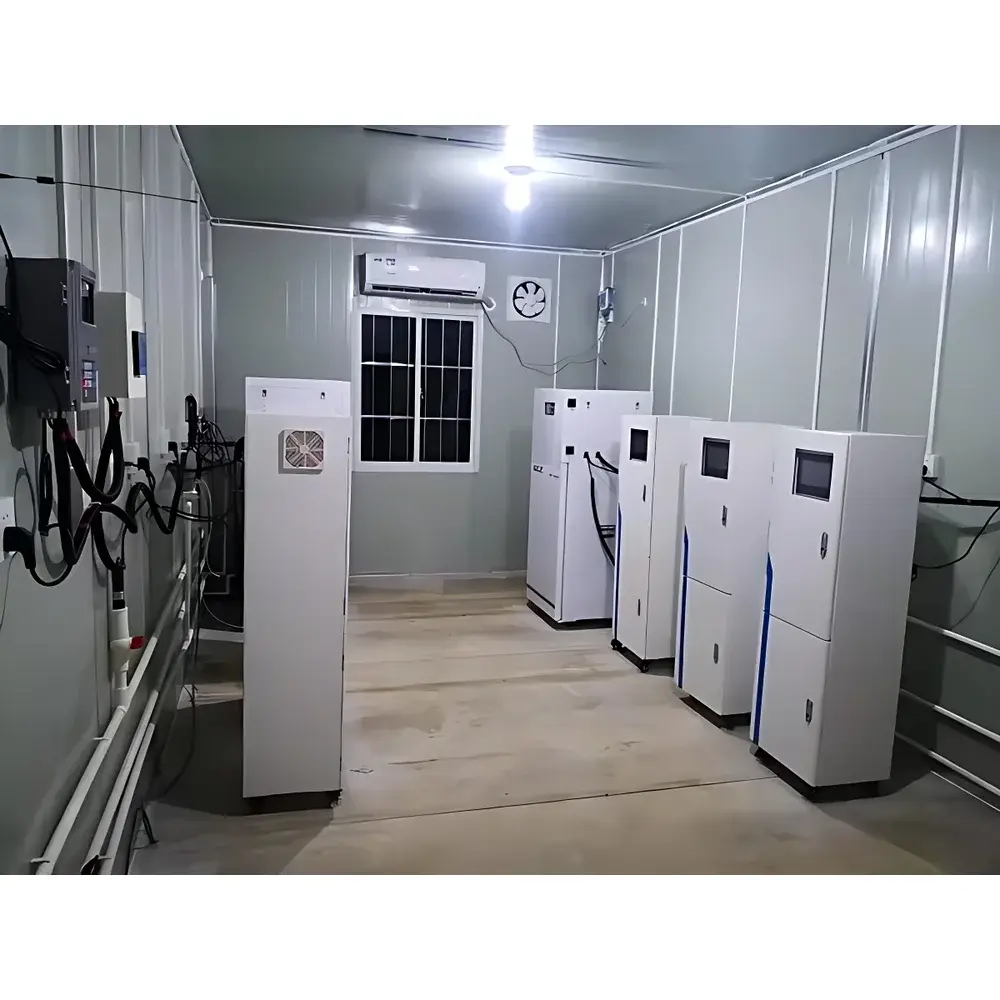
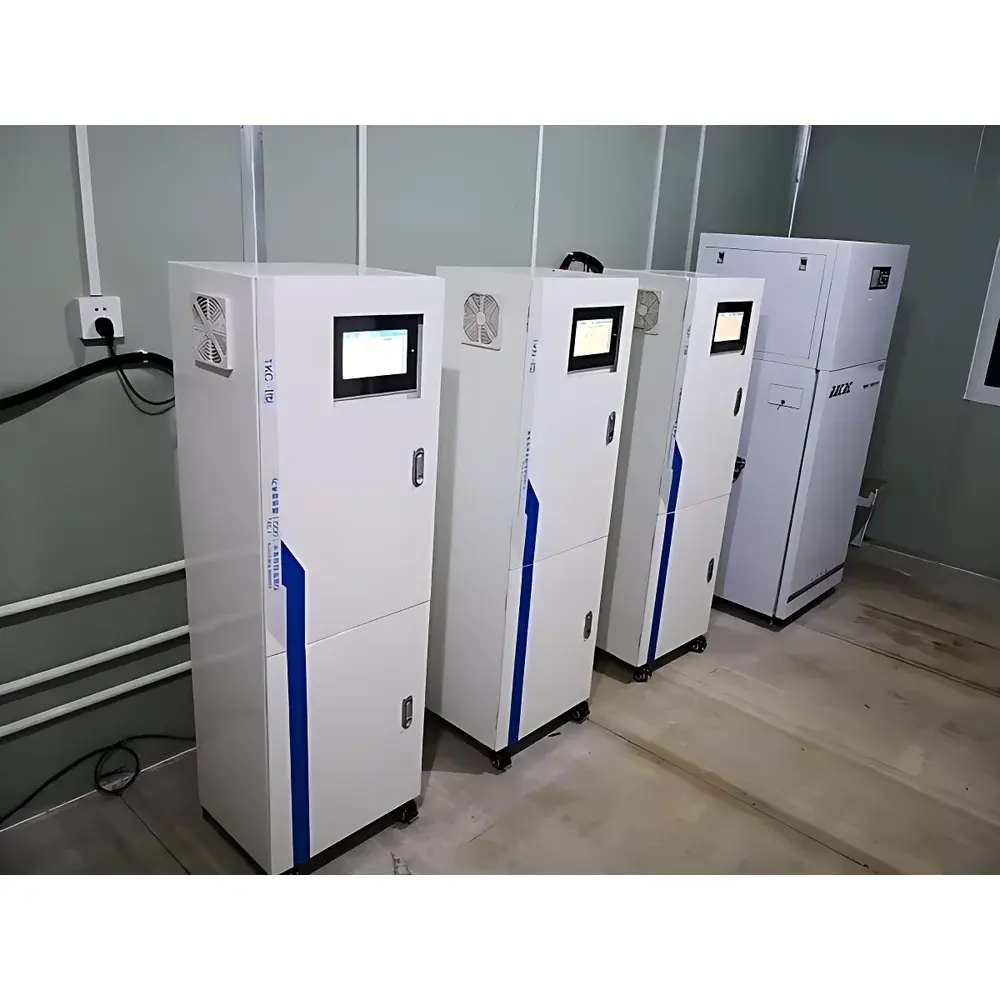
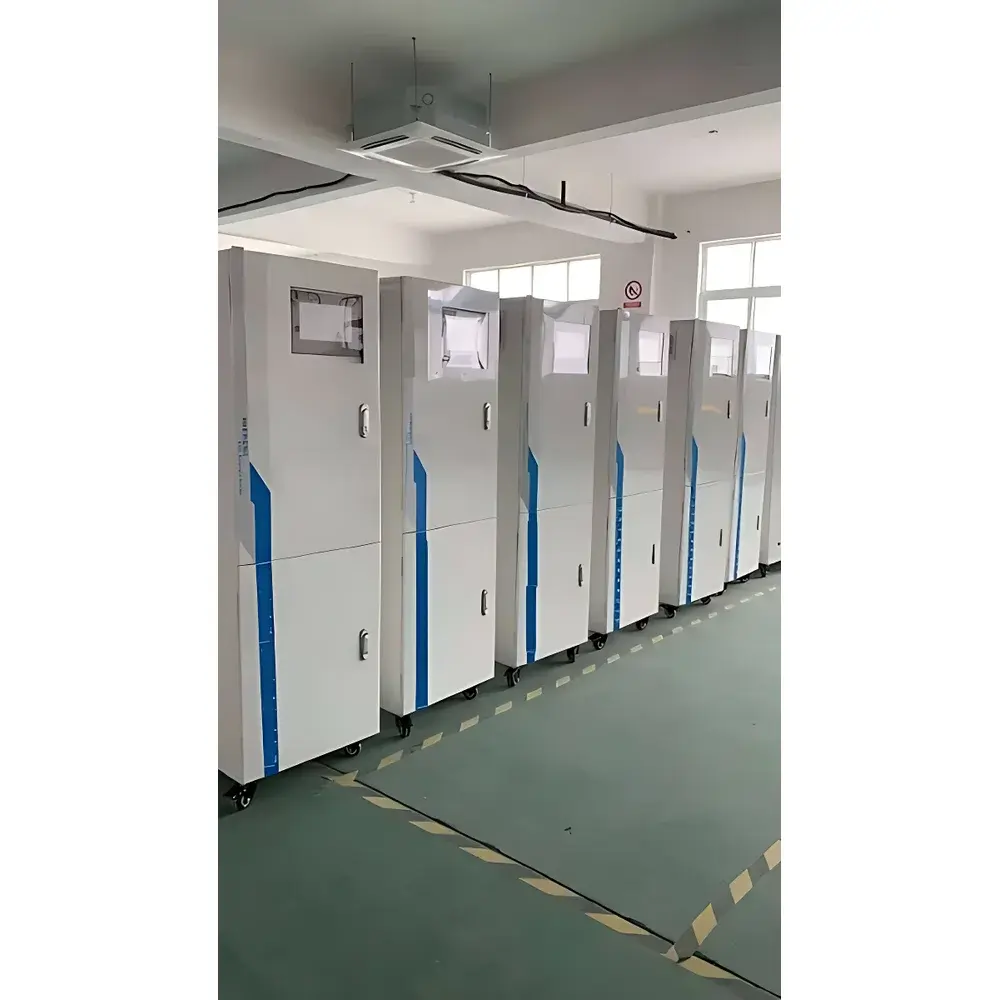
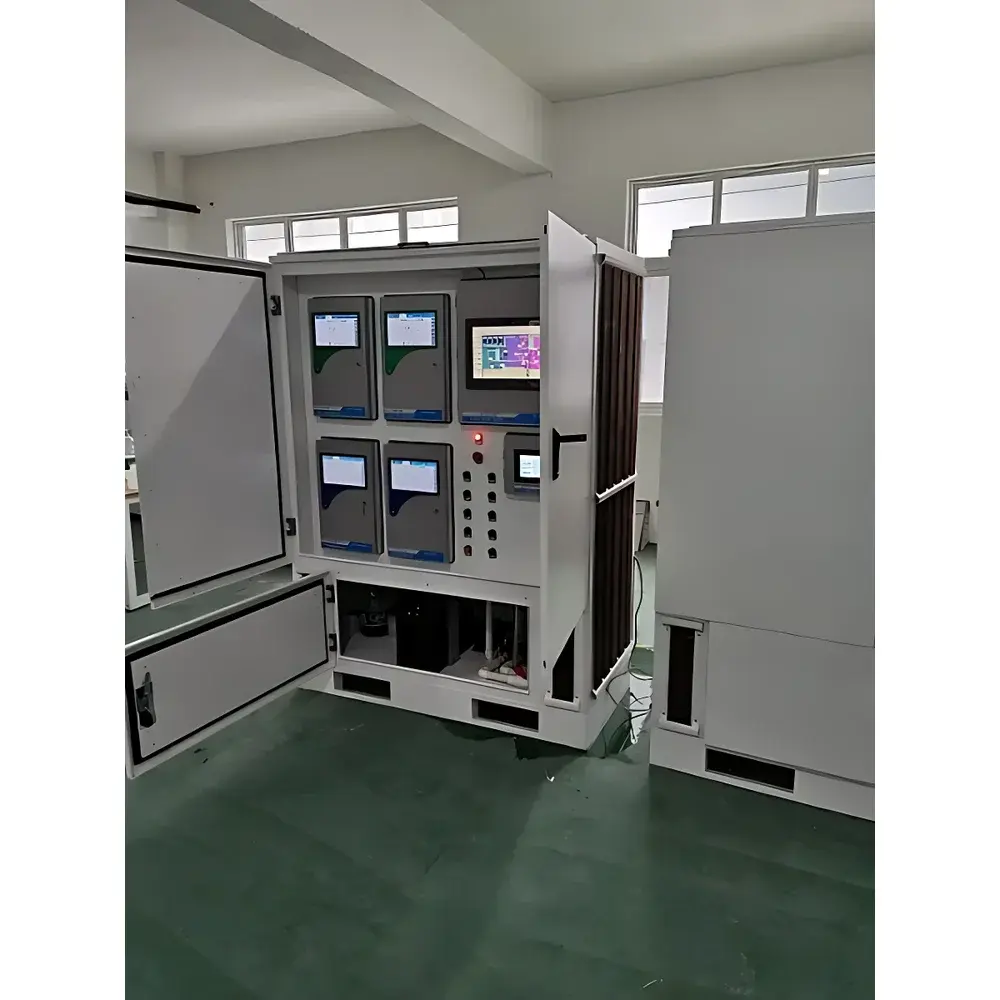
Loobo KS2202 Online CODCr Analyzer for Municipal Wastewater Treatment Plants
| Brand | Loobo |
|---|---|
| Origin | Shandong, China |
| Manufacturer Type | Authorized Distributor |
| Product Category | Domestic |
| Model | KS2202 |
| Price | USD 2,800 (FOB Qingdao) |
| Measurement Principle | Potassium Permanganate Oxidation with ORP Endpoint Detection |
| Instrument Type | Online Continuous Analyzer |
| Range | 10–5000 mg/L COD<sub>Cr</sub> |
| Repeatability | ≤3% RSD |
| Accuracy | ±5% of reading (≥100 mg/L) |
| LOD | 15 mg/L |
| Resolution | 1 mg/L |
| Cycle Time | 15 min per analysis |
| Compliance | HJ 377–2019, GB 11914–1989 |
| Auto-Standard Verification | Yes |
| Dual Waste Discharge | Cleaning Solution & Spent Reagent Separately Collected |
| Chloride Tolerance | Up to 35,000 mg/L Cl⁻ (with HgSO₄ masking) |
Overview
The Loobo KS2202 Online CODCr Analyzer is a fully automated, continuous-monitoring instrument engineered for real-time quantification of chemical oxygen demand (COD) in municipal wastewater treatment plants, surface water bodies (rivers, reservoirs), sewer networks, and industrial discharge points. It operates on the standardized dichromate oxidation method—per HJ 377–2019 and GB 11914–1989—in which aqueous samples are digested under high-temperature (165 °C), high-pressure conditions in the presence of excess potassium dichromate (K2Cr2O7), concentrated sulfuric acid (H2SO4), and silver sulfate (Ag2SO4) as a catalyst. During digestion, Cr(VI) is reduced to Cr(III), inducing a measurable colorimetric shift proportional to the oxidizable organic load. The analyzer employs photometric detection at 600 nm to quantify the extent of reduction, delivering traceable, laboratory-grade CODCr values without manual intervention. Unlike permanganate-based systems (which measure the permanganate index, or CODMn), this instrument specifically targets the dichromate-based CODCr—the regulatory standard for industrial and municipal effluent compliance in China and widely referenced in international wastewater management frameworks.
Key Features
- High-fidelity optical detection system with dual-beam compensation, minimizing drift from lamp aging or cuvette fouling.
- Integrated chloride interference mitigation: mercury sulfate (HgSO4) reagent dosing module enables accurate CODCr measurement in saline matrices up to 35,000 mg/L Cl⁻—critical for coastal treatment plants and mixed industrial-municipal influents.
- Modular selection valve architecture with ceramic rotor design ensures >500,000 actuation cycles and simplified field maintenance; reagent lines are accessible without disassembly.
- 7-inch capacitive touchscreen interface with multilingual OS (English, Chinese, Spanish), intuitive workflow navigation, and context-sensitive help prompts—designed for operation by plant technicians with minimal training.
- Onboard data logging capacity supports ≥5 years of 1-hour interval measurements (43,800+ records) with timestamped audit trail, compliant with GLP data integrity requirements.
- Automated leak detection via conductive sensor array in reagent manifold; triggers audible/visual alarm and halts assay sequence upon leakage confirmation.
- Optical liquid-level sensing for precise 100–500 µL volumetric dispensing—eliminating mechanical piston wear and ensuring long-term quantitative reproducibility.
- Independent waste handling: dedicated pathways for spent digestate and cleaning solution prevent cross-contamination and simplify hazardous waste segregation per local environmental regulations.
Sample Compatibility & Compliance
The KS2202 accommodates raw influent, secondary effluent, tertiary treated water, and industrial process streams with suspended solids ≤100 mg/L (pre-filtration recommended for higher loads). Its digestion protocol achieves ≥95% oxidation efficiency for aliphatic hydrocarbons, aromatics, and low-molecular-weight carboxylic acids—consistent with ASTM D1252–12 and ISO 6060. All calibration, verification, and operational logs adhere to ALCOA+ principles (Attributable, Legible, Contemporaneous, Original, Accurate, Complete, Consistent, Enduring, Available). The analyzer supports 21 CFR Part 11-compliant electronic signatures when paired with Loobo’s optional LIMS integration module. It meets CE marking requirements for electromagnetic compatibility (EN 61326–1) and environmental operating conditions (IEC 60721–3–3, Class 3K3: 5–28 °C, RH ≤90% non-condensing).
Software & Data Management
Firmware v3.2 includes embedded web server (HTTP/HTTPS) enabling remote configuration, real-time status monitoring, and historical trend visualization via any standards-compliant browser. Data export formats include CSV, PDF reports (with digital signature), and Modbus TCP for SCADA integration. Scheduled auto-verification against NIST-traceable KHP standards occurs at user-defined intervals (1–99 days); successful verification triggers automatic gain adjustment and updates the calibration certificate log. Audit trails record operator ID, timestamp, action type (e.g., “calibration executed”, “reagent replaced”), and parameter changes—with immutable write-once storage. Optional USB firmware update eliminates dependency on vendor service visits.
Applications
- Municipal wastewater treatment plants: continuous compliance monitoring per discharge permits (e.g., DB11/307–2013, CJJ 60–2011).
- River and reservoir early-warning systems: detection of upstream pollution events via rapid COD spikes (>20 mg/L change within 30 min).
- Industrial pretreatment verification: validating COD removal efficiency across equalization, coagulation, and biological treatment stages.
- Combined sewer overflow (CSO) monitoring: correlating COD dynamics with flow rate to optimize retention basin release protocols.
- Third-party environmental auditing: providing auditable, timestamped datasets for regulatory submissions and ESG reporting.
FAQ
What is the difference between CODCr and CODMn?
CODCr uses potassium dichromate in strong acid and measures ~95% of organic carbon; CODMn uses potassium permanganate and measures ~50%, making it suitable only for clean water. Regulatory limits in China and the EU specify CODCr for wastewater.
How does the instrument handle high-chloride samples?
It adds stoichiometric HgSO4 to complex Cl⁻ prior to digestion, preventing chloride-induced positive bias. Validation data per HJ 377–2019 confirms <±5% error at 35,000 mg/L Cl⁻.
Is manual cleaning required?
No routine manual cleaning is needed. The system performs automated acid wash and ultrasonic probe cleaning every 24 hours; quartz reaction cell lifetime exceeds 18 months under typical use.
Can the analyzer be integrated into existing PLC/SCADA systems?
Yes—via RS-232 (ASCII protocol) or optional 4–20 mA analog output. Modbus RTU/TCP drivers are available for Siemens, Rockwell, and Schneider platforms.
What maintenance is required monthly?
Reagent replacement (dichromate, sulfuric acid, ferrous ammonium sulfate, HgSO4), particulate filter inspection, and verification with certified reference material (CRM)—total time ≤30 minutes.







