

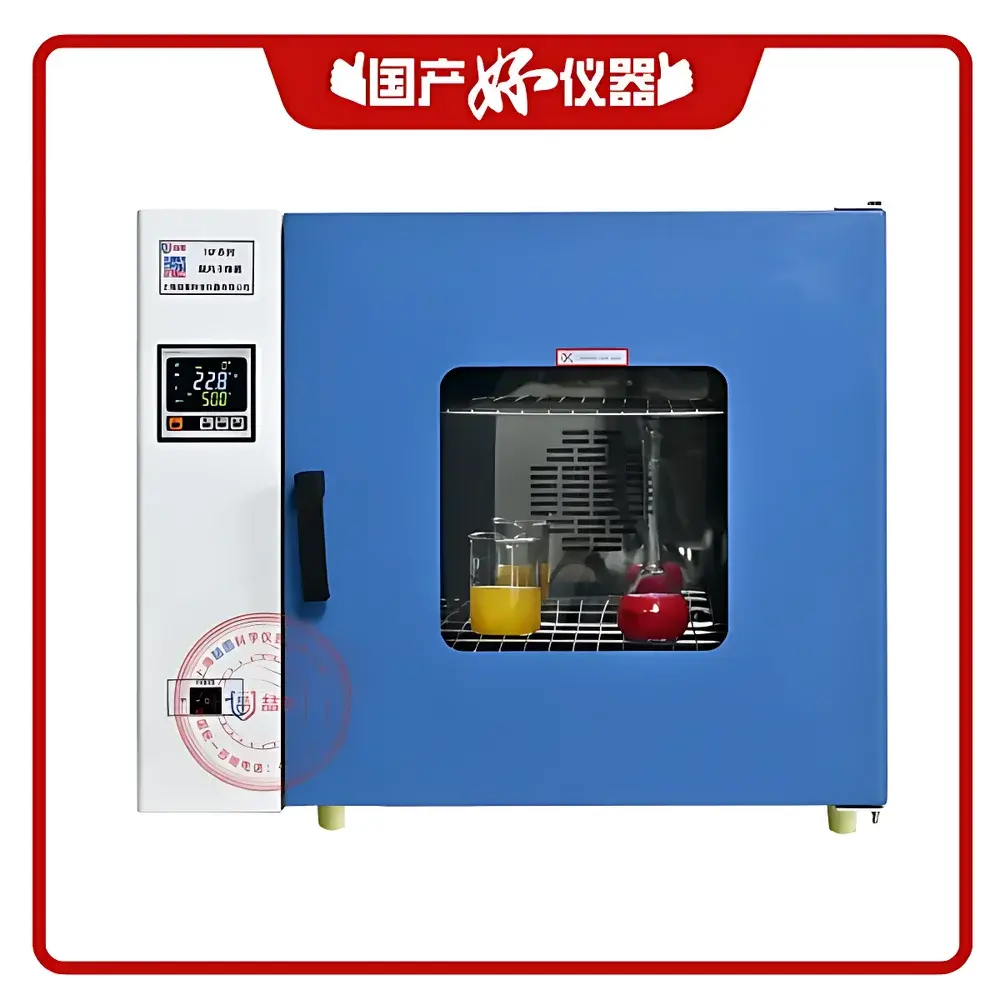
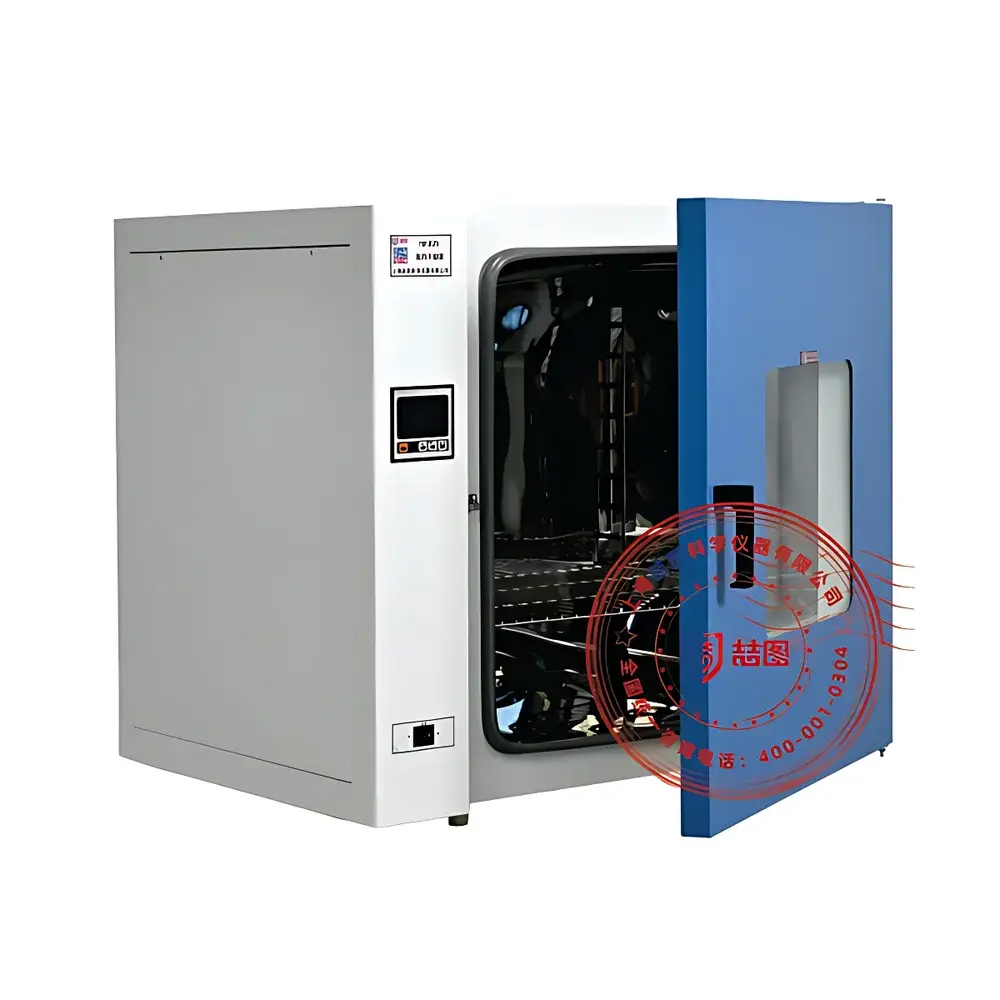
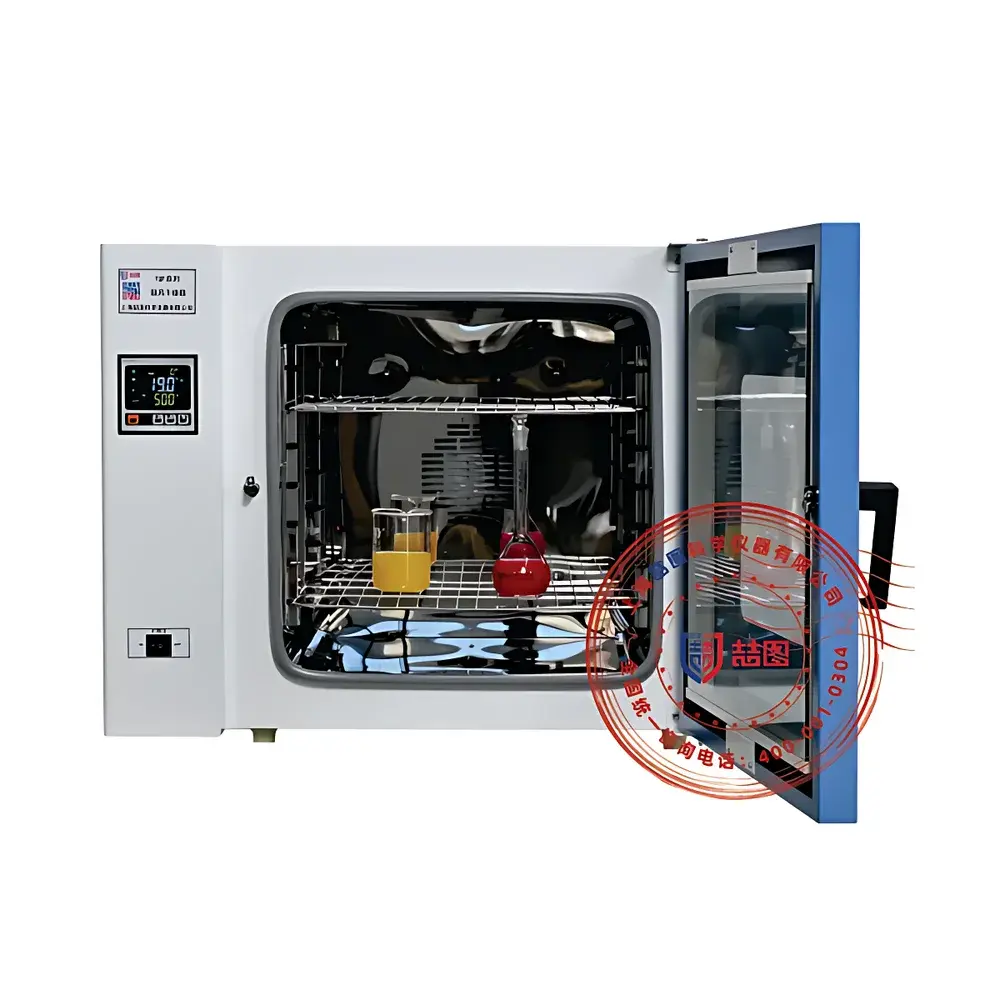
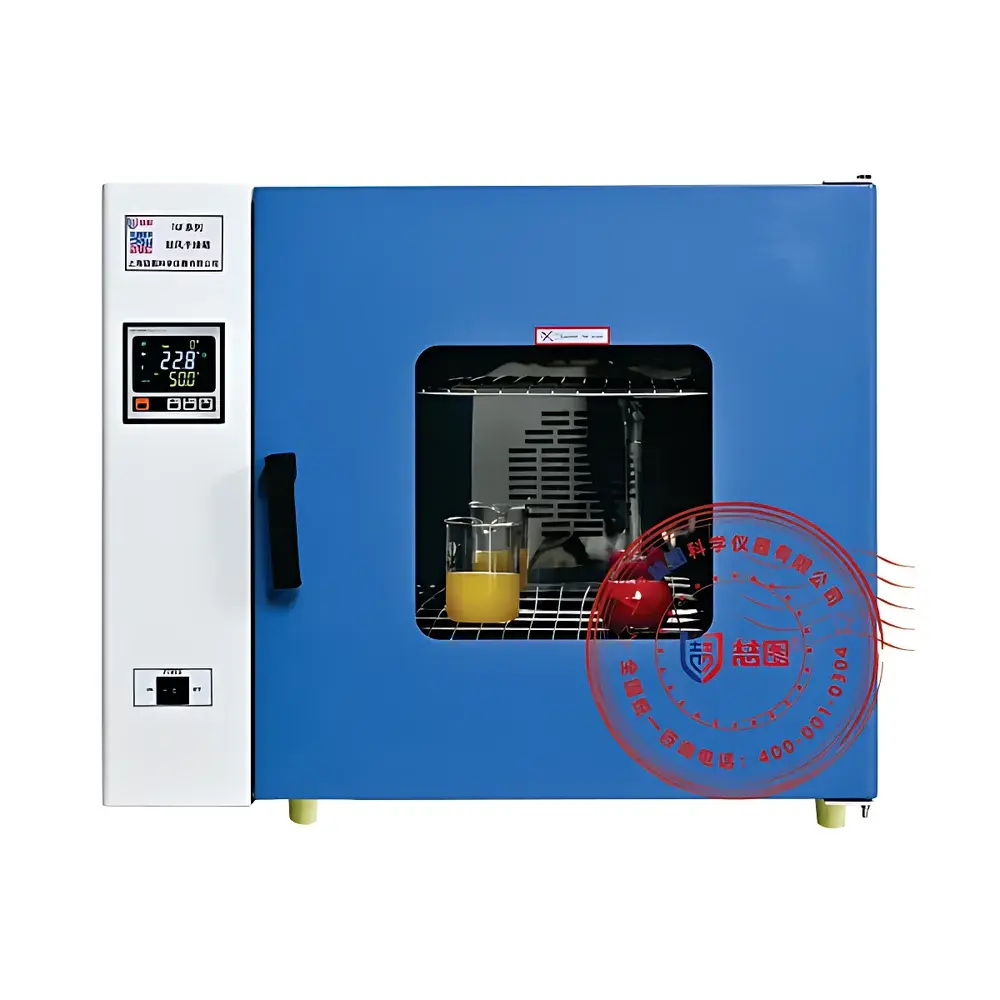
DRETOP TGF-9140A Forced-Air Drying Oven
| Brand | DRETOP |
|---|---|
| Origin | Shanghai, China |
| Manufacturer Type | Direct Manufacturer |
| Product Category | Domestic |
| Model | TGF-9140A |
| Instrument Type | General-Purpose Forced-Air Oven |
| Temperature Range | RT+10°C to 250°C |
| Temperature Uniformity | ±2.5°C (at 100°C, empty chamber) |
| Temperature Fluctuation | ±1°C |
| Temperature Resolution | 0.1°C |
| External Dimensions | 840 × 640 × 735 mm |
| Internal Chamber Dimensions | 550 × 450 × 550 mm |
| Chamber Material | Mirror-Finish Stainless Steel (SUS304) |
| Heating Method | Forced Convection with High-Temperature Fan & Optimized Airflow Ducts |
| Working Environment Temperature | RT+10°C to 250°C |
| Vacuum Capability | Not Applicable (Non-vacuum model) |
Overview
The DRETOP TGF-9140A Forced-Air Drying Oven is an engineered solution for precise, repeatable thermal processing in research laboratories, quality control environments, and industrial R&D settings. Designed according to fundamental principles of convective heat transfer, the unit employs a robust forced-air circulation system—comprising a high-temperature-rated centrifugal fan and a symmetrically optimized air duct layout—to ensure uniform thermal distribution across the entire working chamber. Unlike natural convection ovens, this design actively mitigates thermal stratification and edge cooling effects, delivering stable temperature profiles essential for applications such as moisture content determination (per ASTM D2231, ISO 787-2), dry-heat sterilization of glassware and stainless steel instruments (in compliance with ISO 17665-1), thermal aging of polymeric components (IEC 60216), and pre-conditioning of samples prior to gravimetric analysis or chromatographic injection. Its operational envelope—spanning from ambient +10°C up to 250°C—covers the majority of non-combustible material drying, baking, curing, and depyrogenation protocols used in pharmaceutical, food science, materials testing, and electronics manufacturing labs.
Key Features
- Microprocessor-based P.I.D. temperature controller with 0.1°C resolution, featuring auto-tuning capability and real-time deviation compensation to minimize overshoot and stabilize setpoints within ±1°C fluctuation.
- Dual-layer tempered glass observation window with reinforced aluminum frame enables continuous visual monitoring without thermal leakage; integrated silicone gasket ensures long-term sealing integrity at elevated temperatures.
- Adjustable, removable stainless steel shelving (SUS304) with multi-position support rails—designed for rapid cleaning and flexible load configuration across diverse sample geometries and mass distributions.
- Self-diagnostic firmware with alphanumeric fault-code display on a high-contrast LCD screen (three-color backlighting), enabling immediate identification of sensor failure, heater open-circuit, or fan stall conditions.
- Independent over-temperature cut-off circuit with audible/visual alarm—mechanically isolated from the main controller to satisfy functional safety requirements under IEC 61508 SIL-2 equivalency.
- Electrostatically coated cold-rolled steel exterior housing and seamless mirror-finish stainless steel interior chamber resist corrosion, facilitate decontamination, and comply with GLP facility surface hygiene standards.
Sample Compatibility & Compliance
The TGF-9140A accommodates a broad range of non-volatile, non-explosive, and non-hygroscopic specimens—including ceramic crucibles, borosilicate glassware, metal calibration standards, polymer films, pharmaceutical excipients, and inert particulate matrices. It is not rated for use with flammable solvents, volatile organic compounds (VOCs), or pyrophoric substances. The oven meets structural and electrical safety requirements per GB/T 14710 (Chinese National Standard for Environmental Adaptability of Medical Electrical Equipment) and conforms to EMC directive 2014/30/EU. While not certified to UL 61010-1 or EN 61010-1 out-of-the-box, its design architecture—including grounded chassis, Class H insulation on heating elements, and redundant thermal protection—supports third-party certification pathways for global deployment. For regulated environments, optional RS485 Modbus RTU interface enables integration into LIMS or MES platforms supporting 21 CFR Part 11 audit trails when paired with validated software.
Software & Data Management
The standard configuration includes a front-panel LCD interface with embedded data logging (up to 10,000 timestamped records). Optional accessories expand traceability and process control: a USB port allows export of temperature/time logs to FAT32-formatted flash drives for offline analysis in Excel or MATLAB; an RS485 serial interface supports bidirectional communication with SCADA systems using standard Modbus RTU protocol; and an optional programmable controller offers up to 30 segment ramp-soak profiles with slope limiting and event-triggered outputs. All logged data retain UTC timestamps, operator ID fields (when enabled), and metadata tags—including chamber load status, door-open events, and alarm history—supporting full ALCOA+ data integrity principles required in GMP-compliant operations.
Applications
- Moisture loss-on-drying assays for raw materials (e.g., APIs, excipients) per USP <731> and Ph. Eur. 2.2.32.
- Dry-heat sterilization of reusable labware at ≥160°C for ≥2 hours, validated per ISO 17665-1 Annex B.
- Thermal conditioning of reference standards prior to tensile or hardness testing (ASTM E18, ISO 6508).
- Baking of printed circuit board (PCB) assemblies to remove residual flux and moisture before conformal coating.
- Accelerated aging studies of elastomers and adhesives per ASTM D573 and ISO 188.
- Pre-drying of soil, coal, or biomass samples prior to proximate analysis (ASTM D3172, ISO 18134-3).
FAQ
Is the TGF-9140A suitable for sterilizing biological safety cabinets or pipette tips?
No—it is not classified as a medical-grade sterilizer and lacks validation documentation for microbial kill efficacy. It may be used for dry-heat decontamination of non-critical tools only.
Can the oven maintain ±0.5°C temperature fluctuation as listed in some specifications?
The ±0.5°C figure applies only under stabilized, no-load conditions at 100°C per internal factory verification; actual performance under load depends on mass, thermal inertia, and door-opening frequency.
Does the unit support NIST-traceable temperature calibration?
Yes—its PT100 sensor input accepts external reference probes; users may perform in-situ calibration using accredited dry-block calibrators per ISO/IEC 17025 procedures.
What is the maximum recommended loading volume for optimal temperature uniformity?
For compliance with ±2.5°C uniformity specification, total load should not exceed 60% of chamber volume and must allow ≥50 mm clearance from all walls and ceiling.
Is the stainless steel interior electropolished or passivated?
The chamber uses standard mirror-finish SUS304; electropolishing is available as a custom option for enhanced corrosion resistance in aggressive chemical environments.



