
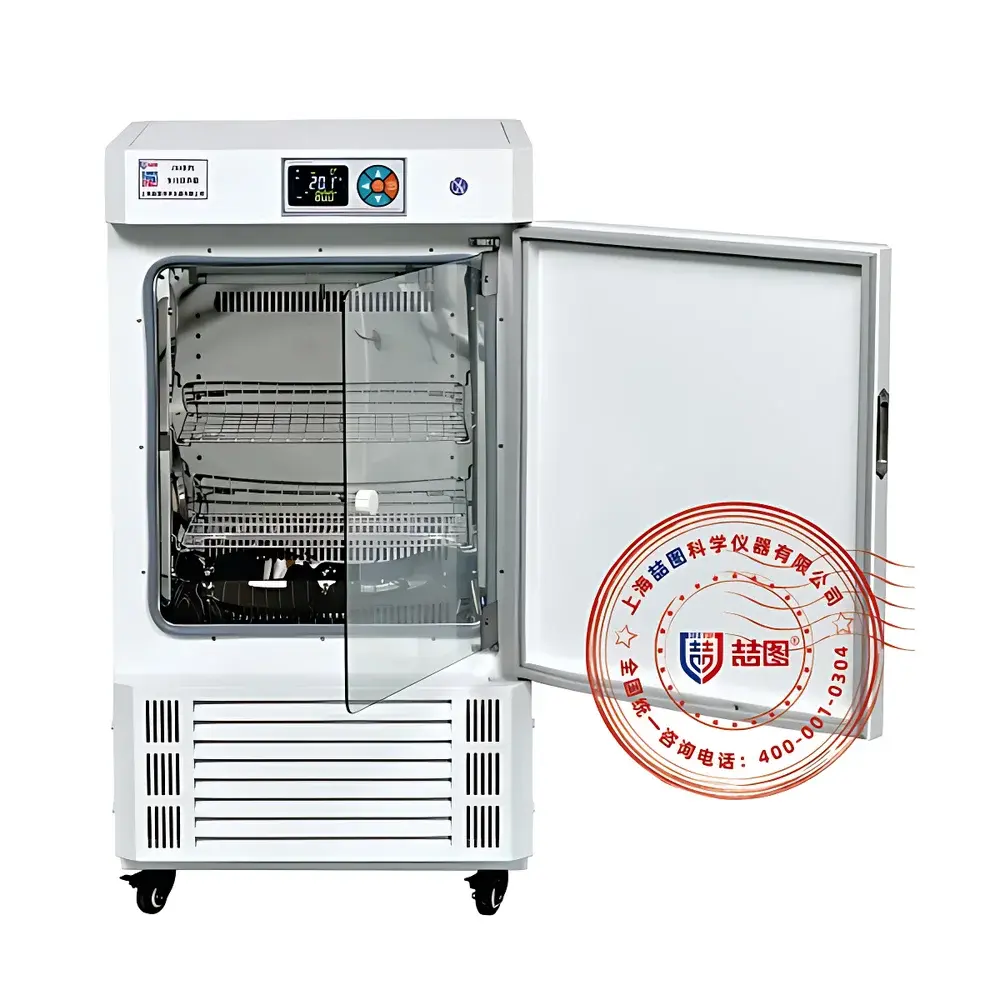
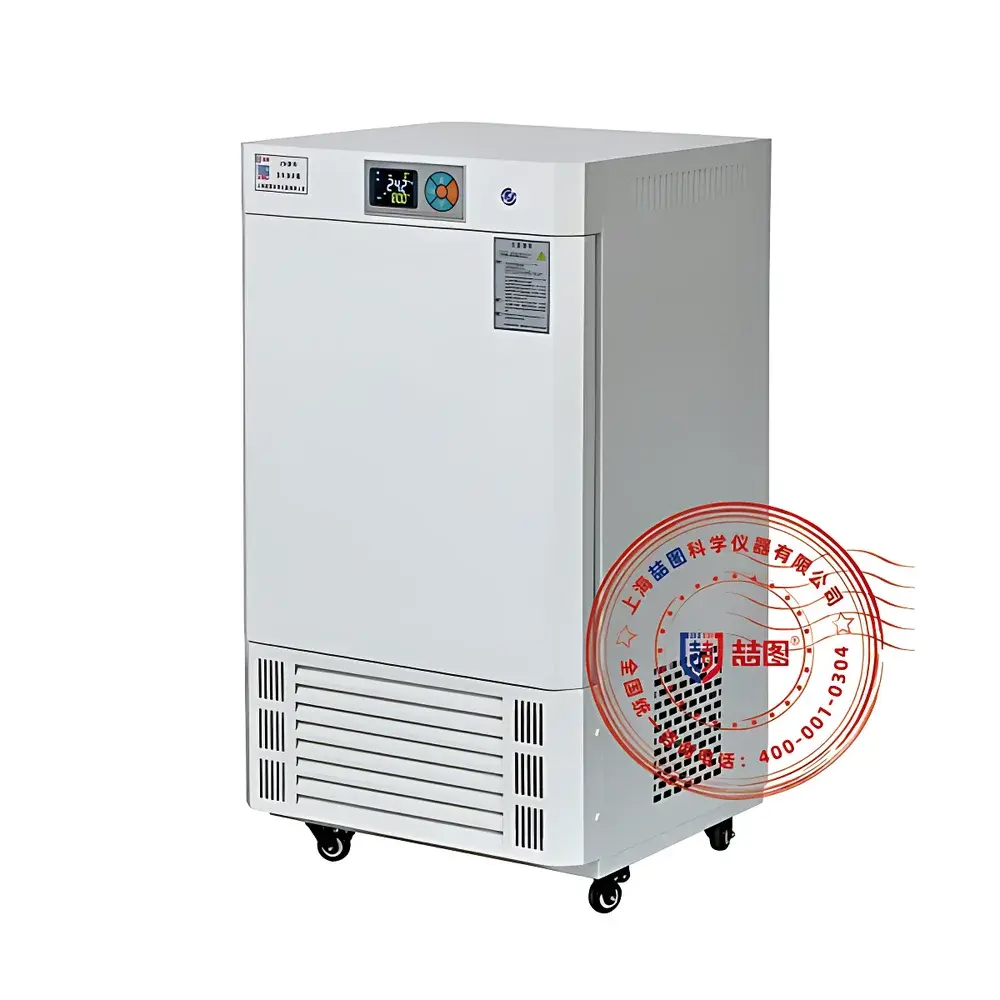
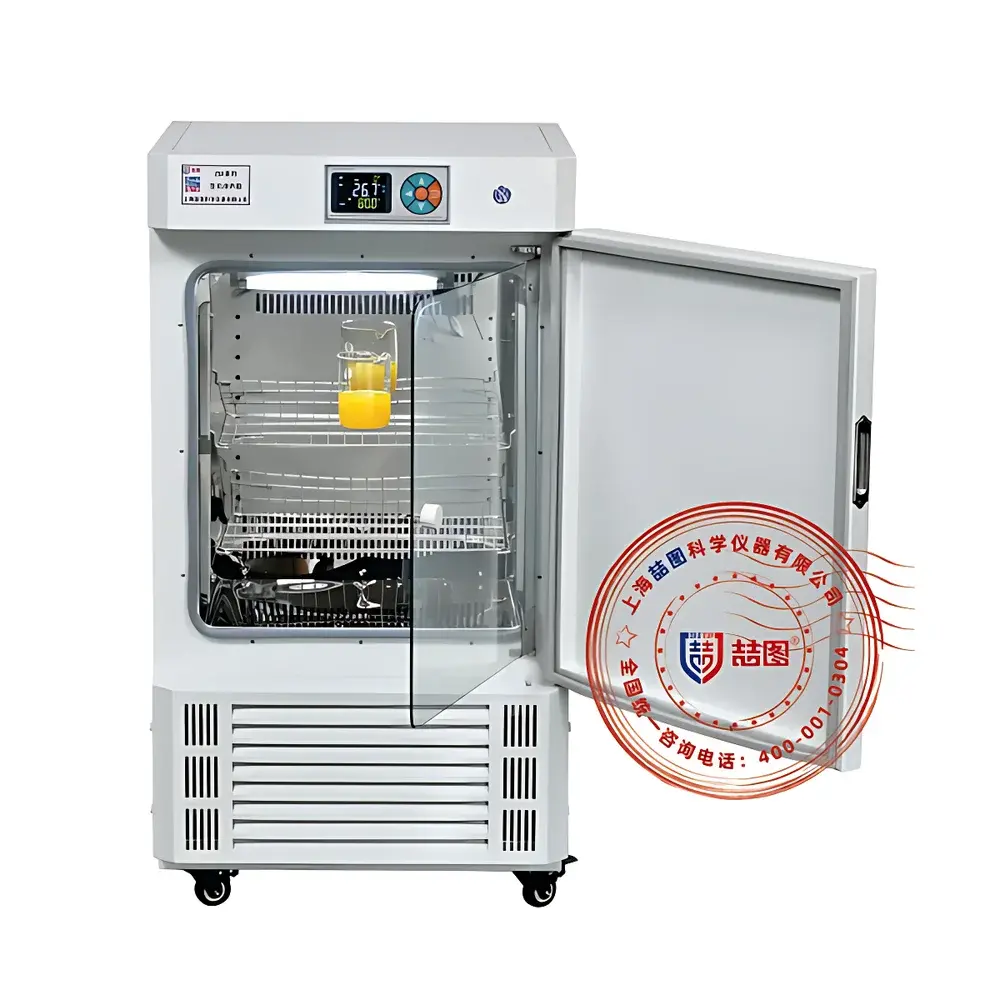
DRETOP ZSH-250F Biochemical Incubator
| Brand | DRETOP |
|---|---|
| Origin | Shanghai, China |
| Manufacturer Type | Direct Manufacturer |
| Model | ZSH-250F |
| Heating Method | Air-jacketed |
| Cooling Method | Compressor-based |
| Air Circulation | Forced convection |
| Temperature Range | 0–70 °C |
| Temperature Accuracy | ±0.1 °C |
| Temperature Uniformity | ±1 °C (empty chamber, @25 °C) |
| Temperature Fluctuation | ±0.5 °C |
| Chamber Volume | 250 L |
| External Dimensions (W×D×H) | 720×745×1558 mm |
| Power Supply | AC 220 V, 50 Hz |
| Input Power | 2000 W |
| Display | LCD with touch keys |
| Control System | Microprocessor-based P.I.D. temperature controller with alarm and data retention |
Overview
The DRETOP ZSH-250F Biochemical Incubator is a precision-engineered, dual-mode (heating/cooling) environmental chamber designed for stable, long-term incubation of biological samples under tightly controlled thermal conditions. Utilizing an air-jacketed heating system and a high-efficiency compressor-based refrigeration module, the unit maintains setpoint temperatures across the full operational range of 0–70 °C — enabling year-round use in diverse laboratory environments, from cold-room-adapted BOD testing to elevated-temperature microbial culture propagation. Its forced-air convection architecture, driven by optimized axial-flow fans and a refined internal airflow path, ensures rapid thermal equilibration and high spatial uniformity (±1 °C at 25 °C, empty chamber), critical for reproducible assay outcomes in regulated life science workflows.
Key Features
- Microprocessor-controlled P.I.D. temperature regulation with 0.1 °C resolution, real-time digital display, and user-configurable over-temperature alarm thresholds;
- Air-jacketed heating system combined with a sealed, low-GWP hydrocarbon refrigerant (R290) compressor assembly — compliant with international environmental directives on ozone-depleting substances;
- Stainless steel interior chamber (304 grade) with fully adjustable, removable stainless steel shelves; seamless welds and rounded internal corners minimize contamination traps and support validated cleaning protocols;
- Dual-door observation window: outer magnetic door seal + inner tempered glass panel — reduces thermal loss while maintaining optical clarity for non-invasive sample monitoring;
- Integrated castor wheels with independent locking feet — enables safe repositioning without compromising stability or vibration isolation;
- Robust power management: automatic parameter memory retention, power-fail recovery, and programmable delay-start logic to protect compressor longevity;
- Optional configurable accessories include BOD-rated waterproof power outlets (IEC 60309-compliant), RS485 serial interface for LabVantage or LimS integration, and external PT100 probe inputs for independent validation.
Sample Compatibility & Compliance
The ZSH-250F accommodates standard microbiological vessels (Petri dishes, test tubes, flasks up to 2 L), multi-well plates, and BOD bottles. Its interior geometry supports ISO 14644-1 Class 8 cleanroom-compatible operation when used with HEPA-filtered air add-ons (optional). The incubator meets essential safety and performance benchmarks including IEC 61010-1 (Electrical Safety for Laboratory Equipment), EN 60529 (IP20 enclosure rating), and conforms to GLP-relevant design principles — such as audit-trail-capable event logging (via optional RS485 + software), temperature deviation alerts, and traceable calibration points. While not inherently 21 CFR Part 11-compliant, its data export capabilities support integration into validated electronic lab notebook (ELN) systems under site-specific SOPs.
Software & Data Management
The embedded controller supports time-stamped temperature logging (internal buffer: 30 days at 1-min intervals). When paired with optional RS485-to-USB gateway and DRETOP LabLink™ PC software (Windows 10/11), users gain access to real-time graphing, automated report generation (PDF/CSV), alarm history review, and remote setpoint adjustment. All logged events — including door openings, temperature excursions, and alarm acknowledgments — are timestamped and exportable for quality audits. Firmware updates are delivered via secure USB key, ensuring version control and change documentation per ISO/IEC 17025 requirements.
Applications
- Biochemical Oxygen Demand (BOD5) analysis per APHA Standard Methods 5210B and ISO 5815-1;
- Microbial growth studies (E. coli, S. aureus, P. aeruginosa) under standardized incubation conditions (e.g., ISO 6579, USP <61>);
- Enzyme activity assays requiring precise thermal stabilization (e.g., amylase, protease kinetics);
- Cell culture pre-incubation for hybridoma or primary cell work where ambient CO2 control is unnecessary;
- Environmental simulation for ecotoxicology testing (OECD 201, 210) and seed germination studies (ISTA protocols);
- Pharmaceutical stability testing at intermediate storage conditions (ICH Q1A);
- Quality control of raw materials and finished products in food, cosmetic, and nutraceutical manufacturing (HACCP-aligned).
FAQ
What is the recommended calibration frequency for the ZSH-250F?
Annual verification using NIST-traceable PT100 probes is advised; internal sensor drift should be assessed against a secondary reference thermometer prior to critical experiments.
Can the ZSH-250F operate continuously at 4 °C?
Yes — the compressor cooling system is rated for uninterrupted operation across the full 0–70 °C range, including extended low-temperature holds typical in BOD and psychrophilic culture applications.
Is the unit suitable for GMP-regulated environments?
It supports GMP alignment through optional data logging, alarm documentation, and hardware-level redundancy features; however, final qualification (IQ/OQ/PQ) must be performed per site-specific validation protocols.
Does the incubator include a built-in humidity control system?
No — the ZSH-250F is a dry-air incubator. For humidity-dependent applications (e.g., fungal culture), external humidification modules or alternative models (e.g., ZSH-H series) are required.
How is temperature uniformity verified during installation qualification?
Per ISO 14159 and ASTM E2874, a 9-point sensor grid (center + eight corners) is placed at working height; measurements are recorded over 3 hours after thermal stabilization at 25 °C and 37 °C, with acceptance criteria of ≤±1 °C deviation.
Related Products




