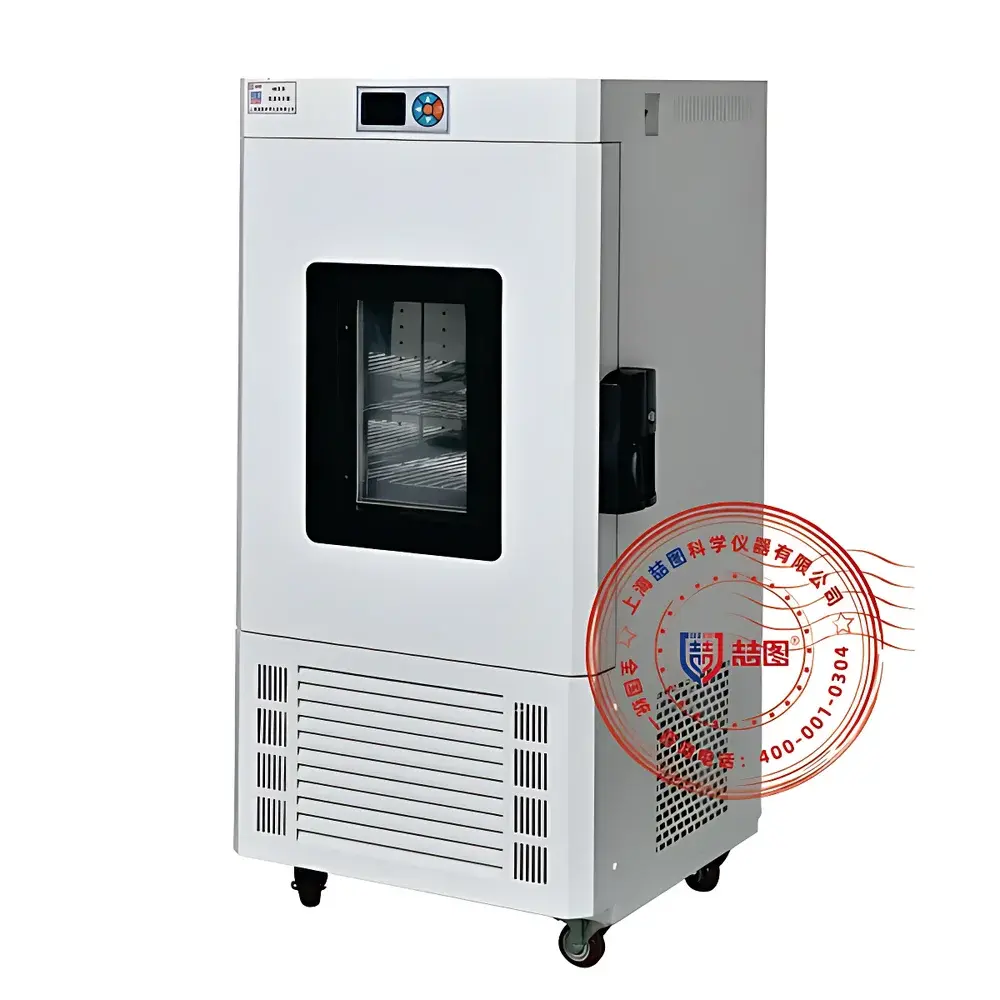
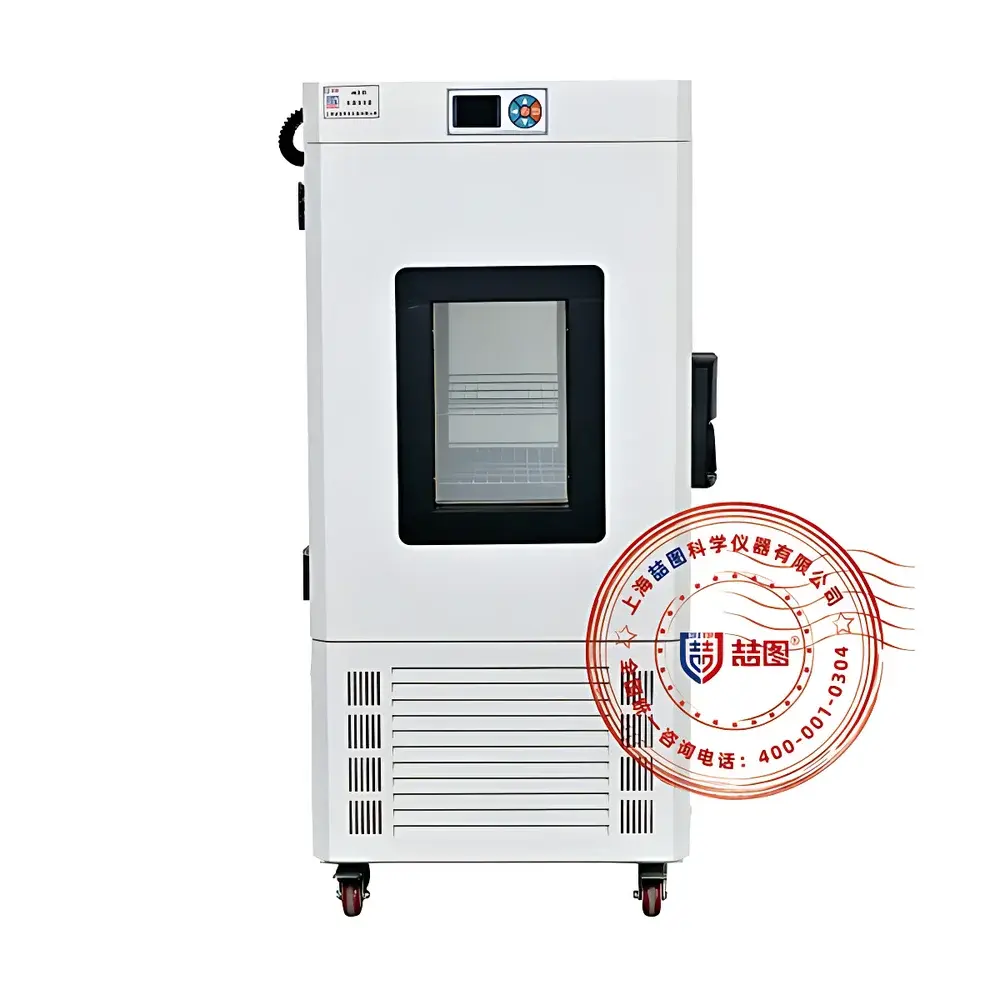
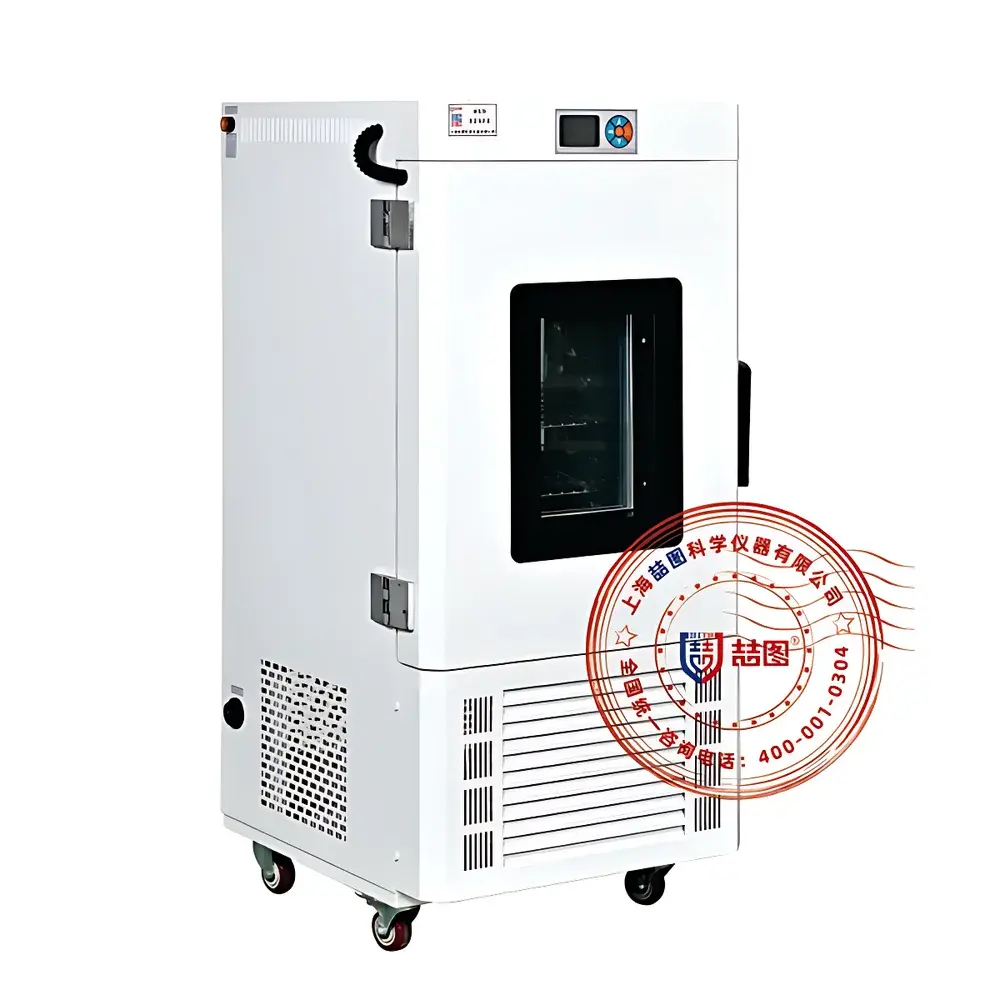
DRETOP DW-100CB Low-Temperature Incubator
| Brand | DRETOP |
|---|---|
| Origin | Shanghai, China |
| Manufacturer Type | Direct Manufacturer |
| Model | DW-100CB |
| Cooling Method | Compressor-based refrigeration |
| Heating Method | Air-jacket heating |
| Temperature Range | −40 °C to +65 °C (standard key-lock door) |
| Temperature Resolution | 0.1 °C |
| Temperature Uniformity | Not specified |
| Temperature Fluctuation | ±0.5 °C |
| Capacity | 100 L |
| External Dimensions (W×D×H) | 740 × 815 × 1555 mm |
| Power Supply | AC 220 V, 50 Hz |
| Input Power | 2200 W |
| Observation Window | Embedded anti-fog heated window |
| Test Port | 25 mm diameter, stainless steel plug included |
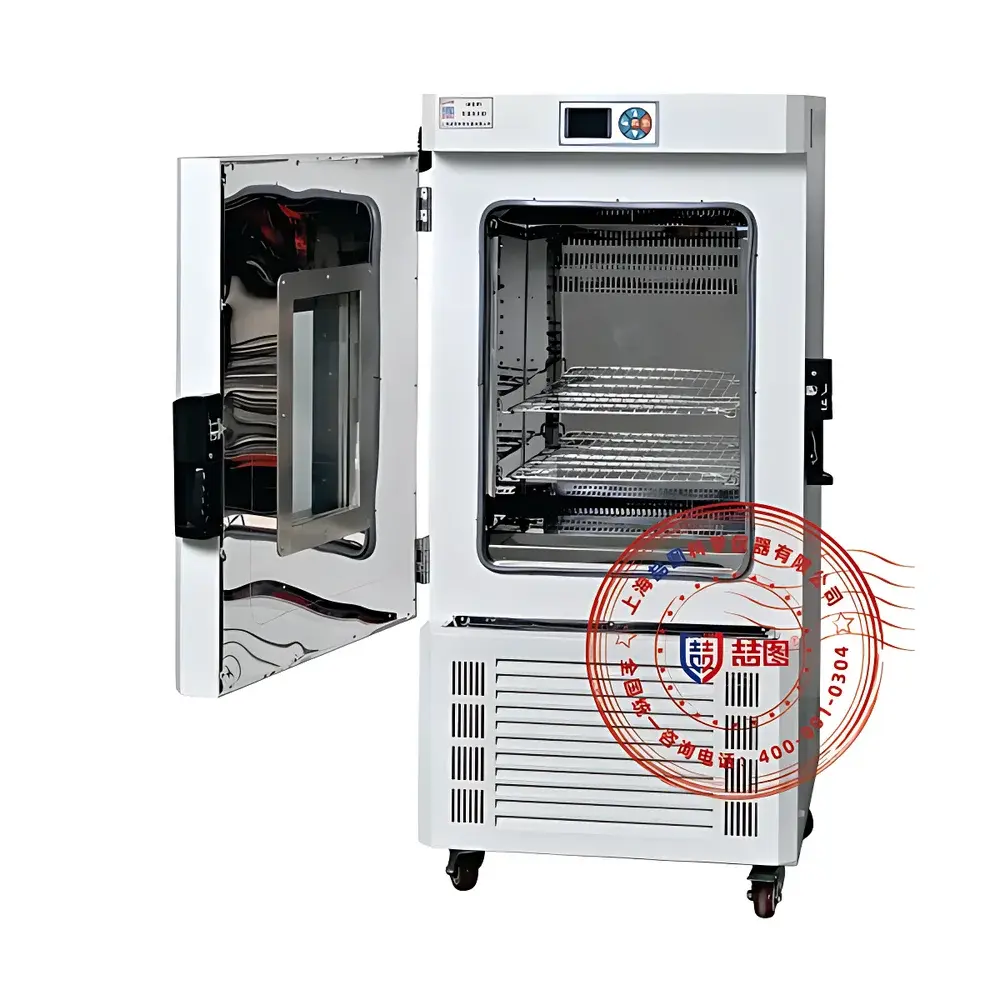
| Shelving | 3 adjustable stainless steel shelves |
| Safety Lock | Mechanical key lock |
Overview
The DRETOP DW-100CB Low-Temperature Incubator is an engineered environmental chamber designed for precise, stable, and reproducible temperature control across a broad operational range of −40 °C to +65 °C. Unlike standard microbiological incubators, this unit integrates dual-mode thermal management—compressor-driven refrigeration coupled with air-jacket heating—to achieve rapid thermal response and high fidelity setpoint maintenance. Its architecture supports applications requiring extended cold storage stability (e.g., cryopreserved cell stocks, thermolabile reagents) as well as controlled low-temperature cultivation (e.g., psychrophilic microorganisms, cold-adapted enzyme assays). The system complies with fundamental design principles outlined in ISO 13408-1 (aseptic processing environments) and aligns with GLP-compliant laboratory infrastructure requirements for temperature-critical workflows.
Key Features
- Microprocessor-based P.I.D. temperature controller with 0.1 °C resolution and real-time display of setpoint, actual temperature, and elapsed time;
- Embedded heated observation window with anti-condensation functionality, eliminating visual obstruction during low-temperature operation;
- Three-tier stainless steel interior shelves—fully removable and height-adjustable—to accommodate varied vessel geometries and facilitate CIP/SIP-compatible cleaning;
- Four-corner rounded interior cabinet design and cold-rolled steel outer shell ensure structural integrity and long-term corrosion resistance;
- Integrated mechanical key lock on the door prevents unauthorized access, supporting sample integrity protocols required in regulated research settings;
- Modular compressor assembly with built-in start-delay and stop-interval protection circuits extends service life and enhances operational reliability;
- Directional casters with independent locking feet enable both flexible repositioning and vibration-dampened stationary use;
- 25 mm test port with stainless steel sealing cap allows external sensor integration or powered device testing without compromising chamber integrity.
Sample Compatibility & Compliance
The DW-100CB accommodates a wide spectrum of biological and material science samples—including culture flasks, Petri dishes, cryovials, buffer solutions, and electronic components—within its 100 L stainless steel chamber. Its −40 °C capability supports short-term cryostorage of sensitive biologics (e.g., primary cells, hybridomas) prior to liquid nitrogen transfer. While not certified for long-term archival freezing per ISO 13355, it meets ASTM E2879-22 criteria for performance verification of low-temperature incubation systems. The unit’s non-fluorinated refrigerant (R134a or equivalent) conforms to EU F-Gas Regulation (EU) No 517/2014 and EPA SNAP program guidelines. All electrical components comply with IEC 61010-1 safety standards for laboratory equipment.
Software & Data Management
The DW-100CB operates via embedded firmware without proprietary software dependency. Optional RS485 interface enables Modbus RTU communication for integration into centralized lab monitoring systems (e.g., LabVantage, Siemens Desigo CC). When equipped with the optional intelligent program controller, users can define up to 30 multi-step temperature profiles with ramp/soak logic—suitable for accelerated aging studies or thermal cycling validation. Built-in parameter memory retains user-defined settings and alarm thresholds following power interruption, satisfying basic data continuity requirements under FDA 21 CFR Part 11 Annex 11 guidance for non-electronic record systems. Audit trail functionality is available only when paired with external logging hardware meeting ALCOA+ data integrity principles.
Applications
- Low-temperature microbial cultivation (e.g., Pseudomonas fluorescens, Colwellia psychrerythraea) under controlled aerobic conditions;
- Stability testing of pharmaceutical excipients and biologics at sub-zero temperatures per ICH Q5C guidelines;
- Pre-conditioning of polymer-based medical devices prior to mechanical testing (ASTM D618);
- Environmental stress screening of semiconductor components per JEDEC JESD22-A119;
- Storage and equilibration of calibration standards (e.g., reference oils, NIST-traceable temperature sensors);
- Controlled cooling of reaction mixtures post-synthesis to inhibit side reactions or preserve metastable intermediates.
FAQ
What is the minimum operating temperature of the DW-100CB?
The unit achieves and maintains −40 °C throughout its working volume under standard ambient conditions (≤25 °C, ≤60% RH).
Does the DW-100CB support humidity control?
No—this model is a dry-air, convection-controlled incubator; relative humidity is not monitored or regulated.
Can the unit be validated for GxP environments?
Yes—its temperature uniformity and stability performance may be qualified per IQ/OQ protocols using calibrated PT100 probes and data loggers compliant with ISO/IEC 17025.
Is the stainless steel interior electropolished?
The inner chamber uses brushed 304 stainless steel; electropolishing is available as a custom fabrication option upon request.
What is the recovery time after door opening?
From −20 °C, the chamber returns to setpoint within ≤12 minutes following a 30-second door opening at 23 °C ambient (tested per ISO 15378 Annex B methodology).