
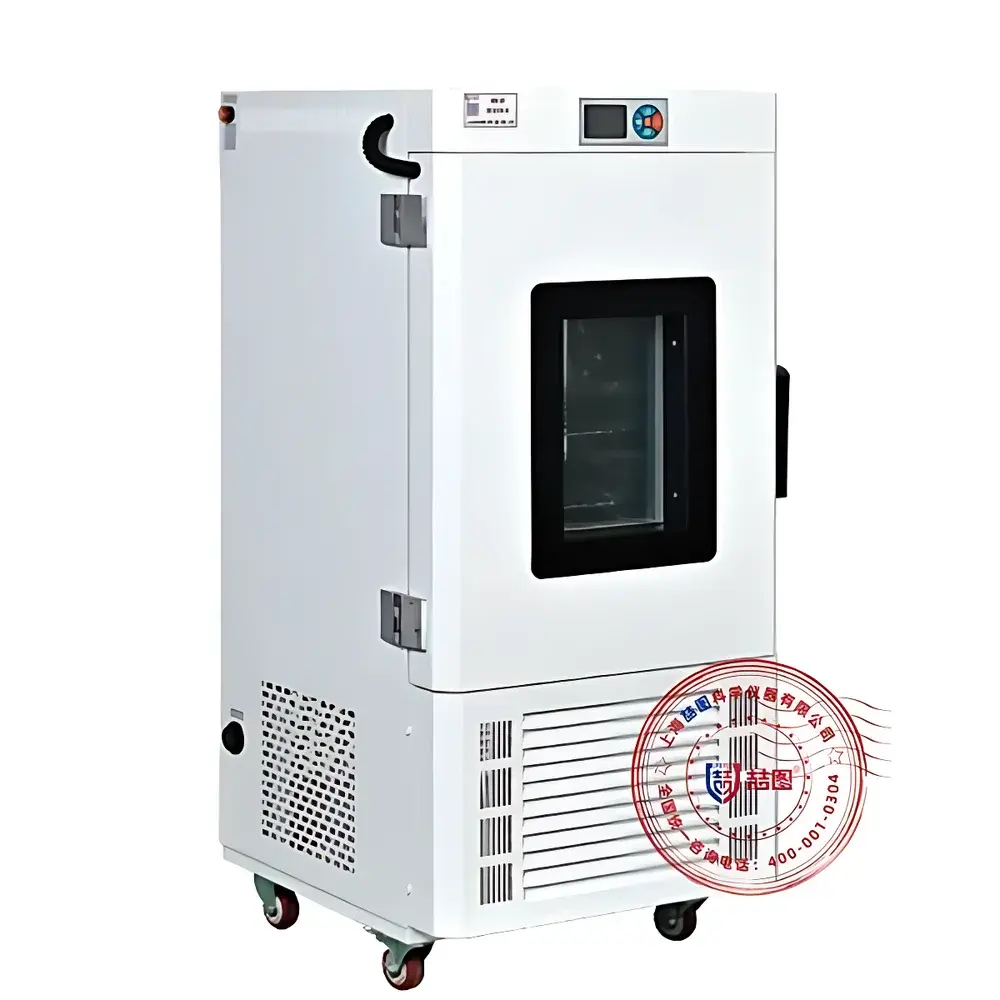
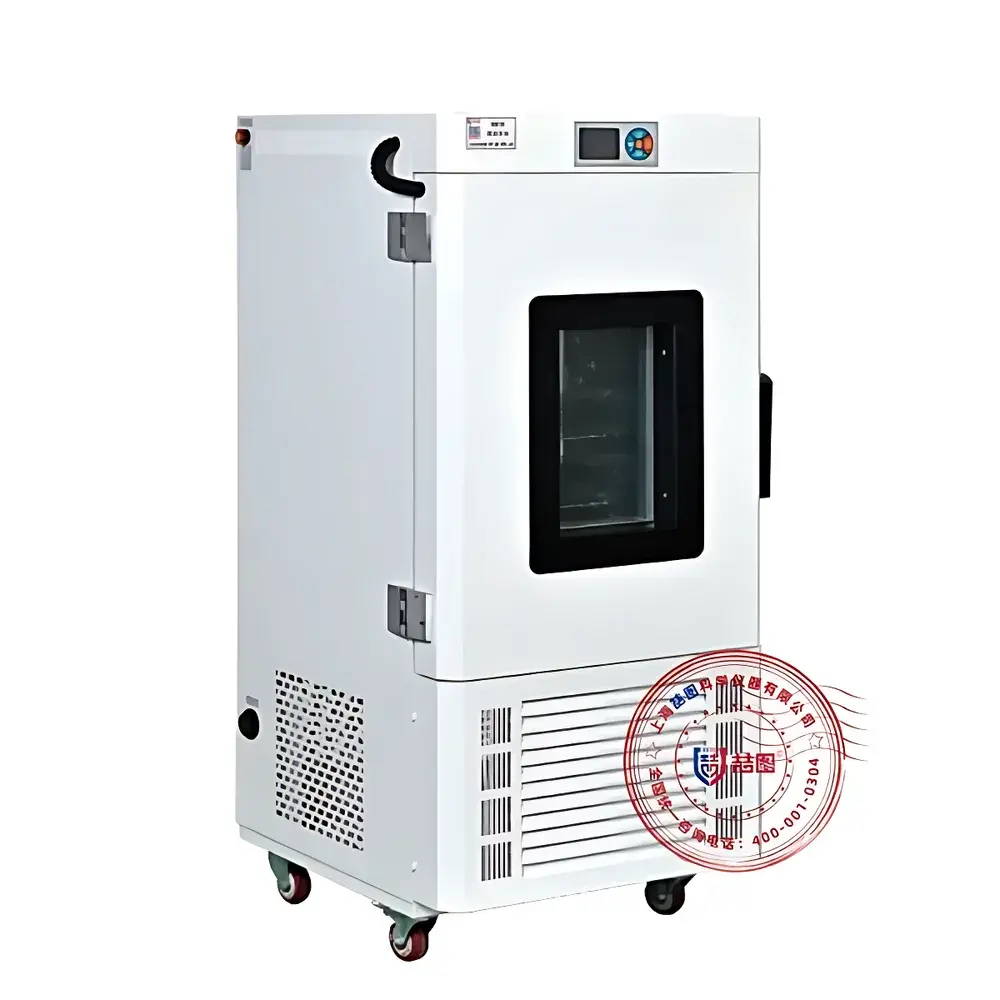
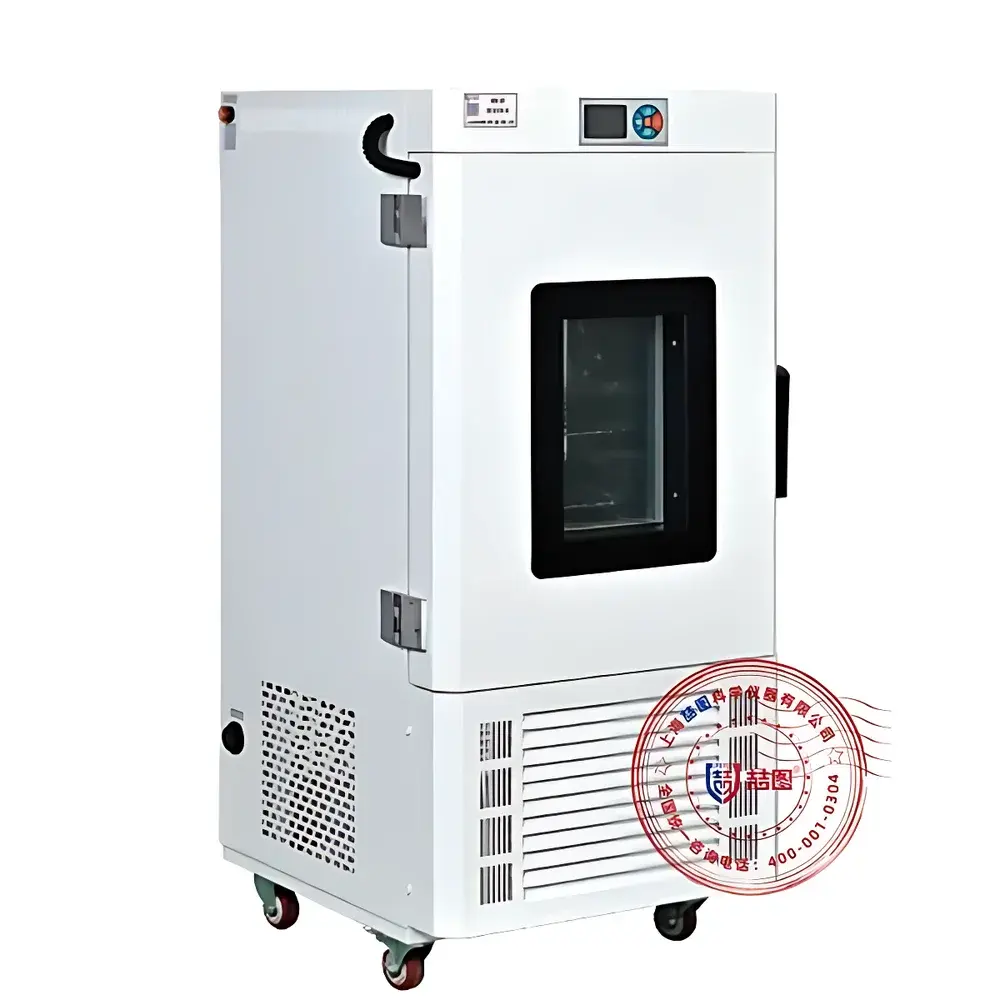
DRETOP DRH-250CL Temperature and Humidity Controlled Chamber
| Brand | DRETOP |
|---|---|
| Origin | Shanghai, China |
| Manufacturer Type | Direct Manufacturer |
| Product Category | Domestic |
| Model | DRH-250CL |
| Instrument Type | Benchtop |
| Condensation Method | Air-Cooled |
| Temperature Range | −10 °C to +65 °C |
| Humidity Range | 20–95 %RH |
| Temperature Uniformity | ±0.5 °C |
| Humidity Deviation | ±3 %RH |
| Internal Chamber Dimensions (W×D×H) | 580 mm × 500 mm × 850 mm |
| Power Supply | AC 220 V, 50 Hz |
| Rated Power | 2100 W |
| Nominal Volume | 250 L |
| Standard Accessories | RS485 Interface, 25 mm Test Port, 3 Adjustable Stainless Steel Shelves |
Overview
The DRETOP DRH-250CL Temperature and Humidity Controlled Chamber is an engineered environmental test system designed for precise, reproducible simulation of climatic conditions in laboratory and quality assurance settings. Based on the principle of dual-loop PID-controlled refrigeration and steam-based humidification, the chamber maintains stable thermal and hygric environments across a wide operational envelope—from low-temperature/low-humidity (-10 °C / 20 %RH) to high-temperature/high-humidity (+65 °C / 95 %RH) profiles. Its architecture supports standardized test protocols including temperature cycling (IEC 60068-2-14), damp heat testing (IEC 60068-2-30), condensation exposure, and long-term stability assessment per ICH Q1A(R2) guidelines. The chamber’s air-cooled refrigeration system—integrated with an energy-efficient scroll compressor and eco-friendly R134a refrigerant—ensures compliance with EU F-Gas Regulation (EU No 517/2014) and aligns with global sustainability benchmarks.
Key Features
- Mirror-polished stainless steel interior (SUS304) with radius-rounded corners and adjustable shelving for optimal cleaning, contamination control, and spatial flexibility.
- Dual-door design: outer magnetic seal door with nano-composite gasket and inner tempered glass door enabling full-field visual monitoring without thermal disturbance or humidity loss.
- Intelligent 7-inch color touchscreen controller supporting bilingual (English/Chinese) interface, 30-segment programmable cycles, and balanced heating/humidification algorithms minimizing overshoot and drift.
- Top-mounted automatic water supply module with external reservoir access—reducing maintenance frequency and eliminating internal tank overflow risks.
- Integrated safety architecture: independent over-temperature cutoff, real-time fault diagnostics (compressor overcurrent, fan overheat, low-water alarm), acoustic-optic alerts, and power-loss memory retention for uninterrupted test continuity.
- Eco-optimized operation: brushless DC circulation fan, non-energy-consuming defrost cycle, and low-noise (<55 dB(A)) acoustics suitable for shared lab environments.
Sample Compatibility & Compliance
The DRH-250CL accommodates diverse sample geometries via its 250 L working volume (580 × 500 × 850 mm) and three height-adjustable shelves rated for uniform load distribution. It is routinely deployed in validation workflows compliant with ISO/IEC 17025, GLP, and GMP Annex 15 requirements. Applications include accelerated aging of pharmaceutical packaging (per USP ), electrostatic discharge (ESD) sensitivity evaluation in semiconductor components (JEDEC JESD22-A114), moisture barrier integrity testing of flexible electronics, and microbiological incubation under controlled desiccation (e.g., fungal spore viability at 25 °C / 30 %RH). Its ±0.5 °C temperature uniformity and ±3 %RH humidity deviation meet ASTM E145-22 Class II chamber performance criteria for routine stability studies.
Software & Data Management
Equipped with standard RS485 serial communication (Modbus RTU protocol), the DRH-250CL enables remote configuration, real-time parameter logging, and event-triggered control via PC-based software platforms. Data export supports CSV and Excel formats, facilitating integration into LIMS or ELN systems. Optional audit trail functionality—including user login history, parameter change logs, and alarm timestamps—can be enabled to satisfy FDA 21 CFR Part 11 requirements for electronic records and signatures. Firmware updates are delivered via USB port, ensuring long-term regulatory alignment without hardware modification.
Applications
- Stability testing of active pharmaceutical ingredients (APIs) and finished dosage forms under ICH Q5C conditions.
- Material compatibility assessment of adhesives, coatings, and polymer composites exposed to cyclic humidity stress.
- Reliability screening of automotive ECUs and infotainment modules per ISO 16750-4 environmental stress profiles.
- Long-term storage simulation for lithium-ion battery cells at elevated humidity to evaluate electrolyte hydrolysis kinetics.
- Bacterial and fungal culture maintenance where precise RH control prevents agar desiccation or condensation-induced colony fusion.
- Calibration verification of hygrometers and thermistors using NIST-traceable reference sensors placed within the chamber workspace.
FAQ
What is the maximum allowable ambient operating temperature for the DRH-250CL?
The unit is rated for installation in rooms maintained at ≤30 °C and ≤70 %RH to ensure consistent cooling capacity and compressor longevity.
Can the chamber operate continuously at -10 °C and 20 %RH?
Yes—its air-cooled refrigeration system and dedicated dehumidification mode support sustained operation across the full specified range without derating.
Is the 25 mm test port fitted with a removable plug and sealed gasket?
Yes—the port includes a silicone O-ring seal and a threaded stainless steel blanking plug compatible with standard feedthrough connectors (e.g., thermocouple, pressure tubing).
Does the controller support password-protected parameter locking for SOP compliance?
Yes—three-tier user access levels (Operator, Engineer, Administrator) are configurable to restrict modifications to critical setpoints and calibration constants.
Are validation documents (IQ/OQ/PQ templates) available upon request?
DRETOP provides customizable IQ/OQ documentation packages aligned with ISO 13485 and GAMP 5 principles; PQ execution requires on-site sensor mapping and uncertainty analysis by qualified personnel.



