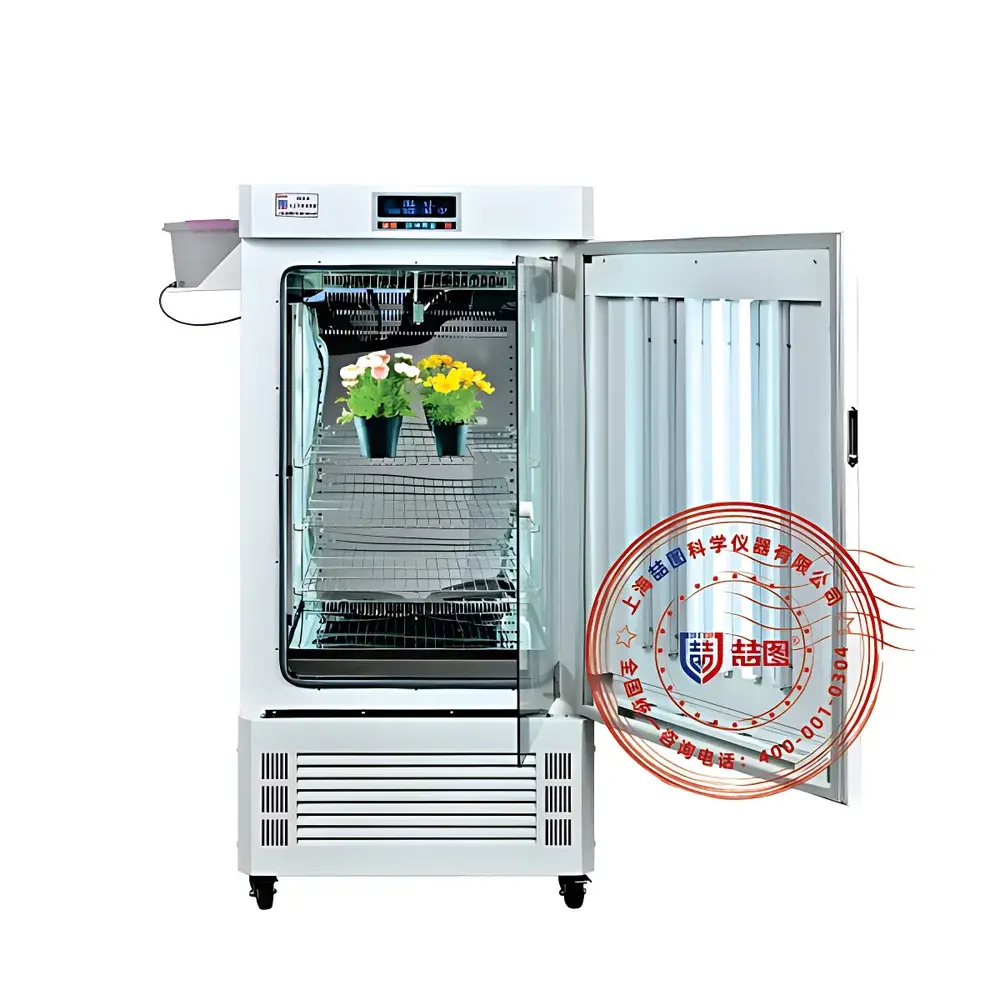
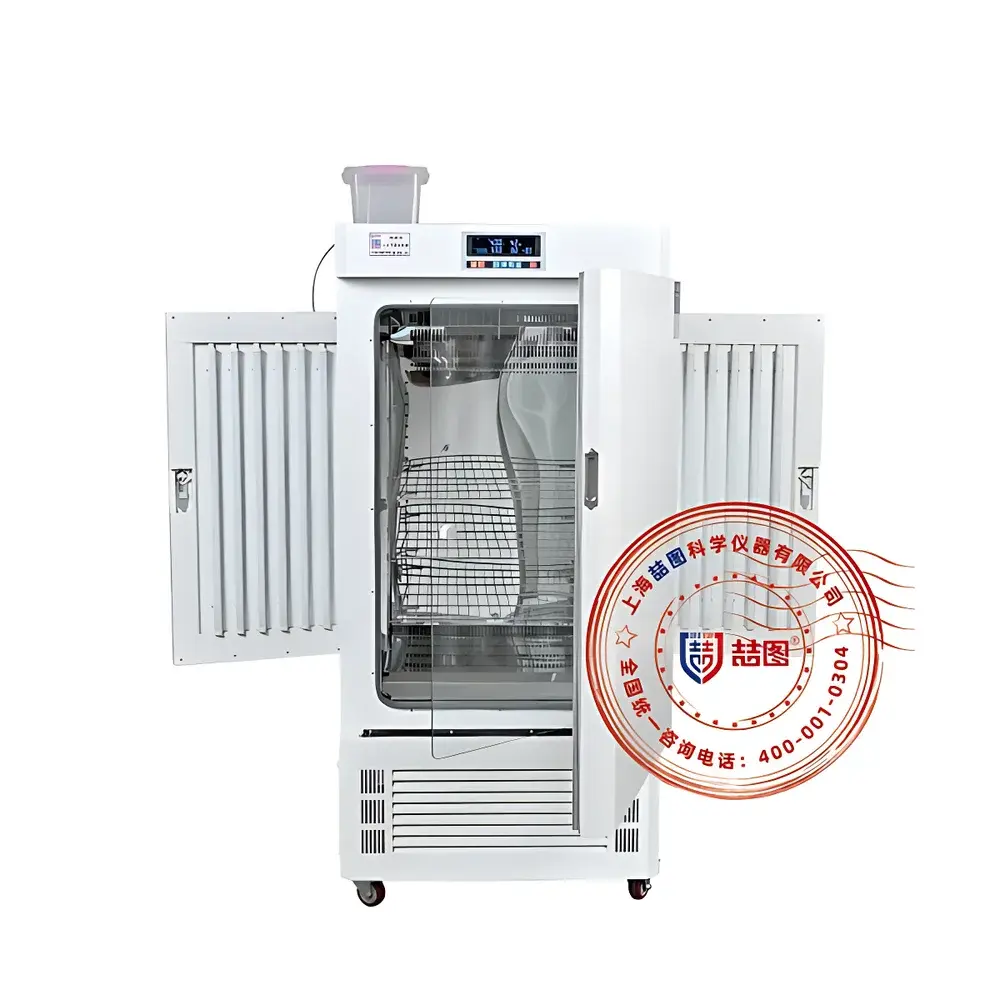
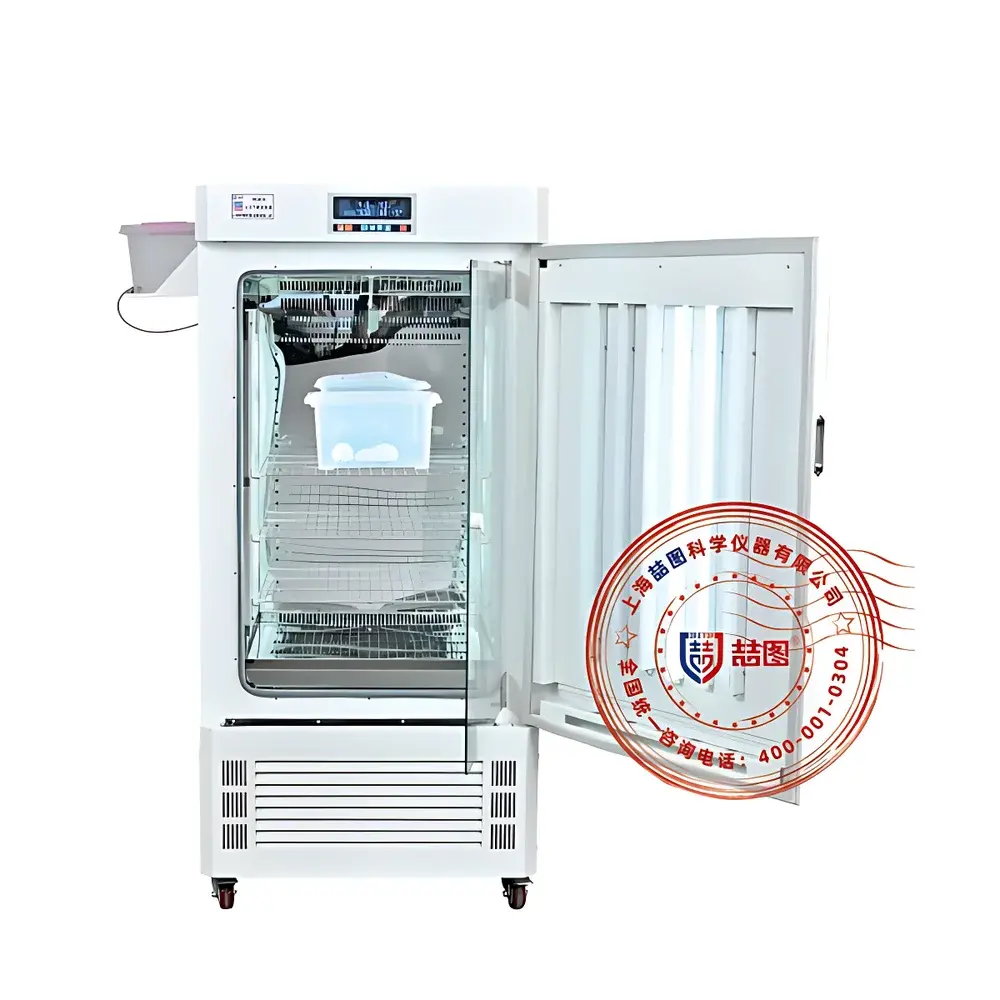
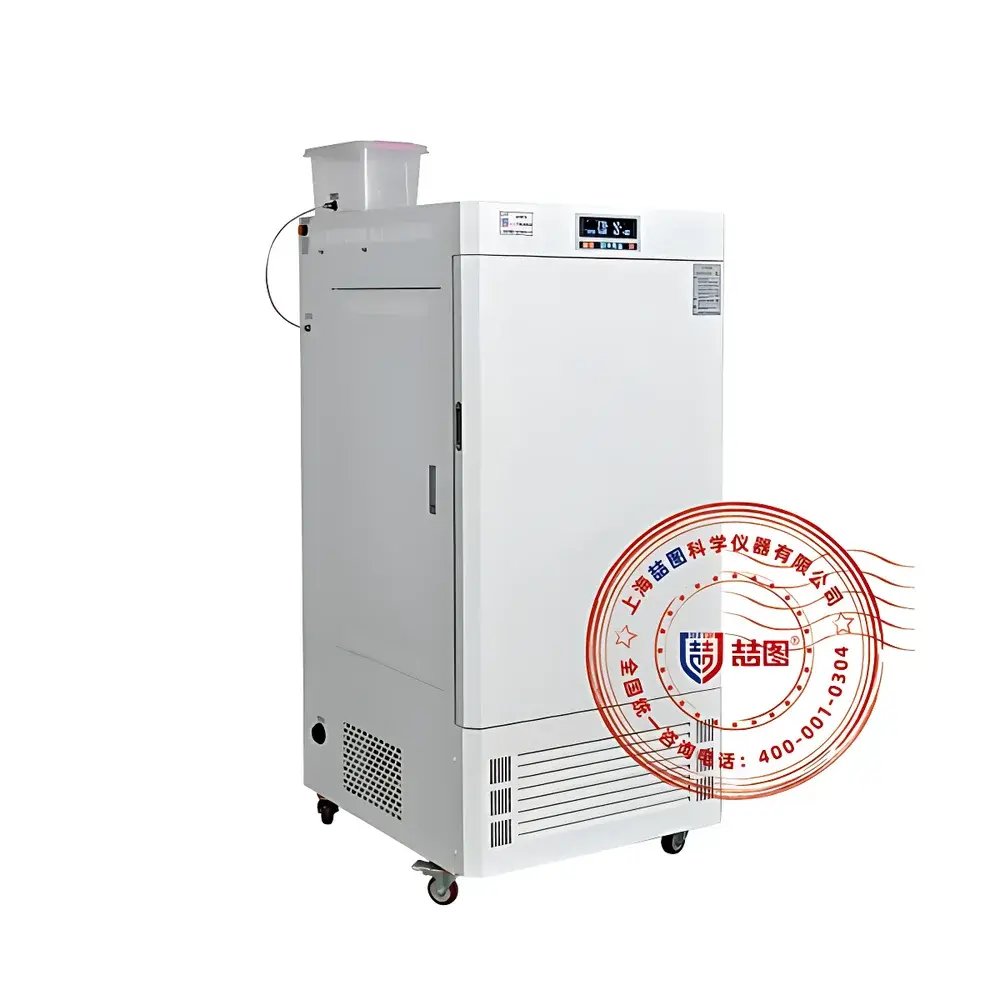
DRETOP ZRQ-350T Artificial Climate Incubator
| Brand | DRETOP |
|---|---|
| Origin | Shanghai, China |
| Manufacturer Type | Direct Manufacturer |
| Instrument Type | Fully Automatic Programmable Incubator |
| Capacity | 350 L |
| Temperature Range | 10–65°C (with illumination), 0–50°C (without illumination) |
| Temperature Uniformity | ±0.1°C |
| Humidity Range | 30–95% RH |
| Humidity Uniformity | ±3–5% RH |
| Illumination Intensity | 0–20,000 lx |
| External Dimensions | 880 × 805 × 1710 mm |
| Control Interface | Color Touchscreen |
| Light Source | Full-Spectrum LED (RGBWV configurable, 0–100% dimmable) |
| Illumination Mode | Triple-Side Adjustable Lighting |
| Power Supply | AC 220 V, 50 Hz |
| Input Power | 3100 W |
| Internal Chamber Dimensions | 680 × 550 × 950 mm |
| Shelving | 3 Adjustable Stainless Steel Shelves |
Overview
The DRETOP ZRQ-350T Artificial Climate Incubator is a fully programmable, multi-parameter environmental simulation system engineered for precision control of temperature, relative humidity, and spectral illumination. Designed in accordance with core requirements for plant physiology, microbiological culture, entomological rearing, and BOD testing, it implements a closed-loop climate control architecture based on microprocessor-driven PID regulation, high-efficiency refrigeration, and full-spectrum LED photobiology modules. Unlike standard incubators, the ZRQ-350T integrates synchronized diurnal cycling—enabling independent day/night temperature setpoints, timed illumination ramps, and humidity profiles—to replicate natural environmental gradients essential for reproducible biological assays. Its chamber construction utilizes seamless stainless-steel interior walls, double-glazed tempered glass viewing doors with nano-composite magnetic seals, and a reinforced cold-rolled steel outer shell—ensuring thermal stability, contamination resistance, and long-term operational integrity under continuous 24/7 duty cycles.
Key Features
- Fully programmable controller supporting up to 30 segmented cycles, each with independent temperature, humidity, illumination intensity, and duration parameters.
- Triple-side LED illumination system with 0–100% continuous dimming and user-selectable RGBWV spectral composition—enabling targeted photomorphogenic studies (e.g., red/blue ratio tuning from 4:1 to 9:1).
- High-fidelity climate uniformity: ±0.1°C temperature uniformity across the 350 L working volume; ±3–5% RH uniformity maintained via dual-channel humidification and condensation-controlled dehumidification.
- Intelligent defrost management with automatic cycle initiation based on evaporator frost accumulation detection—minimizing thermal disturbance during extended experiments.
- Modular refrigeration unit featuring hermetic compressor, copper-aluminum finned evaporator, and eco-friendly R134a refrigerant—compliant with international ozone depletion and global warming potential (GWP) directives.
- Touchscreen HMI with real-time graphical trend display, event logging, and password-protected parameter locking—supporting audit-ready operation per GLP and ISO 17025 frameworks.
Sample Compatibility & Compliance
The ZRQ-350T accommodates diverse biological specimens including seedlings, tissue cultures, fungal isolates, arthropods, aquatic microcosms, and microbial inocula. Its stainless-steel interior, removable adjustable shelves, and smooth-radius corners facilitate validated cleaning and sterilization protocols (e.g., 70% ethanol wipe-down or vaporized hydrogen peroxide treatment). The device conforms to IEC 61000-6-3 (EMC emissions), IEC 61000-6-2 (immunity), and meets mechanical safety requirements per IEC 61010-1. While not FDA-cleared as a medical device, its design supports compliance with USP , ASTM E1825 (for plant growth chamber performance), and ISO 21748 (guidance on uncertainty estimation in environmental testing). Data integrity features—including power-fail recovery, non-volatile parameter memory, and timestamped alarm logs—align with basic 21 CFR Part 11 readiness for laboratory quality systems.
Software & Data Management
The embedded controller records all operational variables—including chamber temperature, humidity, light intensity, and system status—at user-defined intervals (1 min to 24 h). Logged data are exportable via USB to CSV format for downstream analysis in MATLAB, Python (Pandas), or statistical packages such as JMP or GraphPad Prism. Optional RS485 Modbus RTU interface enables integration into centralized building management systems (BMS) or LIMS platforms. All parameter changes, alarm events, and manual overrides are time-stamped and stored with operator ID fields—providing traceable audit trails required for internal QA reviews and external accreditation audits. Firmware updates are performed locally via encrypted firmware files, ensuring version control and cybersecurity baseline adherence.
Applications
- Controlled-environment plant phenotyping: germination kinetics, photoperiodic flowering induction, stress response screening (drought, heat, low-light).
- Microbial culture under defined hygrothermal conditions: aerobic/anaerobic bacterial growth, yeast fermentation profiling, filamentous fungi sporulation studies.
- Insect and small vertebrate rearing: developmental staging of Drosophila, Tribolium, zebrafish embryos, or juvenile amphibians under circadian-regulated environments.
- Biochemical oxygen demand (BOD5) testing per ISO 5815-1 and APHA Standard Methods 5210B—maintaining strict 20.0 ± 0.5°C incubation for five-day respirometric assays.
- Pharmaceutical stability testing support: preliminary ICH Q1A-aligned condition screening (e.g., 40°C/75% RH) prior to formal stability chambers.
- Educational laboratories: undergraduate botany, ecology, and microbiology courses requiring repeatable, instrumented environmental replication.
FAQ
What is the maximum sustained operating temperature when illumination is active?
The ZRQ-350T maintains stable operation up to 65°C under full illumination load, achieved through thermally decoupled LED driver circuitry and enhanced chamber airflow design.
Can the LED spectrum be customized beyond standard RGBWV configurations?
Yes—DRETOP offers OEM spectral tailoring for research-grade applications, including narrowband peaks at 450 nm (blue), 660 nm (red), and 730 nm (far-red) with optical power calibration certificates.
Is remote monitoring supported out-of-the-box?
Standard configuration includes local USB data export and RS485 serial output; Ethernet/WiFi connectivity requires optional gateway module (DRETOP-NET-1) and compatible SCADA integration.
How is humidity controlled without introducing water droplets onto samples?
Humidity is generated via ultrasonic nebulization with integrated steam dispersion ducts and condensate recirculation—eliminating direct mist contact with shelves or specimens.
What maintenance intervals are recommended for long-term reliability?
Compressor oil and refrigerant charge verification every 24 months; LED array photometric recalibration every 12 months; door gasket inspection and replacement every 36 months under continuous use.