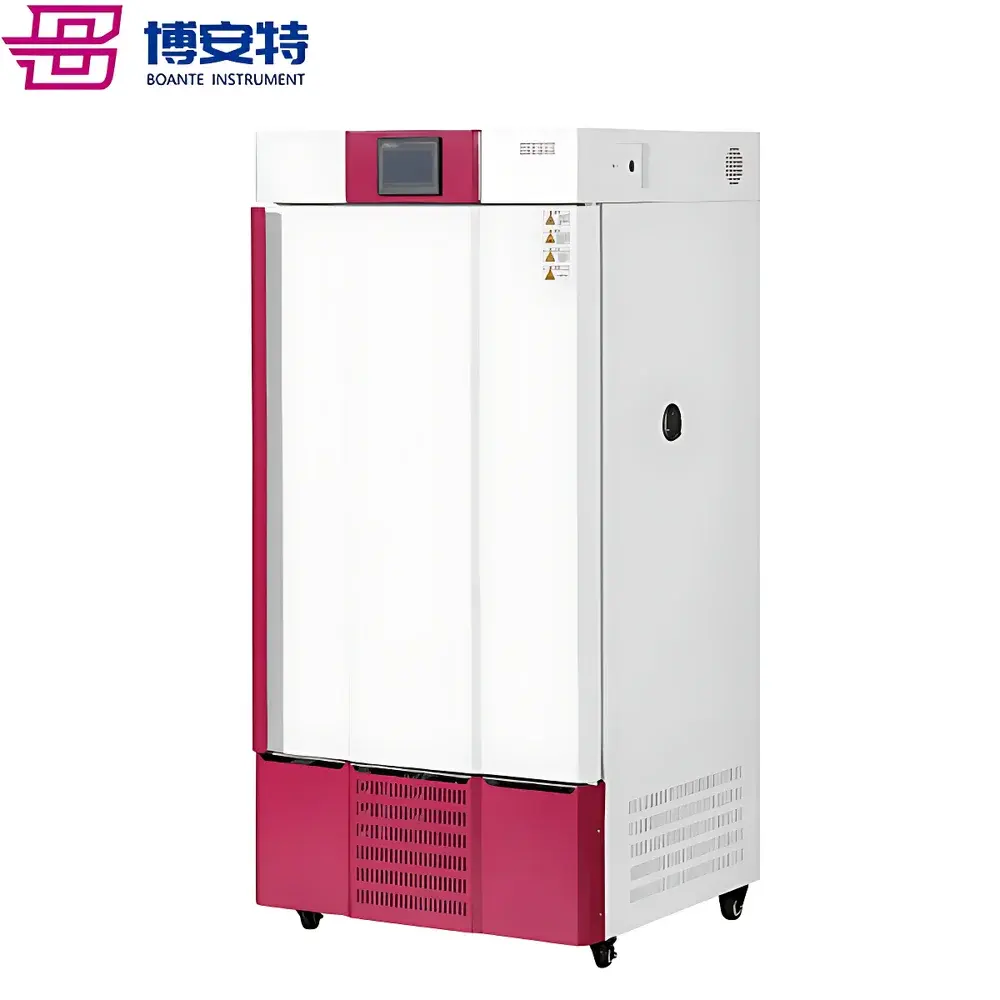
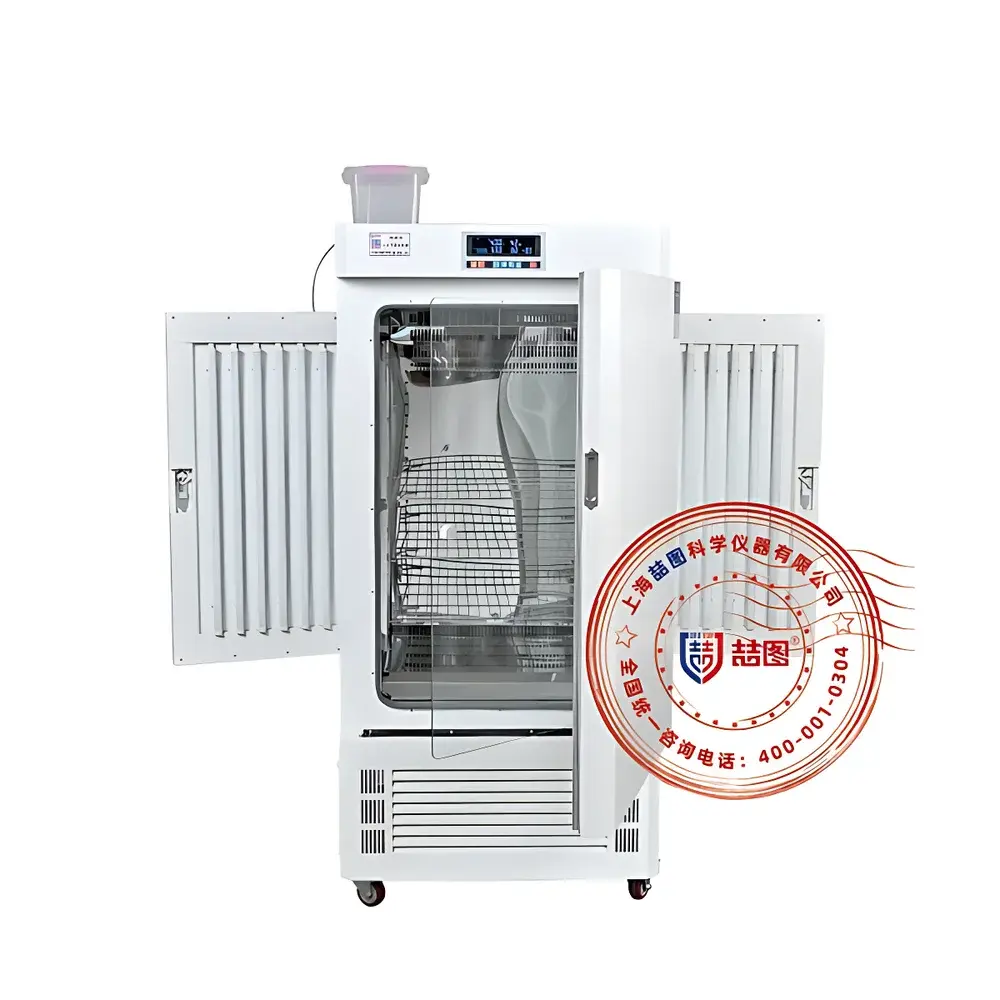
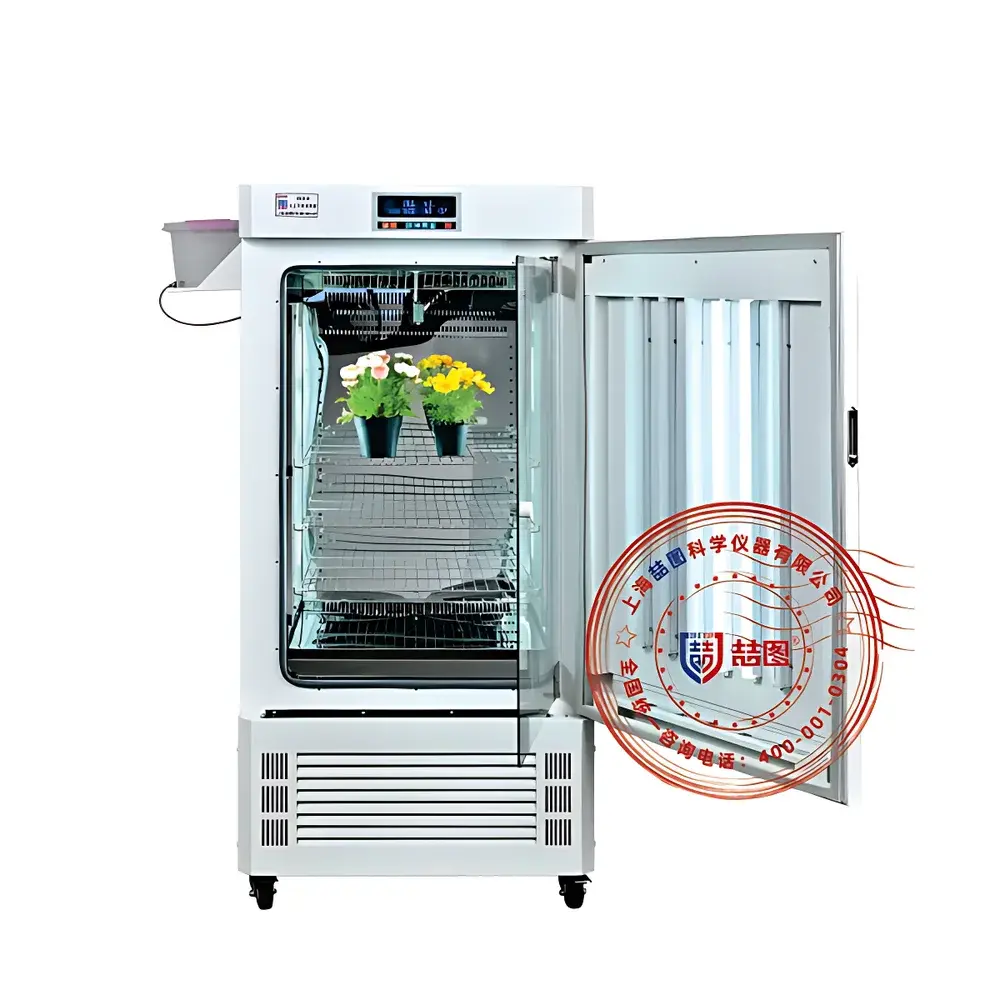
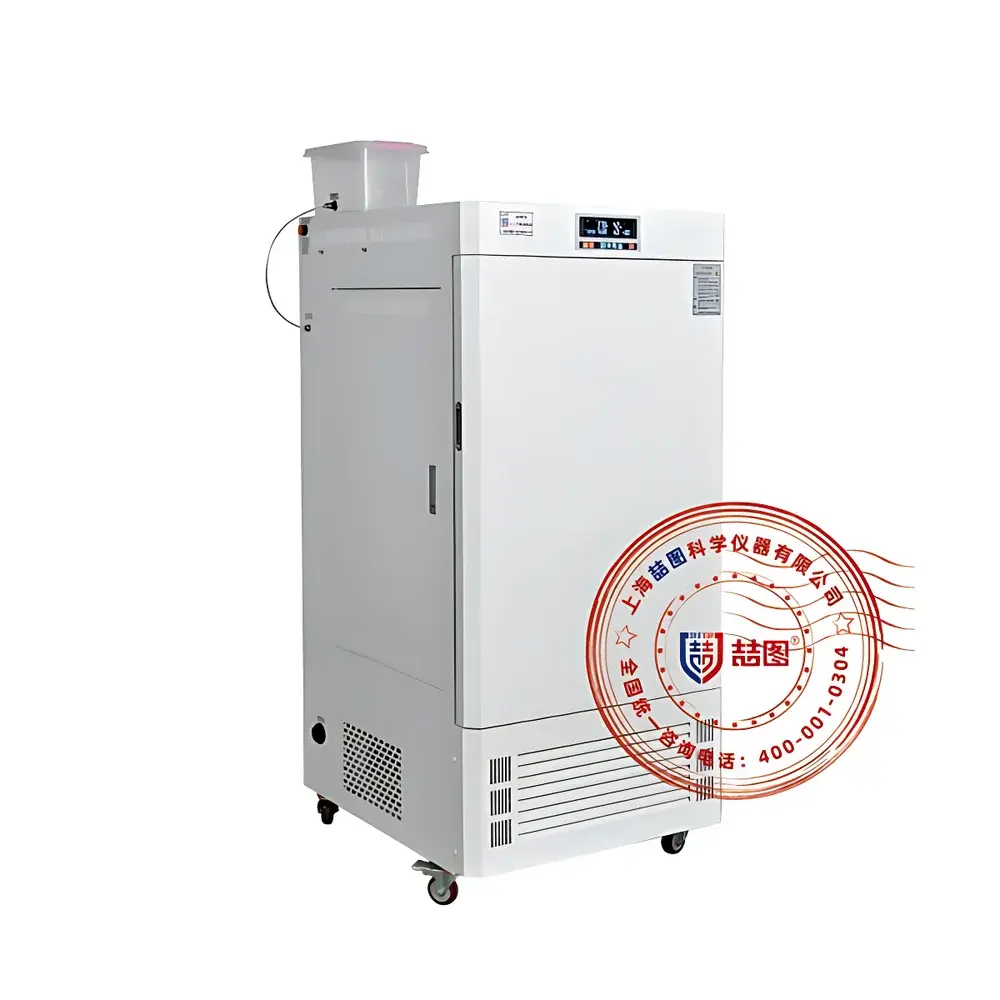
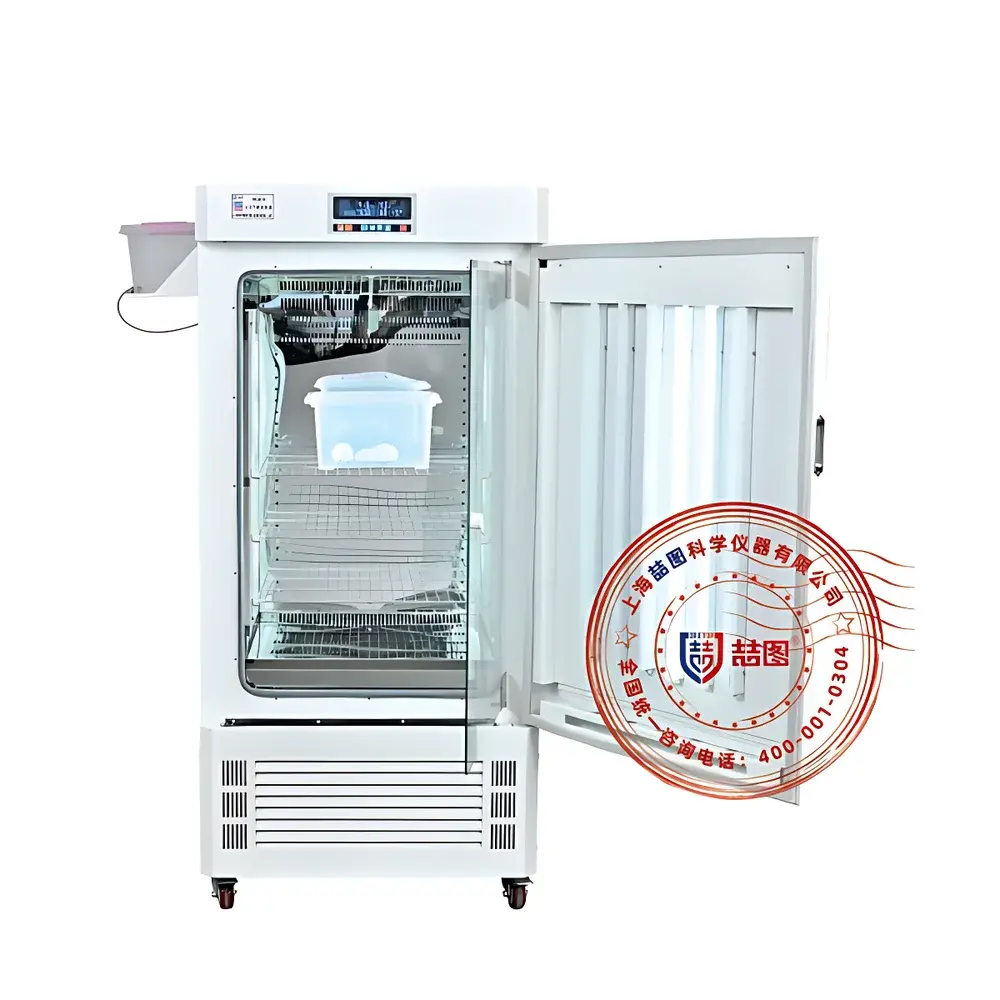
DRETOP ZRQ-150 Artificial Climate Incubator
| Brand | DRETOP |
|---|---|
| Origin | Shanghai, China |
| Manufacturer Type | Direct Manufacturer |
| Product Category | Domestic |
| Model | ZRQ-150 |
| Instrument Type | Fully Automatic (Programmable) |
| Capacity | 150 L |
| Temperature Range | 10–50 °C (with illumination), 0–50 °C (without illumination) |
| Temperature Uniformity | ±1.5 °C |
| Humidity Range | 30–95 %RH |
| Illumination Intensity Range | 0–12,000 lx |
| External Dimensions (W×D×H) | 717 × 680 × 1505 mm |
| Refrigerant | Eco-friendly non-CFC |
| Control System | Microprocessor-based PID controller with LCD interface |
| Lighting System | Adjustable white LED array (3-side illumination) |
| Power Supply | AC 220 V, 50 Hz |
| Input Power | 2300 W |
Overview
The DRETOP ZRQ-150 Artificial Climate Incubator is a fully programmable, multi-parameter environmental simulation chamber engineered for precision-controlled biological experimentation. It integrates independent regulation of temperature, relative humidity, and photosynthetically active radiation (PAR)-capable illumination within a single enclosed workspace—enabling reproducible simulation of diurnal cycles, seasonal climatic conditions, and controlled photobiological environments. Designed in accordance with ISO 17025-aligned laboratory infrastructure requirements, the ZRQ-150 supports GLP-compliant experimental protocols in plant physiology, microbial culture, entomological rearing, BOD analysis, and tissue-based assays. Its thermodynamic architecture employs a dual-mode refrigeration system (active cooling + resistive heating), coupled with a high-efficiency axial air circulation mechanism and condensate management system, ensuring stable thermal-hygrometric profiles across the full operational envelope.
Key Features
- Microprocessor-based PID control system with real-time monitoring of temperature, humidity, illumination intensity, and elapsed runtime—supporting up to 30 programmable segments per cycle.
- Three operational modes: fixed-point (constant condition), day/night cycling (asymmetric setpoint scheduling), and multi-step program mode (time-dependent parameter ramping).
- Triple-layer door design: outer magnetic seal with nano-composite gasket, inner tempered glass viewport, and structural chamfered corners for minimized thermal bridging and enhanced optical clarity.
- Stainless steel interior chamber (304 grade) with removable, height-adjustable stainless steel shelves—designed for autoclave-compatible cleaning and residue-free sterilization.
- Eco-conscious refrigeration using R134a or R600a (non-ozone-depleting, low-GWP) compressors, paired with automated defrost logic and compressor protection sequencing (start-delay, stop-interval, thermal overload cutoff).
- LED illumination system delivering 0–12,000 lx output across a full-spectrum white light source (400–830 nm), with optional multi-wavelength configurations (R/G/B/V/W) available for spectral response studies.
- Comprehensive alarm architecture including over-temperature, under-humidity, door-open, low-water, illumination failure, and sensor fault alerts—with event logging timestamped to the minute.
Sample Compatibility & Compliance
The ZRQ-150 accommodates a broad range of biological and biochemical samples—including seed germination trays, Petri dishes, multi-well plates, insect rearing cages, and small aquatic mesocosms—within its 150 L working volume. Internal dimensions (500 × 400 × 750 mm) allow vertical stacking of standard ISO 8573-1 compliant sample carriers. The unit complies with IEC 61000-6-3 (EMC emission standards) and IEC 61000-6-2 (immunity), and meets mechanical safety requirements per EN 61010-1 for laboratory equipment. While not certified to FDA 21 CFR Part 11 out-of-the-box, its data logging functionality (including audit-trail-capable parameter history storage at 1-minute intervals) supports validation pathways for GMP/GLP-regulated workflows when deployed with documented SOPs and periodic calibration verification.
Software & Data Management
The embedded controller records all operational parameters—including temperature, humidity, illumination level, alarm status, and runtime—into non-volatile memory with automatic timestamping. Historical data is retrievable via front-panel interface and exportable as CSV files through USB port (optional RS-485 or Ethernet module available). The system supports password-protected access tiers (operator, supervisor, administrator), time-limited license enforcement, screen lock timeout, and bilingual UI (English/Chinese). Real-time trend visualization displays the prior 60 minutes of temperature and illumination profiles; lifetime LED usage metrics and predictive maintenance prompts are integrated into the diagnostics menu. All stored data retains integrity during power interruption thanks to built-in UPS-ready circuitry and parameter retention firmware.
Applications
- Plant science: Controlled-environment phenotyping, photomorphogenesis studies, vernalization trials, and abiotic stress response assays under defined PAR spectra.
- Microbiology: Aerobic/anaerobic cultivation of mesophilic strains requiring precise hygrometric control (e.g., Aspergillus, Penicillium, lactic acid bacteria).
- Entomology: Diapause induction, developmental staging of Drosophila or Tribolium under programmable thermoperiods.
- Environmental testing: BOD5 incubation per ASTM D5210-22, algal growth inhibition assays (OECD 201), and sediment toxicity screening.
- Biotechnology: Pre-culture conditioning of explants prior to transformation, callus induction under low-light/high-humidity regimes, and fungal secondary metabolite profiling.
FAQ
What is the temperature recovery time after door opening?
Typically ≤12 minutes to return within ±0.5 °C of setpoint following a 10-second door opening at 25 °C ambient, verified per ISO 15378 Annex C methodology.
Is humidity control validated across the full 30–95 %RH range?
Yes—calibrated against NIST-traceable chilled-mirror hygrometers; deviation remains within ±3–5 %RH per manufacturer specification under steady-state conditions.
Can the LED lighting spectrum be customized for specific photobiological experiments?
Yes—multi-channel RGBWV modules support user-defined spectral ratios (e.g., R:B = 4:1 to 9:1) and dynamic spectral shifting within programmed segments.
Does the unit support remote monitoring or integration with building management systems?
Standard configuration includes Modbus RTU over RS-485; optional Ethernet/IP or MQTT gateway modules enable SCADA-level integration and cloud-based telemetry.
What maintenance intervals are recommended for long-term reliability?
Compressor oil inspection every 24 months; condenser coil cleaning quarterly; humidity sensor recalibration annually; door gasket integrity check biannually.