

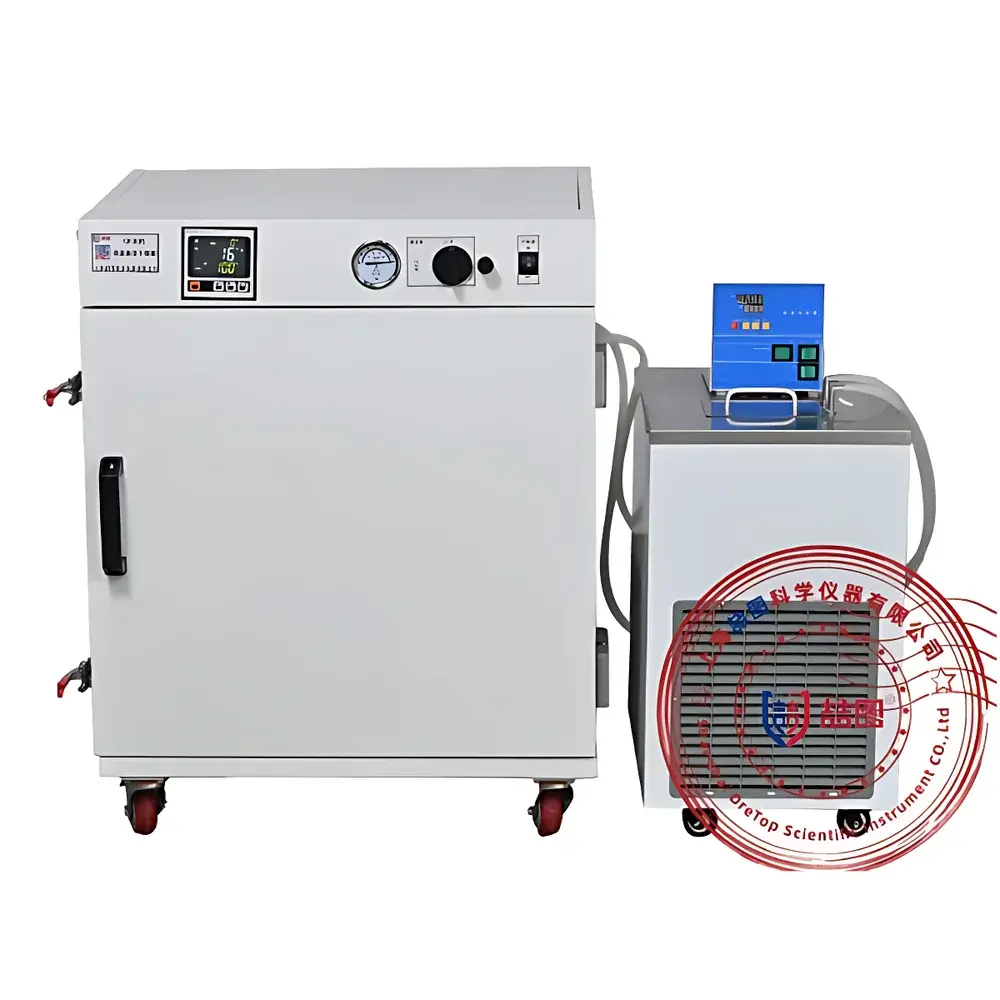
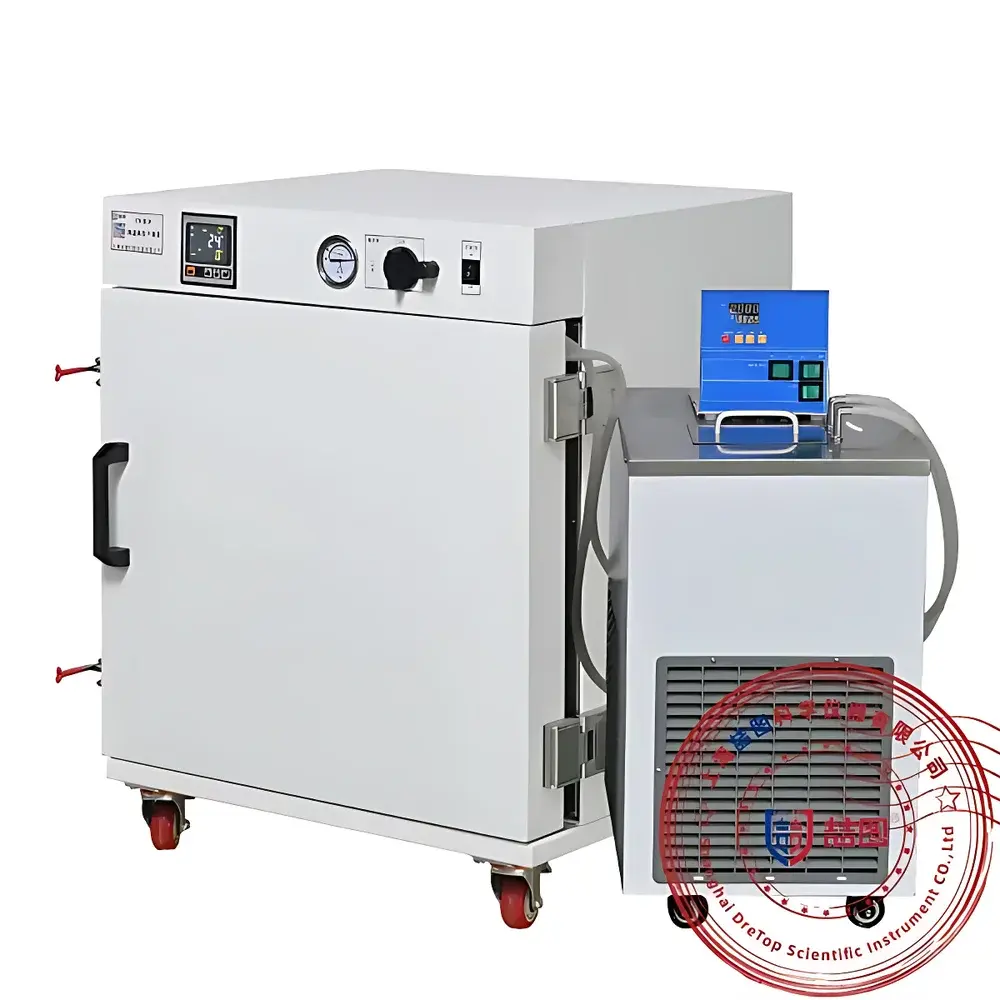
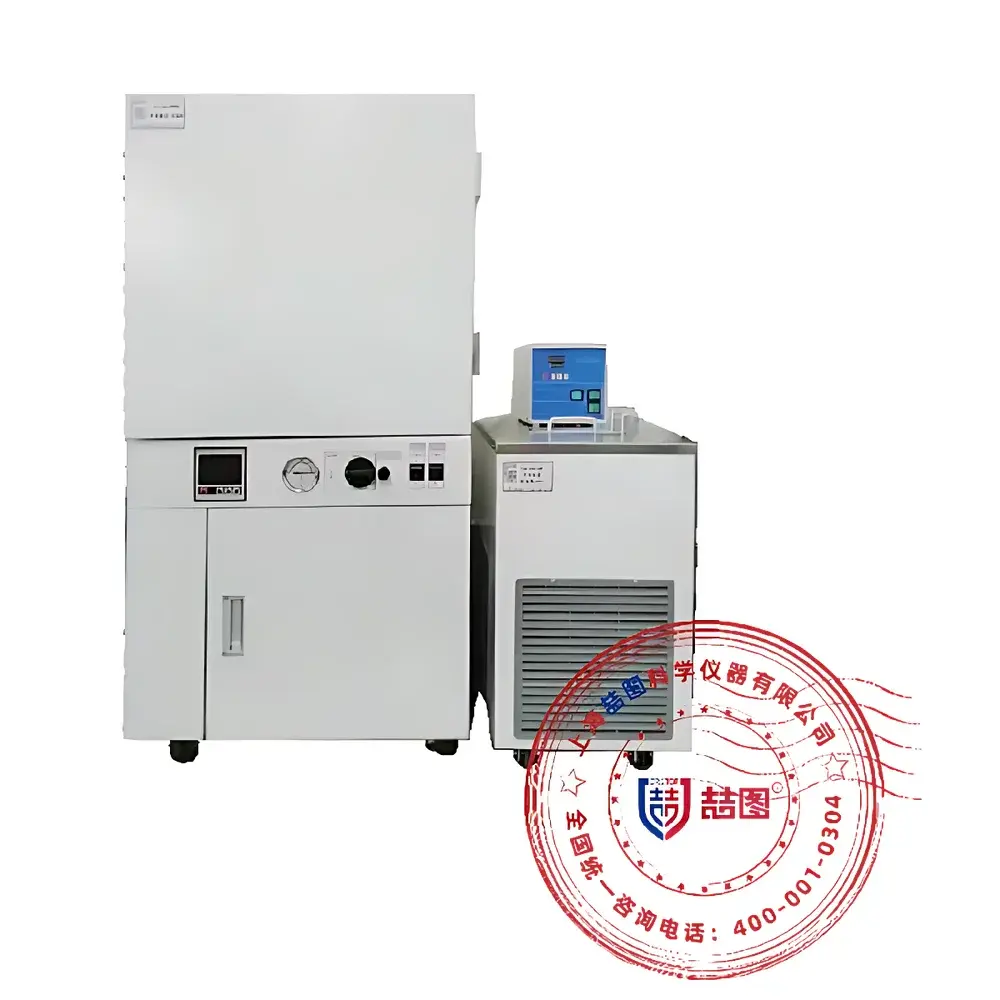
DRETOP UR4-30 High-Temperature Vacuum Drying Oven
| Brand | DRETOP |
|---|---|
| Origin | Shanghai, China |
| Manufacturer Type | Direct Manufacturer |
| Instrument Type | Vacuum Oven |
| Temperature Range | RT+10 to 400 °C |
| Temperature Uniformity | ±1 °C |
| Temperature Fluctuation | ±1 °C |
| Temperature Resolution | 0.1 °C |
| Vacuum Level | ≤133 Pa |
| Inner Chamber Dimensions | 320 × 320 × 300 mm |
| Chamber Volume | 30 L |
| Chamber Material | Stainless Steel (SUS304) |
| Heating Method | External Heaters |
| Working Environment Temperature | 5–45 °C |
| Insulation | Glass Fiber |
| Safety Protections | Overtemperature Alarm, Leakage Protection, Short-Circuit Protection, Overload Protection, Power-Failure Data Retention |
Overview
The DRETOP UR4-30 High-Temperature Vacuum Drying Oven is an engineered thermal processing system designed for precise, oxidation-free drying, annealing, degassing, and moisture removal under controlled vacuum conditions. Operating on the fundamental principle of vapor pressure depression—where reduced ambient pressure lowers the boiling point of volatile components—the UR4-30 enables efficient thermal treatment of heat-sensitive, hygroscopic, or oxygen-reactive materials without decomposition or surface oxidation. Its operational envelope spans from ambient +10 °C up to 400 °C, with a certified vacuum capability of ≤133 Pa (≤1 Torr), making it suitable for applications demanding strict atmospheric control, including semiconductor wafer baking, cathode/anode material conditioning in lithium-ion battery R&D, aerospace composite curing validation, and high-purity ceramic sintering pre-treatment. The oven’s double-walled stainless steel chamber, argon-welded seams, and high-temperature silicone door gasket ensure long-term vacuum integrity, while its external heating configuration minimizes internal convection and hot-spot formation—critical for uniform thermal exposure across delicate samples.
Key Features
- Stainless steel (SUS304) inner chamber and adjustable stainless steel shelving—corrosion-resistant, non-contaminating, and fully removable for cleaning or reconfiguration.
- Intelligent microprocessor-based PID temperature controller with 0.1 °C resolution, ±1 °C uniformity, and programmable timer; includes overtemperature deviation alarm and self-diagnostic fault code display.
- Two-stage rotary latch door mechanism with reinforced silicone sealing ring and water-cooled jacket interface—ensures consistent vacuum retention and extends gasket service life.
- Integrated thermal insulation using high-density glass fiber between chamber and outer casing—reduces surface temperature rise and improves energy efficiency.
- Dual-layer tempered safety observation window with anti-fog coating—enables real-time visual monitoring without compromising vacuum integrity.
- Comprehensive electrical safety architecture: leakage current protection, short-circuit interruption, overload cutoff, and non-volatile parameter memory to retain setpoints after power interruption.
Sample Compatibility & Compliance
The UR4-30 accommodates powders, thin films, coated substrates, porous ceramics, electrode slurries, and encapsulated electronic assemblies—particularly where air exposure induces oxidation, hydrolysis, or bubble entrapment. Its vacuum-only environment eliminates convective disturbance, preserving particulate morphology during drying. The system complies with general laboratory safety standards (IEC 61010-1) and supports GLP/GMP-aligned workflows through traceable temperature logging (when paired with optional RS485/USB data export) and configurable alarm thresholds. While not intrinsically rated for explosive atmospheres, its inert-gas inlet option (N₂ purge) allows safe processing of pyrophoric or moisture-reactive compounds per ASTM E2018 and ISO 11143 guidelines.
Software & Data Management
The standard configuration features a backlit LCD controller with intuitive menu navigation and real-time dual-display of setpoint/actual temperature and vacuum level. Optional upgrades include a color touchscreen controller with multi-segment ramp-soak programming, built-in data logging (up to 10,000 records), and USB export capability for CSV-formatted thermal profiles. When integrated with third-party LIMS or MES platforms via RS485 Modbus RTU, the UR4-30 supports audit-ready operation—including timestamped event logs for temperature excursions, vacuum breaches, and door-open intervals—facilitating compliance with FDA 21 CFR Part 11 requirements when combined with appropriate user access controls and electronic signature protocols.
Applications
- Battery R&D: Electrode drying and binder crosslinking under N₂/vacuum to prevent LiCoO₂ degradation and optimize SEI formation.
- Semiconductor fabrication: Wafer desiccation prior to thin-film deposition and photoresist hard-bake stabilization.
- Advanced materials: Thermal aging studies of polymer composites, metal-organic frameworks (MOFs), and aerogels under controlled partial pressure.
- Pharmaceutical development: Solvent residue removal from lyophilized APIs and excipient blends without thermal degradation.
- Environmental testing: Accelerated aging of sensor coatings and filtration membranes under simulated high-altitude or space-grade vacuum conditions.
- Quality assurance labs: Moisture content validation per USP and ASTM D2297 for adhesives, sealants, and encapsulants.
FAQ
What vacuum level can the UR4-30 achieve, and how is it measured?
The UR4-30 achieves a base vacuum of ≤133 Pa (1 Torr) using a compatible rotary vane pump; vacuum level is monitored via either analog gauge or optional digital vacuum meter calibrated to ISO 27875 traceable standards.
Is the chamber volume truly 30 L, and how is usable space affected by shelving?
The nominal chamber volume is 30 L (320 × 320 × 300 mm internal); one adjustable shelf is standard—removing it yields full-height access, while adding optional shelves reduces vertical clearance but maintains ISO-defined airflow-free thermal homogeneity.
Can the UR4-30 be used for inert-atmosphere processing?
Yes—optional N₂ inlet valve (0–10 L/min adjustable) enables purging, backfilling, or continuous inert gas flow; compatible with mass flow controllers for precise atmosphere composition management.
What maintenance is required for long-term vacuum performance?
Routine checks include gasket integrity inspection every 6 months, vacuum pump oil replacement per manufacturer schedule, and verification of water-cooling circuit flow if R-series circulation unit is installed.
Does the UR4-30 support regulatory-compliant data archiving?
With the optional color touchscreen controller and USB export, raw time-stamped temperature/vacuum datasets can be archived externally; full 21 CFR Part 11 compliance requires integration with validated third-party software and institutional SOPs for electronic record governance.



