
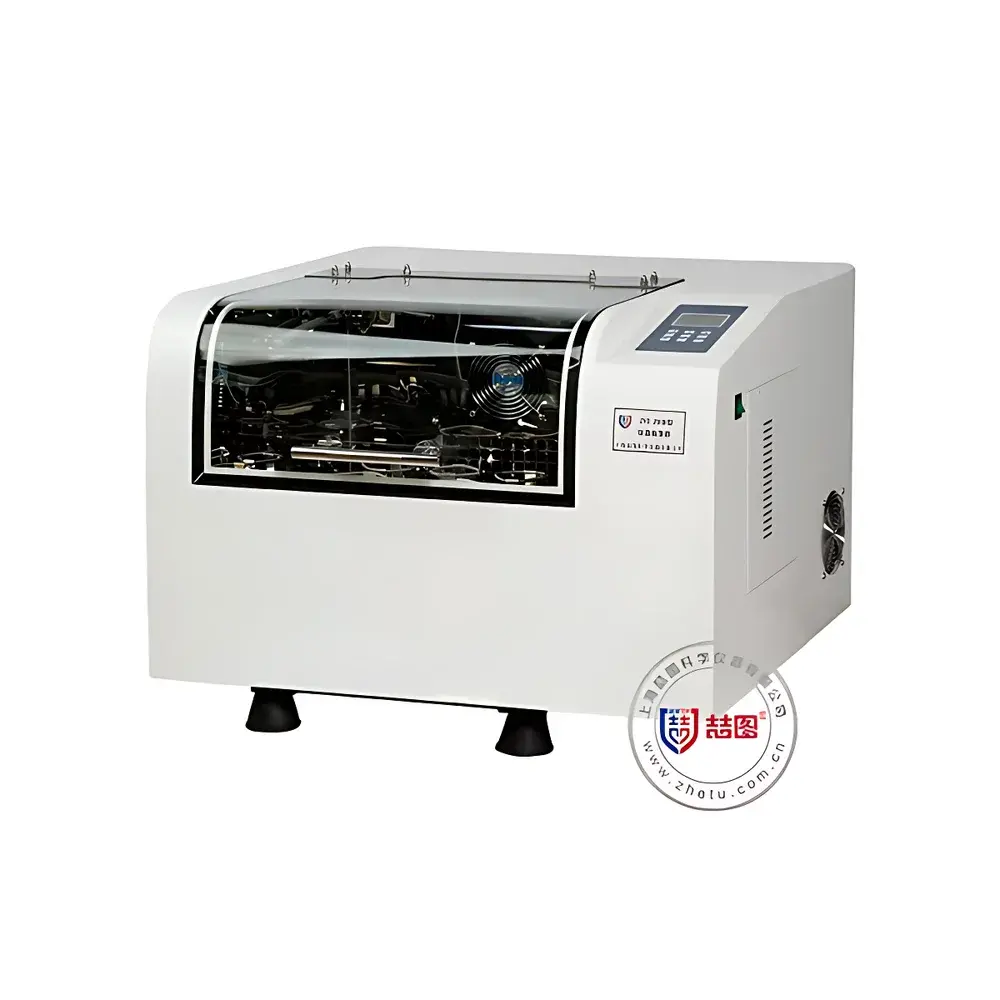
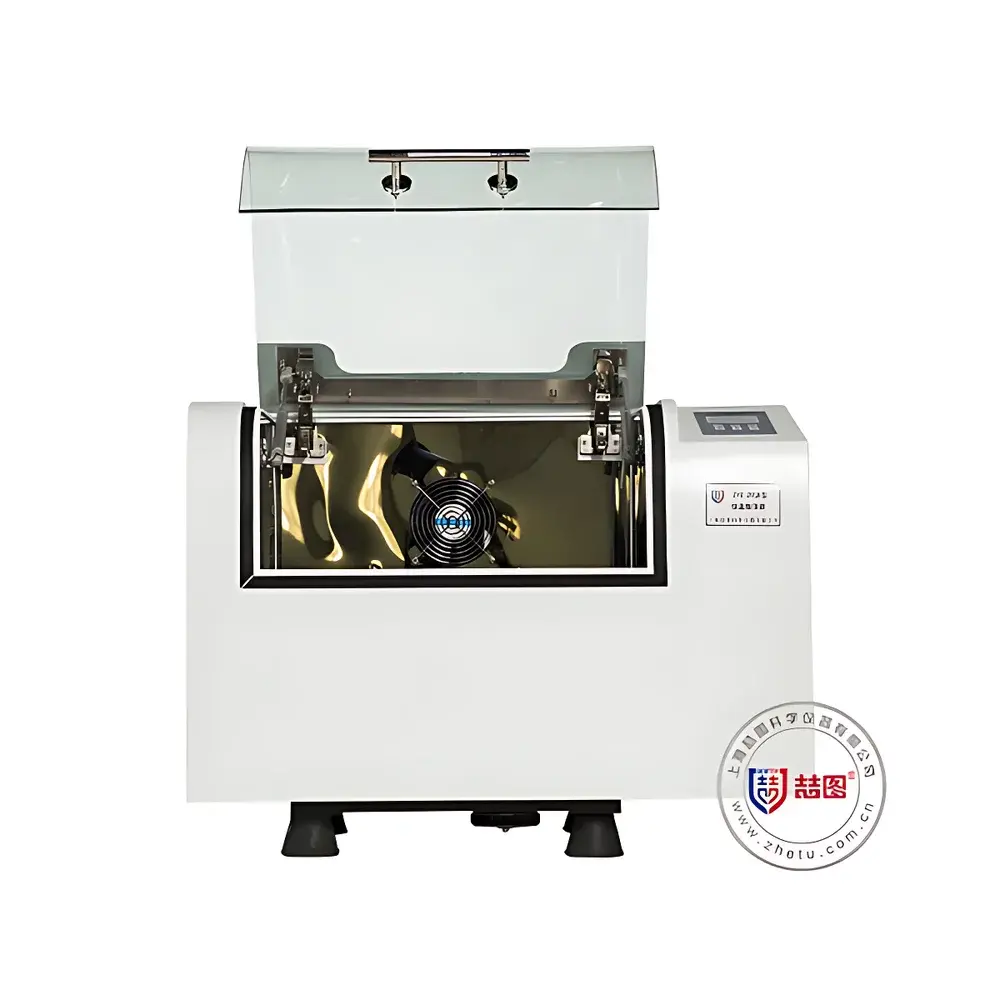
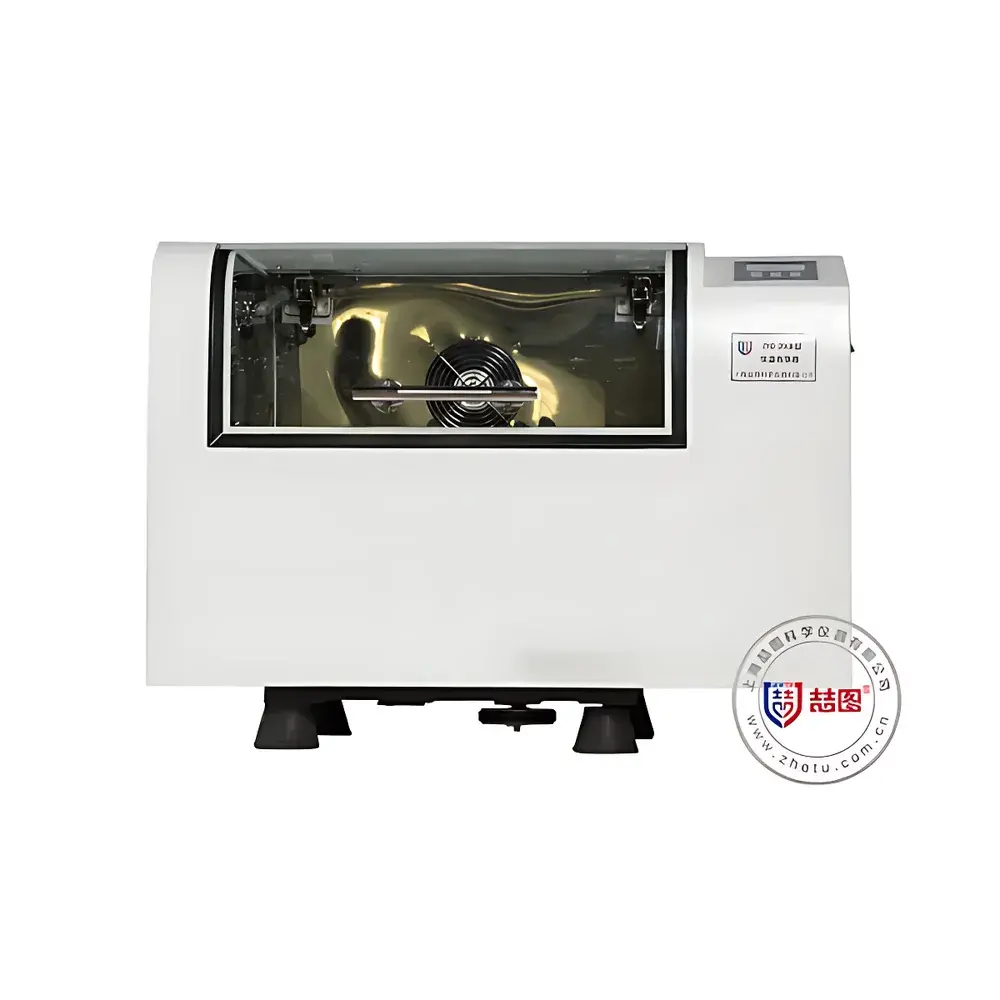
DRETOP ZYC-400BHR Air-Bath Constant-Temperature Orbital Shaker
| Brand | DRETOP |
|---|---|
| Origin | Shanghai, China |
| Manufacturer Type | Direct Manufacturer |
| Instrument Type | Air-bath constant-temperature orbital shaker / incubator shaker |
| Timer Range | 0–999 h |
| Oscillation Frequency | 0–300 rpm |
| Orbit Diameter | 26 mm |
| Temperature Range | 4–60 °C |
| Shelf Quantity | 1 |
Overview
The DRETOP ZYC-400BHR Air-Bath Constant-Temperature Orbital Shaker integrates precise temperature control with stable orbital agitation in a single compact unit, engineered for reproducible cultivation and biochemical reaction support under controlled environmental conditions. Unlike water-jacketed or refrigerated incubator shakers, this model employs an air-circulating heating system—optimized for rapid thermal equilibration, uniform chamber temperature distribution (±0.3 °C typical at setpoint), and minimal condensation risk during low-temperature operation. Its orbital motion mechanism follows ISO 8570-compliant kinematics, delivering consistent shear profiles across flask volumes from 50 mL to 5 L. Designed for continuous-duty laboratory use, the ZYC-400BHR serves as a core platform in microbial growth studies, enzyme kinetics assays, cell suspension culture, and small-scale fermentation process development where simultaneous thermal and mechanical stimulation is required.
Key Features
- Microprocessor-based P.I.D. temperature and speed controller with real-time digital display of setpoint and actual values (temperature resolution: 0.1 °C; speed resolution: 1 rpm)
- Orbital drive system with three-dimensional eccentric cam mechanism and soft-start acceleration profile to suppress liquid splashing and minimize vortex-induced sample disturbance
- Stainless steel inner chamber and oscillating platform (AISI 304 grade), electrostatically coated outer housing, and tempered glass observation window with integrated LED illumination
- Brushless DC motor with constant torque output across full speed range (0–300 rpm), maintenance-free operation, and electromagnetic interference shielding
- Dual safety architecture: independent over-temperature cutoff (mechanical backup thermostat), overspeed shutdown, audible/visual alarm activation on deviation > ±2 °C or ±5 rpm
- User-configurable parameter encryption and power-failure recovery function—retains last operational settings after interruption
- Optional accessories include universal spring clamps, conical flask holders (50–5000 mL), UV-C germicidal lamp module (254 nm, timer-controlled), and O₂ inlet port with manual isolation valve
Sample Compatibility & Compliance
The ZYC-400BHR accommodates standard laboratory vessels including Erlenmeyer flasks (50–2000 mL), test tubes (15–50 mL), microtiter plates (with optional adapter), and custom bioreactor bottles. Its 920 × 500 mm platform supports up to 36 × 250 mL flasks or 8 × 5 L carboys when configured with reinforced clamping fixtures. The unit complies with IEC 61010-1:2010 for electrical safety in laboratory equipment and meets EN 60335-1 requirements for temperature-controlled appliances. While not certified for GMP manufacturing environments, its data logging capabilities—including timestamped temperature/speed history and alarm event logs—support GLP-aligned documentation practices. Optional USB interface enables export of CSV-formatted datasets compatible with FDA 21 CFR Part 11–compliant analysis software upon integration with validated third-party platforms.
Software & Data Management
The embedded controller records operational parameters at user-defined intervals (1–60 min) and stores up to 30 days of continuous runtime data internally. Via the rear-panel USB-B port, users can perform one-click download of time-series temperature, speed, and timer status logs directly to Windows or macOS systems. Exported files contain ISO 8601 timestamps, sensor ID metadata, and checksum-verified integrity headers. No proprietary software installation is required—data opens natively in Excel or MATLAB. For traceability-critical applications, optional firmware upgrade supports audit trail generation (user login, parameter change log, alarm acknowledgment history) aligned with ALCOA+ principles. All firmware updates are delivered via signed binary packages verified against DRETOP’s public key infrastructure.
Applications
- Bacterial and yeast cultivation under defined aeration and thermal regimes (e.g., E. coli expression optimization at 37 °C, S. cerevisiae ethanol tolerance screening at 30 °C)
- Enzymatic hydrolysis and immobilized catalyst testing requiring sustained agitation at 4–15 °C (cold-active proteases) or 55–60 °C (thermostable amylases)
- Mammalian cell suspension culture in serum-free media, particularly for transient transfection protocols demanding strict pH stability and low-shear mixing
- Environmental microbiology: enrichment cultures of psychrophilic isolates from marine sediments (4–10 °C) or thermophilic consortia from geothermal sources (55–60 °C)
- Quality control workflows in pharmaceutical excipient testing—e.g., viscosity stability assessment of polymer solutions under accelerated aging conditions
FAQ
What is the temperature uniformity across the platform at 37 °C?
Typical spatial variation is ≤ ±0.5 °C (measured at nine points per ICH Q5C guidance), verified using NIST-traceable PT100 probes.
Can the unit operate continuously for 999 hours without interruption?
Yes—rated for uninterrupted operation up to 999 h; internal thermal management includes dual-stage fan control and heat-dissipating aluminum chassis design.
Is the USB data export compliant with 21 CFR Part 11?
The device itself does not provide electronic signature or role-based access control; however, exported raw data may be imported into validated LIMS or ELN systems that implement Part 11 requirements.
What is the maximum load capacity for the platform?
Maximum dynamic load is 25 kg distributed evenly; static load capacity is 35 kg—verified per ASTM D4169 performance testing protocol.
Does the UV-C option meet ISO 15858 for surface disinfection efficacy?
UV-C irradiance at 254 nm reaches ≥ 40 µW/cm² at 30 cm distance; cumulative dose achieves ≥ 40 mJ/cm² in 30 min, satisfying ISO 15858 Annex B for non-porous surfaces.





