
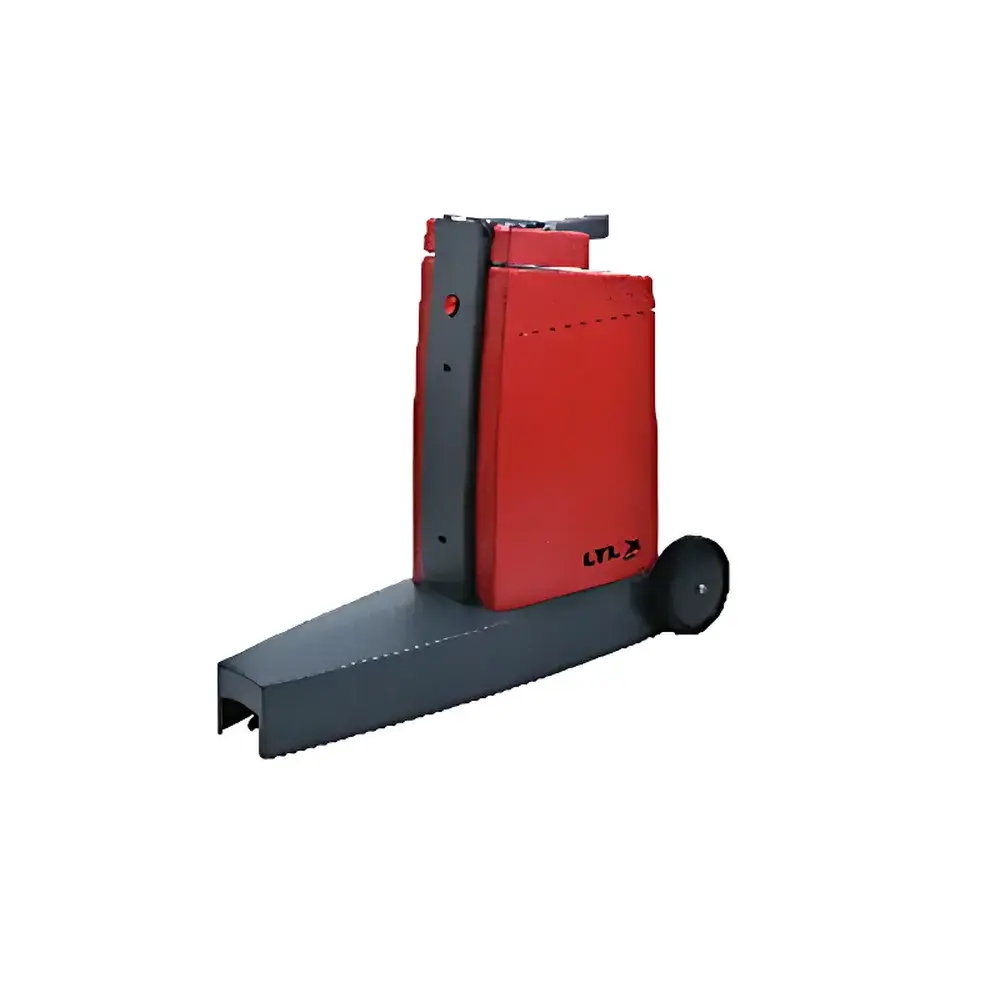
Delta LTL-Mark II Retroreflectometer for Road Marking Measurement
| Brand | Delta |
|---|---|
| Origin | Denmark |
| Model | LTL-Mark II |
| Compliance | ASTM E1710, E2177, E2302, E2832 |
| Measurement Range (RL) | 0–2000 mcd·m⁻²·lx⁻¹ |
| Incident Angles | 1.24° and 88.76° |
| Observation Angles | 2.29° and 1.05° |
| Illumination Angle Spread | Horizontal 0.33°, Vertical 0.17° |
| Observation Angle Spread | ±0.17° |
| Standard Viewing Distance | 30 m |
| Measurement Area | 45 mm (w) × 200 mm (h) |
| Light Source | Maintenance-free LED calibrated to CIE A-illuminant |
| Photometric Response | CIE photopic luminosity function (V(λ)) compliant |
| Data Output | Internal storage, USB export, RSC software for report generation |
| Power | Rechargeable battery with charger included |
| Accessories | Wheeled transport case, telescopic handle, built-in thermal printer, DANAK-accredited calibration certificate, quick start guide, full documentation on USB |
Overview
The Delta LTL-Mark II Retroreflectometer is a precision-engineered optical instrument designed for the quantitative measurement of retroreflective performance of road surface markings under standardized geometric and photometric conditions. It operates on the principle of directional reflectance measurement—illuminating the marking at defined incident angles and capturing the luminous intensity returned along a specified observation path, normalized to illuminance (expressed as mcd·m⁻²·lx⁻¹). This methodology aligns rigorously with international test standards including ASTM E1710 (for dry/wet/continuous wet conditions), ASTM E2177 (wet retroreflection), ASTM E2302 (chromaticity and color evaluation), ASTM E2832 (profile height correlation), EN 1436 (European specification for road marking materials), and Chinese national standards GB 16311, GB/T 21383, and JT/T 612. The instrument integrates Delta’s proprietary gradient-index optical train and CIE-compliant photodetector array, ensuring spectral response fidelity to the human photopic vision function V(λ) under CIE Standard Illuminant A. Its robust mechanical architecture supports field deployment across diverse climatic and operational environments—from highway maintenance crews to third-party certification laboratories conducting GLP-compliant audits.
Key Features
- Simultaneous dual-angle retroreflection measurement per ASTM E1710: incident angles of 1.24° (near-normal) and 88.76° (grazing), with observation angles of 2.29° and 1.05°, enabling comprehensive characterization of angular dependence.
- Optical system engineered to meet CEN and ISO-defined angular tolerances: illumination angle spread ≤0.33° (horizontal) and ≤0.17° (vertical); observation angle tolerance ±0.17° at 30 m standard viewing distance.
- Integrated scatter-light compensation algorithm to minimize ambient interference during daytime or low-contrast field measurements.
- High-resolution color LCD with intuitive icon-based navigation—fully operable with single-hand use, even with gloves.
- Maintenance-free, thermally stabilized LED light source calibrated to CIE A-illuminant, eliminating lamp drift and recalibration frequency associated with tungsten-halogen sources.
- Built-in thermal printer for immediate hardcopy output of RL values, date/time stamp, operator ID, and environmental metadata (e.g., surface condition: dry/wet/rain).
- Onboard data logging capacity for ≥10,000 measurements with timestamp, GPS-ready metadata fields (when paired with optional external GNSS module), and automatic statistical summarization (mean, SD, min/max, CV%).
Sample Compatibility & Compliance
The LTL-Mark II accommodates both smooth (non-profiled) and profiled road markings up to 15 mm in height (0.6 inch), including thermoplastic, paint, preformed tape, and glass-bead-embedded systems. Its 45 mm × 200 mm rectangular measurement aperture conforms to EN 1436 Annex A and ASTM E1710 Section 7.2 for representative sampling area definition. All photometric calibrations are traceable to DANAK-accredited reference standards (DK-012-REF), satisfying ISO/IEC 17025 requirements for testing laboratories. Instrument validation includes routine verification using NIST-traceable ceramic tile standards and annual third-party audit support for ISO 9001, ISO/IEC 17025, and transportation agency QA/QC programs (e.g., FHWA, MOT China, Highways England).
Software & Data Management
The RSC (RetroReflectance Software Center) suite—supplied on USB and compatible with Windows 10/11—enables full post-processing, compliance reporting, and database integration. Functions include batch export to CSV/Excel, automated pass/fail assessment against user-defined thresholds (per ASTM or local specifications), graphical trend analysis over time/space, and PDF report generation with embedded calibration certificates and uncertainty budgets. Audit trail functionality logs all user actions, parameter changes, and firmware updates in accordance with FDA 21 CFR Part 11 and EU Annex 11 requirements for regulated environments. Data encryption and role-based access control support GxP-aligned deployment in certified testing facilities.
Applications
- Field verification of newly applied road markings prior to commissioning (pre-acceptance testing per DOT specifications).
- Periodic performance monitoring of in-service markings to assess degradation rate and inform maintenance scheduling.
- Material qualification testing for manufacturers seeking CE marking, CCC certification, or procurement approval from national highway authorities.
- Research into bead embedment depth, binder aging, and contamination effects on retroreflectance decay kinetics.
- Independent laboratory accreditation assessments requiring documented measurement uncertainty per GUM (JCGM 100:2008) and ISO/IEC 17025 Clause 7.6.
FAQ
What standards does the LTL-Mark II comply with for wet retroreflection testing?
It fully implements ASTM E2177–22 for wet retroreflectance measurement, including controlled water film thickness (0.5 ± 0.1 mm), temperature stabilization, and dynamic illumination geometry.
Can the instrument measure chromaticity (color coordinates) in addition to RL?
Yes—via integrated CIE 1931 xy chromaticity calculation per ASTM E2302, supporting L*a*b* conversion and ΔE evaluation against target color tolerances.
Is third-party calibration documentation included with delivery?
Each unit ships with a DANAK-accredited calibration certificate (DK-012-REF traceability), valid for 12 months from date of issue, plus full uncertainty budget per ISO/IEC 17025.
Does the RSC software support automated report generation for regulatory submissions?
Yes—templates conform to ASTM E1710 Annex A, EN 1436 Annex D, and GB/T 21383 reporting structures, including digital signature fields and electronic audit log export.
What is the expected service life of the LED light source?
Rated for ≥50,000 hours of operation with <0.5% spectral shift over lifetime—no scheduled replacement required within typical field instrument service intervals (8–10 years).





