

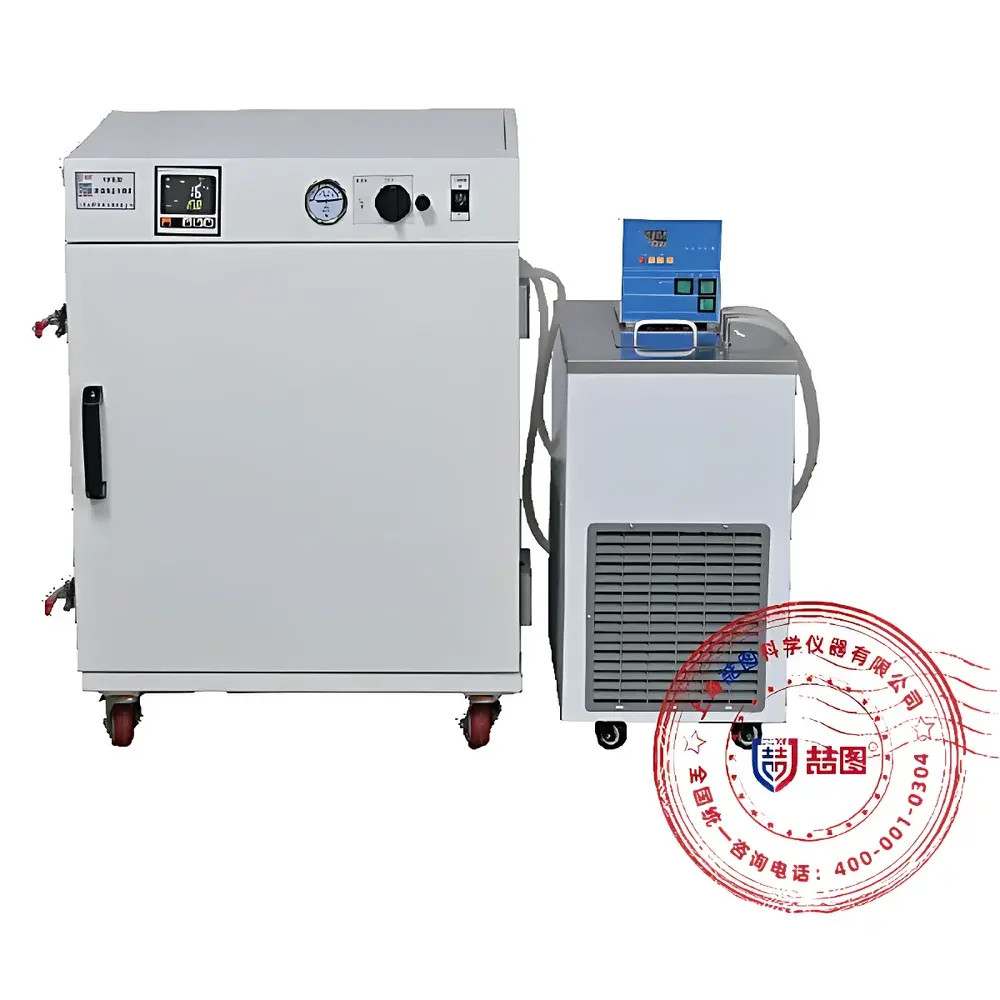
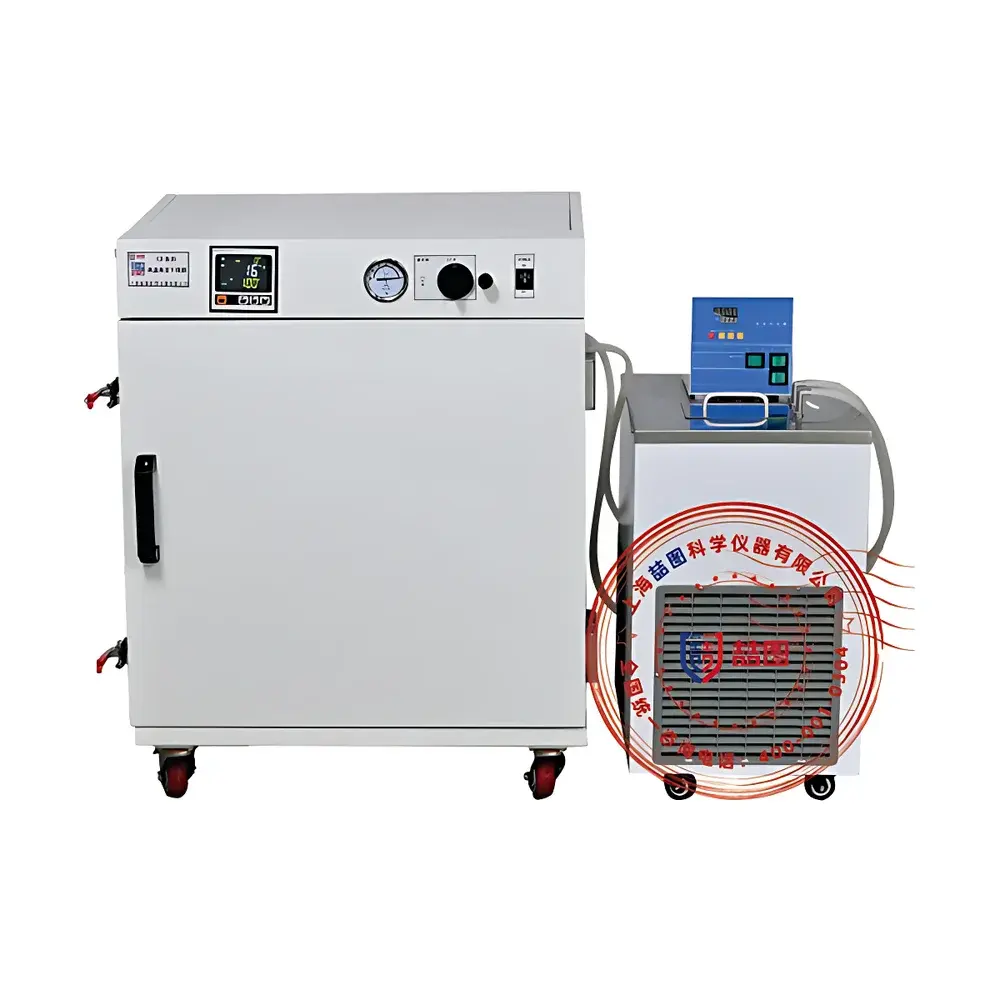
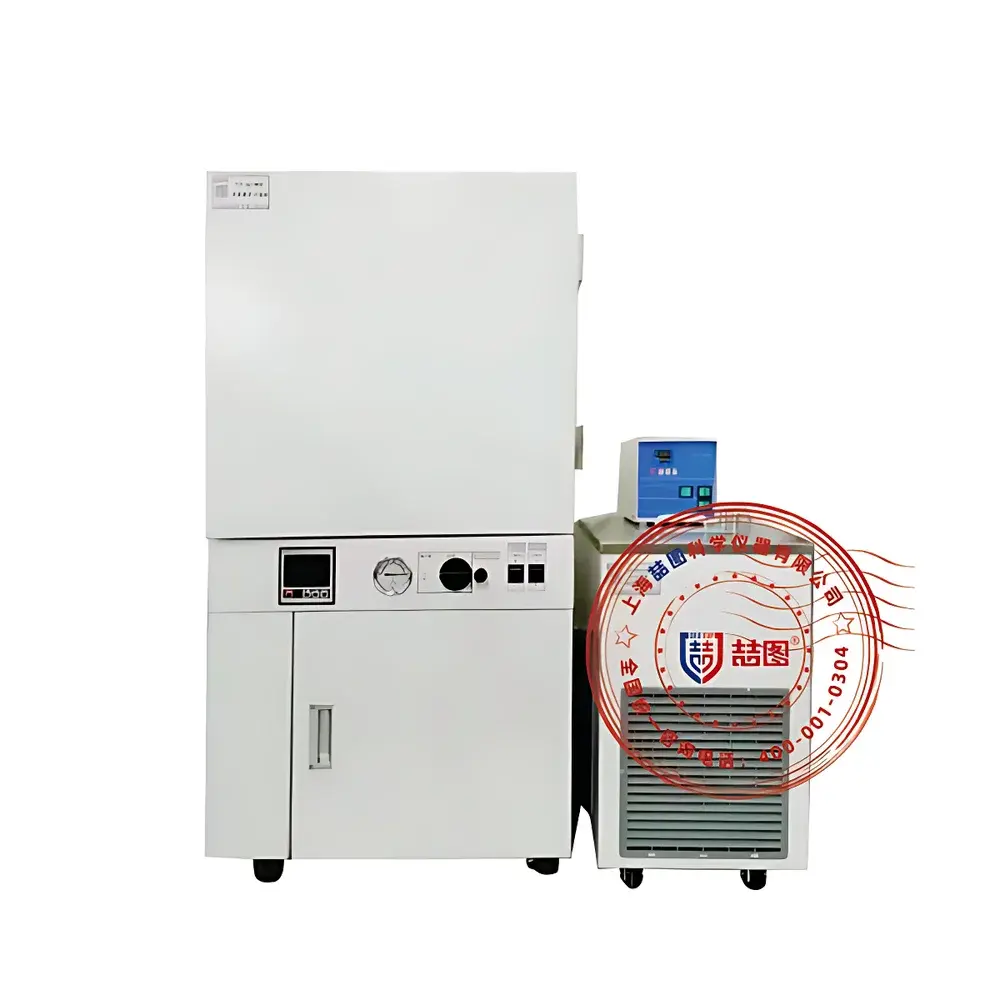
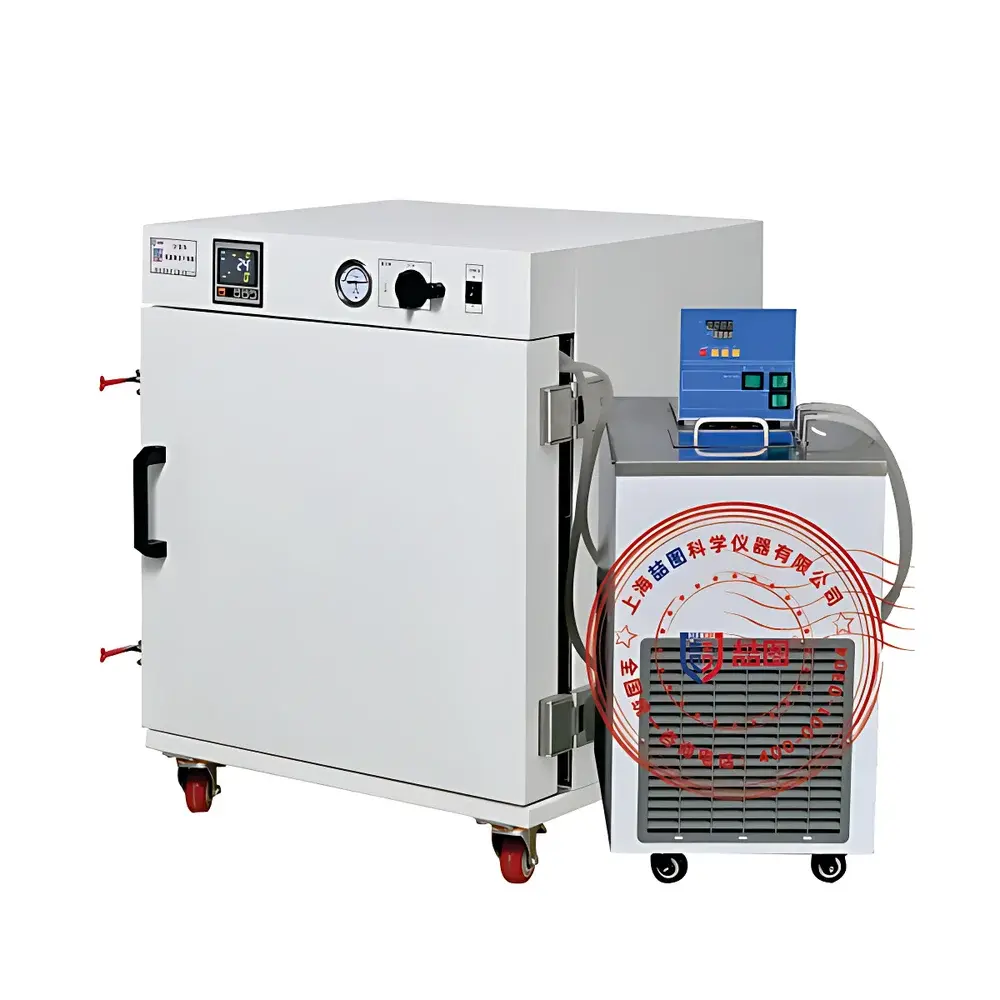
DRETOP UR6-30JVS Programmable High-Temperature Vacuum Drying Oven
| Brand | DRETOP |
|---|---|
| Origin | Shanghai, China |
| Manufacturer Type | Direct Manufacturer |
| Model | UR6-30JVS |
| Instrument Type | Vacuum Drying Oven |
| Temperature Range | RT +10°C to 600°C |
| Temperature Uniformity | ±1°C |
| Internal Chamber Dimensions | 320 × 320 × 300 mm (W×D×H) |
| Temperature Resolution | 0.1°C |
| Vacuum Level | ≤133 Pa |
| Operating Ambient Temperature | 5–45°C |
| Chamber Material | Stainless Steel (AISI 304) |
| Heating Method | Forced-Air Circulation with Dual-Wall Insulation |
| Power Supply | AC 220 V, 50 Hz |
| Standard Accessories | Recirculating Water Cooling Unit, Carbon-Steel Soundproof Enclosure, Rotary Vane Vacuum Pump, J-Type Intermediary Condensate Trap |
Overview
The DRETOP UR6-30JVS Programmable High-Temperature Vacuum Drying Oven is an engineered solution for thermal processing under controlled low-pressure environments. Designed for applications requiring precise temperature management in the absence of atmospheric oxygen, it operates on the principle of vacuum-assisted thermal desorption—lowering the boiling point of volatile components (e.g., solvents, moisture, residual monomers) while suppressing oxidation, decomposition, or surface degradation. Its operational envelope spans from ambient +10°C up to 600°C, making it suitable for high-temperature annealing, ceramic sintering pre-treatment, battery electrode drying, semiconductor packaging curing, and aerospace composite outgassing protocols. The oven integrates a dual-wall stainless steel chamber with argon-welded seams, water-cooled door gasket interface, and integrated condensate management—ensuring long-term vacuum integrity and reproducible process outcomes across R&D, QC, and pilot-scale manufacturing workflows.
Key Features
- Programmable microprocessor-based PID temperature controller with digital vacuum display, enabling multi-step ramp-hold profiles and real-time deviation monitoring;
- Stainless steel (AISI 304) interior chamber and adjustable, removable stainless steel shelves—designed for corrosion resistance and mechanical stability at elevated temperatures;
- Two-stage rotary latch mechanism with high-temperature silicone door seal and water-jacketed flange—maintaining ≤133 Pa vacuum level even during extended 600°C holds;
- Forced-air circulation system with optimized duct geometry and fan speed regulation—ensuring uniform heat distribution without turbulent particle displacement;
- Comprehensive safety architecture: over-temperature alarm with user-defined threshold, automatic power cutoff upon sensor failure, leakage current protection, thermal fuse backup, and non-volatile parameter memory for power interruption recovery;
- Integrated recirculating water cooling unit and J-type intermediary condensate trap—critical for condensing vaporized organics or high-moisture volatiles prior to vacuum pump inlet.
Sample Compatibility & Compliance
The UR6-30JVS accommodates powders, thin-film substrates, battery cathode/anode wafers, ceramic green bodies, and encapsulated electronic assemblies—all without mechanical agitation or oxidative exposure. Its vacuum-tight construction complies with ISO 554 (standard atmospheres for conditioning and testing), ASTM E145 (specification for gravity-convection and forced-ventilation ovens), and supports GLP/GMP-aligned validation protocols. When paired with optional Q-type dual-stage condensation and inert gas purge modules, it meets requirements for USP (glass containers), IEC 60068-2-66 (vacuum testing), and NASA-STD-6002 (outgassing specifications). All electrical components conform to IEC 61000-6-3 (EMC emission standards) and IEC 61000-6-2 (immunity).
Software & Data Management
The T-type color touchscreen controller supports up to 32 programmable segments per profile, with real-time logging of temperature, vacuum pressure, elapsed time, and alarm events. Data export is available via USB port in CSV format, compatible with LIMS integration and 21 CFR Part 11-compliant audit trail systems when deployed with validated firmware (optional). The controller records timestamped fault codes—including thermocouple open-circuit, vacuum leak detection, and heater circuit failure—enabling rapid root-cause analysis. Optional Ethernet connectivity allows remote monitoring and centralized fleet management across multi-unit laboratory deployments.
Applications
- Battery R&D: Electrode drying under N₂/vacuum to prevent LiCoO₂ oxidation and ensure consistent SEI formation;
- Materials Science: Pre-sintering of metal-organic frameworks (MOFs), zeolites, and aerogel precursors where solvent removal must occur below decomposition thresholds;
- Semiconductor Packaging: Die-attach curing and wire-bond outgassing to eliminate voids and interfacial delamination;
- Pharmaceutical Development: Active pharmaceutical ingredient (API) solvent residue reduction per ICH Q5C guidelines;
- Aerospace Engineering: Composite layup degassing prior to autoclave cure, adhering to Boeing BAC 5307 and Airbus AITM 1-0011 standards;
- Academic Research: Controlled pyrolysis studies, catalyst activation, and thermal gravimetric method development under inert or reduced-pressure conditions.
FAQ
What is the maximum sustainable vacuum level at 600°C?
The chamber maintains ≤133 Pa continuously at 600°C when equipped with the standard J-type condensate trap and recirculating water cooling system.
Can inert gas purging be integrated?
Yes—optional mass flow-controlled N₂ or Ar purge ports are available for maintaining positive inert atmosphere during cool-down or for hybrid vacuum/inert processing sequences.
Is calibration documentation provided?
Each unit ships with factory calibration certificates for the PT100 sensor and digital vacuum transducer, traceable to NIST standards; IQ/OQ documentation templates are included for GxP validation.
What maintenance intervals are recommended for the vacuum pump?
The included rotary vane pump requires oil replacement every 500 operating hours and filter element replacement every 1,000 hours under typical lab usage.
How is temperature uniformity verified across the chamber volume?
Uniformity is validated per ASTM E2203 using nine calibrated PT100 probes positioned at standardized locations (center, corners, mid-walls); typical measured deviation is ±0.8°C at 400°C and ±1.0°C at 600°C.
Related Products



