

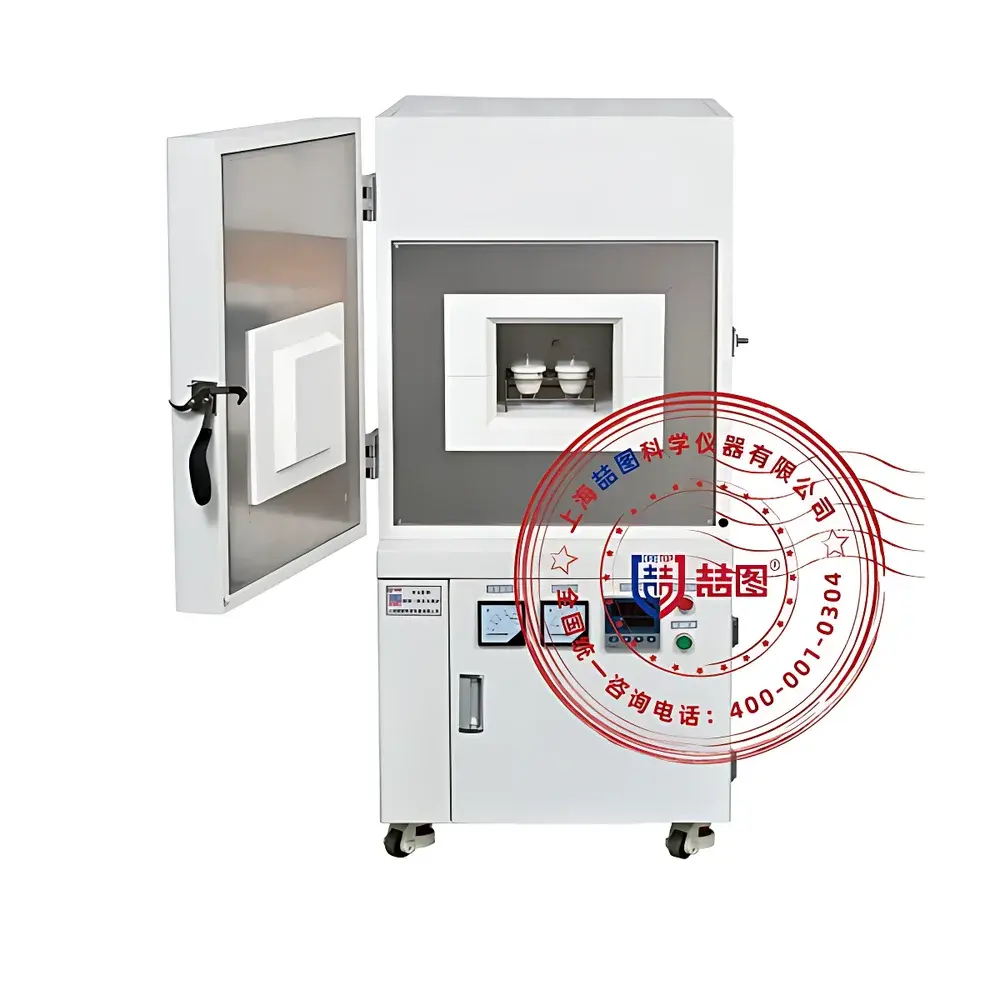
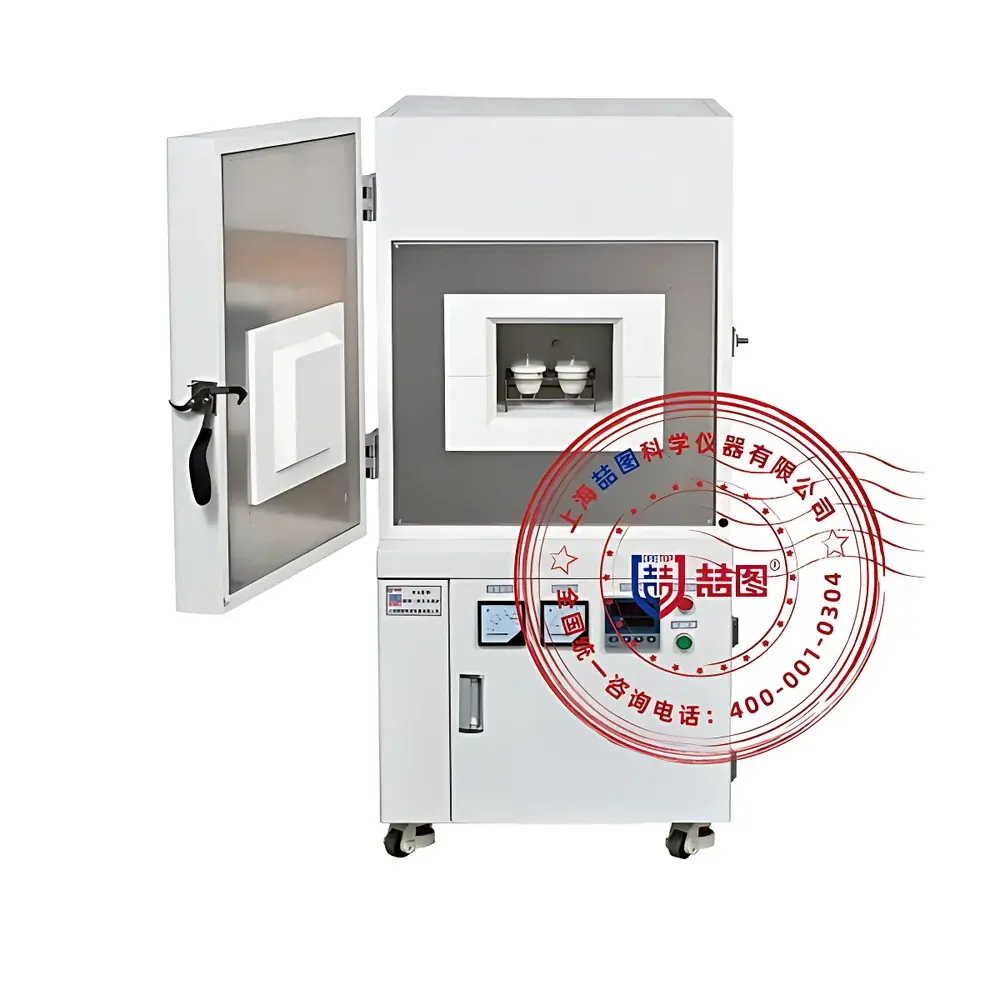
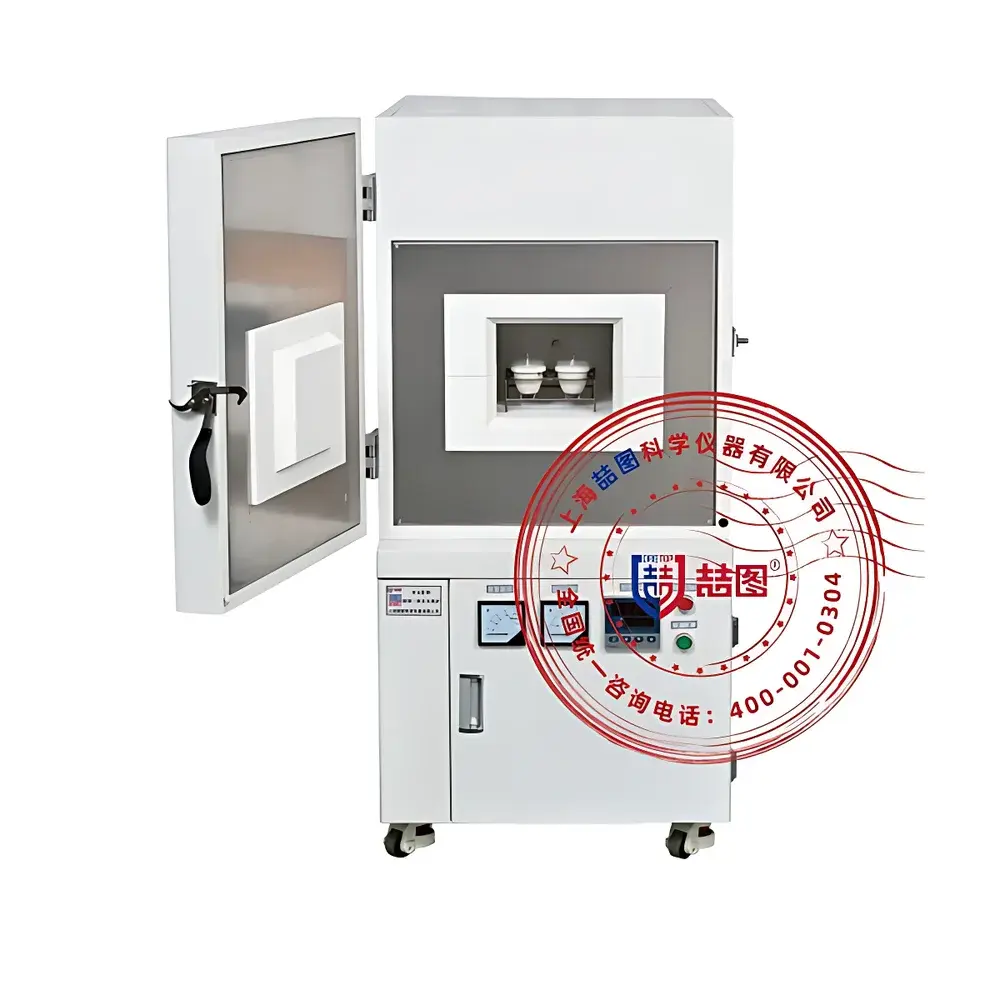
DRETOP B16-9AI Programmable Integrated High-Temperature Muffle Furnace
| Brand | DRETOP |
|---|---|
| Origin | Shanghai, China |
| Manufacturer Type | Direct Manufacturer |
| Product Category | Domestic |
| Model | B16-9AI |
| Instrument Type | Box-Type Muffle Furnace |
| Maximum Temperature | 1600 °C |
| Temperature Control Accuracy | ±1 °C |
| Rated Power | 10 kW |
| Heating Time to Max Temp | 70 min |
| Heating Element | Silicon-Molybdenum (MoSi₂) Rods |
| Internal Chamber Dimensions | 200 × 300 × 150 mm |
| Control Interface | 7-inch Color Touchscreen Controller |
| Nominal Volume | 9 L |
Overview
The DRETOP B16-9AI Programmable Integrated High-Temperature Muffle Furnace is a precision-engineered box-type resistance furnace designed for controlled thermal processing in research laboratories, materials science facilities, and quality control environments. It operates on Joule heating principle—electric current passing through high-resistivity silicon-molybdenum (MoSi₂) rods generates radiant heat within a thermally insulated chamber. With a maximum operating temperature of 1600 °C and ±1 °C temperature uniformity across the 9 L working volume, the furnace meets stringent requirements for ashing, calcination, sintering, annealing, and heat treatment of metals, ceramics, and advanced composites. Its integrated architecture eliminates external controller cabinets, reducing footprint and electromagnetic interference while improving thermal stability and operator safety.
Key Features
- Programmable AI-based temperature controller with multi-segment ramp-hold-cool profiles; supports up to 30 programmable steps with linear or non-linear curve fitting.
- 7-inch full-color resistive touchscreen interface with real-time trend display, historical data overlay, and USB-exportable CSV logs for traceability and GLP-compliant recordkeeping.
- Three-sided MoSi₂ heating element configuration ensures radial thermal symmetry and minimizes axial temperature gradients—validated per ASTM E220 for furnace uniformity mapping.
- Patented dual-stage door interlock: automatic power cutoff upon door opening and seamless resumption of programmed cycle upon closure, eliminating thermal shock and process interruption.
- Vacuum-formed polycrystalline alumina fiber insulation (density: 280 kg/m³) provides low thermal conductivity (40% versus conventional refractory brick designs.
- Integrated three-phase dry-type isolation transformer (rated 380 V AC, 50 Hz) suppresses line-borne noise and harmonics, ensuring stable voltage delivery under dynamic load conditions.
- Dual-level safety system: independent over-temperature cut-off (OTC) relay + thermocouple break detection, with audible/visual alarms and latched fault memory for root-cause analysis.
Sample Compatibility & Compliance
The B16-9AI accommodates standard crucibles (alumina, quartz, graphite) up to Ø80 mm × 100 mm height, with optional inert gas purging (N₂, Ar) via front-panel–mounted mass flow–controlled inlet valve (accessory). Its chamber geometry—200 × 300 × 150 mm internal dimensions—enables uniform heating of heterogeneous samples including powder compacts, thin-film substrates, and small-scale metallurgical specimens. The furnace complies with IEC 61000-6-3 (EMC emissions), UL 61010-1 (electrical safety), and ISO/IEC 17025 calibration traceability requirements when paired with NIST-traceable Type S thermocouples. Optional RS485 Modbus RTU interface enables integration into centralized lab automation systems compliant with FDA 21 CFR Part 11 electronic records protocols.
Software & Data Management
The embedded controller firmware supports audit-trail-enabled operation: all parameter changes, program uploads, and alarm events are timestamped and logged with user ID (via configurable engineer/operator password tiers). Data export includes raw thermocouple millivolt readings, setpoint history, and power consumption curves—formatted for direct import into MATLAB, OriginLab, or LIMS platforms. Firmware updates are performed via USB drive without external PC dependency. Optional Ethernet/WiFi module (DRETOP NET-Link v2.1) adds remote monitoring, email alerting on deviation events, and TLS 1.2–secured API access for enterprise-grade lab informatics integration.
Applications
- Quantitative ash content determination per AOAC 942.05 and ASTM D3174 for coal, biomass, and polymer composites.
- Sintering of yttria-stabilized zirconia (YSZ), silicon carbide (SiC), and lithium iron phosphate (LiFePO₄) cathode precursors under controlled atmosphere.
- Thermal gravimetric analysis (TGA) pre-conditioning of catalyst supports prior to BET surface area measurement.
- Metallurgical heat treatment: austenitizing, tempering, and stress-relieving of tool steels (e.g., AISI H13) and Ni-based superalloys.
- Calibration of thermocouples and RTDs using fixed-point cells (e.g., Ag, Cu, Al) within the 961–1084 °C range.
- Preparation of reference standards for XRD and SEM-EDS elemental quantification via high-purity oxide fusion.
FAQ
What is the recommended maintenance schedule for the MoSi₂ heating elements?
MoSi₂ rods require no periodic replacement under normal operation; however, visual inspection every 200 operational hours is advised for surface oxidation cracks. Avoid rapid cooling below 800 °C to prevent thermal shock-induced embrittlement.
Can the furnace be operated under vacuum or reduced pressure?
No—the B16-9AI is not rated for vacuum service. For low-pressure applications, use the optional inert gas purge kit with regulated flow (0–5 L/min) to displace ambient oxygen and suppress oxidation.
Is the touchscreen controller compatible with third-party SCADA systems?
Yes—via RS485 Modbus RTU (standard) or optional Ethernet TCP/IP, enabling read/write access to setpoints, PV values, program status, and alarm registers.
How is temperature uniformity validated across the working zone?
Per ASTM E220 Annex A3, uniformity is certified at three levels (top/mid/bottom) using five calibrated Type S thermocouples; typical deviation is ≤±3 °C at 1600 °C (95% confidence interval).
Does the furnace support GLP-compliant electronic signatures?
Yes—when equipped with the optional NET-Link module and configured with role-based authentication, it satisfies ALCOA+ data integrity principles for electronic records and signatures under 21 CFR Part 11.



