
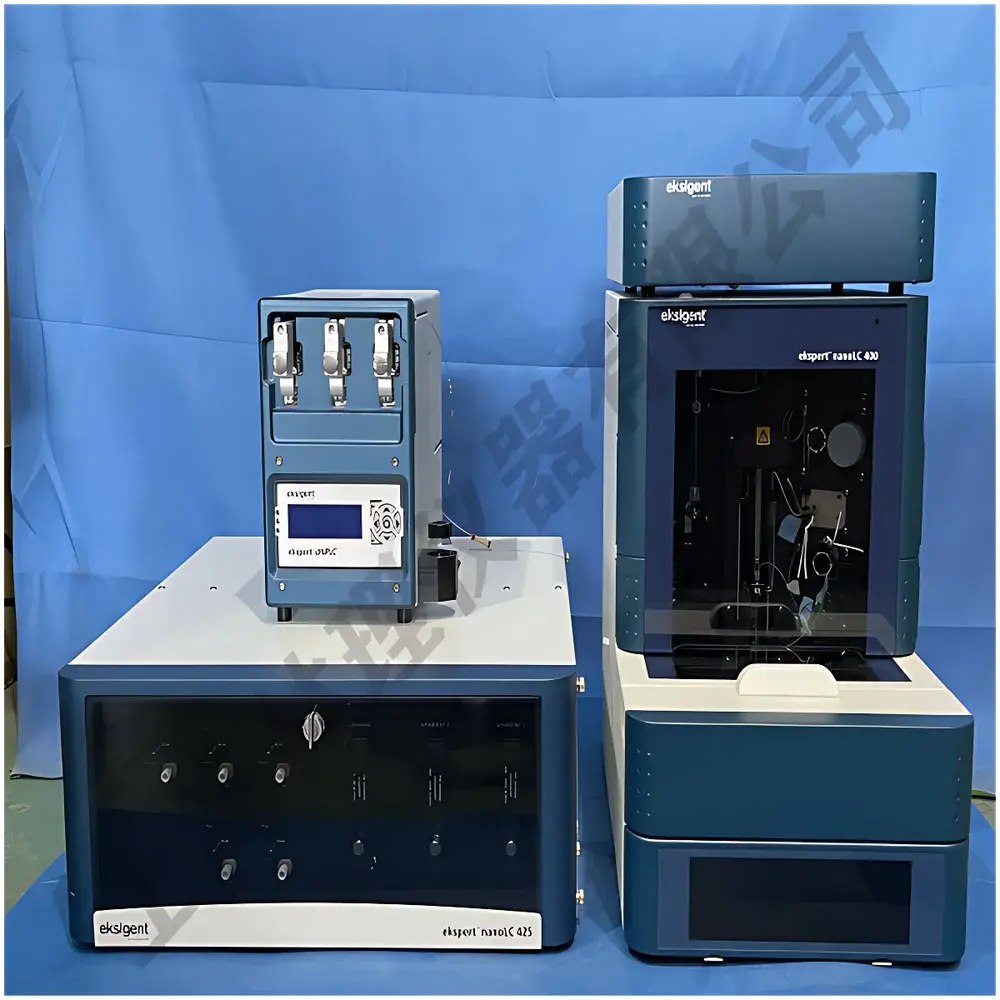
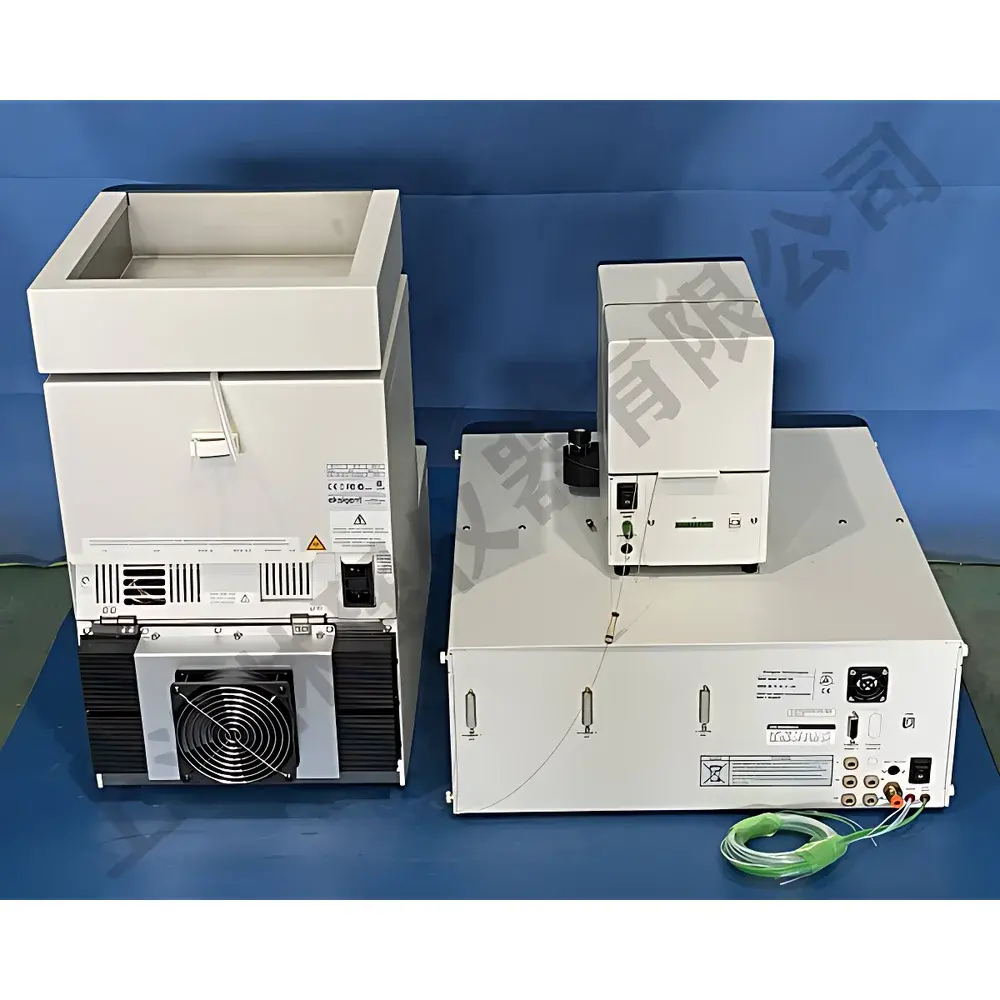
AB SCIEX EKSPERT CHIPLC nanoLC 425 Liquid Chromatograph
| Brand | AB SCIEX |
|---|---|
| Origin | Netherlands |
| Model | EKSPERT CHIPLC nanoLC 425 |
| Type | Nano-flow Liquid Chromatography System |
| Configuration | Used (Refurbished & Verified) |
| Intended Use | Analytical-scale and nano-scale LC separation for proteomics, metabolomics, and biomarker discovery |
Overview
The AB SCIEX EKSPERT CHIPLC nanoLC 425 is a high-precision, chip-based nanoflow liquid chromatography system engineered for reproducible, low-volume separations in demanding life science applications. Built upon SCIEX’s proprietary microfluidic chip technology, the system integrates capillary pumping, sample loading, gradient formation, and column switching into a single monolithic silicon/glass chip—eliminating dead volume, reducing carryover, and enhancing retention time stability. Unlike conventional HPLC or UHPLC platforms, the nanoLC 425 operates in the 50–500 nL/min flow range, enabling optimal coupling with electrospray ionization (ESI) sources on mass spectrometers such as SCIEX TripleTOF® and QTRAP® systems. Its design adheres to core principles of nano-liquid chromatography: minimal system dispersion, pressure-resistant microfluidics, and thermally stabilized separation modules. The platform supports both reversed-phase and hydrophilic interaction liquid chromatography (HILIC) modes, making it suitable for intact protein analysis, peptide mapping, post-translational modification (PTM) profiling, and targeted quantitation workflows.
Key Features
- Monolithic microfluidic chip architecture with integrated 15 cm analytical column, 10 mm trap column, and nanospray emitter—no external tubing or fittings required
- Programmable dual-gradient capability: independent control of trap wash, loading, and analytical gradients via two high-precision syringe pumps
- On-chip pressure monitoring and real-time flow calibration ensuring consistent nano-flow delivery across extended run times
- Thermostatically controlled chip holder (4–60 °C) for retention time reproducibility and method robustness
- Automated valve sequencing for unattended operation of multi-step LC methods including trap-elute, 2D-LC, and fraction collection
- Compatible with SCIEX Analyst® TF and PeakView® software for method development, sequence management, and instrument control
Sample Compatibility & Compliance
The nanoLC 425 accepts aqueous and organic solvent-based mobile phases (e.g., water/acetonitrile with 0.1% formic acid), and is validated for injection volumes from 0.1–5 µL of complex biological digests—including cell lysates, plasma fractions, tissue extracts, and immunoprecipitated samples. Sample introduction is achieved via autosampler-compatible vial trays or direct chip priming using standard 96-well plate formats. From a regulatory perspective, the system supports audit-trail-enabled operation when paired with compliant software environments meeting FDA 21 CFR Part 11 requirements. While the nanoLC 425 itself does not bear CE or UL certification as a standalone unit (as it is intended for integration into laboratory workflows under qualified instrumentation), its hardware design conforms to IEC 61010-1 safety standards for laboratory equipment. Method validation documentation—including system suitability testing per USP , ISO/IEC 17025 traceability protocols, and GLP-compliant run logs—is fully supported through integrated software reporting tools.
Software & Data Management
Control and data acquisition are managed via SCIEX’s EKSPERT™ Software Suite, which provides intuitive graphical method editor, real-time pressure/flow diagnostics, and chip status monitoring. All chromatographic parameters—including gradient profiles, temperature setpoints, valve timing, and injection sequences—are stored in encrypted XML-based method files. Raw data output is generated in .wiff format (compatible with PeakView®, MasterView™, and third-party open-source tools like Skyline and MaxQuant). The software includes built-in tools for peak detection, integration, baseline correction, and retention time alignment across large sample cohorts. For enterprise deployment, the system supports networked instrument sharing, centralized method libraries, and role-based user access control—facilitating compliance with internal SOPs and external audit requirements.
Applications
- Bottom-up and top-down proteomics workflows requiring high sensitivity and reproducibility at sub-femtomole injection levels
- Discovery and verification of post-translational modifications (phosphorylation, glycosylation, ubiquitination)
- Targeted quantitative analysis using parallel reaction monitoring (PRM) or multiple reaction monitoring (MRM) on hybrid quadrupole-TOF or triple quadrupole platforms
- Metabolite profiling in limited-volume clinical specimens (e.g., cerebrospinal fluid, microdissected tumor biopsies)
- Peptide library generation for spectral library building and DIA (Data-Independent Acquisition) method development
- Quality control of monoclonal antibody digests and biosimilar characterization studies
FAQ
Is this a refurbished or used instrument? What refurbishment level is applied?
Yes—the EKSPERT CHIPLC nanoLC 425 is offered as a pre-owned system that has undergone full functional verification, chip replacement, pump recalibration, leak testing, and firmware update to the latest stable release. All consumables (chips, frits, seals) are replaced prior to shipment.
Does the system include a mass spectrometer?
No—the nanoLC 425 is a standalone chromatography module. It is designed for seamless interface with SCIEX mass spectrometers via standard ESI source connections; MS instrumentation must be procured separately.
What chip types are supported?
The system is compatible with SCIEX’s full portfolio of CHIPLC chips, including C18, C8, HILIC, and SCX variants, all featuring 75 µm ID analytical columns and integrated nano-electrospray emitters.
Can the system be operated under GxP-regulated environments?
Yes—when deployed with validated software configurations, electronic signatures, and documented IQ/OQ/PQ protocols, the nanoLC 425 meets foundational requirements for use in GLP and GMP laboratories conducting biomarker or bioanalytical method development.
What maintenance is required between runs?
Routine maintenance includes daily chip priming, weekly system flushing with high-organic solvents, and quarterly replacement of syringe pump seals and chip gaskets—procedures fully documented in the included Service Manual and covered in operator training materials.
Related Products




