
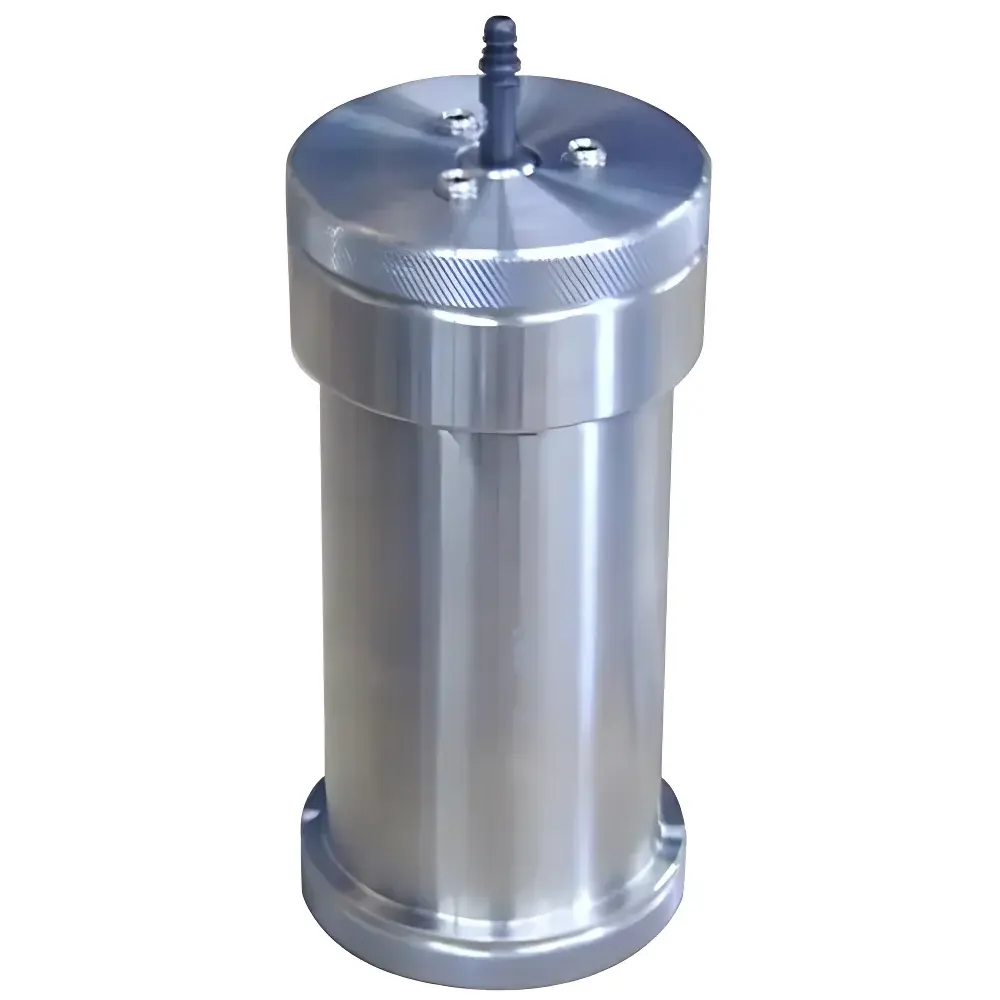
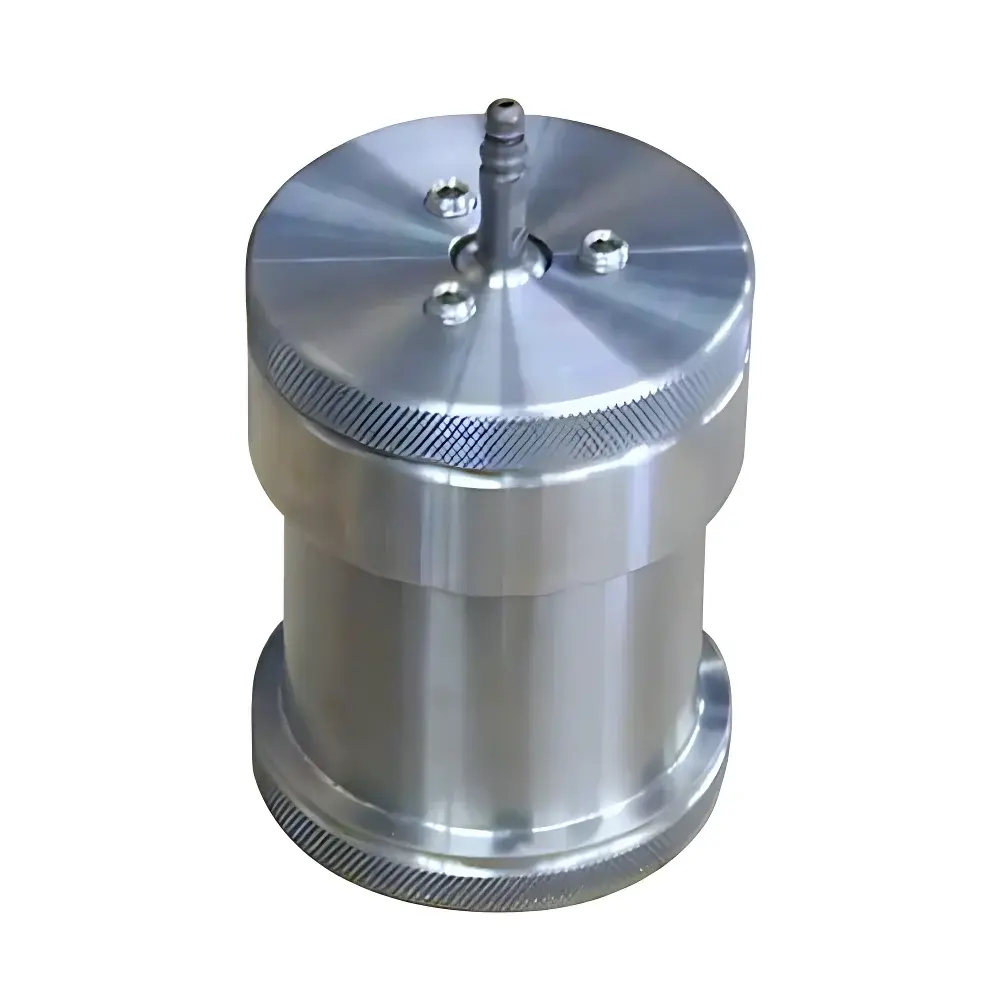
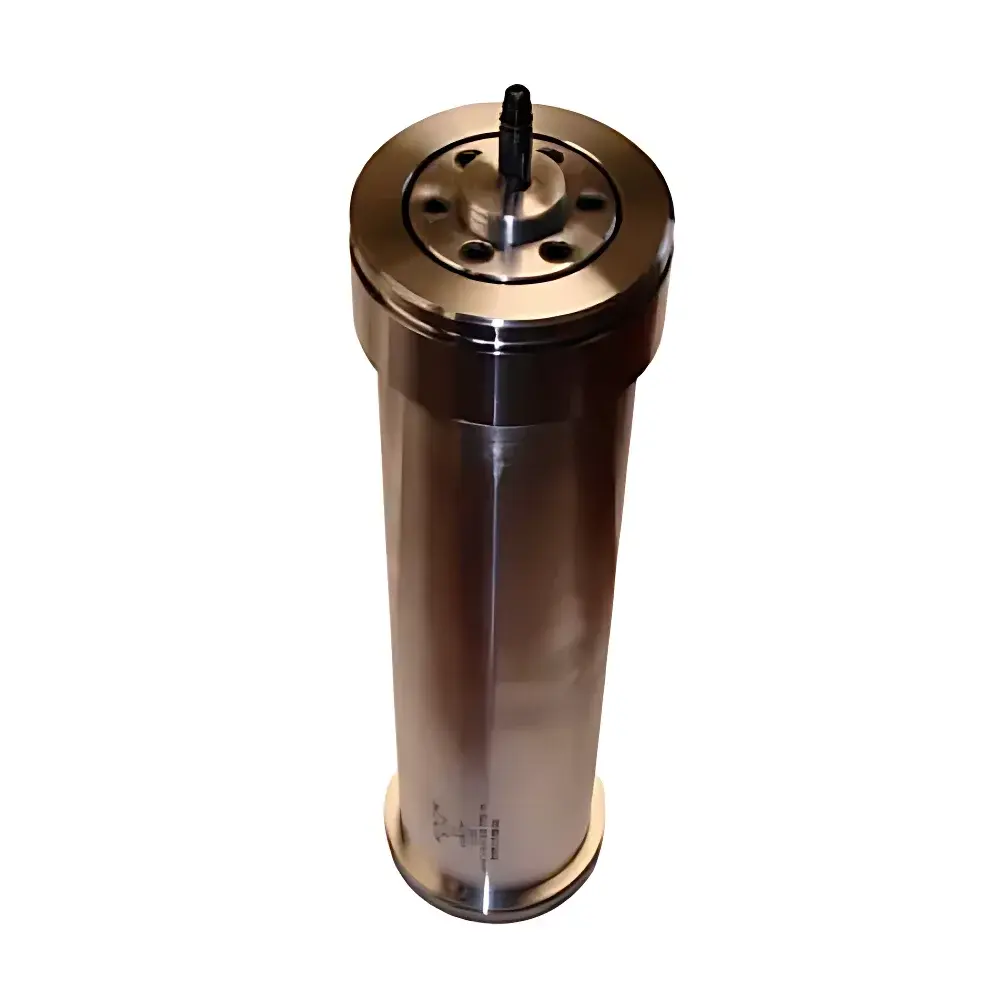
OFITE Model 175-50 High-Pressure Aging Vessel (Roller Oven Compatible)
| Brand | OFITE |
|---|---|
| Origin | USA |
| Model | 175-50 |
| Capacity | 500 mL |
| Construction Material | 316 Stainless Steel |
| Max Operating Temperature | 260 °C |
| Max Working Pressure | 13.8 MPa |
| Sealing Type | Fluoroelastomer (FKM) or PTFE O-ring |
| Compliance | ASTM D2872, API RP 13B-1, ISO 10425 |
| Optional Liner | PTFE-lined (P/N 175-60 / 175-60-6) |
| High-Temp Variant | 1000 mL, 316 SS, 315.6 °C (P/N 175-80) |
Overview
The OFITE Model 175-50 High-Pressure Aging Vessel is an engineered pressure containment system designed for controlled thermal aging of drilling fluids, cement slurries, and other oilfield chemical formulations under simulated downhole conditions. Based on patented U.S. technology (Patent No. 4,805,443), the vessel enables static or dynamic aging at temperatures exceeding the atmospheric boiling point of water—up to 260 °C—while maintaining sample integrity in the liquid phase. Its robust construction adheres to recognized industry standards including ASTM D2872 (Standard Test Method for Rolling Fluid Aging), API RP 13B-1 (Recommended Practice for Field Testing Water-Based Drilling Fluids), and ISO 10425 (Petroleum and natural gas industries — Drilling fluid testing). The vessel operates within a roller oven environment, where rotational motion ensures uniform heat transfer and mimics shear history encountered during wellbore circulation.
Key Features
- 500 mL working volume with precision-machined 316 stainless steel body, offering superior resistance to chloride-induced stress corrosion cracking compared to standard 303 SS variants.
- Rated for continuous operation at 13.8 MPa (2,000 psi) and 260 °C—validated per ASME B31.4 design margins and hydrostatically tested to 150% of maximum allowable working pressure (MAWP).
- Modular sealing architecture: compatible with both fluorocarbon (FKM) and virgin PTFE O-rings; optional metal-to-metal seal configuration available in high-temperature variants (e.g., Model 175-80).
- Dual-purpose design: supports both general-purpose aging and dedicated corrosion testing via integrated specimen retention features on internal lid surfaces (P/N 175-40 series).
- PTFE-lined internal configuration (optional P/N 175-60 or 175-60-6) provides inert surface contact for aggressive brines, H₂S-saturated systems, and oxidizing acid treatments.
- Traceable manufacturing: each unit carries engraved serial number, material certification (MTR), and compliance documentation aligned with ISO 9001-certified production protocols.
Sample Compatibility & Compliance
The 175-50 vessel accommodates aqueous, oil-based, and synthetic-based drilling fluids; cementitious slurries; completion fluids; and specialty inhibitors. It is routinely employed in laboratories conducting API-compliant fluid stability assessments and regulatory submissions under U.S. EPA and BSEE guidelines. For corrosive service, C-276 Hastelloy® variants (P/N 175-25-H / 175-30-H) are available upon request and conform to NACE MR0175/ISO 15156 requirements for sour service environments. All vessels comply with GLP documentation standards and support audit-ready traceability for QA/QC workflows.
Software & Data Management
While the 175-50 is a standalone mechanical device, it integrates seamlessly into digital lab workflows. When used with programmable roller ovens (e.g., OFITE Model 9100 Series), temperature and rotation profiles are logged via OEM controllers compliant with FDA 21 CFR Part 11 for electronic records and signatures. Users may export time-stamped aging logs—including ramp rates, dwell durations, and thermal soak data—for inclusion in LIMS or ELN platforms. Calibration certificates and pressure test reports are provided in PDF/A-1b format for long-term archival.
Applications
- Thermal stability evaluation of bentonite- and polymer-based mud systems per API RP 13B-1 Section 7.
- Aging of cement slurries prior to rheological and compressive strength testing (ASTM C305, ISO 10425 Annex A).
- Corrosion coupon immersion studies using standardized NACE TM0169 test cells mounted inside P/N 175-40 corrosion vessels.
- High-temperature fluid degradation kinetics modeling for deepwater and HPHT well design.
- Validation of fluid additive shelf life under accelerated thermal stress conditions.
FAQ
What distinguishes the 175-50 from the 175-25 series?
The 175-50 offers 500 mL capacity versus 260 mL, enabling larger sample volumes for replicate testing or multi-parameter analysis without compromising pressure/temperature ratings.
Can the 175-50 be used for H₂S-containing systems?
Yes—when equipped with C-276 Hastelloy® construction (P/N 175-30-H) and PTFE sealing components, it meets NACE MR0175/ISO 15156 requirements for sour service applications.
Is PTFE lining required for all corrosive tests?
No—PTFE lining (P/N 175-60) is recommended for highly oxidizing or fluoride-containing media; for chloride-rich brines, Hastelloy® construction alone provides sufficient resistance.
Does OFITE provide calibration or pressure certification?
Each vessel ships with a hydrostatic test certificate, material test report (MTR), and dimensional inspection record—all traceable to NIST standards.
How is temperature uniformity verified during aging?
Uniformity is ensured by roller oven qualification per ASTM E2203; OFITE recommends thermocouple monitoring at vessel mid-height using calibrated Class I RTD probes.





