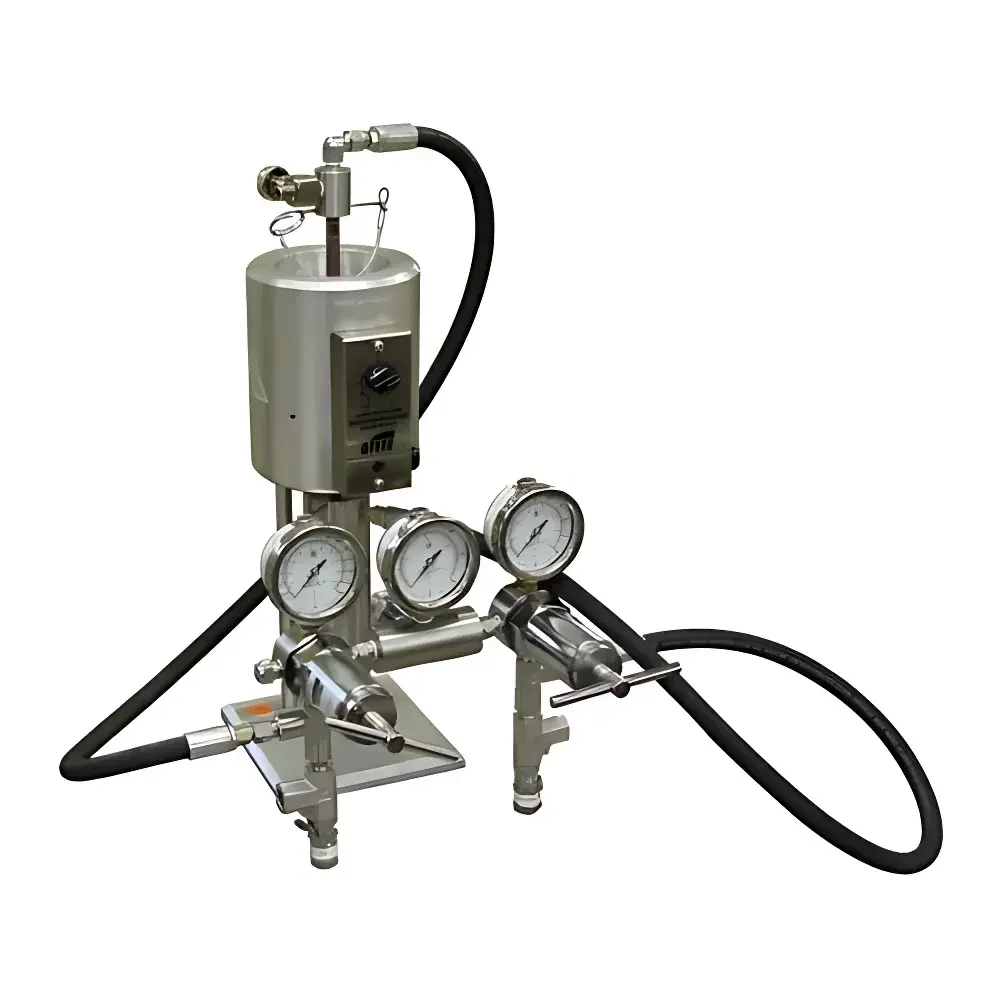
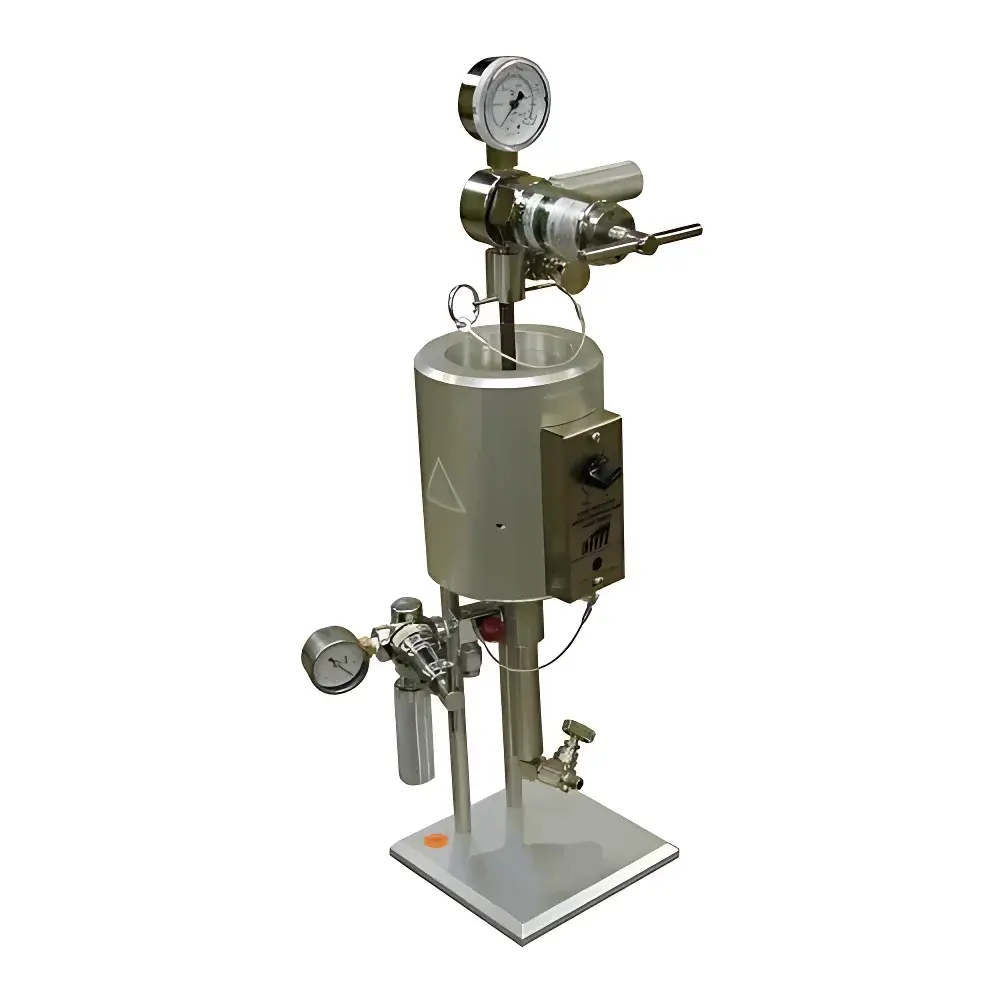
OFITE 175 mL High-Temperature High-Pressure Filter Press
| Brand | OFITE |
|---|---|
| Origin | USA |
| Model | 170-01-3 / 170-01-2 / 170-181-1-N etc. |
| Max Temp | 204°C |
| Max Pressure | 1500 / 2000 / 5000 psi |
| Sample Volume | 175 mL |
| Heating Power | 400 W |
| Dimensions | 19.1 × 27.9 × 59.7 cm |
| Weight | 12.3 kg |
| Voltage | 220 V |
| Pressure Source | N₂ or CO₂ Cartridge |
| Certifications | ASME BPVC Section VIII compliant vessel design, traceable serial-numbered test cells with material and pressure certification |
Overview
The OFITE 175 mL High-Temperature High-Pressure (HTHP) Filter Press is a precision-engineered laboratory instrument designed to quantify static fluid loss behavior of drilling fluids, cement slurries, and completion fluids under downhole-representative conditions. It operates on the fundamental principle of controlled-pressure filtration through standardized porous media—such as filter paper (ASTM D1365), ceramic discs (API RP 13B-1 Annex A), or cement screen mesh—while maintaining simultaneous thermal and mechanical stress profiles. The system replicates wellbore environments up to 204°C (400°F) and 5000 psi, enabling accurate assessment of cake formation, filtrate volume, and rheological stability during simulated static exposure. Its modular, ASME-compliant pressure vessel architecture ensures structural integrity, operator safety, and regulatory traceability—critical for API, ISO 10414-2, and IADC-compliant fluid evaluation workflows.
Key Features
- Modular threaded pressure cell design with single- or dual-port configurations, enabling rapid interchange of filtration media (filter paper, ceramic disc, cement screen) without vessel replacement
- ASME BPVC Section VIII Div. 1 certified test cells, each bearing a unique serialized ID, full material certification (SA-105/SA-240), and hydrostatic pressure test documentation
- Dual independent pressure regulation: main system pressure (up to 5000 psi) and backpressure control (for differential pressure maintenance across the filter medium)
- Uniform thermal management via 400 W integrated heating jacket; achieves and sustains ±1.5°C temperature stability across the full 25–204°C range
- Low-power, field-deployable footprint (19.1 × 27.9 × 59.7 cm; 12.3 kg); compatible with standard 220 V AC supply and portable N₂ cylinders or disposable CO₂ cartridges
- Integrated safety interlocks prevent lid disengagement under pressure; threaded closure mechanism mechanically locks during pressurization
Sample Compatibility & Compliance
The instrument accommodates a broad spectrum of oilfield fluids—including water-based muds (WBM), oil-based muds (OBM), synthetic-based muds (SBM), cement slurries, and lost-circulation materials (LCMs)—across defined API RP 13B-1, ISO 10414-2, and ASTM D1365 test protocols. All filtration media interfaces comply with dimensional and permeability specifications outlined in API RP 13B-1 Annexes A–C. Pressure vessels are supplied with third-party traceable calibration certificates verifying burst pressure margin (>3× working pressure), leak integrity (helium mass spectrometry tested), and thermal cycling durability (≥500 cycles at rated T/P). The system supports GLP-compliant operation when paired with external data loggers meeting FDA 21 CFR Part 11 audit-trail requirements.
Software & Data Management
While the base unit operates via analog pressure gauges and manual timer, OFITE provides optional digital instrumentation kits—including calibrated pressure transducers (0.1% FS accuracy), PT100 RTD probes (±0.2°C), and USB-enabled data acquisition modules—for automated time-series recording of filtrate volume, temperature, and differential pressure. Exported CSV files align with industry-standard reporting templates for API Form 13B-1 and internal QA/QC databases. Firmware and firmware update logs are retained with timestamped version control, supporting GMP-aligned validation documentation packages (IQ/OQ/PQ).
Applications
- Static fluid loss evaluation of drilling fluids per API RP 13B-1 Section 5 and ISO 10414-2 Clause 7.3
- Cement slurry filtration testing under elevated temperature to assess free water separation and set retardation effects
- Performance screening of fluid-loss additives (e.g., starches, PAC polymers, nanocellulose) under realistic downhole stress states
- Comparative analysis of filter cake quality (thickness, permeability, compressibility) using post-test gravimetric and SEM imaging protocols
- Wellbore stability modeling input generation via quantitative correlation between filtrate volume, cake thickness, and spurt loss kinetics
FAQ
What pressure sources are compatible with the OFITE 175 mL HTHP Filter Press?
N₂ gas from regulated cylinder systems or disposable CO₂ cartridges均可 used; all models include dual-stage pressure regulators and compatible fittings for both sources.
Can the same pressure cell be used for filter paper, ceramic disc, and cement screen tests?
Yes—the modular threaded cell accepts interchangeable top/bottom lids engineered for each medium type, eliminating cross-contamination risk and reducing inventory overhead.
Is the instrument suitable for regulatory submission testing?
Yes—each pressure cell carries ASME U-stamp certification, material test reports (MTRs), and hydrostatic test records required for API monogram licensing and third-party audit readiness.
How is temperature uniformity verified across the 175 mL sample volume?
The heating jacket incorporates axial thermal profiling; OFITE provides factory verification data demonstrating ≤2°C axial gradient at 204°C under static load.
What maintenance intervals are recommended for long-term reliability?
Heating jacket insulation and O-ring sets should be inspected every 200 test cycles; pressure transducer calibration is advised annually or after 1000 psi overpressure events.