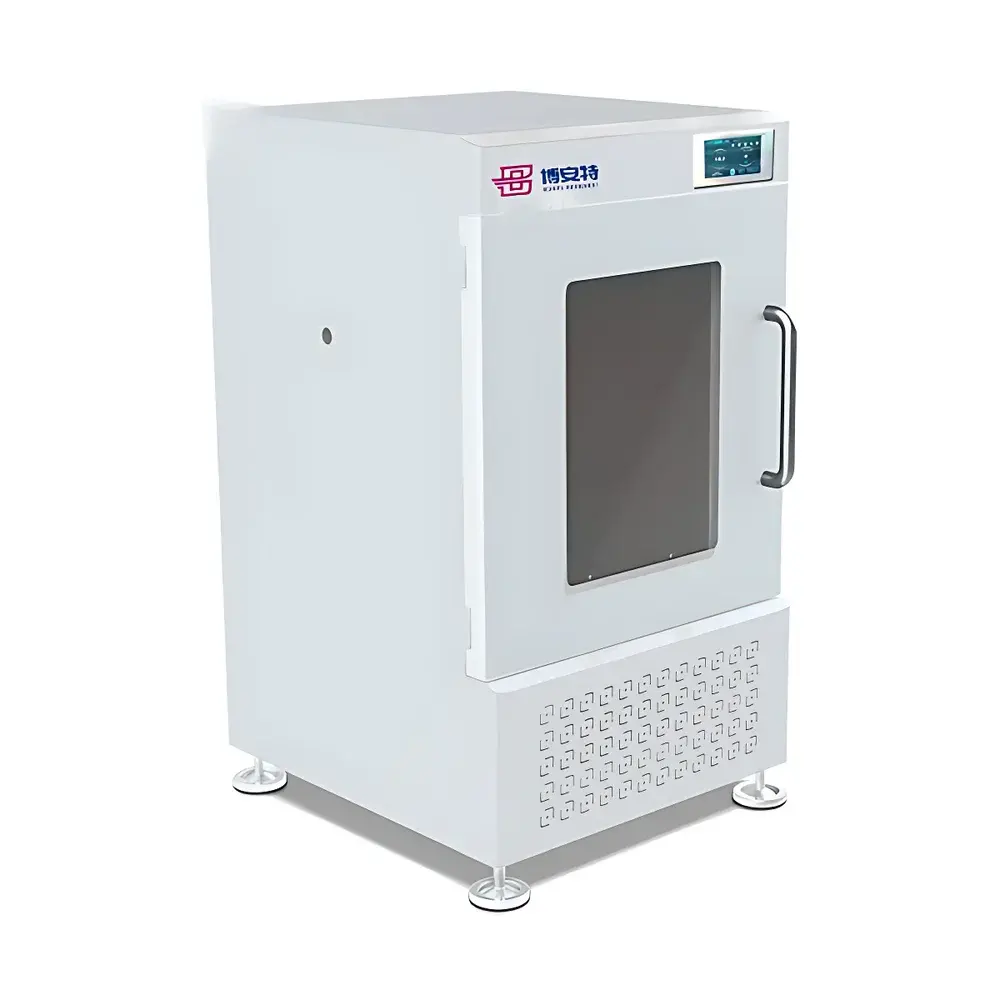
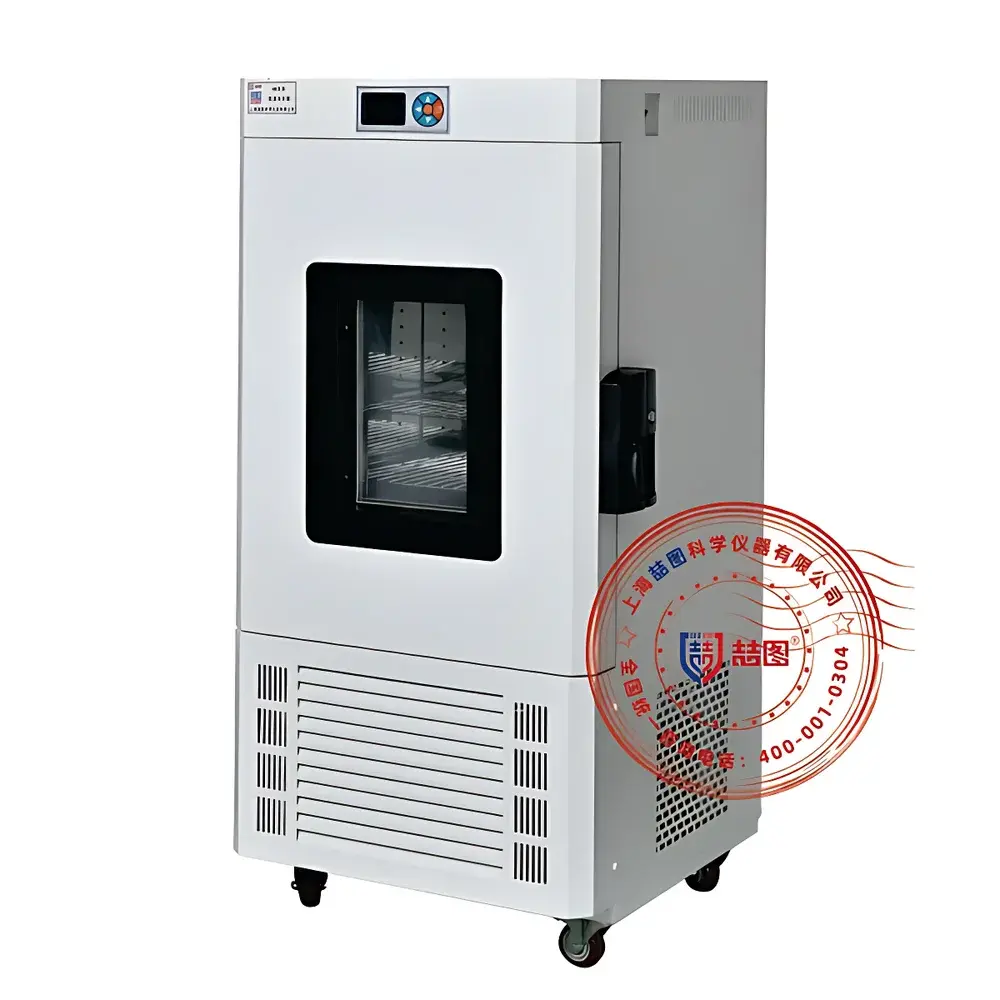
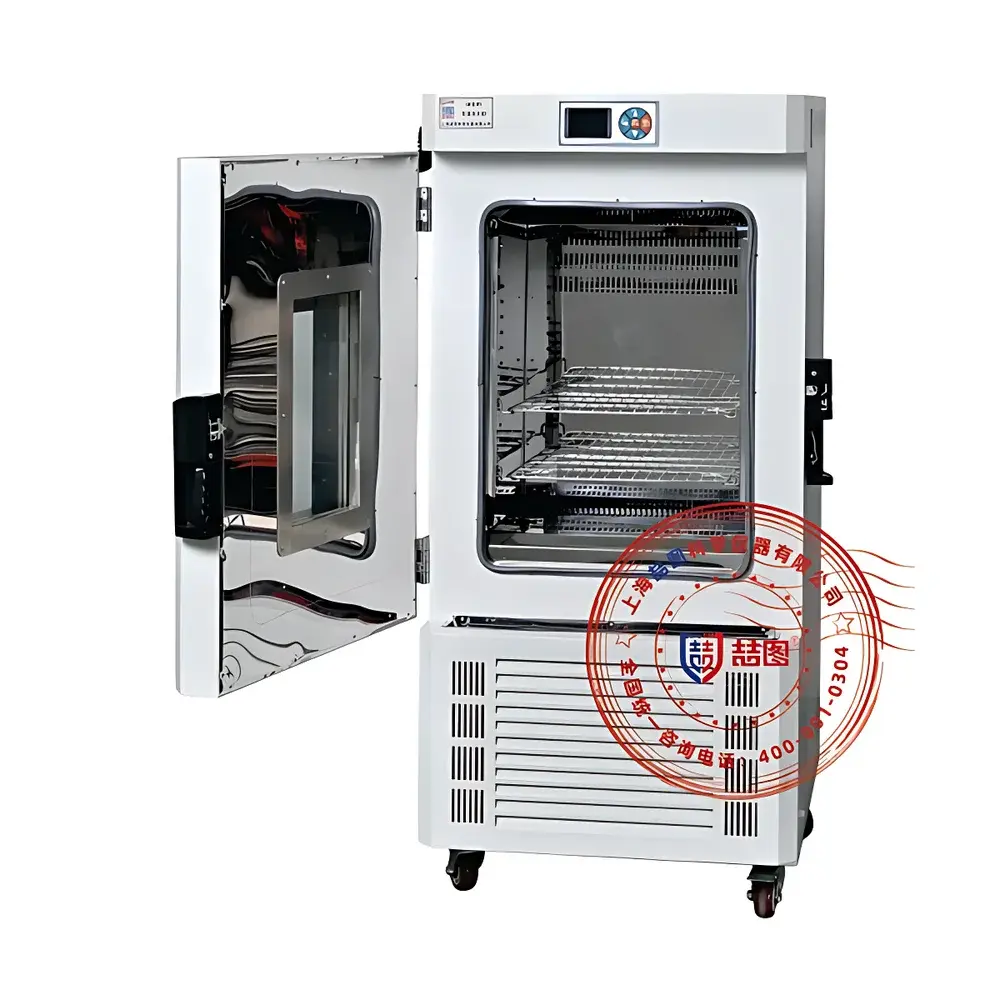
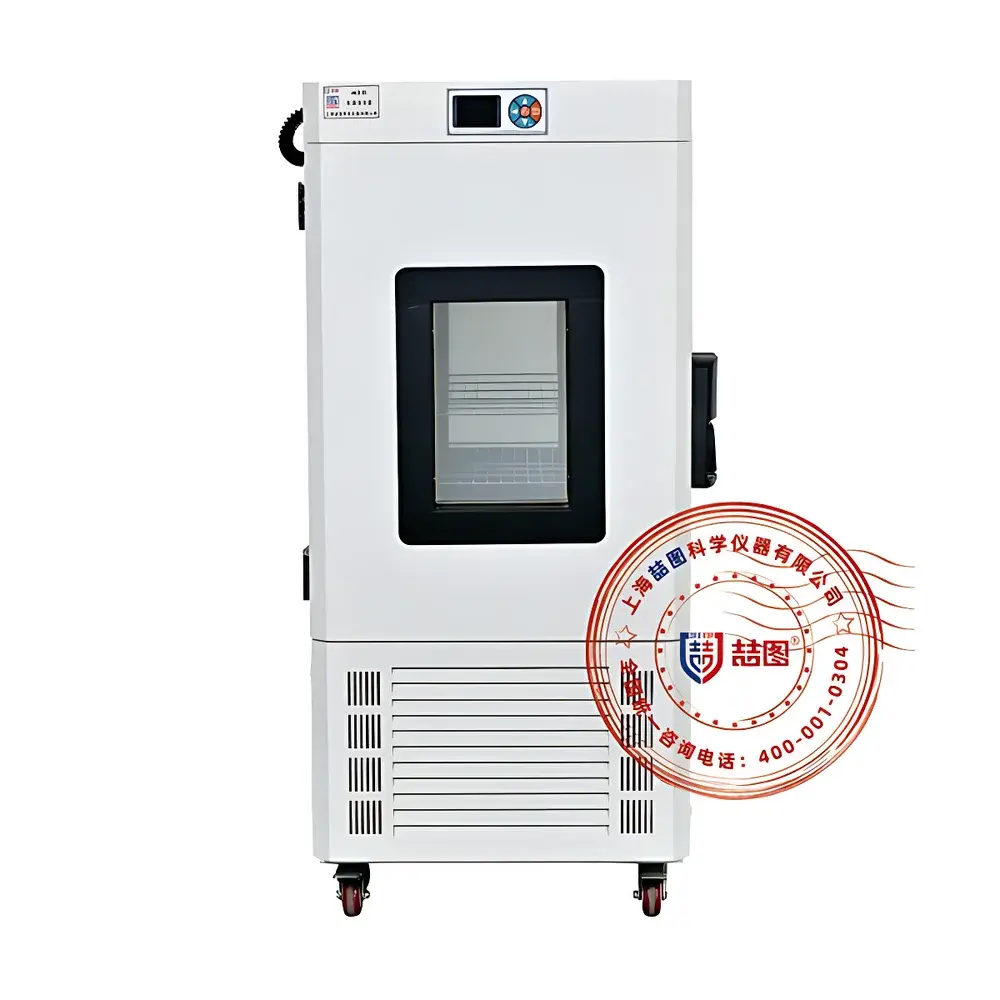
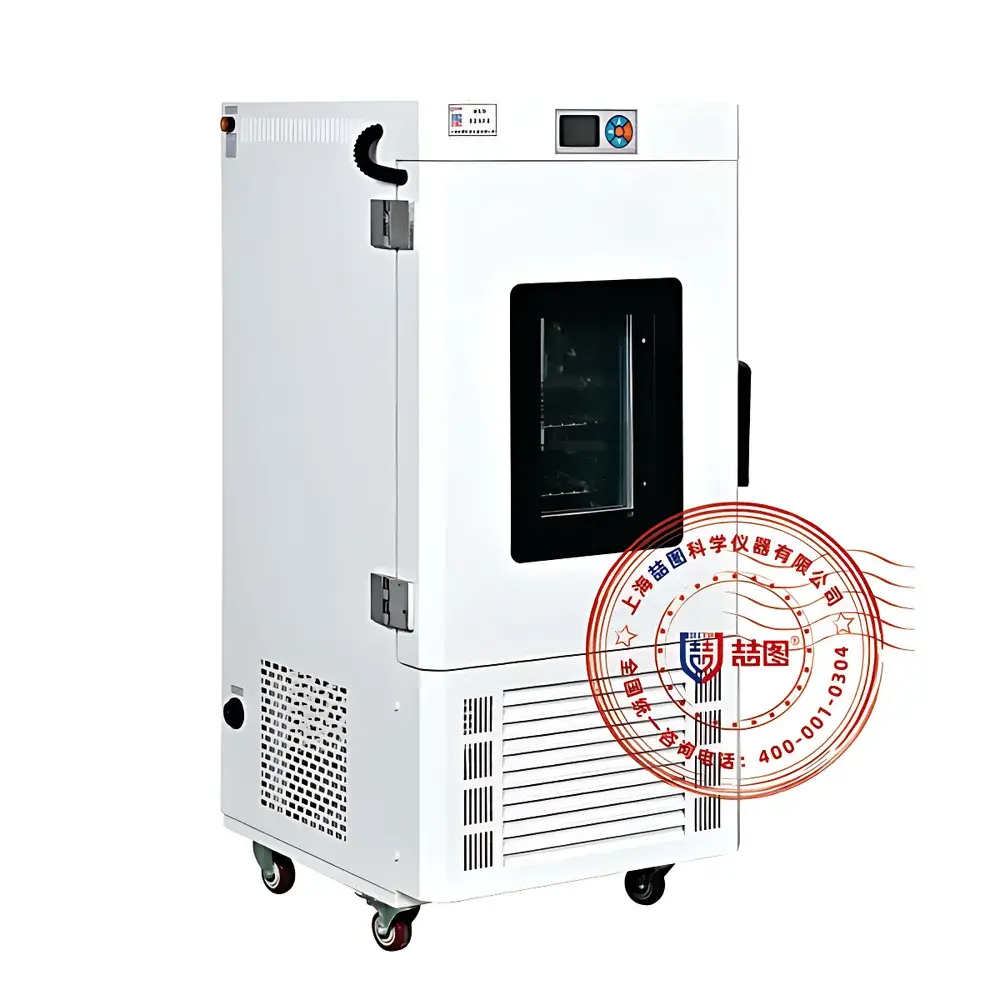
DRETOP DW-250CL Low-Temperature Incubator
| Brand | DRETOP |
|---|---|
| Origin | Shanghai, China |
| Manufacturer Type | Direct Manufacturer |
| Model | DW-250CL |
| Cooling Method | Compressor-Based Refrigeration |
| Heating Method | Air-Jacketed Heating |
| Temperature Range | −10 °C to +65 °C |
| Temperature Resolution | 0.1 °C |
| Temperature Uniformity | Not Specified |
| Temperature Fluctuation | ±0.5 °C |
| Capacity | 250 L |
| External Dimensions (W×D×H) | 850 × 930 × 1810 mm |
| Power Supply | AC 220 V, 50 Hz |
| Input Power | 3000 W |
| Observation Window | Embedded, with anti-fog door heating |
| Test Port | 25 mm diameter, stainless steel plug included |
| Shelving | 3 adjustable stainless steel shelves |
| Safety Lock | Key-operated door lock |
| Control System | Microprocessor-based P.I.D controller with LCD touchscreen interface |
| Compliance | Designed for GLP-compliant laboratory environments |
Overview
The DRETOP DW-250CL Low-Temperature Incubator is an engineered environmental chamber designed for precise, stable thermal control across a broad operational range of −10 °C to +65 °C. Unlike standard ambient incubators, the DW-250CL integrates dual-mode thermal regulation—compressor-driven refrigeration and air-jacketed resistive heating—to ensure rapid temperature transitions, minimal overshoot, and high reproducibility in both cooling and warming cycles. Its architecture follows the air-jacket principle: heated or cooled air circulates uniformly through optimized internal ducts via a high-efficiency axial fan, minimizing thermal gradients and supporting consistent sample conditioning. This design is particularly critical for applications requiring strict adherence to temperature-sensitive protocols—such as microbial culture maintenance at sub-ambient conditions, long-term storage of thermolabile reagents, or accelerated stability testing of pharmaceutical intermediates per ICH Q1A(R3) guidelines.
Key Features
- Microprocessor-controlled P.I.D. temperature regulation with 0.1 °C resolution and ±0.5 °C fluctuation tolerance—validated across full load and empty-chamber conditions.
- Air-jacketed heating system with independent compressor-based cooling enables simultaneous or isolated thermal modes, enhancing process flexibility and energy efficiency.
- Embedded anti-fog observation window with integrated door-heating circuit eliminates condensation during low-temperature operation—critical for real-time visual monitoring without compromising chamber integrity.
- Stainless steel interior (304 grade), fully removable and height-adjustable shelving (3 standard trays), and radius-corner construction eliminate cleaning blind spots and support autoclave-compatible decontamination procedures.
- Key-locked access door prevents unauthorized entry—essential for regulated environments operating under GLP, GMP, or ISO 15189 quality systems.
- Modular refrigeration assembly includes compressor runtime protection (start-delay & stop-interval logic), self-diagnostic fault logging, and automatic recovery after power interruption.
- 25 mm diameter test port with threaded stainless steel cap allows safe integration of external sensors, power feeds, or gas lines without thermal leakage or seal degradation.
Sample Compatibility & Compliance
The DW-250CL accommodates a wide spectrum of life science and materials science samples—including Petri dishes, multi-well plates, serum bottles, vials, and electronic component test fixtures—within its 250 L working volume. Its stainless steel interior and smooth-welded seams meet USP surface finish requirements for non-porous, cleanable surfaces. While not certified as a medical device under FDA 510(k), the unit is constructed to align with ISO 13485 manufacturing practices and supports traceability via optional RS485 serial output (Modbus RTU protocol) for integration into LIMS or ELN platforms. All firmware retains parameter memory and timestamped event logs—including alarm triggers, setpoint changes, and door-open duration—facilitating compliance with 21 CFR Part 11 when used with validated third-party software.
Software & Data Management
The onboard controller provides local data visibility via a 4.3-inch capacitive touchscreen LCD, displaying real-time temperature, elapsed time, alarm status, and system diagnostics. Optional connectivity modules enable remote monitoring and configuration: RS485 interface supports up to 32 devices on a single bus for centralized lab-wide environmental logging; Ethernet-enabled variants (DW-250CL-E) offer HTTP/HTTPS API access and TLS-secured firmware updates. Audit trail functionality—when activated—records user ID (via configurable login), action type, timestamp, and pre-/post-value for all critical parameters. Export formats include CSV and PDF reports compliant with ISO/IEC 17025 Clause 7.7 documentation requirements.
Applications
- Microbial cultivation at low temperatures (e.g., psychrophilic bacteria, lactic acid starter cultures).
- Stability testing of biologics, vaccines, and excipients per ICH Q5C and Q1E protocols.
- Storage and conditioning of cell culture media, enzymes, and nucleic acid reagents requiring −10 °C to +4 °C preservation.
- Environmental stress screening of polymer composites, PCB assemblies, and optoelectronic components.
- Controlled-conditioning of calibration standards prior to metrological verification (e.g., reference thermistors, RTDs).
- Supporting ASTM E1545 (Standard Test Method for Determining Thermal Stability of Organic Materials) and ISO 11357-3 (DSC-based thermal analysis sample prep).
FAQ
What is the minimum achievable temperature and how quickly does the chamber reach it?
The DW-250CL achieves −10 °C from ambient (25 °C) in approximately 90 minutes under no-load conditions. Performance may vary with internal mass loading and ambient room temperature.
Is the temperature uniformity specification available for validation purposes?
Temperature uniformity is not published as a fixed value in the manufacturer’s datasheet; users are advised to perform in-house mapping per ISO 14644-3 or ASTM E2875 using NIST-traceable probes at nine defined locations (center + eight corners) across three vertical planes.
Can the incubator be integrated into a building management system (BMS)?
Yes—via optional RS485 Modbus RTU output or Ethernet interface, enabling read-only status polling and basic alarm forwarding to BMS platforms supporting standard industrial protocols.
Does the unit comply with ozone-depleting substance regulations?
Yes—the refrigeration system uses R134a or R600a (user-selectable at order stage), both classified as zero-ozone-depletion-potential (ODP = 0) refrigerants under the Montreal Protocol and EU F-Gas Regulation (EC) No 517/2014.
What safety certifications does the DW-250CL carry?
The unit conforms to IEC 61010-1:2010 for laboratory electrical equipment safety and meets EMC requirements per IEC 61326-1:2020. CE marking is applied under the Low Voltage Directive (2014/35/EU) and EMC Directive (2014/30/EU).