
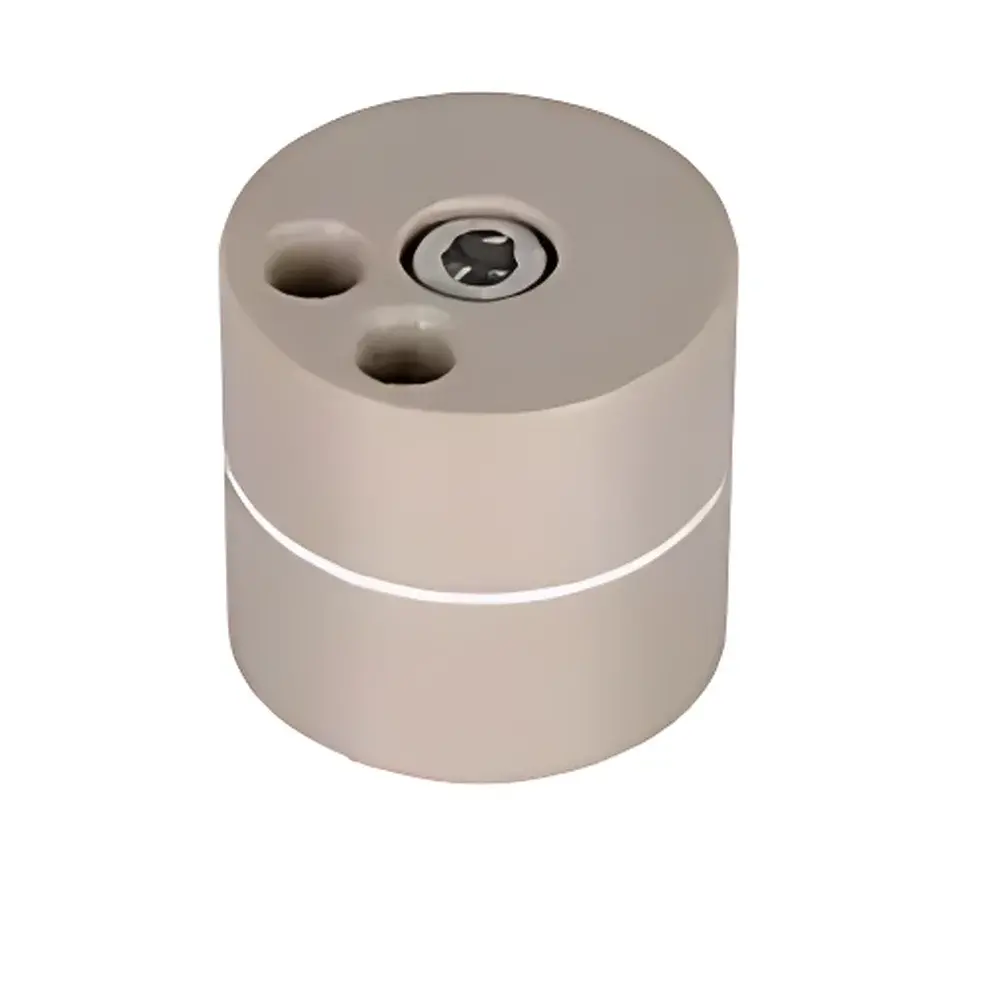
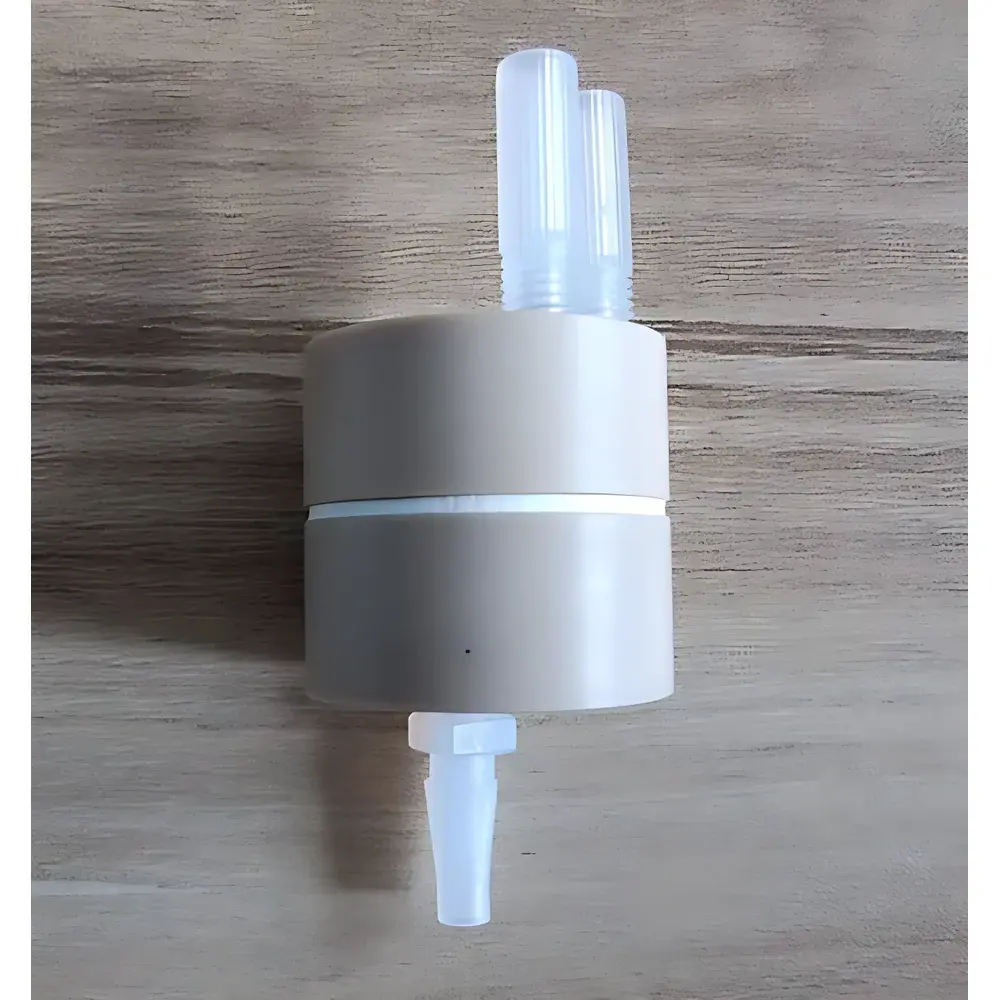
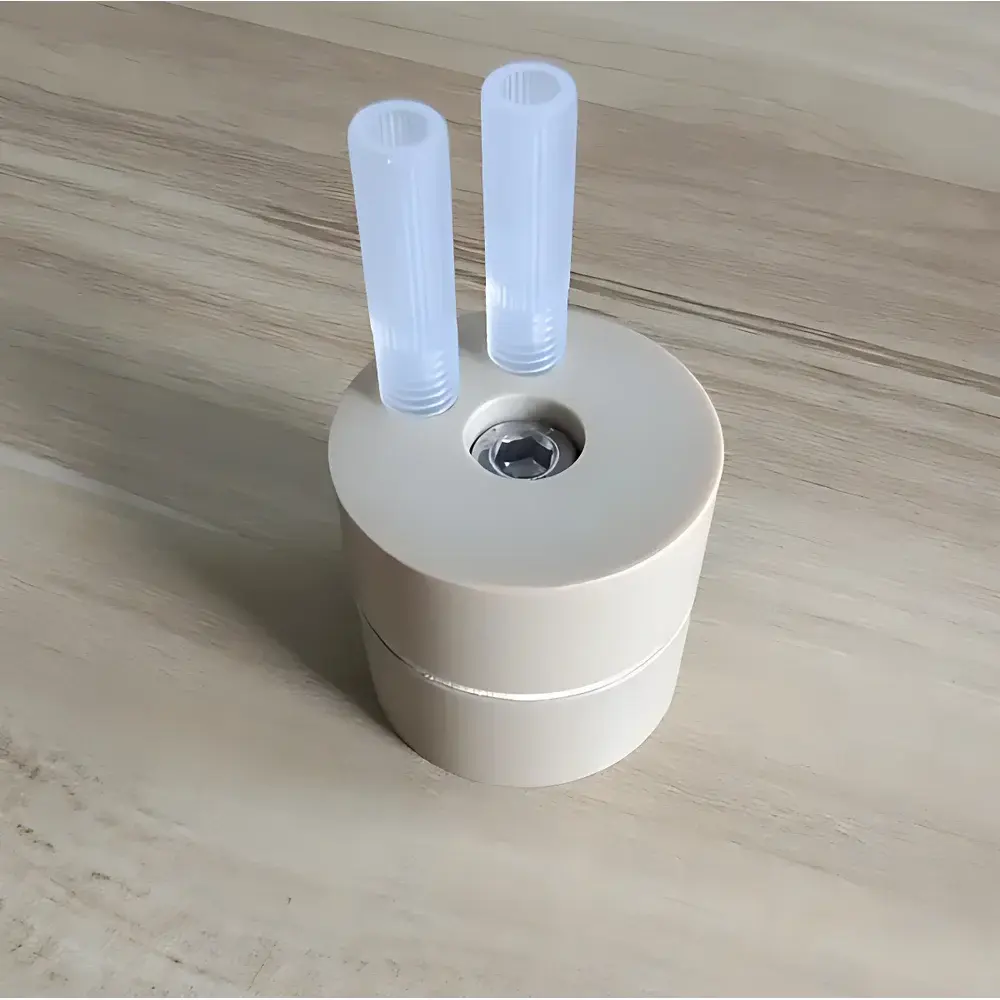
Zhichen Tech FLUT-100 Microfluidic Bubble Trap / Bubble Capture Device
| Brand | Zhichen Tech |
|---|---|
| Origin | Beijing, China |
| Manufacturer Type | Authorized Distributor |
| Country of Origin | China |
| Model | FLUT-100 |
| Target Application | Research-Grade Flow Cytometry Sample Preparation |
| Nozzle Flow Rate | 5 µL/min (indicated value) |
| Maximum Droplet Volume | 362 µL (L designation indicates large-volume configuration) |
| Housing Material | PEEK |
| Bulk Infusion Flow Rate | 1 mL/min |
| Dilution Factor per Wash Cycle | 1 |
Overview
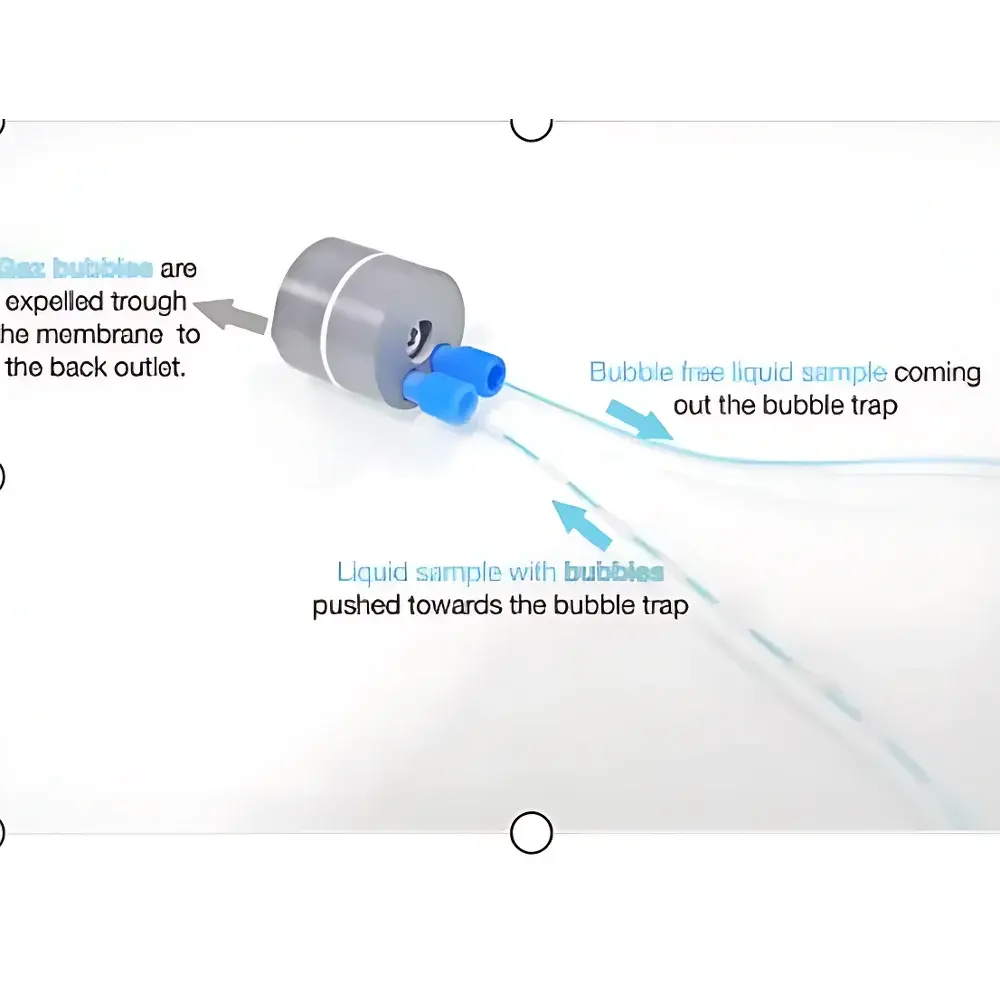
The Zhichen Tech FLUT-100 Microfluidic Bubble Trap is an engineered passive filtration device designed to remove entrained gas microbubbles from liquid streams in low-flow, precision life science workflows—particularly upstream of flow cytometers, microfluidic droplet generators, and sensitive optical detection systems. It operates on the principle of hydrophobic membrane-based phase separation: dissolved and discrete gaseous phases migrate selectively through a porous polytetrafluoroethylene (PTFE) or modified hydrophobic membrane under controlled pressure differentials, while the aqueous phase—including viable cells, fluorescently labeled particles, or protein solutions—passes unimpeded. Unlike vacuum-assisted degassers or ultrasonic degassing units, the FLUT-100 requires no external power, pumps, or active control logic; its function is governed by intrinsic surface energy gradients and laminar flow dynamics. This makes it ideal for integration into closed-loop, GLP-compliant sample preparation modules where mechanical simplicity, sterility assurance, and minimal shear exposure are critical design constraints.
Key Features
- Passive, power-free operation with zero moving parts—ensures long-term reliability and eliminates risk of electrical interference in electromagnetically sensitive instrumentation environments.
- PEEK (polyether ether ketone) body construction provides chemical resistance to common biological buffers (e.g., PBS, HEPES), ethanol, and mild detergents; compatible with autoclaving at ≤121°C for repeated sterilization cycles.
- Integrated hydrophobic membrane cartridge with standardized 1/4″-28 UNF port interface—enables rapid, tool-free replacement without system disassembly or recalibration.
- Optimized for low-flow regimes: validated performance at bulk infusion rates up to 1 mL/min and nozzle-level delivery at 5 µL/min, maintaining stable interfacial tension for reproducible droplet formation in microfluidic encapsulation studies.
- Minimal hold-up volume (<15 µL) reduces sample carryover and enables efficient wash cycles with 1:1 dilution factor per cycle—critical for sequential multi-sample analysis in high-throughput cytometry pipelines.
Sample Compatibility & Compliance
The FLUT-100 is validated for use with mammalian cell suspensions (including primary T cells, HEK293, and Jurkat lines), antibody-conjugated beads, lipid nanoparticles, and viscous polymer solutions up to 10 cP. It introduces no measurable shear-induced apoptosis (as assessed by Annexin V/PI staining post-trap exposure) and preserves >99.2% cell viability over continuous 4-hour perfusion at 1 mL/min (n = 6 replicates, ISO 13319-1 compliant viability assay). The device conforms to ISO 10993-5 (cytotoxicity) and ISO 10993-12 (sample compatibility) testing protocols. While not FDA-cleared as a medical device, its material certifications (USP Class VI PEEK, USP <87> extractables data available upon request) support use in preclinical research environments adhering to ICH-GCP and OECD GLP principles.
Software & Data Management
The FLUT-100 is a hardware-only component with no embedded firmware, software interface, or digital connectivity. Its operational parameters are defined solely by upstream fluidic control—making it fully compatible with third-party pump controllers (e.g., Harvard Apparatus PHD Ultra, Elveflow OB1), flow sensors (e.g., Sensirion SLF3S-1300F), and acquisition platforms (e.g., Beckman Coulter CytoFLEX, BD FACSymphony). All maintenance logs—including membrane replacement dates, sterilization cycles, and pressure-drop monitoring records—must be manually documented per institutional SOPs to satisfy audit requirements under 21 CFR Part 11 when used in regulated workflows.
Applications
- Pre-cytometer sample conditioning to prevent air-locking of quartz flow cells and erroneous pulse-width discrimination.
- Stabilizing monodisperse droplet generation in single-cell RNA-seq encapsulation chips (e.g., 10x Genomics Chromium Controller).
- Protecting capillary electrophoresis detectors and micro-BCA assay modules from bubble-induced baseline drift.
- Enabling long-duration live-cell imaging experiments where intermittent bubble nucleation would otherwise compromise focal plane consistency.
- Integration into ISO 15197-2–compliant point-of-care diagnostic development platforms requiring bubble-free reagent delivery.
FAQ
Can the FLUT-100 be used with vacuum-assisted degassing systems?
Yes—its inlet and outlet ports are rated for differential pressures up to –80 kPa (vacuum) and +200 kPa (positive pressure), permitting tandem deployment with vacuum manifolds without membrane collapse.
Is the membrane reusable after sterilization?
No—hydrophobic membranes undergo irreversible wettability shift after steam sterilization; Zhichen Tech recommends single-use cartridge replacement following each autoclave cycle or after 48 hours of continuous operation.
Does the device alter sample osmolarity or pH?
No measurable change in osmolality (±0.5 mOsm/kg) or pH (±0.02 units) has been observed across validated buffer systems (PBS, DMEM, RPMI-1640) per ASTM D1193 Type II water standards.
What tubing sizes are supported?
The standard configuration accepts 1/16″ and 1/32″ OD fluoropolymer or fused silica capillaries via compression ferrules; custom adapters for 1/8″ OD tubing are available under part number FLUT-ADP-01.
How often should the membrane be replaced in routine flow cytometry workflows?
Under typical lab conditions (20 samples/day, 1 mL/min flow), replace every 72 operating hours or after processing 150 mL total volume—whichever occurs first—to maintain consistent bubble removal efficiency (>99.7% capture rate for ≥10 µm bubbles, per ISO 21501-4 light-scattering validation).





