
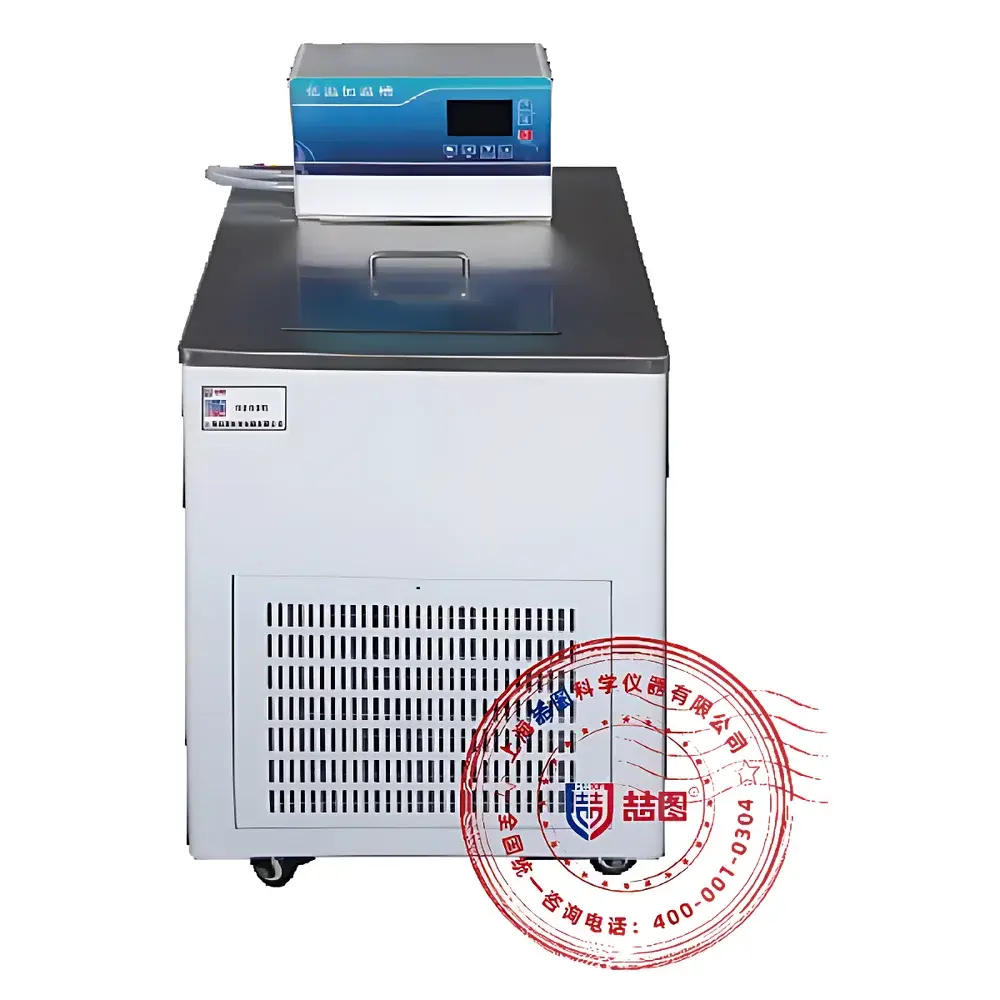
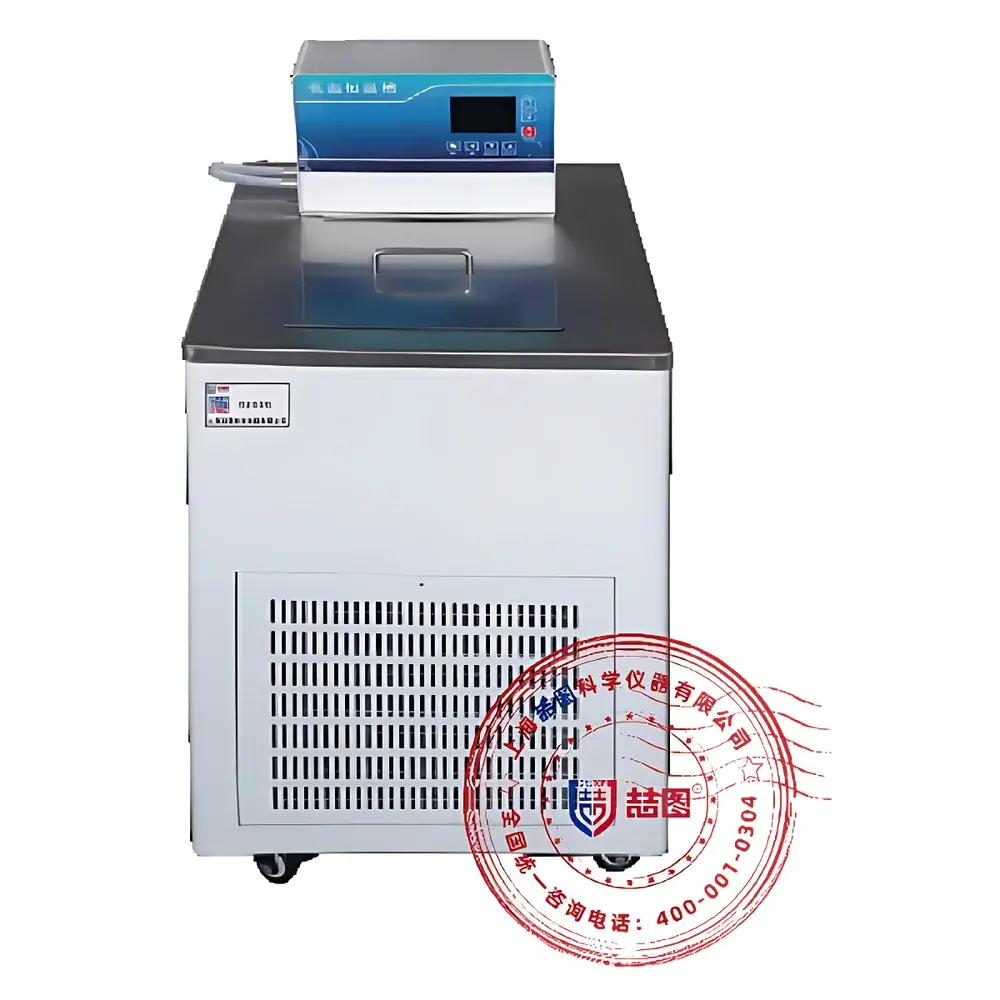
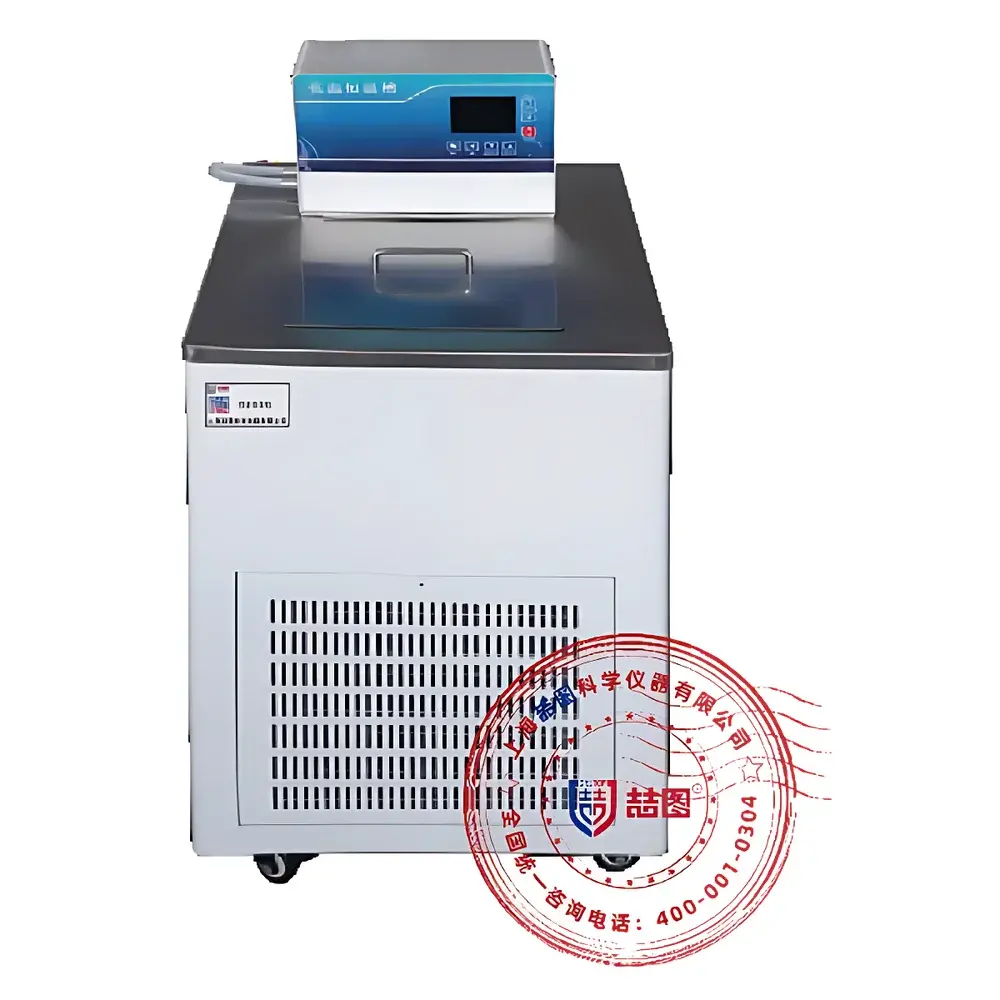
DRETOP FRC-5-10 Low-Temperature Constant-Temperature Bath
| Brand | DRETOP |
|---|---|
| Origin | Shanghai, China |
| Manufacturer Type | Direct Manufacturer |
| Product Category | Domestic |
| Model | FRC-5-10 |
| Instrument Type | Constant-Temperature Bath |
| Circulation Mode | Internal & External Circulation |
| Temperature Control | Refrigeration & Heating |
| Bath Volume | 5 L |
| Temperature Range | −10 °C to 100 °C |
| Temperature Stability | ±0.1 °C |
| Temperature Resolution | 0.1 °C |
| Power Supply | 220 V, 50 Hz |
| Opening Diameter | Ø210 mm |
| Pump Flow Rate | 10 L/min |
| Pump Head | 4–6 m |
| Refrigeration Capacity | 1248–319 W |
Overview
The DRETOP FRC-5-10 Low-Temperature Constant-Temperature Bath is a precision-engineered laboratory thermal management system designed for accurate temperature control and uniform heat transfer in chemical synthesis, analytical instrumentation cooling, and material characterization workflows. Operating on a closed-loop refrigeration–heating principle, the unit integrates a hermetically sealed compressor, PID-controlled heating element, and high-efficiency circulation pump to maintain setpoint stability across its full operational range of −10 °C to 100 °C. Its core architecture follows the standard bath-circulator configuration: a stainless-steel reservoir holds temperature-regulated fluid (e.g., water, ethylene glycol/water mixtures, or ethanol), which is continuously circulated through external devices—such as glass reactors, spectrophotometer cells, or electrophoresis units—via insulated inlet/outlet ports. The integrated magnetic stirrer at the bath base ensures homogeneous thermal distribution within the reservoir itself, minimizing axial and radial temperature gradients and supporting reproducible experimental conditions required in GLP-compliant laboratories.
Key Features
- Integrated magnetic stirring system with adjustable speed control, ensuring uniform temperature distribution throughout the 5 L bath volume
- Dual-mode thermal regulation: simultaneous refrigeration and heating capability enabled by independent compressor and resistive heating circuits
- High-precision platinum resistance temperature sensor (PT100) paired with a digital PID controller, delivering ±0.1 °C temperature stability and 0.1 °C resolution
- Robust stainless-steel bath chamber with corrosion-resistant finish and Ø210 mm opening, compatible with standard lab fixtures including overhead stirrers, pH electrodes, and condenser clamps
- External circulation porting supports both supply and return lines, enabling connection to jacketed reactors, cold traps, or analytical detectors requiring active thermal conditioning
- Front-panel interface with LED display, intuitive parameter navigation, and real-time monitoring of setpoint, actual bath temperature, and pump status
Sample Compatibility & Compliance
The FRC-5-10 accommodates a wide range of thermally sensitive applications without direct sample contact. It is routinely deployed for temperature stabilization of glass reaction vessels (up to 5 L capacity), electrophoresis tanks, viscometers, UV-Vis cuvette holders, and electron microscopy power supplies. Compatible heat-transfer media include deionized water (5–80 °C), 15% glycerol–water solution (80–100 °C), and ethylene glycol–water or anhydrous ethanol mixtures (−10 to −110 °C). The unit complies with IEC 61010-1:2010 safety standards for electrical equipment used in laboratory environments. While not certified for medical device use under ISO 13485, its temperature accuracy and audit-ready parameter logging support adherence to ASTM E2877 (Standard Guide for Validation of Thermal Management Systems) and internal SOPs aligned with FDA 21 CFR Part 11 data integrity requirements when used with compliant software interfaces.
Software & Data Management
The FRC-5-10 operates as a standalone instrument with no embedded data logging; however, its analog output (0–5 V or 4–20 mA) and RS485 communication port enable integration into third-party SCADA or LIMS platforms. When connected via optional USB-to-RS485 adapter, the unit supports Modbus RTU protocol for remote setpoint adjustment, real-time temperature readback, and alarm state polling. All temperature setpoints, dwell times, and pump activation events can be recorded externally with timestamping and user attribution—fulfilling traceability requirements for ISO/IEC 17025-accredited testing laboratories. No proprietary software is required, eliminating vendor lock-in and facilitating compatibility with LabVIEW, Python-based automation scripts, or enterprise-grade process historians.
Applications
- Temperature control of jacketed glass reactors during exothermic or cryogenic organic synthesis
- Cooling of electrophoresis power supplies and gel imaging systems to prevent band distortion
- Thermal stabilization of viscosity measurement cells and rheological test fixtures
- Active cooling of X-ray diffraction source housings and CCD detector assemblies
- Conditioning of industrial sensors and transducers during calibration at non-ambient temperatures
- Supporting low-temperature operation of molecular pumps, ion pumps, and microwave ablation generators
- Providing stable thermal environment for polymer crystallization studies and phase-transition analysis
FAQ
What types of fluids are recommended for operation at sub-zero temperatures?
Ethylene glycol–water mixtures (e.g., 30:70 v/v) or anhydrous ethanol are validated for continuous use between −10 °C and −40 °C. For extended low-temperature operation below −40 °C, specialized low-viscosity silicone oils may be employed—subject to pump compatibility verification.
Can the FRC-5-10 be used with external reactors exceeding 5 L capacity?
Yes—the 5 L reservoir serves only as the thermal source; external circulation enables thermal conditioning of reactors up to 20 L, provided flow resistance remains within the pump’s head specification (4–6 m) and tubing diameter ≥6 mm.
Is the magnetic stirrer powerful enough to suspend particles in viscous media?
The stirrer is optimized for homogenizing bath fluid—not for high-torque suspension. For particulate-laden or highly viscous solutions, an external overhead stirrer mounted via the standard Ø210 mm opening is recommended.
Does the unit meet electromagnetic compatibility (EMC) requirements for shared lab environments?
It conforms to EN 61326-1:2013 for laboratory equipment, with conducted and radiated emission limits appropriate for Class A environments. No additional shielding is required when installed per manufacturer-specified clearances.
How frequently should the refrigerant charge and pump seals be serviced?
Under normal operation (≤8 hrs/day, ambient ≤30 °C), the sealed refrigeration system requires no maintenance for 5 years; pump mechanical seals are rated for >10,000 operating hours and should be inspected annually during routine calibration.
Related Products



