
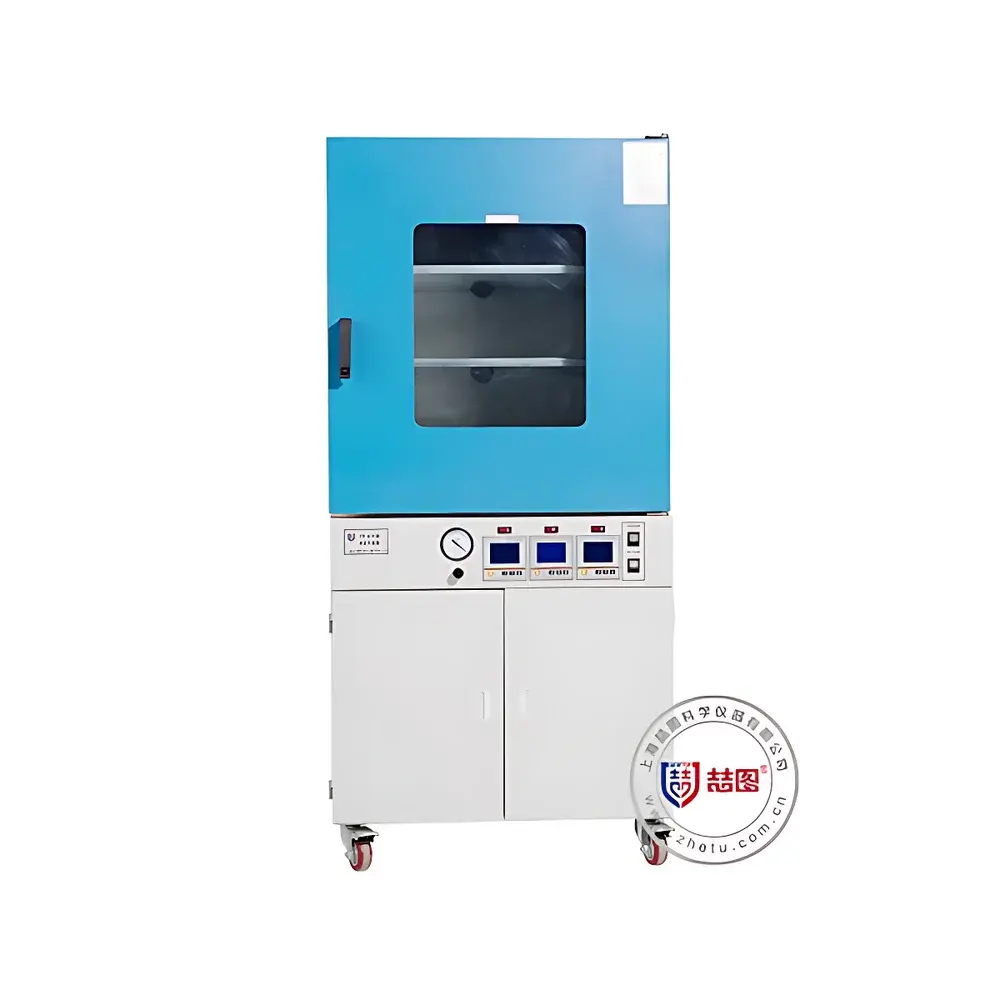
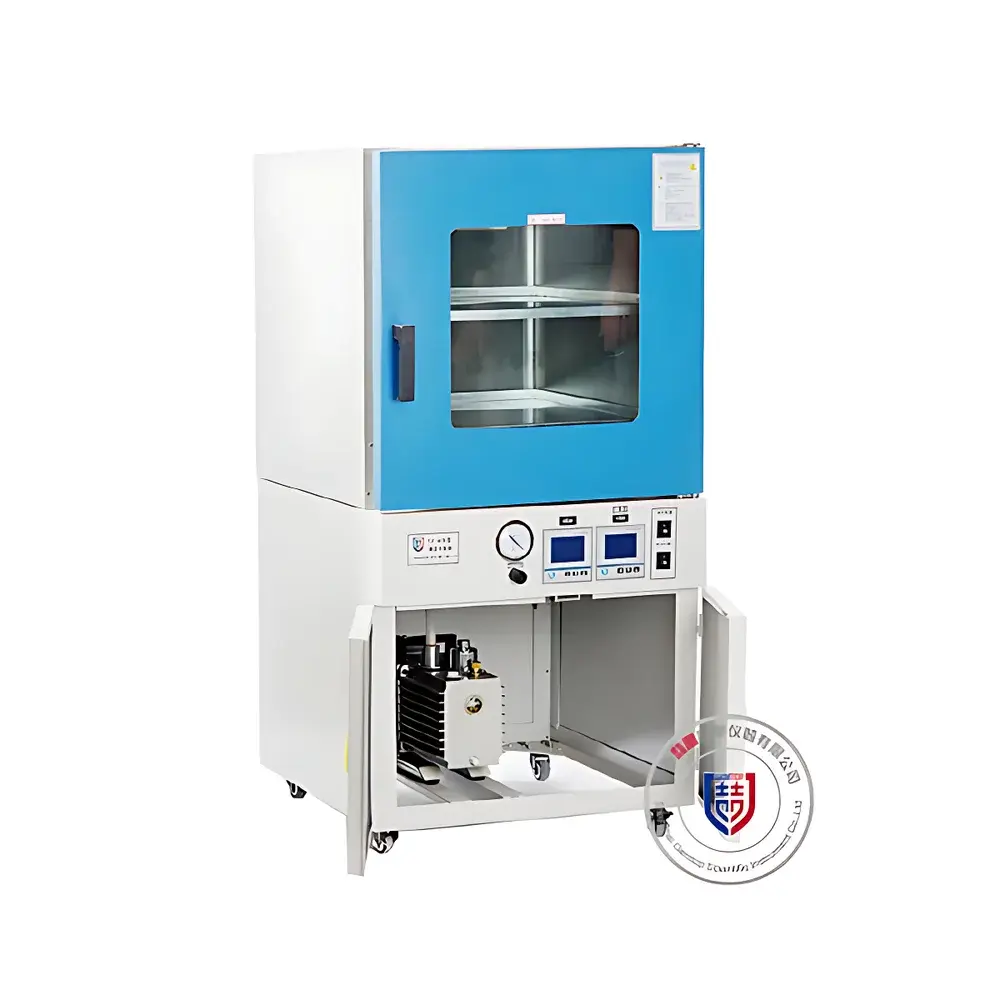
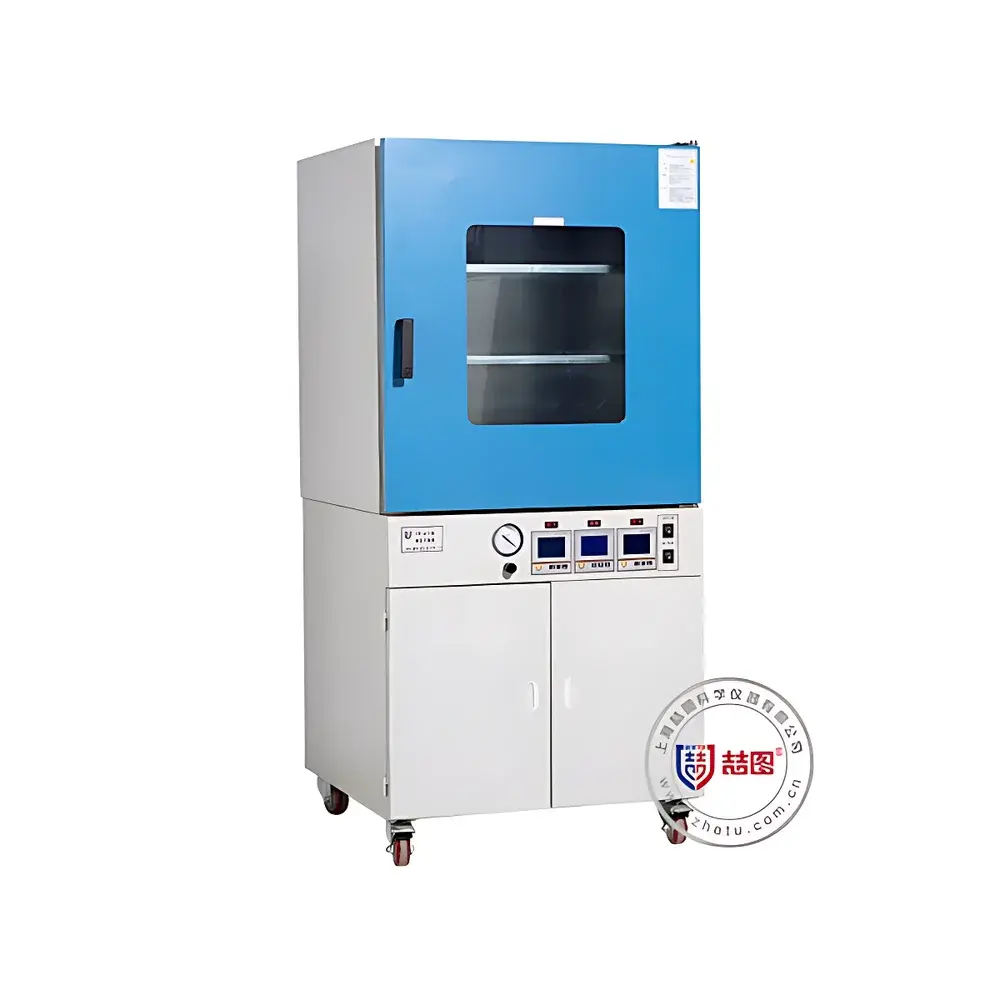
DRETOP TZF-6125LU Vacuum Drying Oven
| Brand | DRETOP |
|---|---|
| Origin | Shanghai, China |
| Manufacturer Type | Direct Manufacturer |
| Product Category | Domestic |
| Model | TZF-6125LU |
| Instrument Type | Vacuum Oven |
| Temperature Range | RT+10 to 250 °C |
| Temperature Fluctuation | ±0.5 °C |
| External Dimensions | 660 × 640 × 1290 mm |
| Control Temperature Range | RT+10 to 250 °C |
| Internal Chamber Dimensions | 500 × 500 × 500 mm |
| Temperature Resolution | 0.1 °C |
| Operating Ambient Temperature | RT+10 to 250 °C |
| Chamber Material | 304 Stainless Steel |
| Heating Method | External Four-Side Radiant Heating |
| Temperature Uniformity | ±1 °C |
| Ultimate Vacuum Level | ≤133 Pa |
Overview
The DRETOP TZF-6125LU Vacuum Drying Oven is an engineered solution for thermal processing under controlled low-pressure environments. It operates on the principle of vacuum-assisted moisture removal—by evacuating ambient air via integrated or externally connected vacuum pumps, the system lowers the partial pressure of water vapor, thereby reducing the boiling point of solvents and volatile components. This enables gentle, uniform drying of thermally sensitive, oxidation-prone, or chemically unstable samples without degradation, decomposition, or surface oxidation. Designed for precision laboratory and pilot-scale manufacturing applications, the TZF-6125LU maintains stable thermal conditions within a sealed stainless-steel chamber while sustaining vacuum integrity up to 133 Pa. Its robust mechanical architecture—including reinforced door sealing, double-layer tempered glass observation window, and fiber-glass insulated cavity—ensures minimal thermal loss and long-term operational reliability in continuous-use settings.
Key Features
- Stainless-steel (304) interior chamber (500 × 500 × 500 mm) with corrosion-resistant finish and smooth, weld-free surfaces for easy cleaning and contamination control.
- External four-side radiant heating system eliminates vacuum arcing, carbon deposition, and localized hot spots—ideal for high-vacuum stability and repeatable thermal profiles.
- Microprocessor-based P.I.D. temperature controller with 0.1 °C resolution, ±0.5 °C fluctuation tolerance, and programmable timer (1–9999 min).
- Dual-stage rotary locking mechanism with zinc-alloy handle ensures consistent gasket compression and leak-tight seal integrity across repeated vacuum cycles.
- Large-view, double-glazed tempered observation window enables real-time visual monitoring without compromising vacuum or thermal stability.
- Adjustable, removable stainless-steel wire shelving (2 standard trays) allows flexible load configuration and facilitates residue-free maintenance.
- Comprehensive safety architecture: over-temperature cut-off, leakage current protection, short-circuit interruption, thermal overload safeguard, and power-failure data retention.
- High-efficiency insulation using premium-grade glass fiber minimizes heat transfer to outer casing, supporting energy-efficient operation and safe external surface temperatures.
Sample Compatibility & Compliance
The TZF-6125LU accommodates a broad spectrum of sample formats—including powders, granules, thin-film coatings, semiconductor wafers, battery electrode sheets, lyophilized biologics, and polymer composites—without particle displacement or structural collapse. Its inert stainless-steel chamber and absence of internal airflow prevent cross-contamination and oxidative side reactions. The unit complies with general laboratory equipment safety standards (IEC 61010-1), and its construction supports alignment with GLP and GMP documentation requirements when integrated with optional accessories such as RS485/USB data logging, embedded printers, or audit-trail-capable controllers. While not inherently FDA 21 CFR Part 11 compliant, the system can be validated for regulated environments when paired with qualified software platforms and procedural controls.
Software & Data Management
Standard operation utilizes a dedicated LCD interface with intuitive menu navigation, fault-code diagnostics, and real-time display of chamber temperature and vacuum status. Optional upgrades include programmable color touchscreen controllers (P-series or LT-series), enabling multi-step ramp-soak-hold profiles, vacuum hold timing, and inert gas purging sequences. Data export is supported via USB flash drive or RS485 Modbus RTU protocol for integration into LIMS or MES systems. When equipped with certified controllers and timestamped event logging, the oven supports traceable process records required for ISO 17025-accredited laboratories or pharmaceutical QC workflows.
Applications
This vacuum drying oven serves critical functions across multiple technical domains: moisture removal from lithium-ion battery cathode/anode materials prior to cell assembly; solvent evaporation from OLED and LED encapsulation layers; post-cleaning drying of MEMS and photonic devices; residual solvent extraction from pharmaceutical intermediates per ICH Q5C guidelines; stabilization of enzyme preparations and nucleic acid reagents; and accelerated aging studies of polymer-based medical devices. Its capacity (125 L net volume) and thermal stability make it suitable for batch processing of medium-volume production lots in R&D, quality assurance, and pre-commercial scale-up environments.
FAQ
What vacuum pump is recommended for optimal performance with the TZF-6125LU?
A 2–4 L/s two-stage rotary vane pump is recommended for routine operation; for solvent-rich or high-moisture loads, pairing with a cold trap is advised to protect pump integrity and extend service life.
Can the chamber be purged with inert gas during operation?
Yes—optional inert gas inlet valves (e.g., N₂) allow controlled backfilling to atmospheric or sub-atmospheric pressure, enabling passivation or oxygen-sensitive annealing protocols.
Is the temperature uniformity verified per ASTM E2207 or ISO 15502?
While factory calibration confirms ±1 °C uniformity at steady state, users are advised to perform in-situ mapping per their internal SOPs or applicable standards prior to critical qualification.
What maintenance intervals are recommended for long-term reliability?
Vacuum gasket inspection every 6 months, pump oil replacement every 500 operating hours (for oil-lubricated pumps), and chamber cleaning after each use involving volatile organics or particulate residues.
Does the unit support remote monitoring or network connectivity?
Via optional RS485 interface and compatible SCADA software, real-time parameter streaming and alarm notification are achievable in industrial lab networks.



