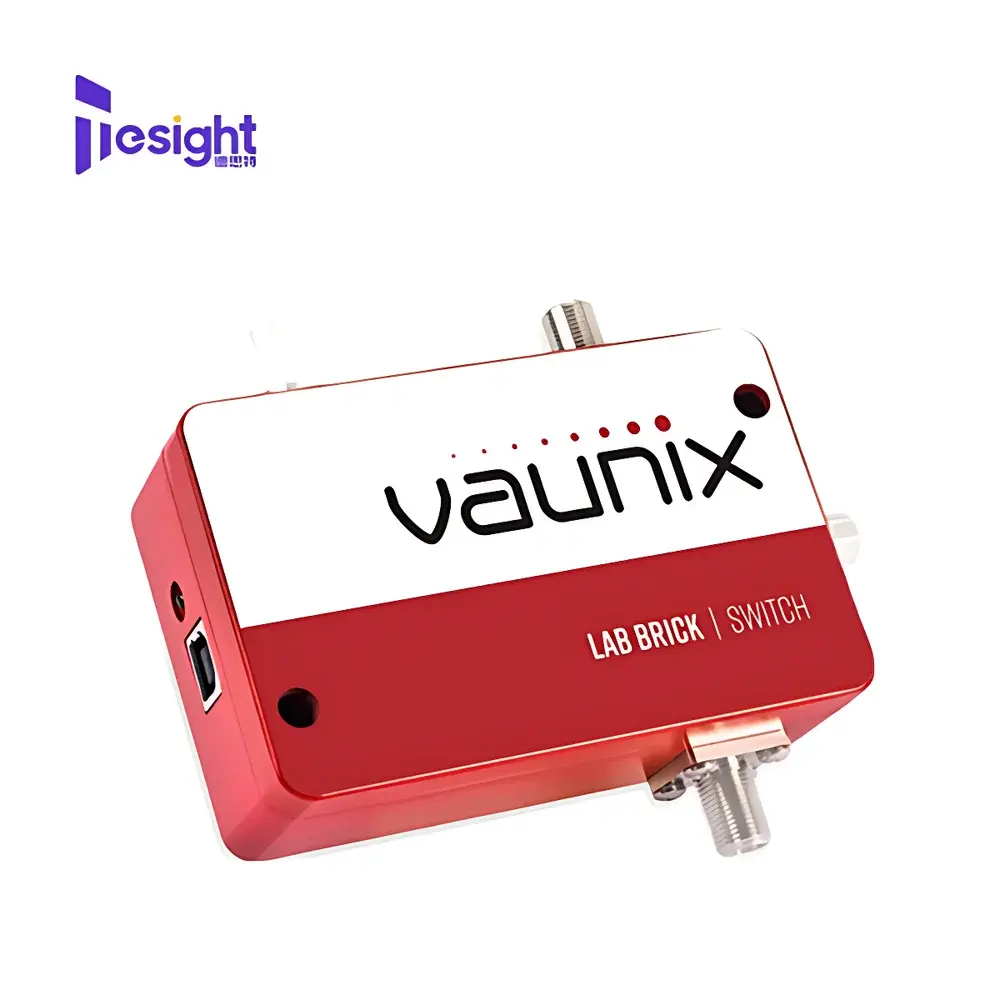
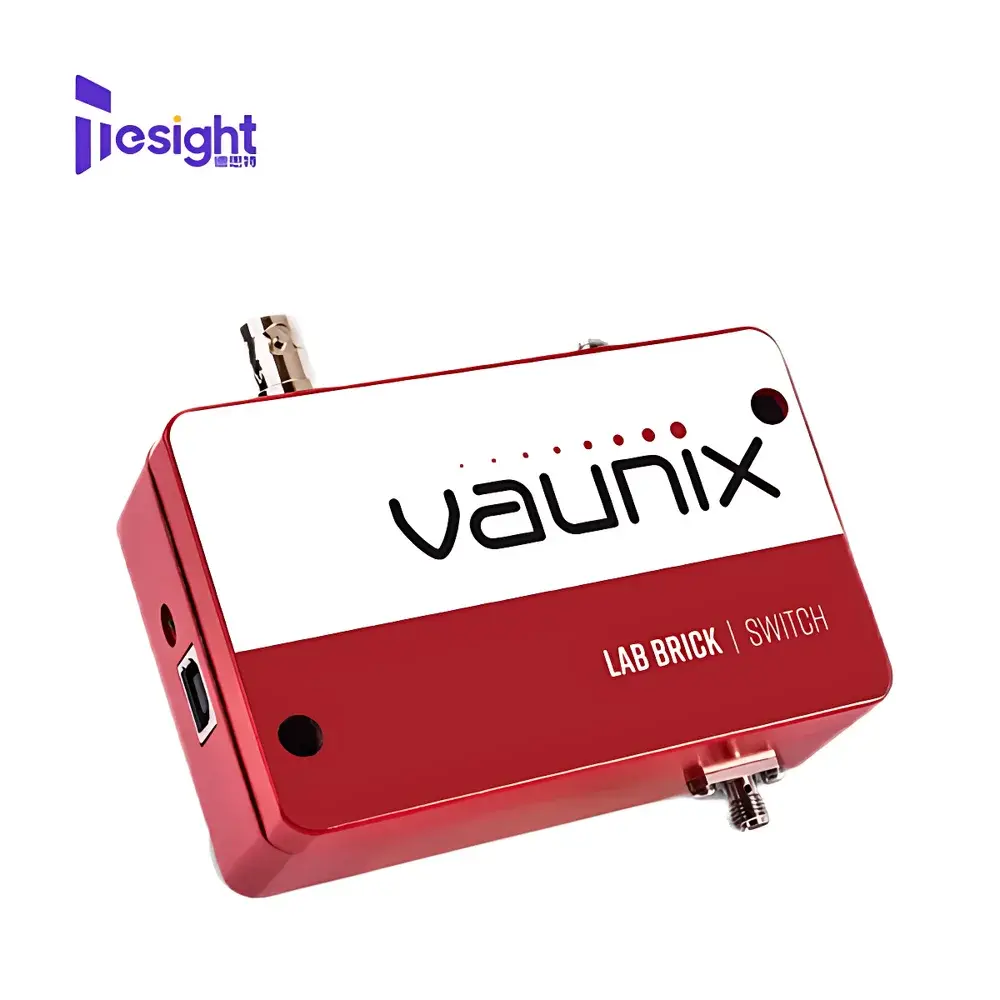
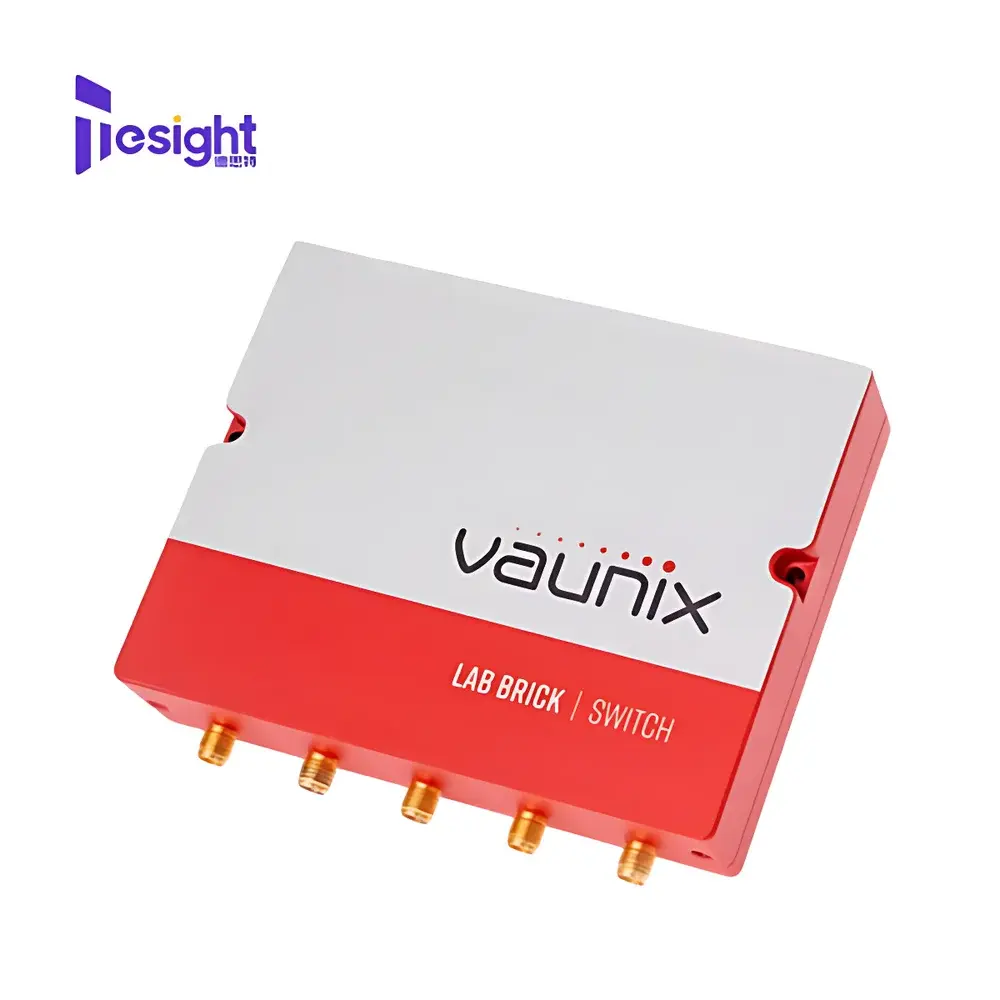
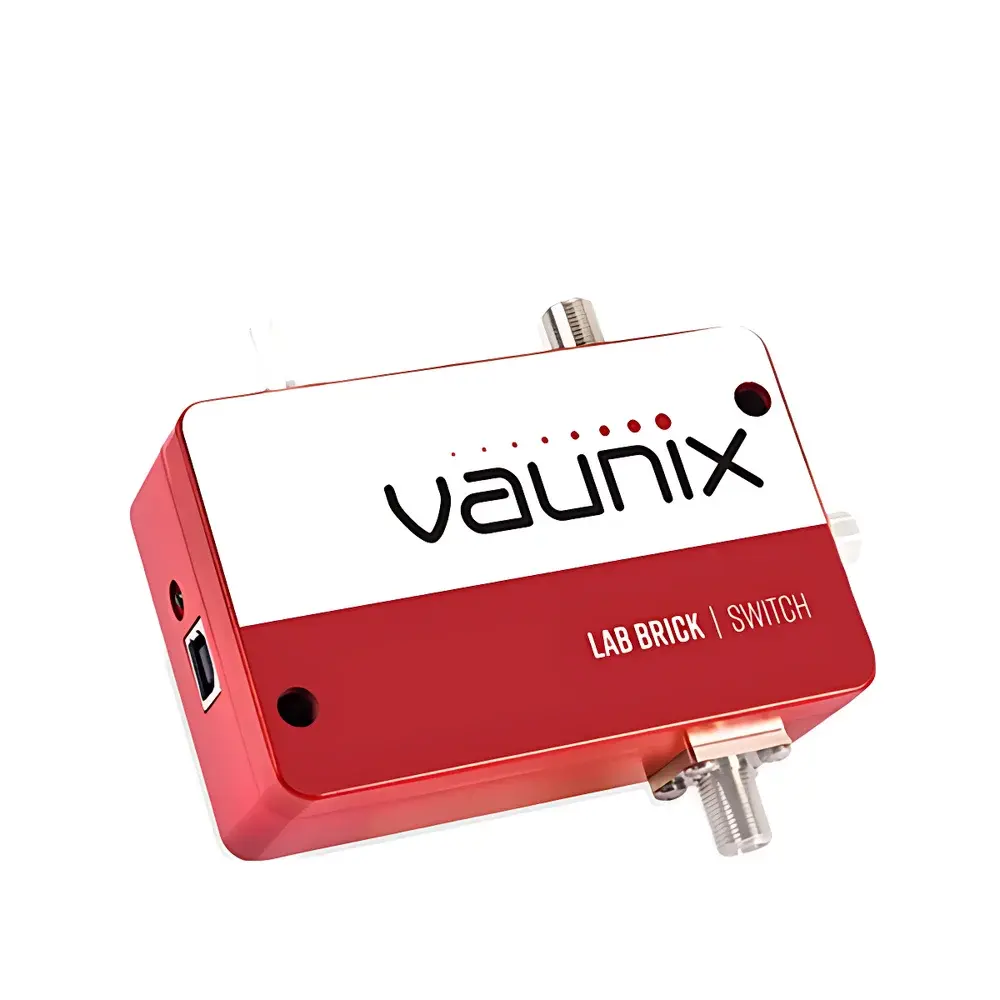
Vaunix LSW-102PDT-75F Compact Programmable RF/Microwave SPDT Switch
| Brand | Vaunix |
|---|---|
| Origin | Italy |
| Model | LSW-102PDT-75F |
| Impedance | 75 Ω |
| Switch Type | SPDT (Single-Pole Double-Throw), Normally Open/Normal Closed Configurable |
| Frequency Range | DC to 6 GHz |
| Insertion Loss | < 0.8 dB (typ. @ 3 GHz) |
| Isolation | > 75 dB (typ. @ 3 GHz) |
| VSWR | < 1.3:1 (typ. @ 3 GHz) |
| Power Handling | +30 dBm (1 W) CW |
| Switching Speed | < 15 µs |
| USB Interface | USB 2.0, Class Compliant, No Driver Required |
| Control | SCPI over USB or Vendor SDK (C/C++, Python, LabVIEW, MATLAB) |
| Operating Temperature | –20 °C to +70 °C |
| Dimensions | 63.5 × 44.5 × 14 mm |
| Weight | 42 g |
Overview
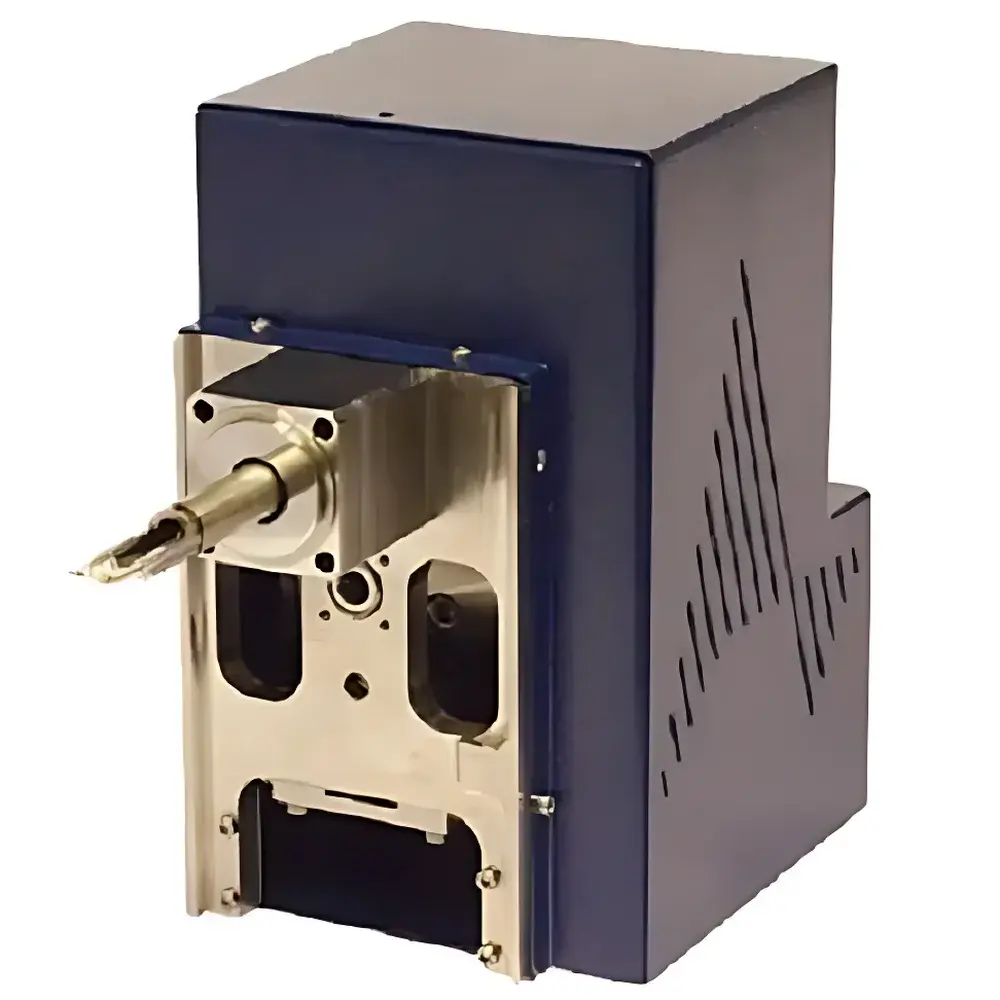
The Vaunix LSW-102PDT-75F is a compact, USB-powered, programmable single-pole double-throw (SPDT) RF/microwave switch engineered for precision signal routing in test, measurement, and automated validation environments. Designed with a 75 Ω impedance architecture, it supports broadband operation from DC to 6 GHz—making it suitable for applications in broadcast instrumentation, cable TV infrastructure testing, satellite communication subsystem verification, and digital video signal integrity analysis. Unlike traditional relay-based switches, the LSW-102PDT-75F employs solid-state GaAs pHEMT switching elements, delivering sub-15 µs switching speed, exceptional repeatability (>1 million cycles), and minimal amplitude/phase perturbation across its operational band. Its fully shielded metal enclosure ensures EMI resilience in dense rack-mounted or benchtop configurations, while the absence of external power supplies simplifies integration into portable or field-deployable measurement systems.
Key Features
- USB 2.0 class-compliant interface—no proprietary drivers required; recognized natively by Windows, Linux, and macOS as a USB CDC device
- SCPI command set support enables seamless integration with existing automated test executive (ATE) frameworks and scripting environments
- High port-to-port isolation (>75 dB typical at 3 GHz) minimizes crosstalk in multi-channel stimulus-response setups
- Amplitude balance ≤ ±0.15 dB and phase balance ≤ ±2.5° (typ. at 3 GHz) ensure fidelity in phase-sensitive measurements such as vector network analysis or IQ modulation path switching
- Low insertion loss (<0.8 dB typical at 3 GHz) preserves signal-to-noise ratio in cascaded RF chains
- Ruggedized aluminum chassis with gold-plated 75 Ω BNC connectors provides mechanical durability and stable impedance matching
- Firmware-upgradable via USB—supports future enhancements to timing control, error reporting, and protocol extensions
Sample Compatibility & Compliance
The LSW-102PDT-75F is optimized for use with 75 Ω RF systems, including SMPTE-certified video signal generators, DVB-T/T2 modulators, CATV headend test equipment, and coaxial-based spectrum analyzers. It complies with IEC 61000-4-2 (ESD immunity), IEC 61000-4-3 (radiated RF immunity), and RoHS 3 directives. While not certified for safety-critical avionics or medical RF subsystems, its performance parameters meet the repeatability and stability requirements outlined in ASTM E2932 (Standard Practice for RF Switch Characterization) and align with general-purpose laboratory validation practices under ISO/IEC 17025-accredited quality management systems. The device operates within standard commercial temperature and humidity ranges and is rated for continuous duty at +30 dBm (1 W) average power.
Software & Data Management
Vaunix provides a cross-platform GUI application (LSS-100) for manual switch state configuration, timing calibration, and status monitoring—including real-time reporting of VSWR warnings and thermal throttling events. For automated workflows, the vendor-supplied SDK includes native bindings for C/C++, Python (PyUSB), LabVIEW (VI package with VISA support), and MATLAB (instrument control toolbox compatible). All USB transactions generate timestamped logs compliant with GLP audit-trail requirements when used with host-side logging middleware. SCPI commands follow IEEE 488.2 conventions and support synchronous query-response sequences, enabling deterministic sequencing in time-critical switching arrays. Firmware updates are delivered as signed binary packages with SHA-256 checksum verification.
Applications
- Automated RF path selection in multi-source video signal generation systems
- Signal routing between antenna ports and spectrum analyzers in EMC pre-compliance testing
- Dynamic load switching for amplifier linearity characterization (e.g., AM-AM/AM-PM distortion analysis)
- Calibration path switching in modular vector signal analyzers and arbitrary waveform generator test fixtures
- Redundant signal path validation in broadcast transmission chain redundancy verification
- Lab-based development of DOCSIS 4.0 upstream channel simulators requiring fast, low-distortion switching
FAQ
Is the LSW-102PDT-75F compatible with 50 Ω systems?
No—it is strictly a 75 Ω impedance device. Use only with 75 Ω sources, loads, and interconnects to maintain VSWR performance and avoid reflections.
Can multiple units be synchronized for parallel switching?
Yes—via USB hub timing coordination and host-controlled SCPI command batching; jitter between units remains <500 ns under controlled host scheduling.
Does it support TTL or GPIO trigger inputs?
No—control is USB-only. External hardware triggering requires an intermediary microcontroller or USB-to-GPIO bridge.
What is the maximum recommended duty cycle for repetitive switching?
Continuous operation at full rated speed is supported; thermal derating begins above 65 °C ambient, with internal temperature sensors triggering protective state hold if exceeded.
Is calibration data provided with each unit?
Factory-measured S-parameter touchstone files (.s2p) and insertion loss/isolation vs. frequency plots are included digitally upon request for traceable system modeling.
Related Products