
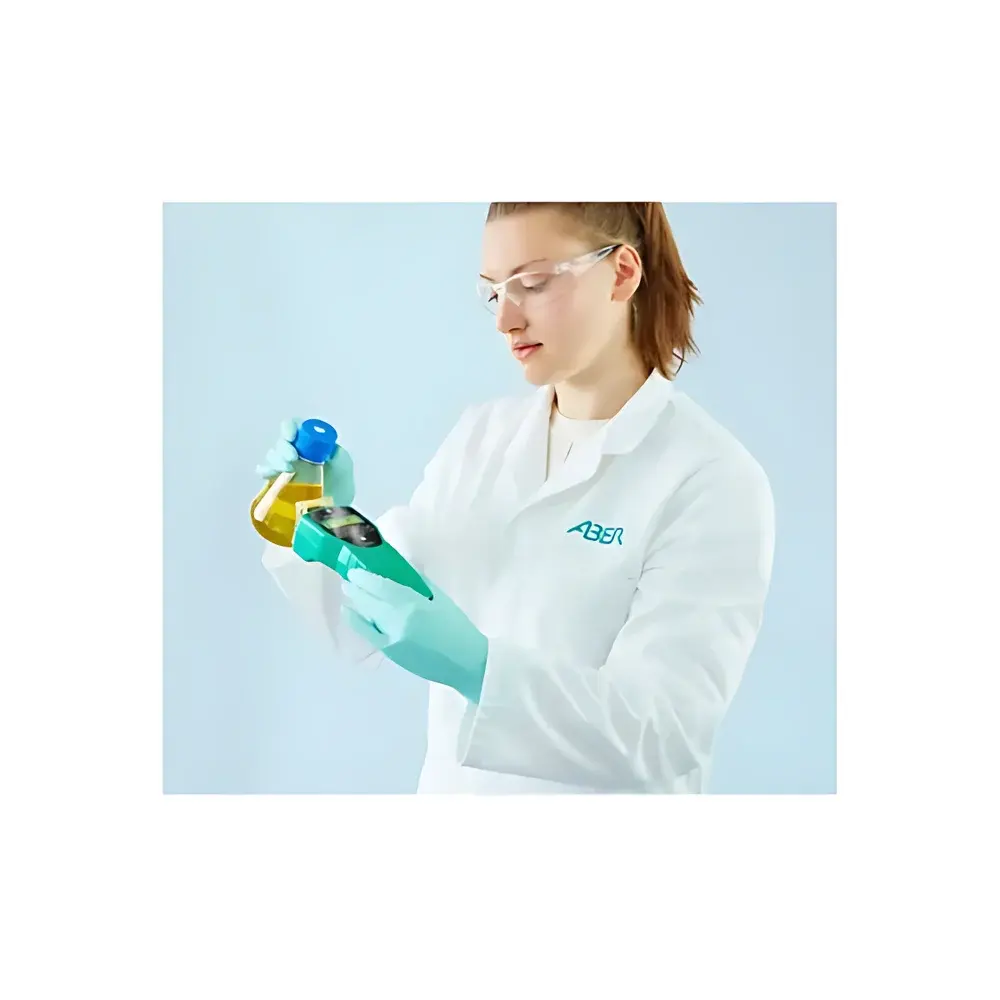
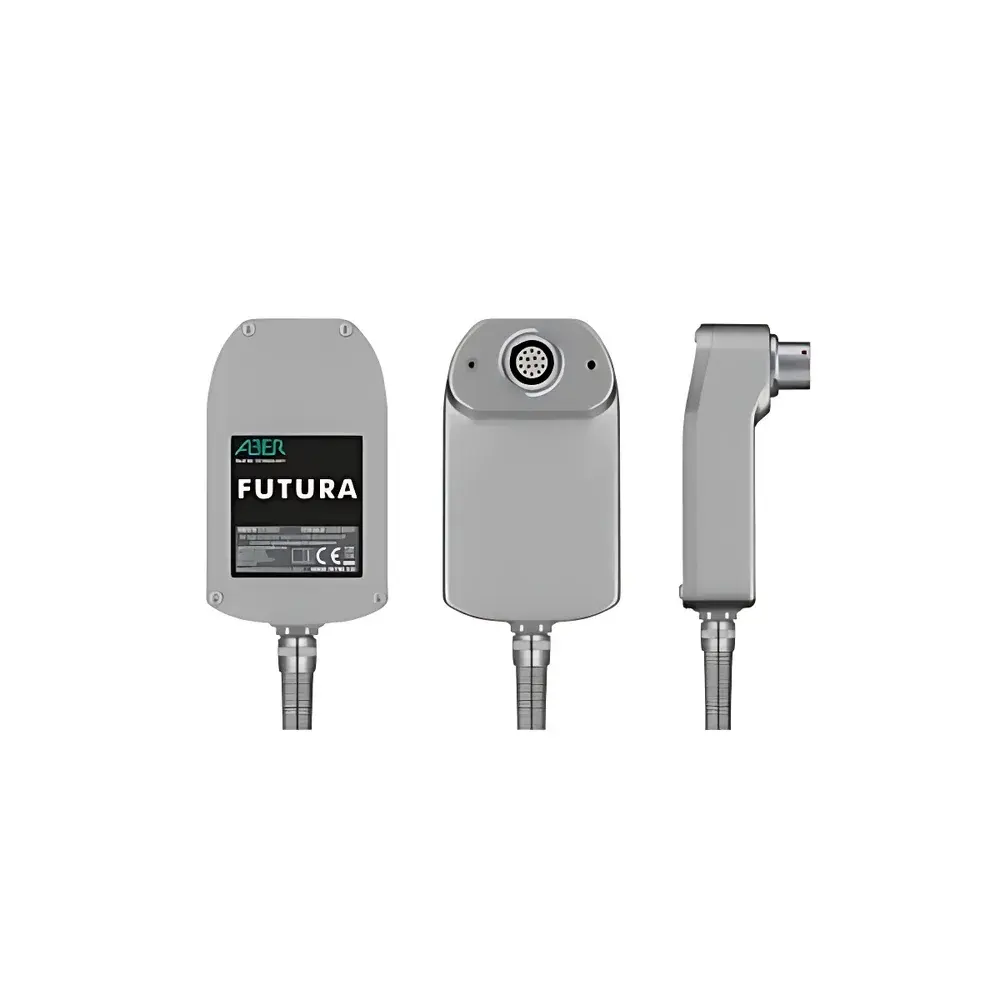
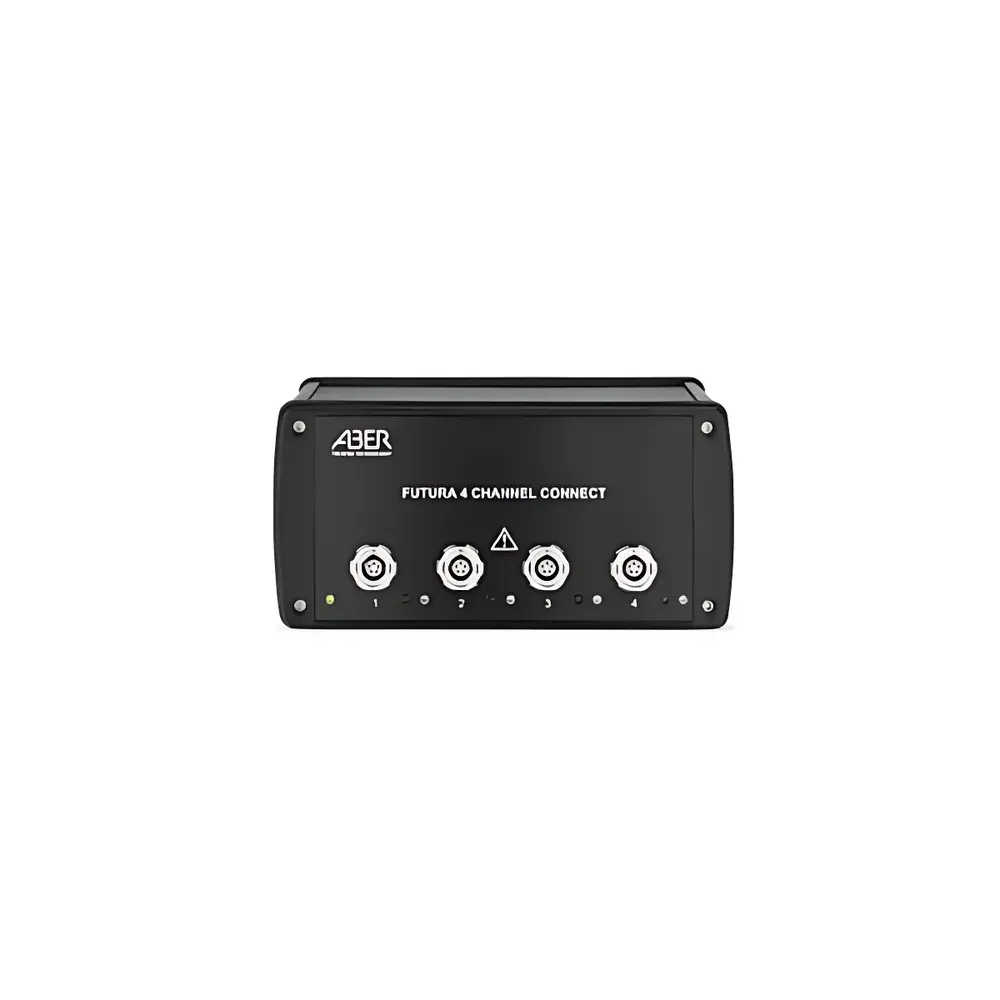
ABER OPTURA Online Biomass Monitor
| Brand | ABER |
|---|---|
| Origin | United Kingdom |
| Model | OPTURA |
| Detection Method | Near-Infrared (NIR) Reflectance |
| Measurement Parameter | Total Biomass (Cell Density) |
| Temperature Range | 0–50 °C |
| Sampling Frequency | 2300 Hz |
| Operating Principle | Optical Reflectance at Fixed Wavelength (1310–1330 nm) |
| Compliance | USP Class VI & FDA 21 CFR Part 11 Ready (with optional certified probes and audit-trail software) |
Overview
The ABER OPTURA Online Biomass Monitor is an industrial-grade, non-invasive optical sensor system engineered for real-time, in-situ quantification of total cell density across microbial and mammalian bioprocesses. Unlike absorbance-based turbidimetric methods—which suffer from interference by colored media components, air bubbles, or suspended solids—the OPTURA employs fixed-wavelength near-infrared (NIR) reflectance (1310–1330 nm) to deliver high-fidelity biomass signals independent of medium chromophores. This principle leverages the differential scattering and reflection characteristics of intact cells at NIR wavelengths, where water absorption is minimal and cellular structural features (e.g., membrane integrity, cytoplasmic granularity) contribute dominantly to the measured reflectance intensity. The result is a linear, calibration-free response over a wide dynamic range—from inoculation (<0.1 g/L DCW) to harvest (>100 g/L DCW)—enabling seamless monitoring across fermentation, fed-batch, and perfusion culture workflows without hardware reconfiguration or wavelength switching.
Key Features
- Non-contact, sterile-integrity-preserving measurement: Sensor mounts externally on glass or single-use bioreactor vessels via optically coupled adhesive adapters—no penetration, no risk of contamination, no validation burden associated with wetted parts.
- Fixed 1310–1330 nm NIR source: Optimized for maximal sensitivity across physiological biomass concentrations while minimizing attenuation from water, hemoglobin, phenolics, or caramelized media components common in brewing and biopharma applications.
- High temporal resolution: 2300 Hz sampling frequency supports detection of rapid growth transitions, lag-phase onset, and metabolic shifts—critical for adaptive feeding control and PAT-compliant process understanding.
- Multi-form factor platform: Includes OPTURA SPY (compact adhesive-mount), OPTURA PALM (handheld spot-check device), OPTURA SCOPE (insertable probe), and integrated OEM modules—ensuring scalability from R&D shake flasks to 20,000 L production bioreactors.
- Temperature-compensated electronics: Built-in thermistor (0–50 °C operating range) enables automatic signal normalization under variable bioreactor jacket temperatures and ambient fluctuations.
Sample Compatibility & Compliance
The OPTURA platform demonstrates robust performance across diverse biological systems: Saccharomyces cerevisiae, E. coli, Pichia pastoris, CHO, HEK293, and hybridoma cultures—as well as complex matrices including wort, soy hydrolysate, and animal-derived feed media. Its optical design mitigates interference from microcarriers, glass beads, antifoam droplets, and gas sparging-induced turbulence. All OPTURA sensors comply with ISO 13485 manufacturing standards. Optional probes carry USP Class VI certification and FDA 21 CFR Part 11–compliant traceability documentation. When paired with ABER’s validated BioView™ software, full audit trails, electronic signatures, and role-based access control meet GLP/GMP data integrity requirements per Annex 11 and ICH GCP guidelines.
Software & Data Management
Data acquisition and visualization are managed through ABER BioView™—a Windows-based application supporting real-time trend analysis, multi-sensor synchronization, and export to CSV, Excel, or OPC UA-compatible SCADA/DCS platforms. BioView™ includes embedded algorithms for derived parameter calculation: specific growth rate (µ), doubling time, and biomass accumulation rate—all computed using first-order numerical differentiation with configurable smoothing windows. Raw reflectance values are stored with timestamped metadata (sensor ID, temperature, firmware version) to support retrospective root-cause analysis. For integration into automated bioprocess control architectures, the OPTURA SPY and SCOPE models support Modbus TCP, 4–20 mA analog output, and USB CDC virtual COM port protocols—enabling direct linkage to DeltaV, Foxboro DCS, or custom Python-based control loops.
Applications
- Real-time monitoring of yeast propagation in brewery propagation tanks and lagering vessels (validated at AB InBev, Heineken, SABMiller).
- In-process control of E. coli and Pichia fermentations for recombinant protein production (used in GSK and Novartis upstream development labs).
- Perfusion culture optimization in CHO bioreactors—correlating reflectance trends with viable cell density (VCD) and metabolite profiles (glucose, lactate, ammonium).
- Accelerated strain screening in microtiter plates using OPTURA PALM for rapid, non-destructive colony density ranking pre-inoculation.
- Process validation support for regulatory filings—including demonstration of consistent biomass trajectory across scale-up batches (Q5A/Q5B alignment).
FAQ
Does OPTURA measure viable or total biomass?
OPTURA measures total biomass (intact and lysed cells) via NIR reflectance. For viable biomass, ABER recommends concurrent use of the FUTURA bio-capacitance system.
Can OPTURA be used in single-use bioreactors?
Yes—OPTURA SPY and PALM are routinely deployed on PETG, polycarbonate, and multilayer film bags with verified optical coupling efficiency (>92% signal transmission).
Is calibration required before each run?
No. OPTURA operates on a factory-established reflectance baseline. Optional user-defined zero-point offset is available for background subtraction in highly reflective vessels.
What is the minimum detectable biomass concentration?
Detection limit is application-dependent but typically ≤0.05 g/L dry cell weight for bacterial cultures in clear media; higher for mammalian cells due to lower refractive index contrast.
How is temperature compensation implemented?
An integrated Pt1000 thermistor provides continuous temperature feedback; reflectance-to-biomass conversion uses a second-order polynomial correction curve embedded in firmware.



