
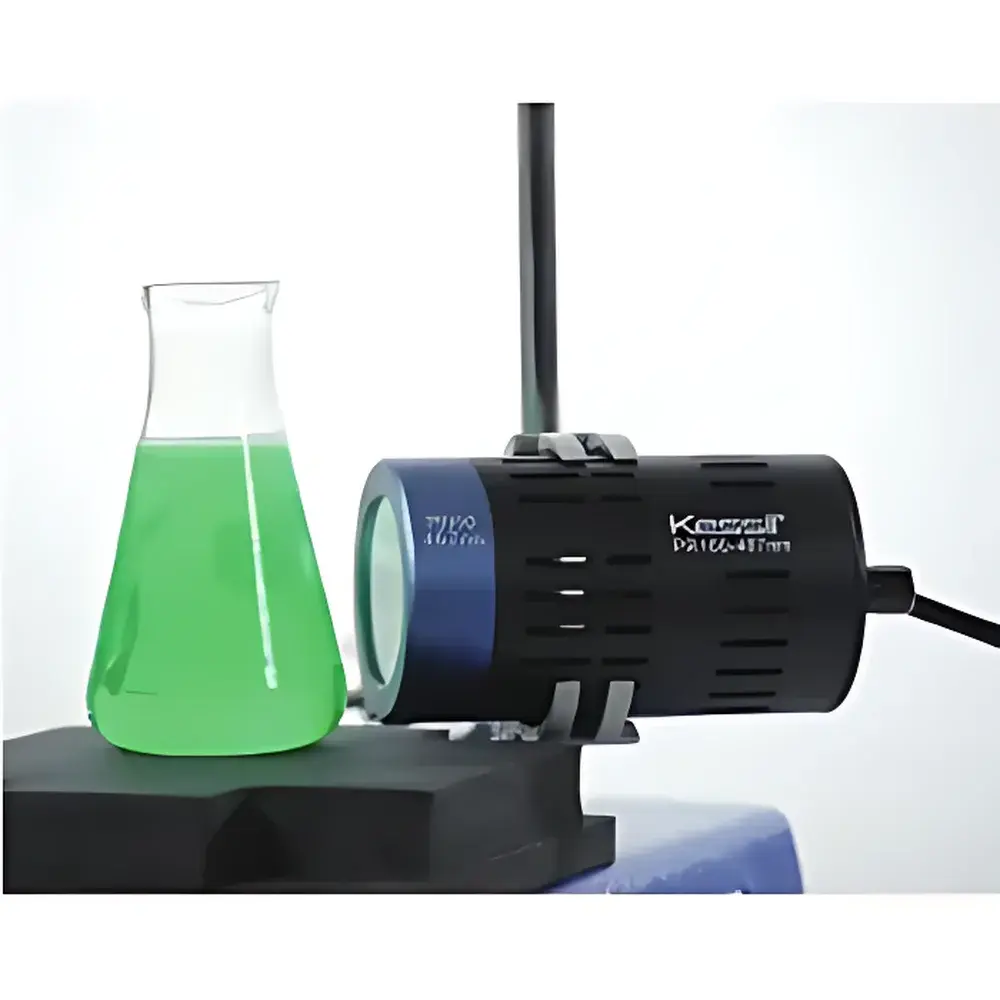
Kessil PR160 LED Photocatalytic Light Source
| Brand | CHEMn (Distributor) |
|---|---|
| Origin | USA |
| Model | PR160 |
| Light Source Type | High-Precision Tunable LED Array |
| Illumination Mode | External Irradiation |
| Max Power | 40 W |
| Input Voltage | 100–240 V AC |
| Operating Temperature | 0–40 °C |
| Beam Angle | 56° |
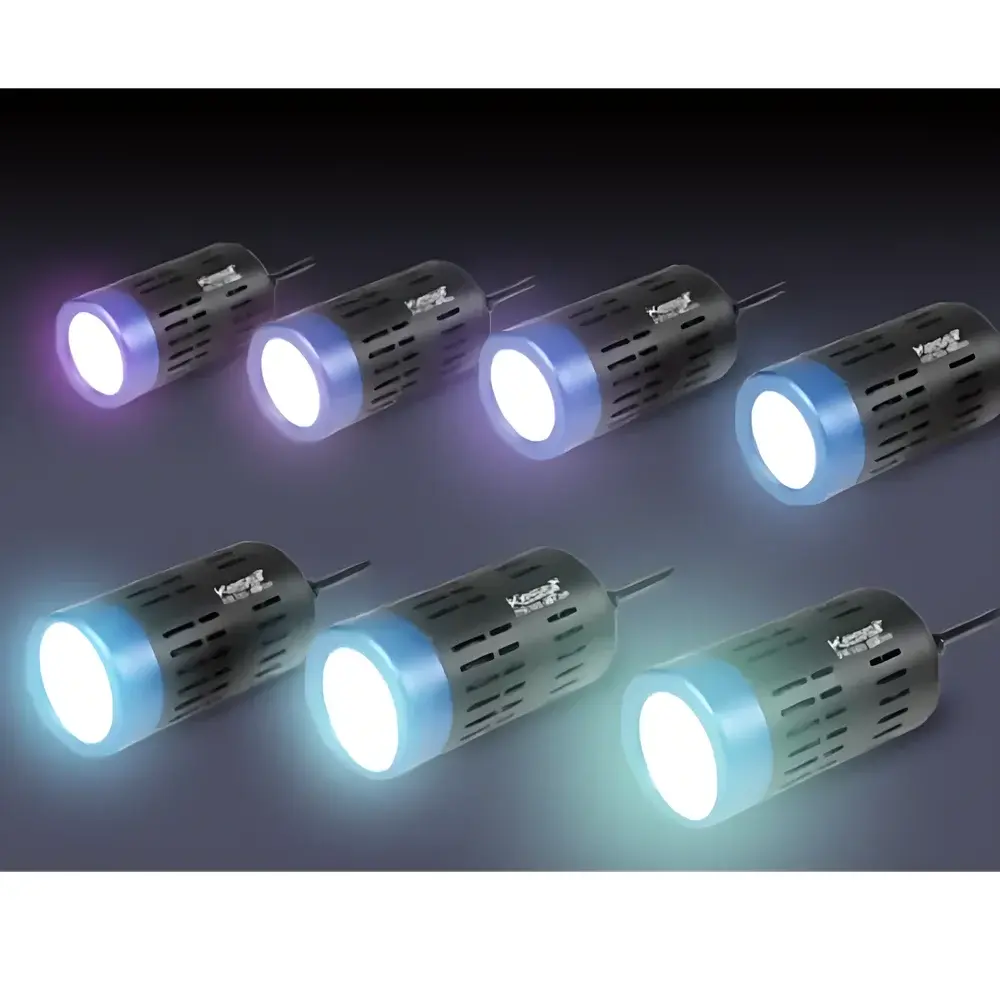
| Peak Wavelength Options | 370 nm, 390 nm, 427 nm, 440 nm, 456 nm, 467 nm, 525 nm, 640 nm, 740 nm |
| Irradiance | 2.3 mW/mm² (measured at 1 cm distance) |
| Dimensions (H × D) | 114 mm × 63 mm |
| Spectral Accuracy | ±1 nm |
| Output Stability | ±3% over rated operating conditions |
| Brightness Control | 4-step discrete intensity adjustment |
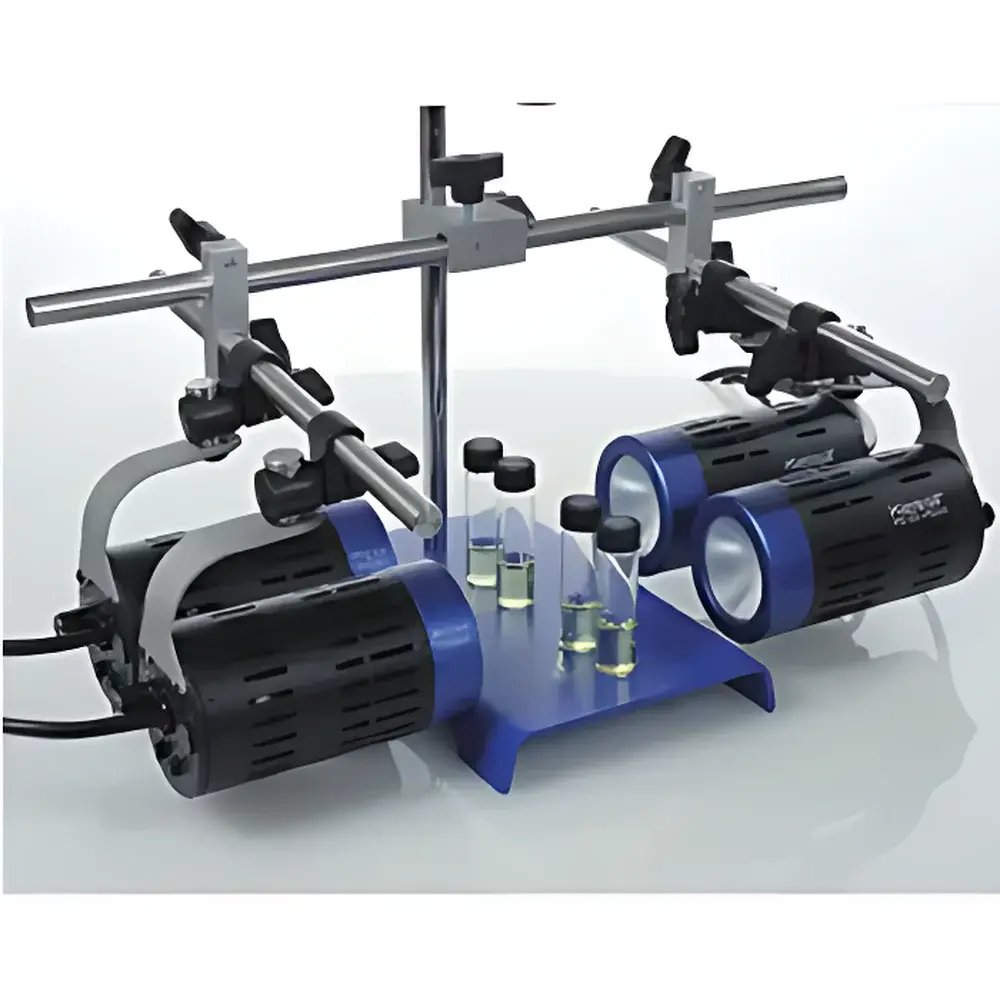
| Mounting Compatibility | Universal lab clamp, dedicated PR160 adjustable stand |
Overview
The Kessil PR160 LED Photocatalytic Light Source is a purpose-engineered, high-stability illumination system designed for reproducible and wavelength-selective photochemical experimentation in academic, industrial, and pharmaceutical research laboratories. Unlike broadband arc lamps (e.g., mercury or xenon), the PR160 employs monochromatic, narrow-bandwidth LED emitters—each individually calibrated to deliver a defined peak wavelength with ±1 nm spectral accuracy. This enables precise activation of photocatalysts (e.g., TiO₂, g-C₃N₄, Ru(bpy)₃²⁺, Ir(ppy)₃) and direct interrogation of wavelength-dependent quantum yields, reaction kinetics, and electron-transfer pathways. Its external irradiation architecture ensures uniform photon delivery to reaction vessels without thermal interference from lamp housing—critical for temperature-sensitive transformations such as asymmetric photoredox catalysis or enzymatic photoactivation. Engineered for continuous-duty operation within ambient laboratory environments (0–40 °C), the PR160 integrates active thermal management and constant-current LED drivers to maintain output stability within ±3% across its operational lifetime.
Key Features
- Wavelength-selective illumination with nine discrete, factory-calibrated peak options: 370 nm, 390 nm, 427 nm, 440 nm, 456 nm, 467 nm, 525 nm, 640 nm, and 740 nm—covering UV-A through deep red spectral regions relevant to photocatalyst bandgap excitation and biological optogenetic probes.
- High irradiance output of 2.3 mW/mm² measured at 1 cm working distance, optimized for scalable photochemical screening while minimizing sample heating.
- Four-level discrete brightness control allows systematic variation of photon flux—enabling quantitative correlation between light intensity and reaction rate, selectivity, or turnover number (TON) under controlled irradiance conditions.
- Compact form factor (114 mm × 63 mm) and standardized M6 threaded mounting interface support flexible integration into fume hoods, gloveboxes, or custom-built photoreactor manifolds.
- Dedicated PR160 adjustable stand provides repeatable positioning with ±0.5° angular resolution and vertical translation—ensuring consistent irradiation geometry across replicate experiments and inter-laboratory studies.
Sample Compatibility & Compliance
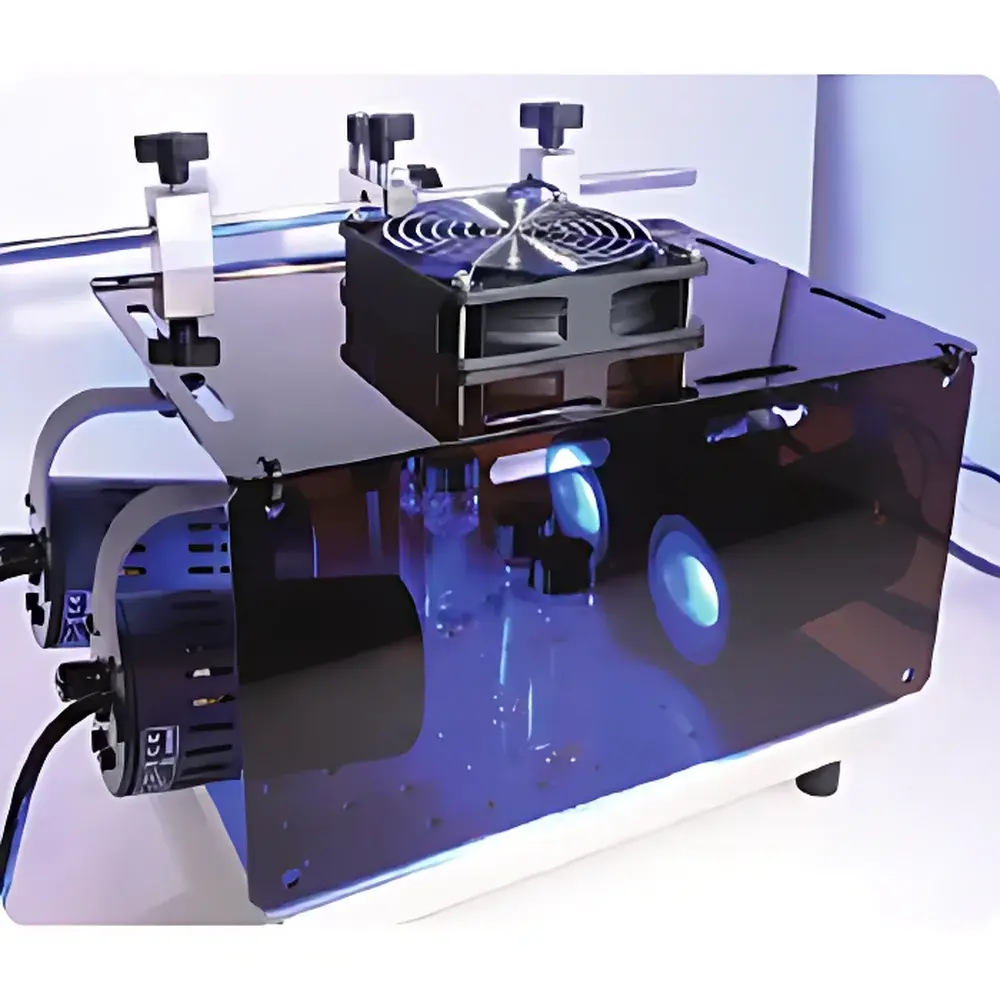
The PR160 is compatible with standard laboratory glassware including 1–50 mL vials, quartz or borosilicate test tubes, jacketed photoreactors, and flow-cell modules. Its external irradiation design eliminates optical coupling constraints associated with immersion-type sources, permitting use with opaque or reflective reaction matrices. The device complies with IEC 61000-6-3 (EMC emission limits) and IEC 62471 (Photobiological Safety Classification — Risk Group 1 for all wavelengths at default intensity settings). While not intrinsically rated for Class I Division 1 hazardous locations, it may be deployed in explosion-proof enclosures per NFPA 497 when used with volatile solvents. No regulatory certification for FDA 21 CFR Part 11 or ISO/IEC 17025 is applicable, as the PR160 functions as a physical stimulus generator—not a data-acquisition or analytical instrument.
Software & Data Management
The PR160 operates as a standalone hardware module with no embedded firmware, driver dependencies, or proprietary software interface. Intensity levels are selected via front-panel tactile switch; no USB, Bluetooth, or network connectivity is provided. This design prioritizes electromagnetic compatibility, long-term calibration integrity, and operational simplicity—eliminating potential failure modes associated with firmware updates or OS compatibility. For GLP/GMP-aligned workflows, users may log intensity setting, wavelength selection, exposure duration, and positional parameters manually or via LIMS-integrated electronic lab notebooks (ELNs). Traceability is maintained through serial-numbered calibration certificates supplied with each unit, documenting peak wavelength and irradiance at time of shipment.
Applications
- Photocatalytic C–H functionalization, cross-coupling, and asymmetric synthesis using transition-metal or organic photocatalysts.
- Photopolymerization kinetics studies for dental resins, 3D-printing photoinitiators, and stimuli-responsive hydrogels.
- Photostability testing of APIs and excipients per ICH Q1B guidelines using controlled UV–vis exposure.
- Photoelectrochemical cell characterization under monochromatic illumination for solar fuel generation research.
- Time-resolved spectroscopic probe excitation in transient absorption or fluorescence upconversion setups.
FAQ
Is the PR160 suitable for use inside a nitrogen-filled glovebox?
Yes—the unit features sealed electronics and passive convection cooling, enabling safe operation in inert-atmosphere environments without modification.
Can multiple PR160 units be synchronized for parallel irradiation?
No synchronization protocol is built-in; however, identical units can be operated simultaneously using independent power supplies with matched intensity settings for comparative batch studies.
Does the PR160 require recalibration after extended use?
LED spectral output drift is negligible over typical laboratory service life (<5,000 hours); no user recalibration is specified—only periodic verification against NIST-traceable spectroradiometric standards is recommended for metrological rigor.
What safety precautions apply when operating the 370 nm or 390 nm configurations?
UV-A emission requires ANSI Z87.1-compliant polycarbonate eyewear and skin coverage; avoid direct beam exposure and ensure adequate ventilation if ozone generation is suspected in high-intensity closed-vessel setups.



