
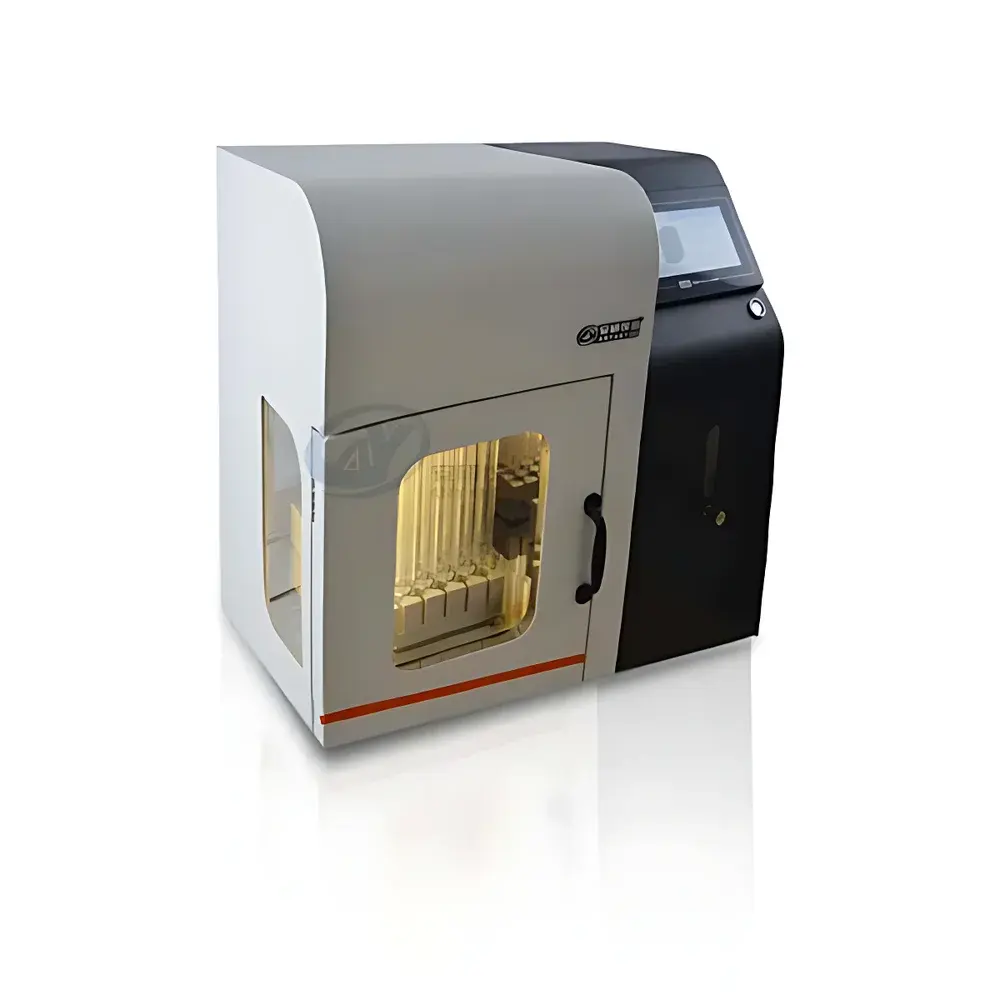
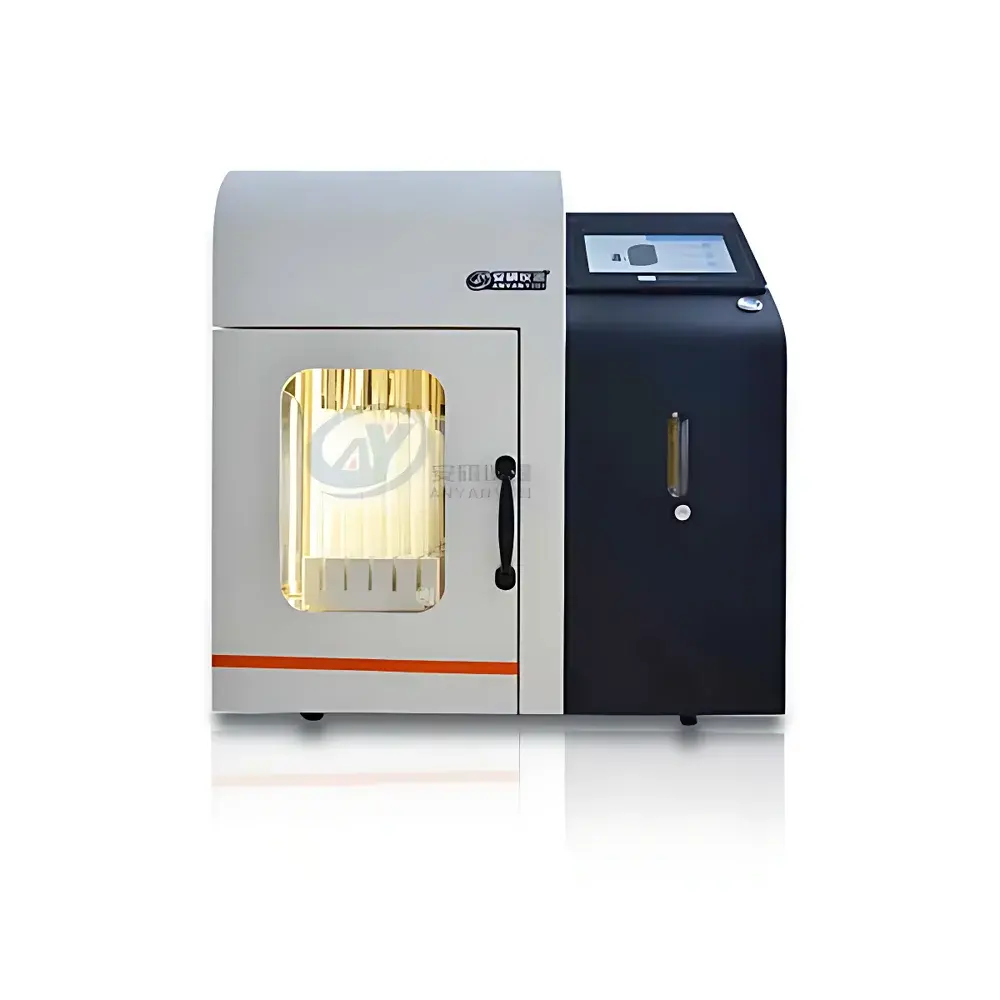
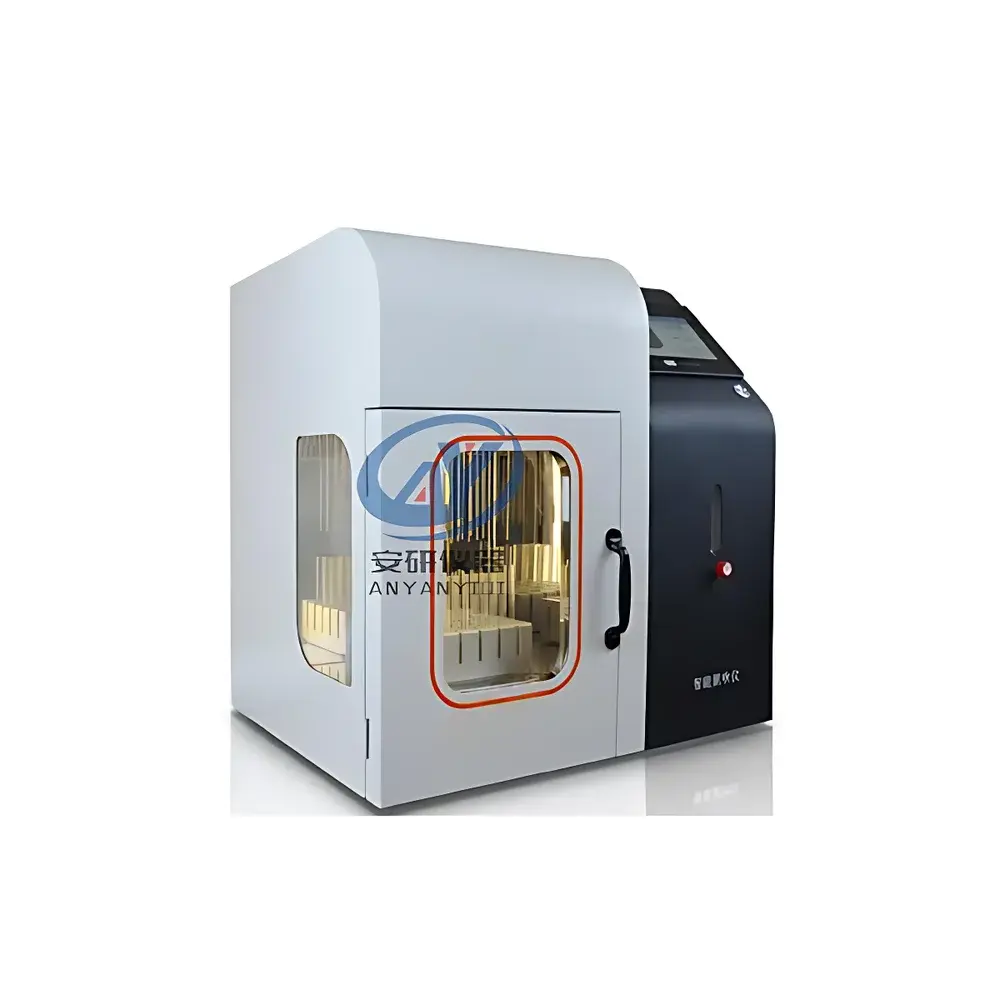
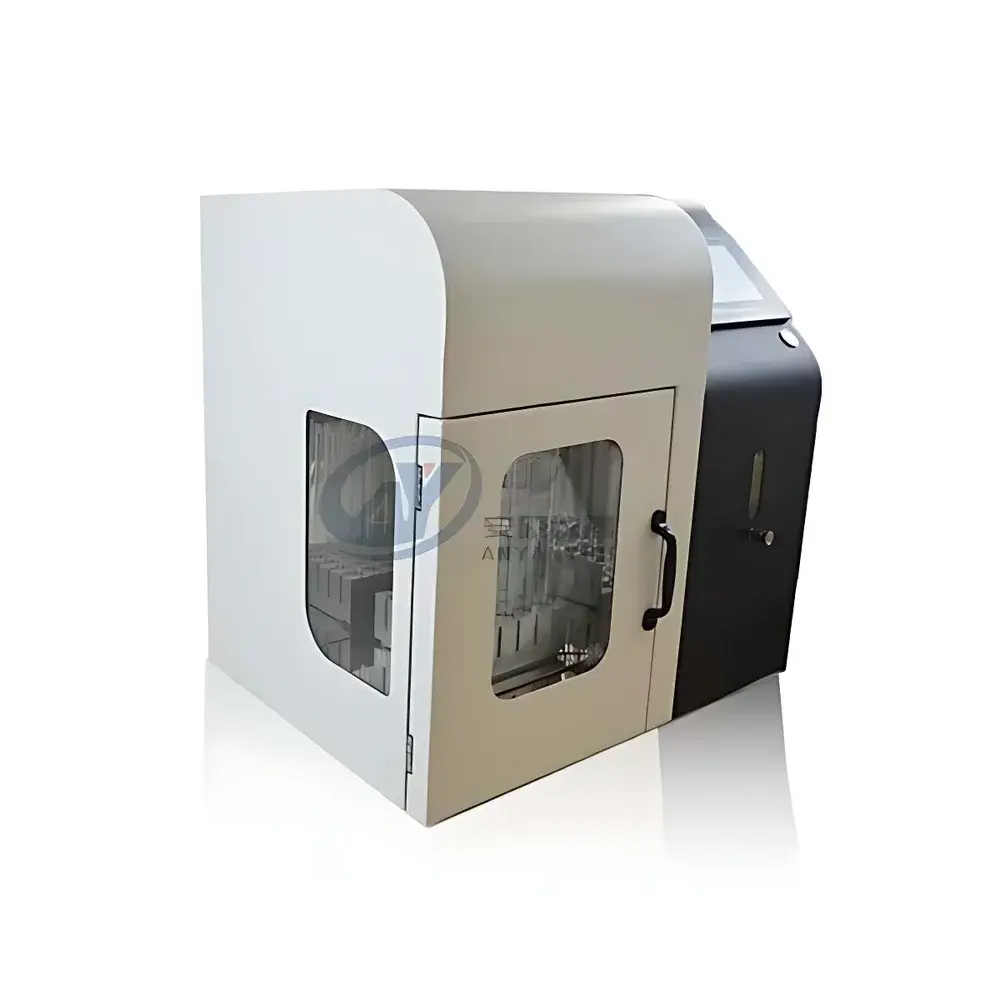
AYAN DC30G Fully Enclosed Dry-Block Nitrogen Evaporator with 30-Position Sample Concentration System
| Brand | AYAN Instruments |
|---|---|
| Origin | Zhejiang, China |
| Model | AYAN-DC30G |
| Heating Method | Dry-block heating |
| Temperature Range | Ambient +5°C to 150°C |
| Temperature Uniformity | ±0.5°C |
| Sample Capacity | 30 positions |
| Tube Diameter Compatibility | 16 mm (optional) |
| Gas Flow Control Range | 0–999 mL/min |
| Programmable Stages | 50 segments |
| Display | 7-inch capacitive touchscreen |
| Heating Block Material | Aerospace-grade aluminum alloy |
| Gas Preheating Function | Yes (~45°C) |
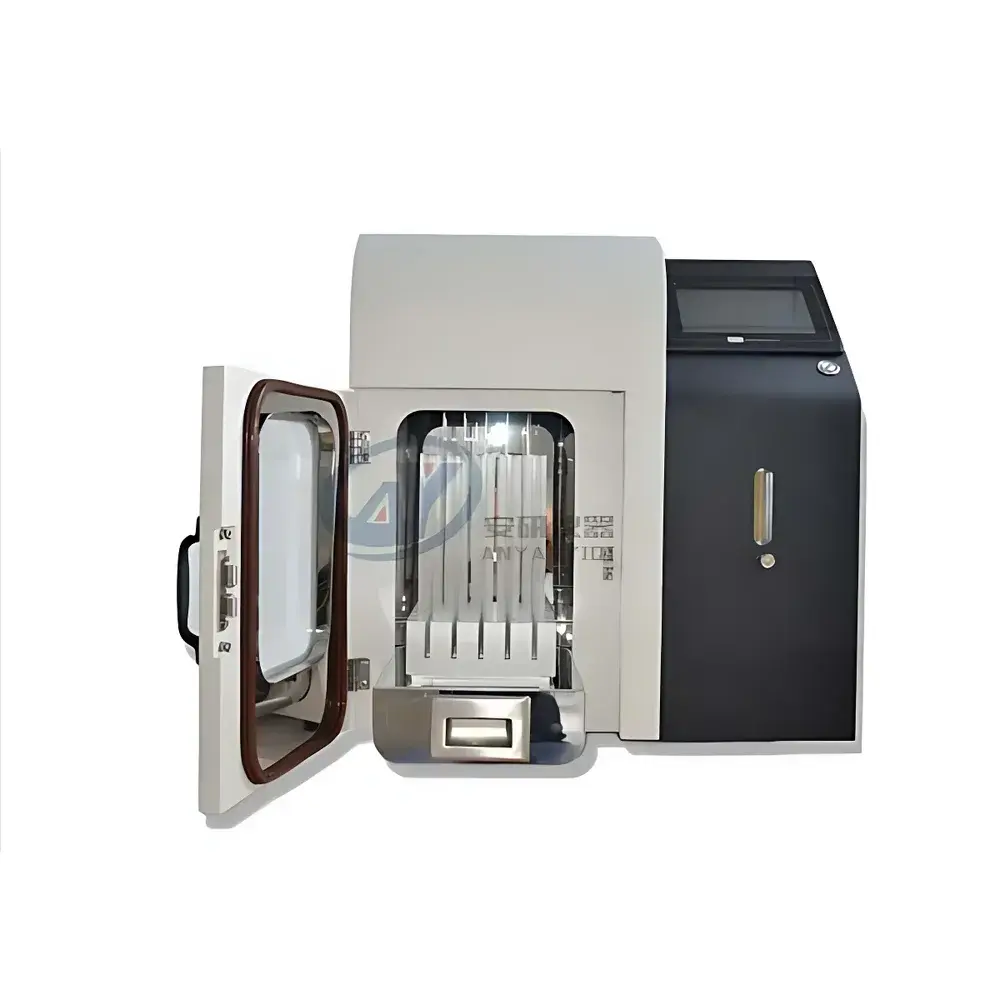
| Sealing System | Dual-seal observation door with internal recirculating fan |
| Data Storage | Internal multi-session logging |
| Gas Distribution | Independent solenoid valve per channel |
| Lift Mechanism | Motorized dual-mode (fine-adjust + rapid) needle positioning |
| Compliance | Designed for GLP-compliant sample preparation workflows |
Overview
The AYAN DC30G is a fully enclosed, programmable dry-block nitrogen evaporator engineered for high-throughput, reproducible solvent removal in analytical laboratories. Unlike traditional open-bay or water-bath systems, the DC30G employs a sealed chamber architecture combined with precision dry-block heating and individually regulated nitrogen flow to eliminate ambient contamination, condensation artifacts, and cross-sample vapor migration. Its core operation relies on controlled laminar nitrogen gas flow directed perpendicularly onto sample surfaces at elevated, thermally stabilized temperatures—accelerating evaporation kinetics while preserving analyte integrity. The system is purpose-built for applications requiring strict environmental control, such as residual solvent analysis, pesticide residue quantification, pharmaceutical impurity profiling, and clinical toxicology sample prep where moisture ingress, temperature drift, or volatile organic compound (VOC) escape must be systematically excluded.
Key Features
- 7-inch high-resolution capacitive touchscreen interface with intuitive graphical workflow navigation and real-time parameter monitoring
- 50-segment programmable temperature ramping profile—supporting complex multi-step concentration protocols (e.g., gentle initial drying followed by accelerated final evaporation)
- Dry-block heating module fabricated from aerospace-grade aluminum alloy, ensuring rapid thermal response (<15 min to 100°C), ±0.5°C spatial uniformity across all 30 positions, and resistance to corrosion from organic solvents
- Fully motorized dual-mode needle lift system: rapid positioning for setup and fine-adjust (0.1 mm resolution) for precise tip-to-surface distance control—critical for low-volume endpoint concentration
- Integrated nitrogen preheating subsystem maintaining inlet gas at ~45°C, eliminating cold condensation on needle tips and preventing re-deposition of volatile analytes
- Independent electromagnetic flow control per channel with digital feedback—ensuring consistent gas distribution even during dynamic load changes
- Full enclosure with dual-sealed observation windows and internal recirculating air management, enabling operation without external fume hood connection while meeting OSHA PEL and EU Directive 2004/40/EC exposure limits for nitrogen displacement
- Drawer-style sample tray with full peripheral visibility—facilitating unobstructed meniscus monitoring and minimizing manual handling errors
Sample Compatibility & Compliance
The DC30G accommodates standard 16 mm outer-diameter test tubes (e.g., 15 mL conical polypropylene or borosilicate glass), with optional interchangeable blocks available for 10 mm, 13 mm, and 20 mm formats. All wetted components are chemically inert (anodized aluminum, PTFE-coated stainless steel, and fluoropolymer seals), ensuring compatibility with acetonitrile, methanol, ethyl acetate, hexane, and chlorinated solvents. The system supports audit-ready operation under GLP and GMP frameworks: internal data logging captures timestamped temperature setpoints, actual block temperature, gas flow rates per channel, program stage progression, and error events. Data export is via USB 2.0 in CSV format, compatible with LIMS integration and 21 CFR Part 11–compliant electronic record validation when paired with validated laboratory software.
Software & Data Management
No external PC or proprietary software is required—the DC30G operates autonomously with embedded firmware supporting up to 20 user-defined methods stored locally. Each method includes temperature profiles, gas flow sequences, lift timing, and dwell durations. All operational parameters are logged at 10-second intervals and retained for ≥1000 hours of continuous runtime. Audit trail functionality records operator ID (via optional RFID badge reader integration), method execution history, and calibration verification timestamps. Exported datasets include ISO/IEC 17025–aligned metadata headers (instrument ID, calibration due date, environmental conditions) to support accredited testing laboratories.
Applications
- Preparative cleanup prior to GC-MS or LC-MS/MS analysis of environmental water extracts (EPA Methods 508, 525.3, 8270)
- Concentration of derivatized steroids and hormones in serum and urine matrices per CLIA and CAP guidelines
- Residual solvent removal in ICH Q3C-compliant pharmaceutical stability studies
- High-sensitivity trace metal analysis (ICP-MS) requiring ultra-low blank levels—enabled by absence of water bath contamination pathways
- Automated sample prep for high-throughput food safety labs performing multi-residue pesticide screening (AOAC 2007.01)
FAQ
Does the DC30G require connection to an external exhaust system?
No—its fully sealed chamber and internal recirculating filtration system eliminate VOC emissions, permitting safe operation on standard lab benches without ducted ventilation.
Can the system be calibrated for traceable temperature accuracy?
Yes—each unit ships with a NIST-traceable calibration certificate for the block sensor; field recalibration is supported using external Class A PT100 probes per ASTM E220 standards.
Is remote monitoring or network integration possible?
The current firmware supports local USB data export only; Ethernet or Wi-Fi modules are not integrated but can be added via third-party industrial IoT gateways compliant with Modbus TCP protocol.
What maintenance intervals are recommended for long-term reliability?
Quarterly inspection of solenoid valves and gas line fittings is advised; annual replacement of the PTFE needle seals and fan filter ensures sustained sealing performance and airflow consistency.
How does the preheated nitrogen function impact method transfer from water-bath systems?
Preheating reduces effective evaporation time by ~25% versus ambient-gas systems and eliminates the need for post-concentration reconstitution steps caused by condensate dilution—facilitating direct method adoption with minimal revalidation.



