
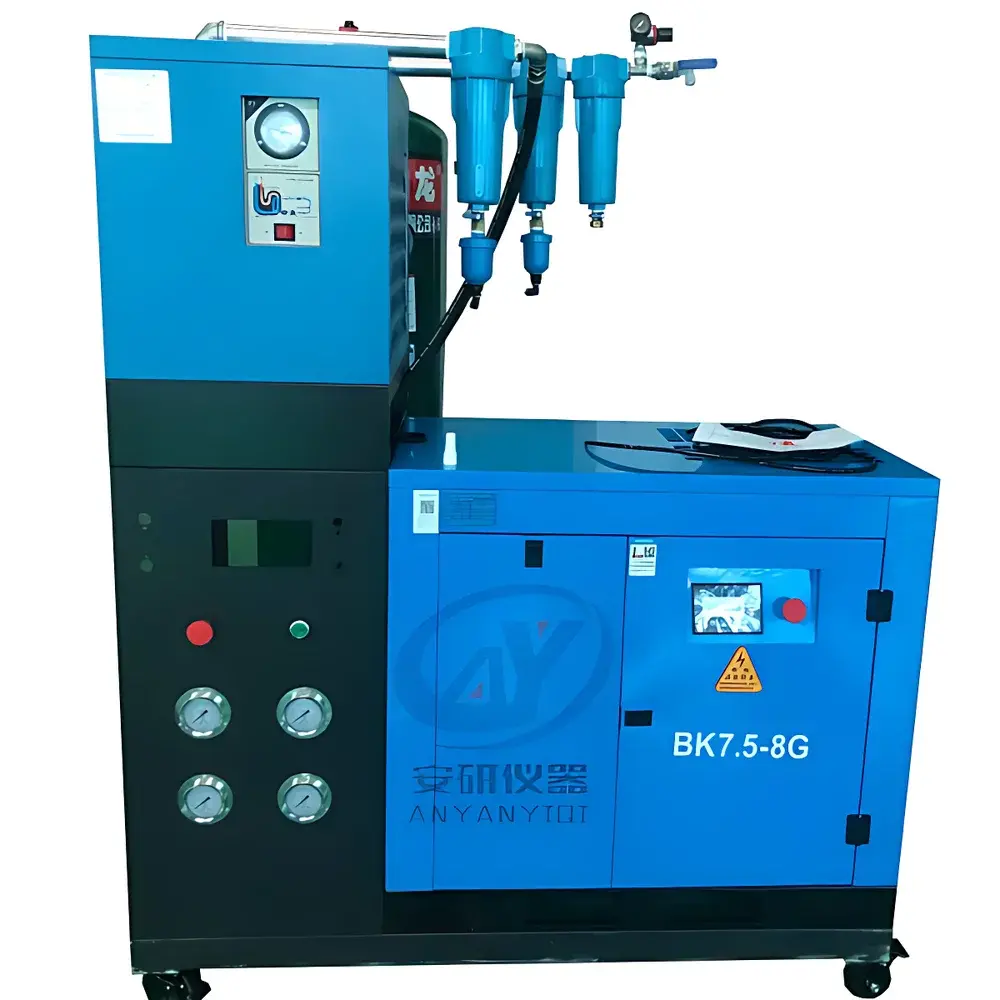
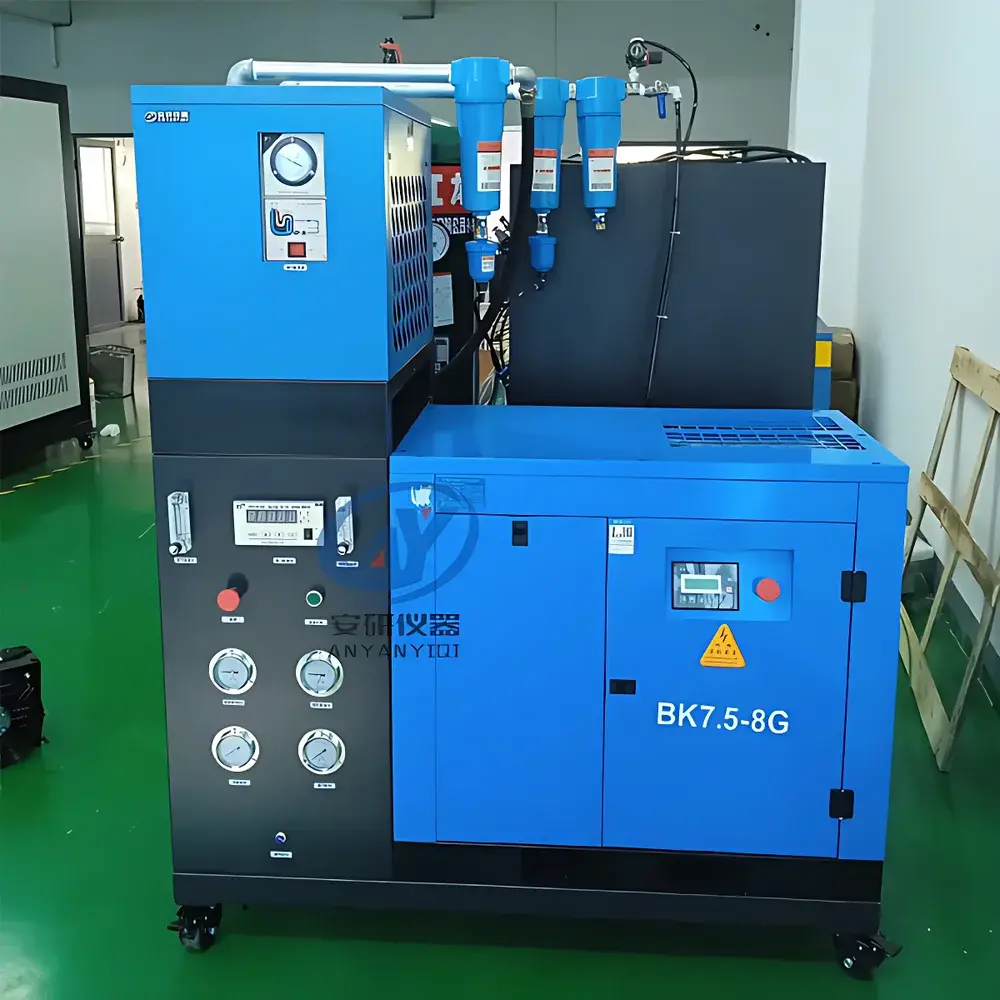
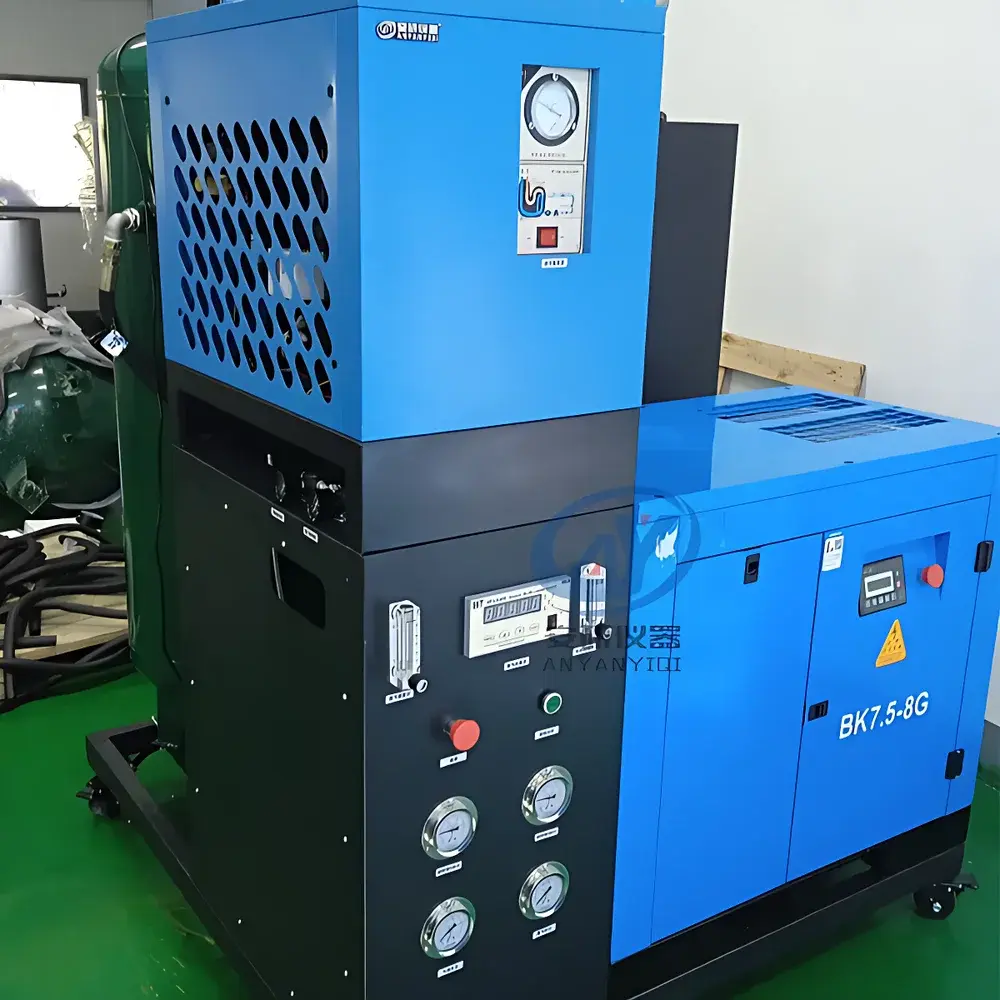
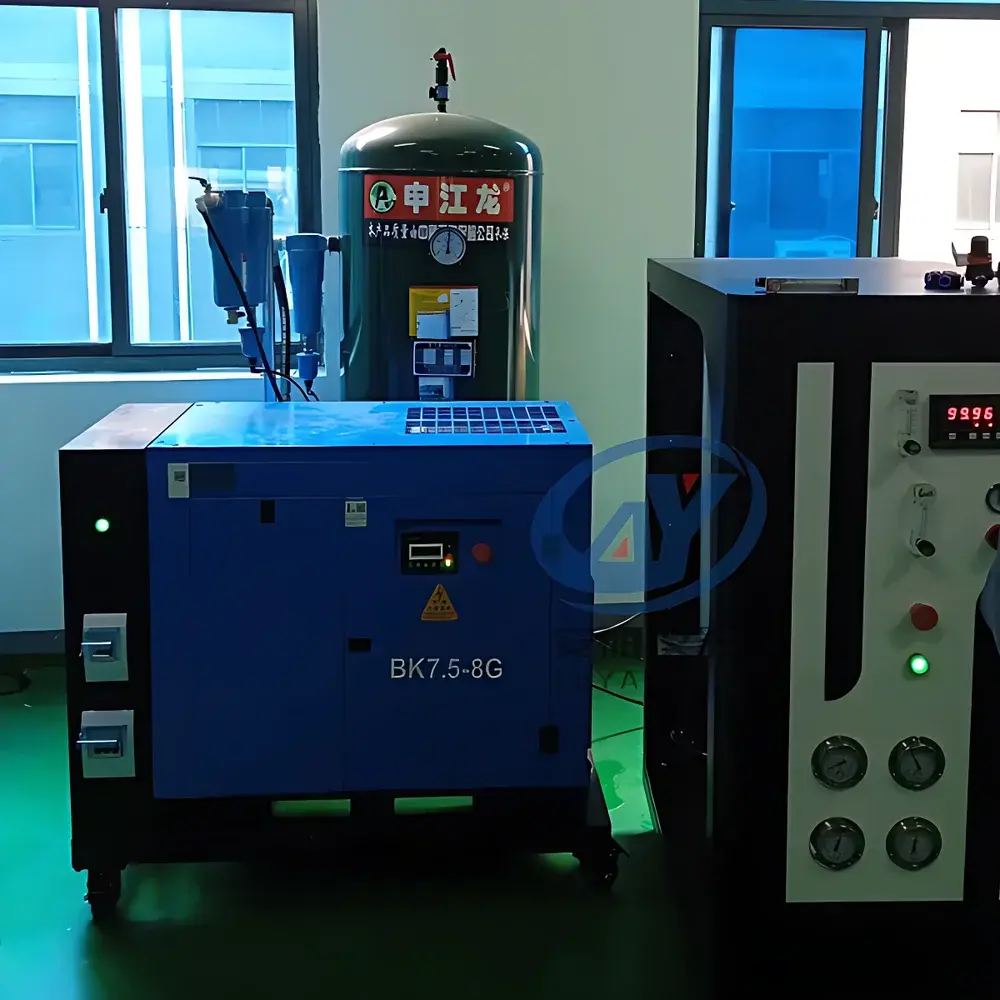
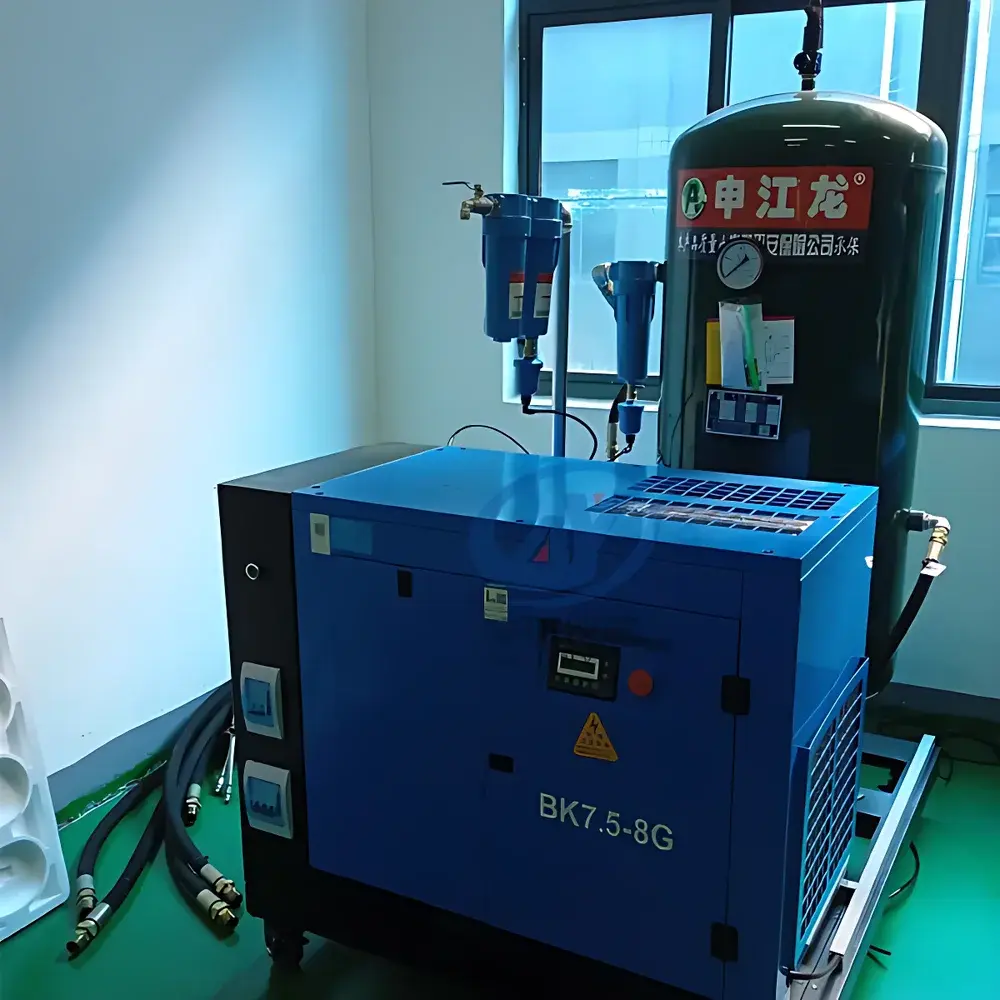
AYAN-10L PSA Nitrogen Generator with 99.999% Purity
| Brand | AYAN Instruments |
|---|---|
| Origin | Zhejiang, China |
| Model | AYAN-10L PSA Nitrogen Generator |
| Nitrogen Production Principle | Pressure Swing Adsorption (PSA) |
| Output Flow Rate | 0–10 L/min |
| Output Pressure | 0–0.7 MPa |
| Nitrogen Purity | 99.999% |
| Dew Point | −40 °C |
Overview
The AYAN-10L PSA Nitrogen Generator is an engineered, on-site nitrogen supply system designed for laboratory and light industrial applications requiring continuous, high-purity nitrogen gas at ambient temperature and low-to-medium pressure. It employs the well-established Pressure Swing Adsorption (PSA) principle—utilizing carbon molecular sieve (CMS) as the selective adsorbent—to separate nitrogen from compressed air. In this process, oxygen, water vapor, and CO₂ are preferentially adsorbed onto the CMS surface due to their smaller kinetic diameters and higher diffusion rates, while nitrogen molecules—larger and less readily adsorbed—accumulate in the gas phase. Dual-bed architecture enables uninterrupted operation: one adsorption tower pressurizes and separates nitrogen while the other depressurizes and regenerates, achieving a typical cycle time of ~120 seconds. The system delivers nitrogen at up to 10 L/min, with guaranteed purity of 99.999% (oxygen content ≤1 ppmv), dew point ≤−40 °C (ISO 8573-1 Class 2.2.1), and output pressure adjustable from 0 to 0.7 MPa. All wetted components—including adsorption towers, piping, and buffer vessels—are constructed from food-grade 304 stainless steel to ensure corrosion resistance, gas integrity, and compliance with material compatibility requirements for analytical and inerting applications.
Key Features
- Integrated pre-treatment train: multi-stage filtration (coalescing + activated carbon + ultra-fine particulate) combined with refrigerated air drying ensures inlet air meets ISO 8573-1 Class 2.4.2 specifications prior to CMS exposure
- Dual-tower PSA configuration with automatic valve sequencing controlled by industrial-grade PLC—enabling stable, unattended operation with <1 s switching response time
- Real-time monitoring suite: embedded oxygen analyzer (electrochemical sensor, 0–10 ppmv range), digital mass flow meter (±1.5% FS accuracy), and calibrated pressure transducers for N₂ outlet and air inlet
- Modular, skid-mounted mechanical design (2600 × 950 × 2400 mm; 2400 kg) optimized for floor placement in controlled environments; no external foundation required
- Compliance-ready architecture: supports audit trails via optional data logging module; all instrumentation calibrated per ISO/IEC 17025 traceable standards
- Energy-efficient operation: rated power consumption ≤600 W; no consumables beyond periodic desiccant and CMS replacement (typical CMS service life: 3–5 years under proper pretreatment)
Sample Compatibility & Compliance
The AYAN-10L is compatible with standard laboratory gas interfaces (e.g., CGA-580, BS 341 No. 3) and integrates seamlessly with GC carrier gas inlets, LC-MS purge lines, glovebox purging systems, and sample preparation enclosures. Its nitrogen output meets ASTM D6349–22 specifications for high-purity nitrogen used in chromatographic analysis and satisfies ISO 8573-1:2010 Class 2.2.1 for particulate, moisture, and oil content. While not certified to FDA 21 CFR Part 11 out-of-the-box, the system’s PLC-based control architecture supports third-party validation protocols for GLP/GMP environments when paired with qualified data acquisition software and electronic signature modules. All structural materials comply with EU Regulation (EC) No. 1935/2004 for food-contact surfaces.
Software & Data Management
The onboard PLC provides local HMI operation via a 5.7″ TFT touchscreen interface, displaying real-time parameters including O₂ concentration, N₂ flow rate, system pressure, and CMS cycle status. Optional RS-485 Modbus RTU or Ethernet TCP/IP connectivity allows integration into centralized lab management systems (e.g., LabVantage, STARLIMS). Logged data—including purity excursions, alarm events, and maintenance timestamps—is exportable as CSV files compliant with 21 CFR Part 11 Annex 11 requirements when deployed with validated timestamping and user-access controls. Firmware updates are performed via secure USB interface with SHA-256 signature verification.
Applications
- Gas chromatography (GC) carrier and detector gases, particularly for ECD, TCD, and FID systems requiring ultra-low oxygen background
- LC-MS solvent degassing and instrument purge gas for electrospray ionization sources
- Inert atmosphere generation for moisture-sensitive synthesis (e.g., Grignard reactions, organometallic catalysis)
- Blanketing and purging of analytical sample vials, headspace autosamplers, and solid-phase extraction manifolds
- Calibration gas dilution systems where consistent, low-oxygen matrix gas is critical
- Quality control labs operating under ISO/IEC 17025 accreditation requiring documented gas source traceability
FAQ
What is the recommended inlet air quality for optimal CMS performance?
Inlet compressed air must meet ISO 8573-1 Class 2.4.2: ≤0.1 µm particles, ≤0.1 mg/m³ total oil, and dew point ≤3 °C. Failure to maintain this specification accelerates CMS fouling and reduces service life.
How often does the carbon molecular sieve require replacement?
Under validated pretreatment conditions and average daily usage (1 ppmv despite regeneration cycle optimization.
Is the system compatible with existing lab air compressors?
Yes—provided the compressor delivers clean, dry, oil-free air at ≥0.8 MPa and ≥15 L/min capacity. An inline coalescing filter and refrigerated dryer are mandatory upstream accessories if the compressor lacks integrated purification.
Can the nitrogen purity be verified independently?
The built-in electrochemical O₂ sensor is factory-calibrated against NIST-traceable standards. Users may perform field verification using a portable paramagnetic O₂ analyzer (e.g., Servomex 4100) connected to the sampling port per ASTM D6349 Annex A2.
Does the unit support remote monitoring and alarm notification?
Standard configuration includes dry-contact alarm outputs (low purity, high pressure, filter clogging). Remote email/SMS alerts require integration with a third-party SCADA platform or IoT gateway supporting Modbus TCP.



