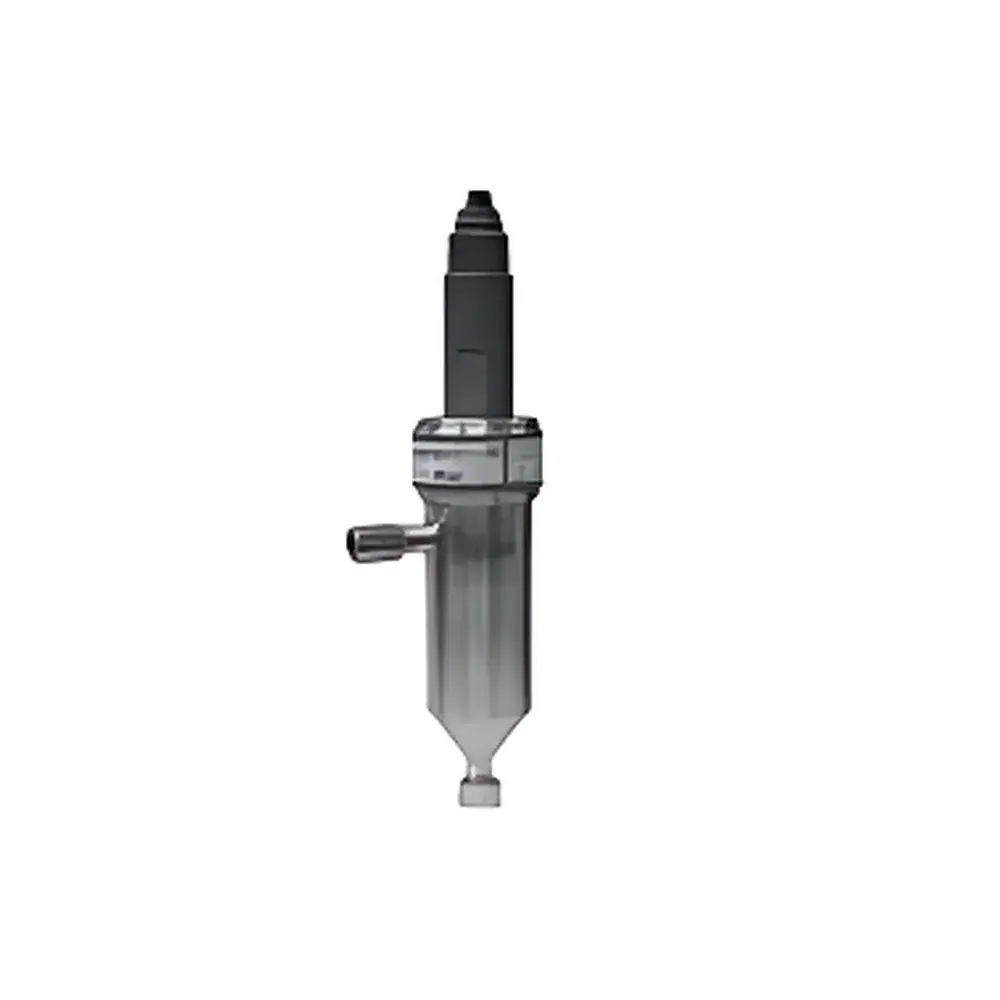
Leichi PHGF-28H Flow-Through pH Transmitter
| Brand | Leichi |
|---|---|
| Origin | Shanghai, China |
| Manufacturer Type | Manufacturer |
| Country of Origin | China |
| Model | PHGF-28H |
| Price | Upon Request |
| pH Range | 0.00–14.00 pH |
| ORP Range | ±1800 mV |
| Temperature Range | −5 to +105 °C |
| Operating Sample Temp. | 5–60 °C |
| Max. Sample Pressure | < 0.1 MPa |
| Sample Flow Rate | 200 mL/min |
| Inlet Tubing | Ø6×1 mm stainless steel |
| Outlet Tubing | Ø10×1 mm stainless steel |
Overview
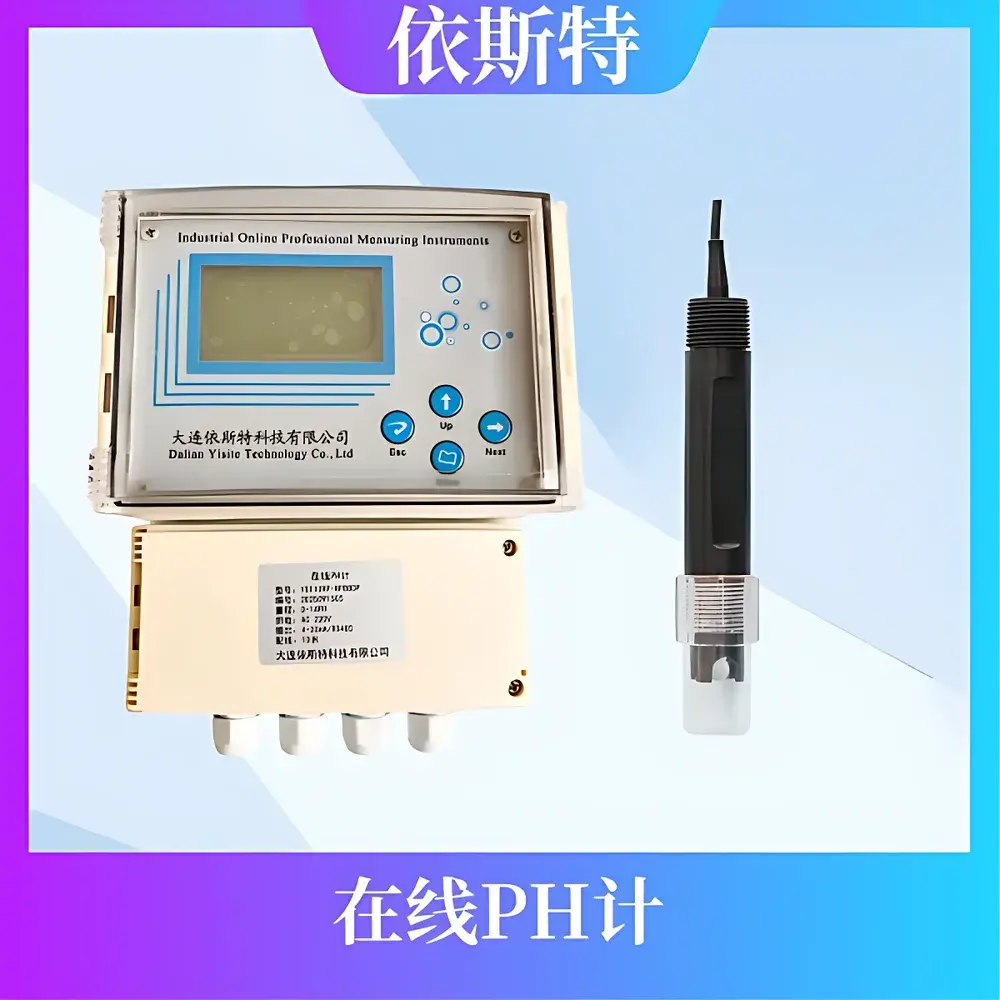
The Leichi PHGF-28H is a dedicated flow-through pH transmitter engineered for high-stability, low-drift measurement of ultrapure and low-conductivity water—particularly in power plant condensate, semiconductor rinse water, pharmaceutical water-for-injection (WFI), and laboratory-grade deionized water systems. Unlike conventional immersion-type transmitters, the PHGF-28H employs a precisely engineered flow cell architecture that maintains laminar, bubble-free sample delivery across the sensing surface, minimizing boundary layer effects and ensuring reproducible electrode potential development. Its core sensing element is the FG-991H triple-combination pH electrode, integrating a low-impedance glass pH sensor, Ag/AgCl reference system with double-junction ceramic frit, and integrated Pt1000 temperature sensor—all housed within a single, pressure-rated PEEK body. This configuration delivers enhanced noise immunity, reduced junction potential drift, and sub-30-second response time (t90) in waters with conductivity below 1 µS/cm.
Key Features
- Optimized flow cell design compliant with ISO 5725-2:2019 for measurement repeatability under continuous flow conditions
- FG-991H triple-combination electrode featuring low-resistance pH glass (≤100 MΩ at 25 °C) and reinforced reference junction for extended service life in low-ionic-strength media
- Integrated Pt1000 RTD with ±0.15 °C accuracy over −5 to +105 °C range, enabling automatic temperature compensation per NIST SRM 186 buffer standards
- Stainless steel inlet (Ø6×1 mm) and outlet (Ø10×1 mm) ports designed for leak-tight compression fitting installation in sanitary or industrial loop configurations
- Electrical output: 4–20 mA analog signal with HART® 7 protocol support for bidirectional diagnostics and configuration via handheld or DCS-integrated tools
- IP65-rated housing with optional explosion-proof (Ex d IIB T4) enclosure variant for hazardous area deployment (ATEX/IECEx certified)
Sample Compatibility & Compliance
The PHGF-28H is validated for use with aqueous solutions having conductivity ≥0.055 µS/cm (equivalent to 18.2 MΩ·cm resistivity). It meets critical requirements for regulated environments: compliant with USP <645> for purified water testing, aligned with ASTM D1125-22 Annex A1 for low-conductivity pH measurement methodology, and suitable for GLP/GMP data integrity workflows when paired with HART-enabled controllers supporting FDA 21 CFR Part 11 audit trails. The double-junction reference system prevents clogging and KCl leaching into ultra-pure streams—essential for maintaining USP-defined water quality specifications. Operation is restricted to non-aggressive, non-suspended, non-oily samples; chlorinated or oxidizing agents above 1 ppm must be removed upstream via activated carbon filtration.
Software & Data Management
When interfaced with Leichi’s PHG-217D-1 industrial pH/ORP controller or PHG-21D-1 benchtop analyzer, the PHGF-28H supports full digital calibration logging—including date/time stamp, operator ID, buffer lot numbers, slope (%), asymmetry potential (mV), and reference impedance (kΩ). All calibration events are stored with immutable timestamps and can be exported as CSV or PDF reports meeting ISO/IEC 17025 documentation requirements. The transmitter firmware includes built-in sensor health monitoring: continuous tracking of reference junction resistance, glass impedance, and thermal time constant deviation triggers configurable alarms (e.g., “Junction Resistance > 200 kΩ”) to preempt measurement failure.
Applications
- Real-time pH monitoring in boiler feedwater and turbine condensate loops (ASME PTC 19.11-2020)
- In-line verification of purified water (PW) and water-for-injection (WFI) distribution systems per EU GMP Annex 1 and WHO TRS 970
- Process control in semiconductor wet benches where pH stability directly impacts etch rate uniformity
- Environmental effluent monitoring for municipal wastewater discharge compliance (EPA Method 150.1)
- Research-grade pH profiling in aquaculture recirculating systems (RAS) requiring sub-0.02 pH unit resolution
- Calibration traceability support for ISO/IEC 17025-accredited laboratories performing pH method validation
FAQ
What is the minimum recommended sample conductivity for reliable operation?
The PHGF-28H is validated for stable performance at conductivities ≥0.055 µS/cm (18.2 MΩ·cm). Below this threshold, increased measurement noise and longer stabilization times may occur.
Can the transmitter be installed vertically or only horizontally?
It must be mounted horizontally with inlet upstream and outlet downstream to ensure consistent laminar flow through the sensing chamber and prevent air entrapment.
Is the FG-991H electrode replaceable without recalibrating the entire transmitter?
Yes—the electrode is field-replaceable as a modular assembly; post-replacement two-point calibration (using pH 4.01 and 7.00 buffers at process temperature) restores full metrological traceability.
Does the transmitter support automatic temperature compensation (ATC) for non-aqueous samples?
No—ATC algorithms are optimized exclusively for aqueous systems per DIN 19263 and are not applicable to organic solvents or mixed-phase media.
What is the maximum allowable backpressure at the outlet port?
Outlet backpressure must remain below 0.02 MPa to avoid flow restriction, diaphragm stress, or reference electrolyte expulsion from the double-junction system.