
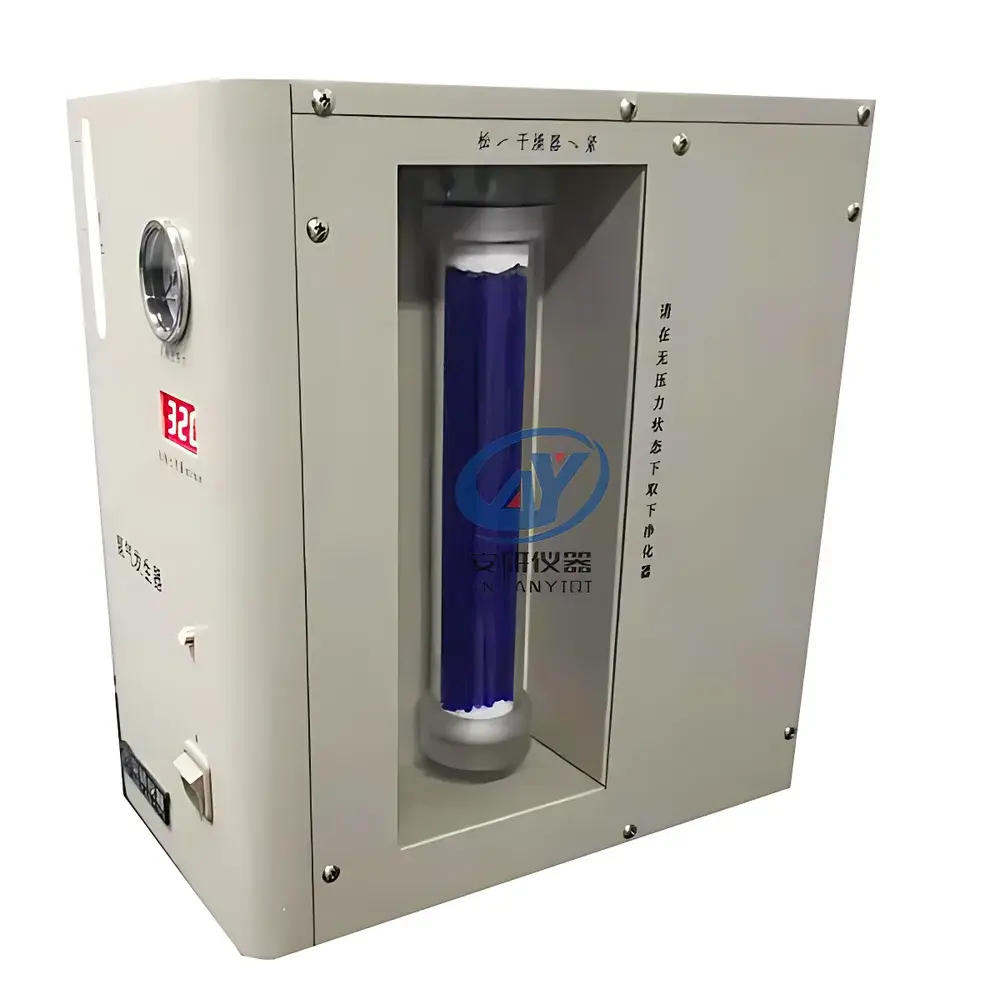
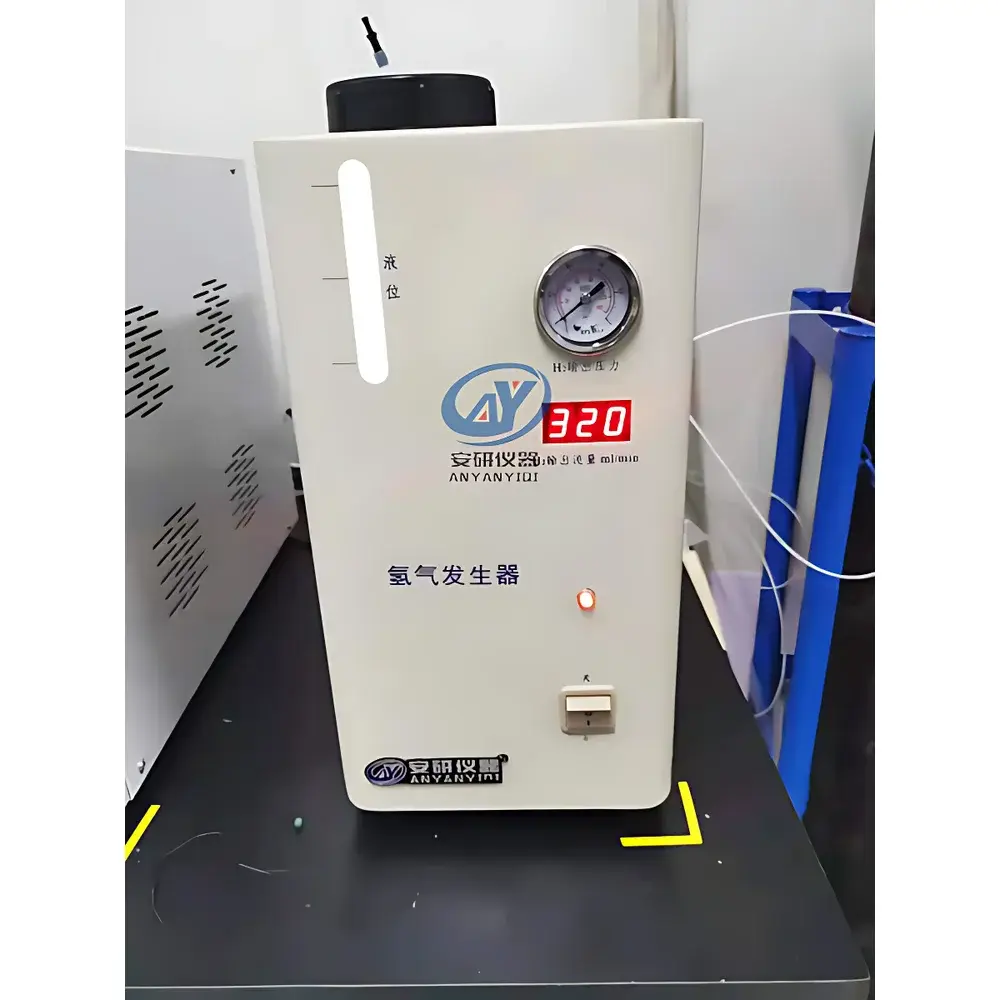
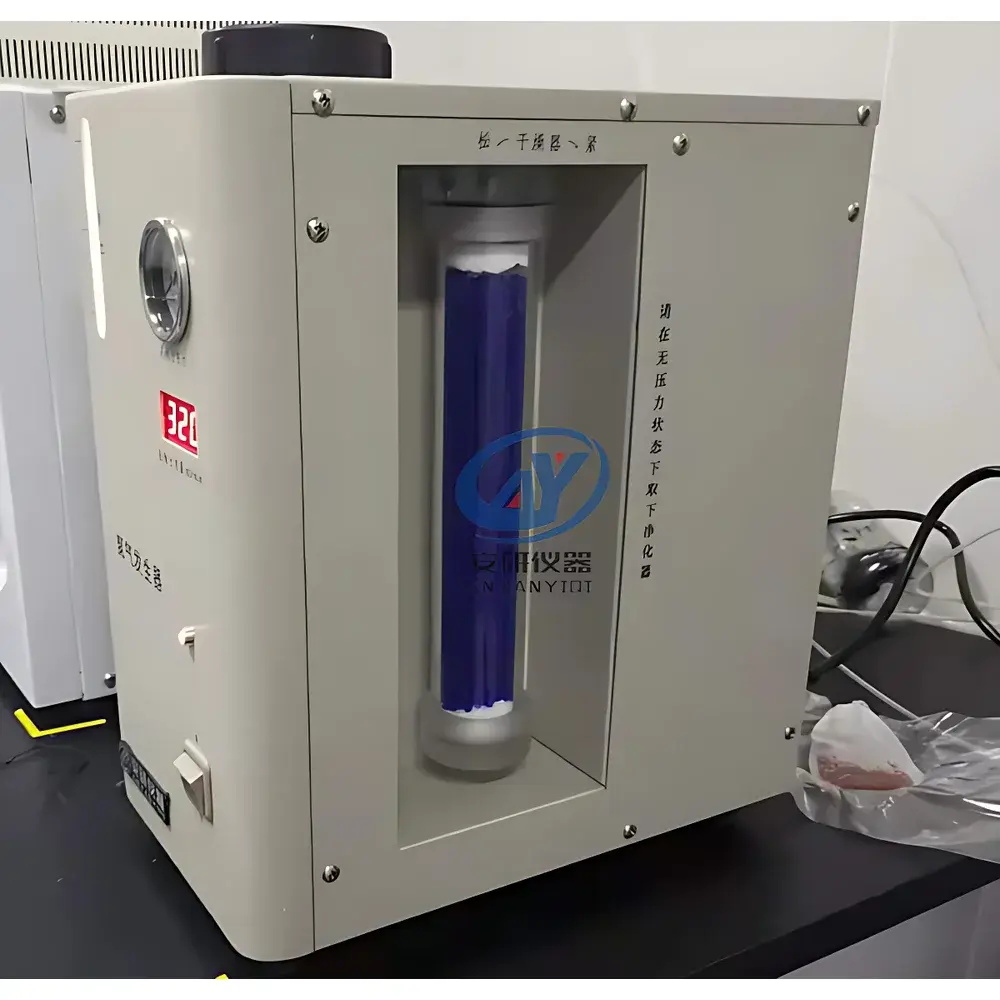
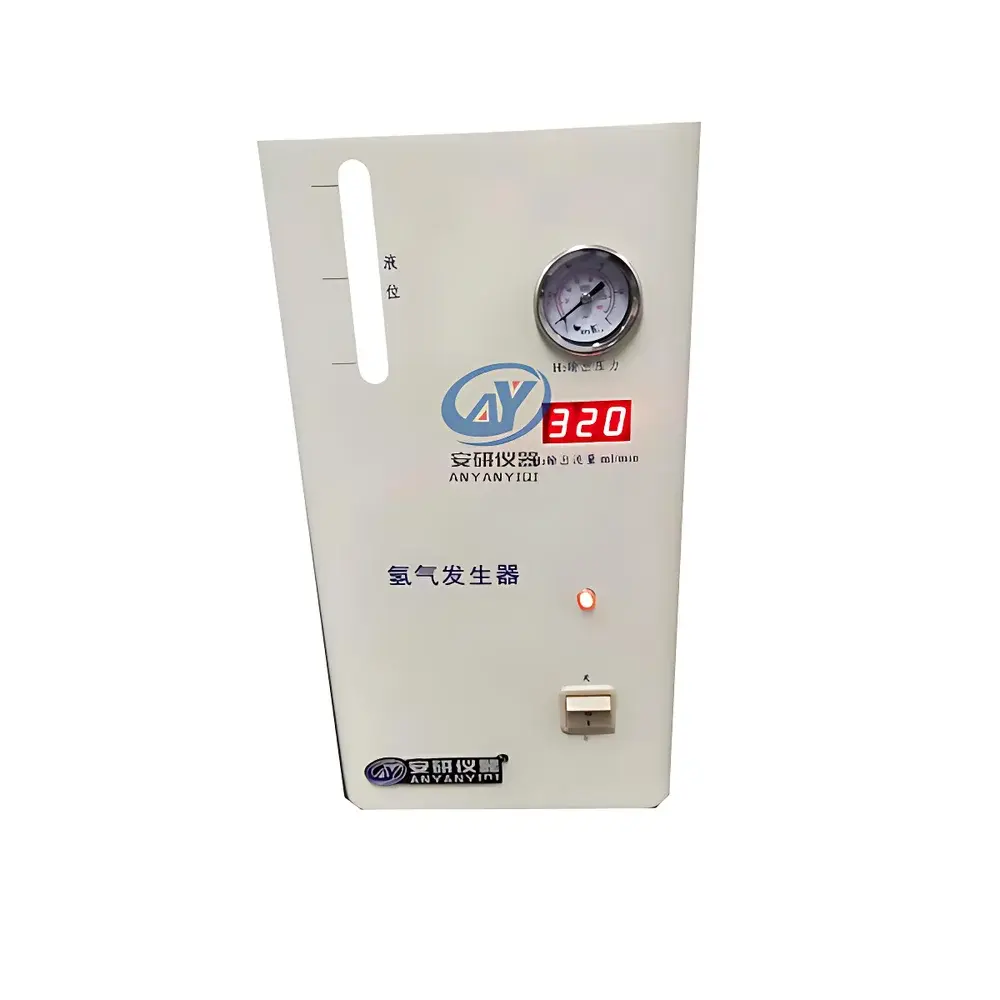
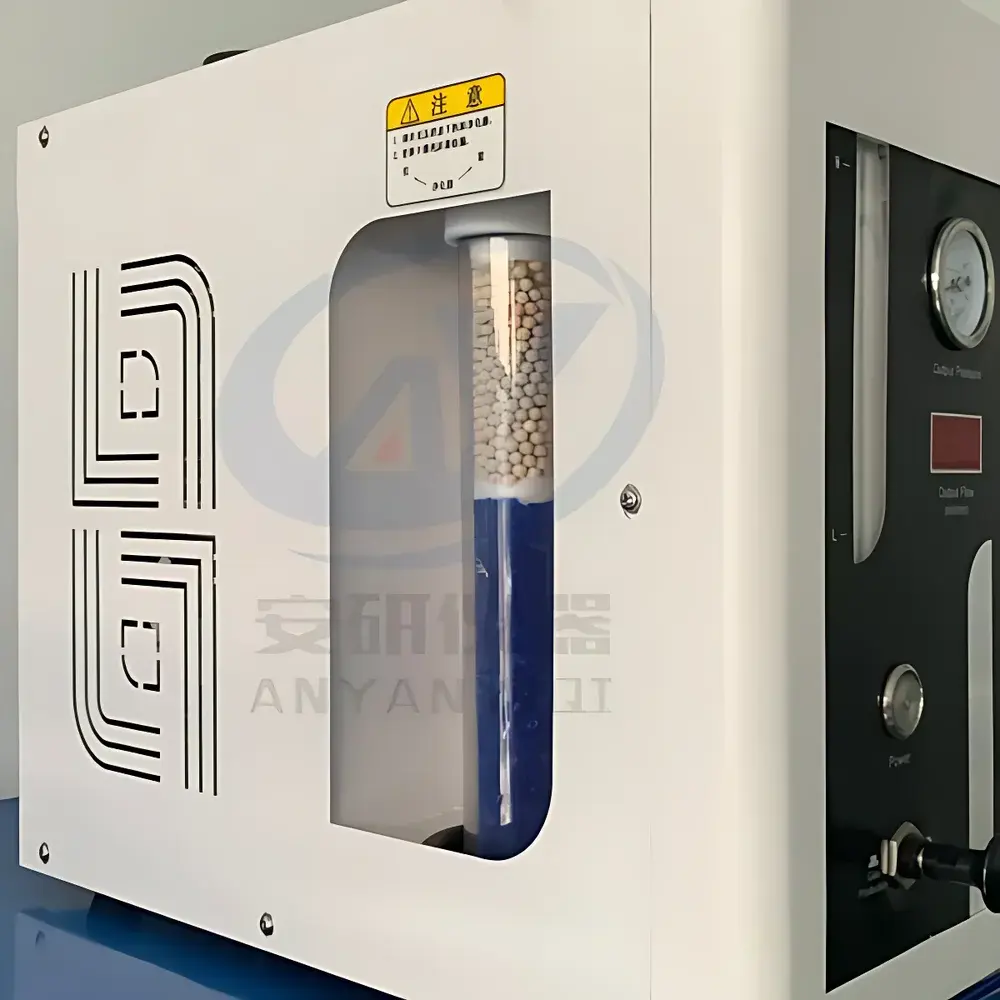
Anyan AYAN-H500ml Electrolytic Hydrogen Generator
| Brand | Anyan Instruments (Hangzhou) |
|---|---|
| Origin | Zhejiang, China |
| Manufacturer Type | Authorized Distributor |
| Country of Origin | China |
| Model | AYAN-H500ml |
| Price Range | USD 790–1,160 (FOB) |
| Hydrogen Generation Principle | PEM-Free Alkaline Electrolysis |
| Output Flow Rate | 0–500 mL/min |
| Output Pressure | 0–0.4 MPa (adjustable, factory-set at 0.3 MPa) |
| Hydrogen Purity | ≥99.999% |
| Power Consumption | 120 W |
| Operating Voltage/Frequency | 220 V ±10%, 50 Hz ±5% |
| Ambient Temperature Range | 0–50 °C |
| Relative Humidity | ≤85% RH |
| Dimensions (W×D×H) | 310 × 190 × 360 mm |
| Net Weight | 12 kg |
| Gas Outlet | 1/8″ NPT or Φ3 mm stainless steel tubing |
| Water Refill Method | Manual + Auto-refill dual mode |
| Electrolyte | KOH-based alkaline solution |
| Construction | 316L stainless steel gas path with electropolished finish |
| Safety Features | Dual-stage overpressure protection, anti-backflow valve, real-time leak detection, dry-run prevention |
Overview
The Anyan AYAN-H500ml Electrolytic Hydrogen Generator is a benchtop, alkaline-electrolysis-based gas supply system engineered for continuous, on-demand hydrogen production in analytical laboratories. It operates on the principle of water electrolysis using a potassium hydroxide (KOH) aqueous electrolyte and high-efficiency nickel-based electrodes—eliminating the need for proton exchange membranes (PEM) while maintaining stable performance under variable load conditions. Designed for integration with gas chromatography (GC), Fourier-transform infrared (FTIR) spectrometers, fuel cell test stations, and hydrogenation reactors, this generator delivers ultra-high-purity hydrogen (≥99.999%) at flow rates up to 500 mL/min and pressures up to 0.4 MPa. Its compact footprint (310 × 190 × 360 mm), low thermal signature (120 W max power draw), and passive-cooled electrolyzer architecture make it suitable for shared lab environments where space, noise, and heat dissipation are constrained.
Key Features
- Stable & Self-Regulating Output: Automatic flow tracking ensures consistent delivery across the full 0–500 mL/min range; pressure remains steady within ±0.02 MPa during dynamic load changes typical in GC carrier-gas applications.
- Corrosion-Resistant Gas Pathway: Entire hydrogen circuit constructed from electropolished 316L stainless steel tubing, ultrasonically cleaned pre-assembly to eliminate particulate residue and ensure compliance with ISO 8573-1 Class 2 compressed gas purity standards.
- Fail-Safe Fluid Management: Dual-mode water replenishment (manual + auto-refill) with integrated level sensors prevents dry-electrolysis events; proprietary anti-backflow valve eliminates risk of electrolyte migration into downstream instruments.
- Long-Life Electrolyzer Core: Optimized electrode geometry and thermally stabilized cell housing maintain uniform current density and minimize localized overheating—extending operational lifetime beyond 8,000 hours under standard lab duty cycles.
- Real-Time Operational Monitoring: LED-lit digital display shows instantaneous flow rate (mL/min), system pressure (MPa), and status indicators (electrolysis active, low-water warning, overpressure alert).
- Integrated Safety Architecture: Redundant mechanical pressure relief valves (set at 0.45 MPa), current-limiting power supply, and open-circuit detection prevent thermal runaway or uncontrolled gas release.
Sample Compatibility & Compliance
This hydrogen generator is compatible with all major GC manufacturers’ carrier-gas inlets—including Agilent, Thermo Fisher Scientific, Shimadzu, and PerkinElmer—when configured with standard 1/8″ NPT or Φ3 mm stainless steel output fittings. The ≥99.999% H₂ purity meets ASTM D7165 (Standard Practice for Determination of Hydrogen Purity in Gaseous Fuels) and exceeds USP requirements for pharmaceutical-grade hydrogen used in catalytic hydrogenation validation studies. All electrical components comply with IEC 61010-1:2010 safety standards for laboratory equipment. While not certified to FDA 21 CFR Part 11 out-of-the-box, its analog control interface supports external audit-trail logging via optional RS232/USB data capture modules for GLP/GMP-aligned workflows.
Software & Data Management
The AYAN-H500ml operates as a standalone hardware unit without embedded firmware or proprietary software dependencies. All operational parameters—including runtime, total gas volume delivered, and fault-event timestamps—are accessible via front-panel display only. For laboratories requiring traceability, analog voltage outputs (0–5 V DC proportional to flow and pressure) enable connection to third-party data acquisition systems (e.g., LabVIEW, DeltaV, or custom SCADA platforms). No cloud connectivity, remote diagnostics, or firmware updates are supported—ensuring electromagnetic compatibility (EMC) stability in RF-sensitive analytical suites.
Applications
- Carrier gas supply for capillary and packed-column gas chromatography (GC-FID, GC-TCD, GC-ECD)
- Hydrogen source for flame ionization detectors (FID) and pulsed discharge helium ionization detectors (PDHID)
- Feedstock gas in catalytic hydrogenation experiments (e.g., palladium-catalyzed reductions)
- Calibration gas generation for hydrogen sensors and leak-detection systems
- Controlled-atmosphere glovebox purging and inerting protocols
- Research-scale fuel cell testing and electrochemical impedance spectroscopy (EIS)
FAQ
What type of water must be used for electrolyte preparation?
Deionized water or double-distilled water (resistivity ≥18.2 MΩ·cm) is mandatory. Tap water or distilled-only water introduces ionic contaminants that accelerate electrode corrosion and reduce gas purity.
Is KOH electrolyte hazardous to handle during initial setup?
Yes. Potassium hydroxide is caustic. Users must wear nitrile gloves, chemical splash goggles, and work in a ventilated area when preparing the 30% w/w KOH solution. Refer to SDS #A-2023-KOH-ANYAN before handling.
Can the generator operate unattended overnight?
Yes—provided ambient temperature remains between 10–35°C and the water level is verified prior to startup. The auto-refill function maintains electrolyte volume, but periodic visual inspection every 72 hours is recommended for long-duration runs.
Does the unit require periodic maintenance beyond water refills?
Yes. Every 6 months, users should inspect the electrolyzer cell for scaling, clean the gas–water separator with dilute citric acid, and verify pressure-relief valve calibration using a certified deadweight tester.
How does ambient humidity affect performance?
Relative humidity >85% may cause condensation inside the control enclosure, potentially triggering false low-pressure alarms. Operation in air-conditioned labs (40–60% RH) is optimal for sensor longevity and display readability.



