
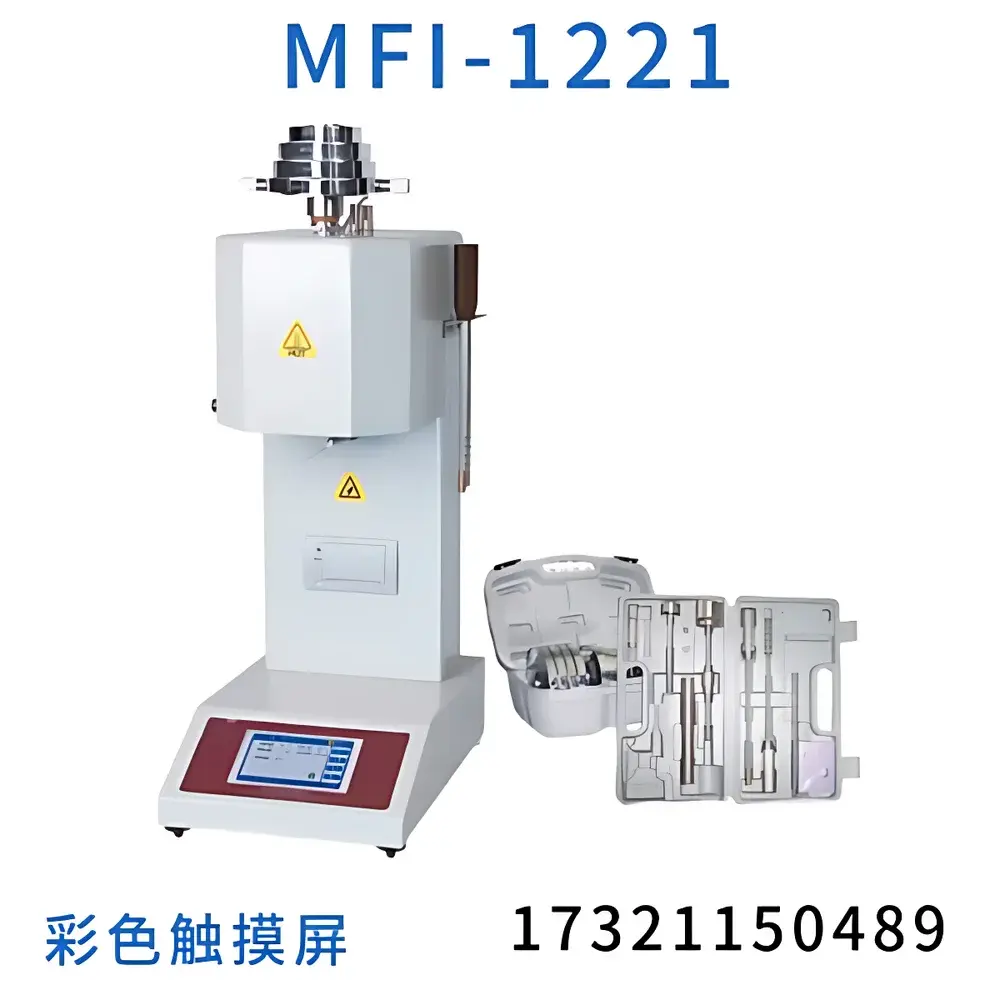
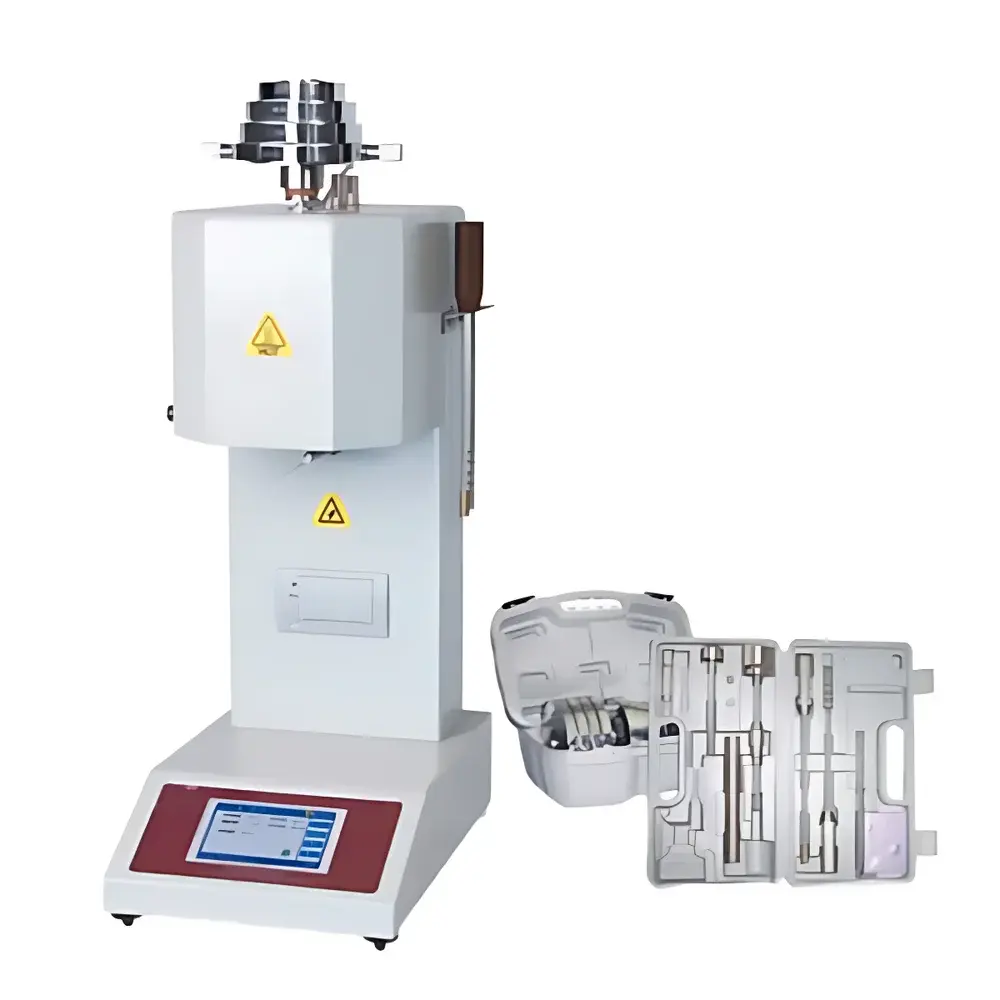
Zhonglu MFI-1221 Advanced Melt Flow Indexer (Mass & Volume Method)
| Key | Brand: Zhonglu |
|---|---|
| Origin | Shanghai, China |
| Manufacturer Type | OEM Manufacturer |
| Country of Origin | China |
| Model | MFI-1221 |
| Test Method | Mass Flow Rate (MFR) & Volume Flow Rate (MVR) |
| Temperature Range | 100–450 °C |
| Temperature Accuracy | ±0.2 °C |
| Temperature Resolution | 0.1 °C |
| Temperature Recovery Time | ≤2 min after charge |
| Die Dimensions | 2.095 mm ±0.005 mm ID, 8.000 mm ±0.025 mm length |
| Barrel ID | 9.550 mm ±0.007 mm |
| Piston Displacement Resolution | 0.002 mm |
| Piston Accuracy | ±0.02 mm |
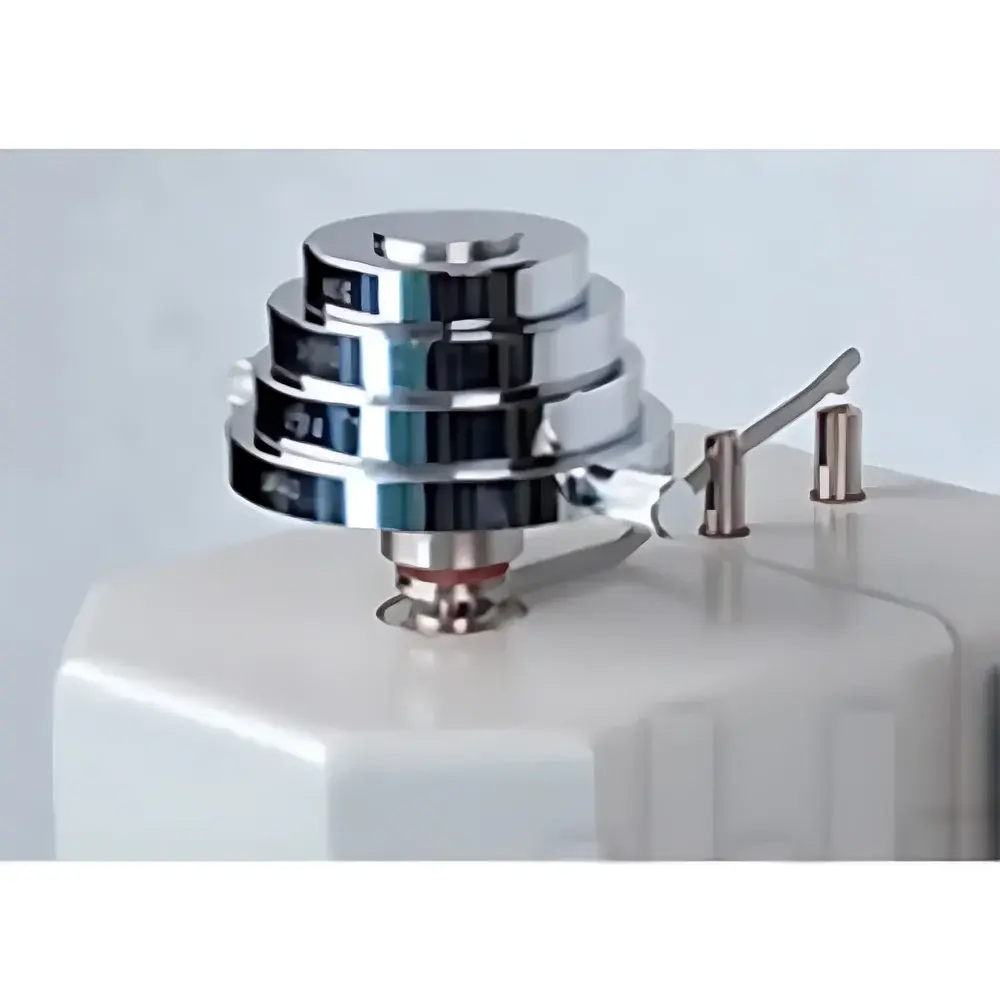
| Load Application | Manual |
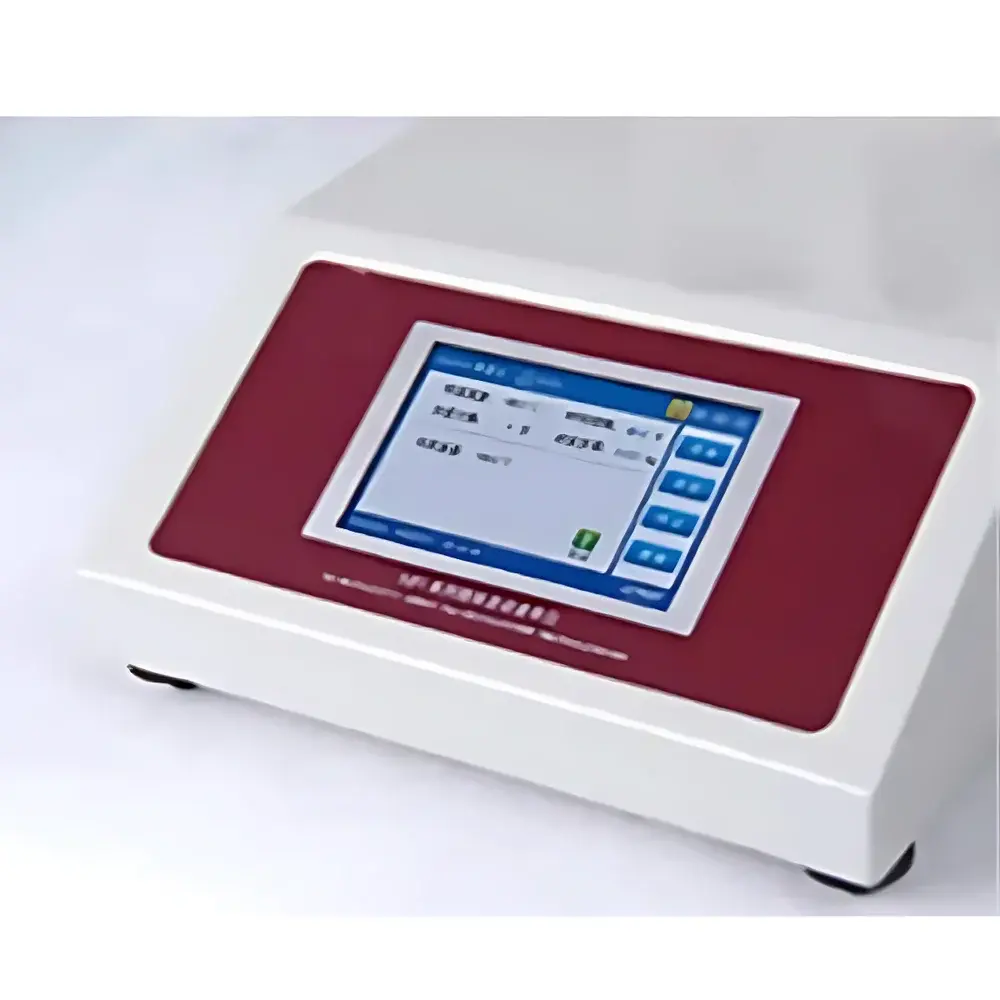
| Display | 5-inch HD color TFT touchscreen (bilingual: EN/CN) |
| Power Supply | 220 VAC ±10%, 50 Hz, 0.5 kVA |
| Weight | ~25 kg (main unit), ~25 kg (accessories) |
| Compliance | GB/T 3682–2018, ASTM D1238, ISO 1133:2005, BS 2782 |
Overview
The Zhonglu MFI-1221 Advanced Melt Flow Indexer is a dual-mode (mass and volume) thermal rheological testing instrument engineered for precise determination of melt mass-flow rate (MFR) and melt volume-flow rate (MVR) of thermoplastic polymers under standardized load and temperature conditions. Based on the principle of extrusion rheometry—where molten polymer is forced through a standardized capillary die under controlled gravimetric loading—the instrument quantifies flow behavior as an indicator of molecular weight distribution, processability, and batch-to-batch consistency. Its design adheres to fundamental requirements of capillary rheometry: constant temperature gradient across the barrel, minimal axial temperature deviation, and traceable mechanical displacement measurement. The MFI-1221 supports both traditional gravimetric (mass method) and volumetric (piston displacement) protocols, enabling cross-validation of results per ISO 1133–1 (MFR) and ISO 1133–2 (MVR). It is suitable for high-melting engineering thermoplastics—including polyethylene (PE), polypropylene (PP), ABS, polystyrene (PS), polyoxymethylene (POM), polyamide (PA), polyphenylsulfone (PPSU), and fluoropolymers—as well as low-viscosity melt-blown feedstocks.
Key Features
- High-stability temperature control system with segmented heating zones ensures uniform axial thermal distribution; measured temperature gradient across the critical 0–70 mm zone above the die is ≤±0.3 °C.
- 24-bit high-resolution analog-to-digital conversion for temperature sensing delivers real-time display accuracy of ±0.1 °C and long-term thermal stability.
- 5-inch HD capacitive touchscreen interface with bilingual (English/Chinese) navigation, workflow-guided operation, and password-protected parameter modification to prevent unauthorized configuration changes.
- Dual-test capability: simultaneous or sequential execution of MFR (mass-based) and MVR (volume-based) tests; automatic MFR calculation from entered specimen mass post-MVR measurement enables direct method comparison.
- Integrated melt density computation function derived from concurrent MFR and MVR outputs—essential for material specification alignment and processing simulation inputs.
- Acoustic feedback alerts for temperature stabilization and post-filling recovery completion, enhancing operator situational awareness during multi-sample runs.
- Robust mechanical architecture: hardened barrel interior (HV-500), surface roughness < Ra 0.25 µm, precision-ground die (2.095 mm ±0.005 mm ID), and calibrated piston assembly (9.474 mm ±0.007 mm OD) ensure metrological integrity over extended service life.
Sample Compatibility & Compliance
The MFI-1221 accommodates standard thermoplastic granules, pellets, and powders conforming to ISO 1133 and ASTM D1238 specimen preparation guidelines. Its operational temperature range (100–450 °C) covers the full spectrum of commercial thermoplastics—from commodity resins (e.g., LDPE at 190 °C/2.16 kg) to high-performance polymers (e.g., PEEK at 380 °C/5 kg). All hardware dimensions—including barrel inner diameter (9.550 mm ±0.007 mm), die geometry (L/D = 8.000 mm / 2.095 mm), and piston specifications—strictly comply with dimensional tolerances defined in ISO 1133:2005 Annex A and ASTM D1238–22 Section 7. The instrument supports full traceability required under GLP and GMP environments: test logs include timestamped operator ID, calibration status, environmental ambient data (if externally interfaced), and digital audit trail of all parameter edits. While not FDA 21 CFR Part 11–certified out-of-the-box, its software architecture permits integration with validated LIMS platforms via RS232/USB export of raw and processed data.
Software & Data Management
Embedded firmware provides closed-loop control of heating, timing, cutting, and displacement acquisition. All test parameters—including temperature setpoint, dwell time, cut interval, load selection, and calibration coefficients—are programmable and stored in non-volatile memory. Real-time piston displacement is captured at ≥100 Hz resolution, with displacement accuracy of ±0.02 mm over full stroke. Post-test data includes MFR (g/10 min), MVR (cm³/10 min), calculated melt density (g/cm³), and temperature recovery profile. Results are viewable on-screen, exportable as CSV files via USB port, and printable directly via integrated thermal printer driver support. No proprietary file formats are used; raw displacement vs. time and temperature vs. time datasets are accessible for third-party analysis. Firmware updates are delivered via signed binary packages to maintain integrity and version control.
Applications
- Quality control laboratories: routine verification of incoming resin lots against supplier certificates of analysis (CoA) and internal specifications.
- R&D departments: screening of polymer blends, filler-loaded composites, and degradation kinetics under accelerated thermal exposure.
- Regulatory submission support: generation of MFR/MVR data compliant with ISO 1043, ASTM D4000, and UL 94 classification requirements.
- Process development: correlation of MFR values with extrusion screw speed, die swell, and pressure drop in pilot-scale lines.
- Academic research: teaching capillary rheology fundamentals, validating constitutive models (e.g., Carreau-Yasuda), and benchmarking against rotational rheometer data.
FAQ
What standards does the MFI-1221 fully comply with?
It meets the mechanical, dimensional, and procedural requirements of ISO 1133:2005 (Parts 1 & 2), ASTM D1238–22, GB/T 3682–2018, and BS 2782 Section 1.12.
Can the instrument perform both MFR and MVR tests without hardware modification?
Yes—no physical reconfiguration is required. Switching between mass and volume modes is software-controlled and validated via built-in calibration routines.
Is temperature uniformity verified across the entire barrel length?
Yes. The furnace employs three independently controlled heating zones; axial temperature mapping confirms ≤±0.3 °C deviation within the 0–70 mm zone above the die, per ISO 1133 Annex B.
How is measurement traceability maintained?
All critical components—including die, barrel, piston, and reference weights—are supplied with individual calibration certificates traceable to CNAS-accredited laboratories (equivalent to ILAC-MRA signatories).
Does the system support automated data archiving for audit purposes?
Raw test data (time-stamped displacement, temperature, and cut events) and final reports are stored locally and exportable in open-format CSV. Integration with networked LIMS requires optional RS232-to-Ethernet gateway configuration.




