
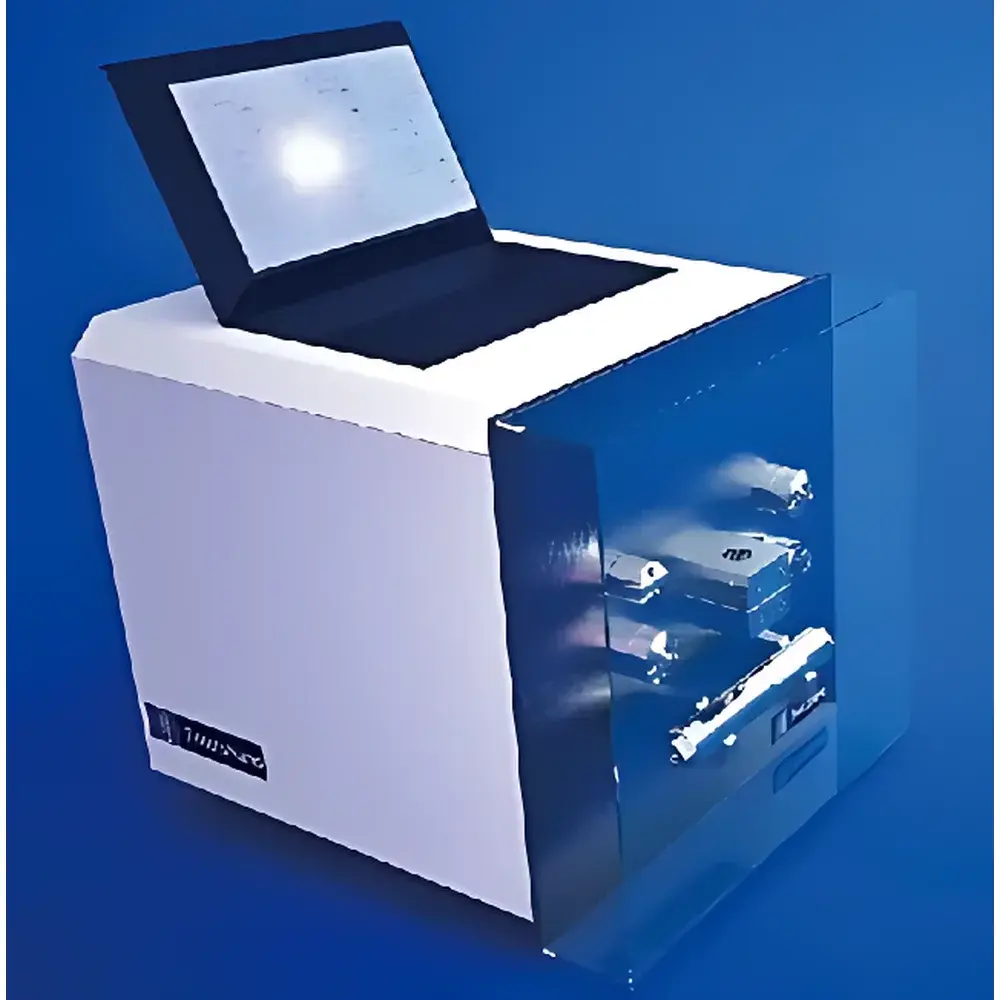
ThalesNano H-Cube Mini Flow Hydrogenation System
| Brand | ThalesNano |
|---|---|
| Origin | Imported (Hungary) |
| Model | H-Cube Mini |
| Temperature Range | 25–100 °C |
| Pressure Range | 1–100 bar (1450 psi) |
| Flow Rate | 0.1–3 mL/min |
| H₂ Generation Rate | 0–30 cm³/min |
| Control Interface | Integrated Touchscreen with Real-time Parameter Adjustment |
| Catalyst Format | Cartridge-based Fixed-Bed Reactor |
| Safety Certification | CE, IEC 61010-1 Compliant |
Overview
The ThalesNano H-Cube Mini Flow Hydrogenation System is a benchtop, continuous-flow catalytic hydrogenation platform engineered for academic and early-stage R&D laboratories requiring safe, scalable, and reproducible hydrogenation chemistry. Unlike traditional batch reactors reliant on external high-pressure H₂ gas cylinders, the H-Cube Mini generates ultra-pure hydrogen *in situ* via solid polymer electrolyte (SPE) water electrolysis—eliminating storage, handling, and regulatory burdens associated with compressed gas infrastructure. Its core architecture integrates a temperature- and pressure-controlled fixed-bed reactor cartridge, precision syringe or HPLC pump-driven liquid flow, and real-time touchscreen supervision—all within a footprint compatible with standard laboratory fume hoods (W × D × H: 32 × 45 × 28 cm). The system operates on fundamental principles of heterogeneous catalysis under continuous-flow kinetics, enabling precise residence time control, improved mass transfer, and inherent thermal management advantages over batch analogues.
Key Features
- In-situ hydrogen generation: Electrolytic H₂ production from deionized water ensures >99.999% purity, zero carbon footprint at point-of-use, and eliminates need for gas certification, leak testing, or cylinder logistics.
- Cartridge-based catalyst system: Pre-packed, disposable catalyst cartridges (e.g., Pd/C, PtO₂, Raney Ni) prevent operator exposure to pyrophoric materials and eliminate post-reaction filtration—a critical advantage for GLP-compliant workflows and high-throughput screening.
- Wide operational envelope: Programmable reaction conditions spanning 25–100 °C and 1–100 bar allow exploration of thermodynamically challenging reductions (e.g., nitroarenes, nitriles, heterocycles) while maintaining catalyst stability.
- Real-time parameter control: Intuitive 7-inch capacitive touchscreen interface enables dynamic adjustment of flow rate, temperature, pressure, and H₂ stoichiometry during active runs—supporting rapid iterative optimization without system shutdown.
- Robust safety architecture: Integrated pressure relief valves, hydrogen sensors (0–1000 ppm range), automatic emergency shutdown, and CE/IEC 61010-1 compliance ensure adherence to ISO 13849-1 PL d functional safety requirements.
Sample Compatibility & Compliance
The H-Cube Mini accommodates a broad spectrum of organic substrates—including aryl halides, alkenes, alkynes, imines, and carbonyl derivatives—across solvent systems such as MeOH, EtOH, THF, EtOAc, and DMF. Its stainless-steel fluidic path (316L) and Hastelloy C-276 reactor liner ensure compatibility with acidic, basic, and halogenated media. The system supports method development aligned with ICH Q5A (viral clearance), USP analytical instrument qualification, and FDA 21 CFR Part 11-ready data integrity protocols when paired with ThalesNano’s optional Audit Trail software module. All hardware components meet RoHS and REACH directives; reactor cartridges are supplied with full CoA documentation per lot.
Software & Data Management
The embedded firmware provides timestamped logging of all critical parameters (T, P, flow, H₂ rate, runtime) in CSV format, exportable via USB or Ethernet. Optional ThalesNano Control Software (v3.2+) adds multi-user role-based access control, electronic signatures, automated report generation (PDF/Excel), and audit trail functionality compliant with ALCOA+ principles. Raw data files include digital signatures and hash verification to satisfy GMP Annex 11 and EU GMP Annex 11 requirements for computerized system validation.
Applications
- Rapid catalyst screening for asymmetric hydrogenation and chiral amine synthesis
- Process intensification of API intermediates under continuous manufacturing paradigms (QbD-aligned)
- Reductive amination, debenzylation, and nitro-group reduction in medicinal chemistry workflows
- Hydrogenolysis of protecting groups (Cbz, Bn, Alloc) in peptide and oligonucleotide synthesis
- Method transfer from batch to flow for scale-up feasibility assessment (mg to g/day throughput)
FAQ
Does the H-Cube Mini require external hydrogen gas supply?
No. It generates hydrogen on-demand via PEM electrolysis using only deionized water and electrical power.
Can I use custom catalysts not supplied by ThalesNano?
Yes—custom-packed cartridges can be prepared in-house using standard Swagelok fittings and validated packing protocols; however, warranty coverage applies only to factory-prepacked cartridges.
Is the system compatible with corrosive reagents like HCl or TFA?
Yes, provided concentrations remain ≤10% v/v and exposure time is limited; extended use requires Hastelloy reactor upgrade option.
What validation documentation is provided?
Factory calibration certificates (temperature, pressure, flow), IQ/OQ templates, and 21 CFR Part 11 implementation guidance are included with each unit.
How is maintenance performed?
Annual electrolyzer stack replacement and quarterly O-ring inspection are recommended; no user-serviceable high-voltage components exist within the sealed power module.
Related Products



