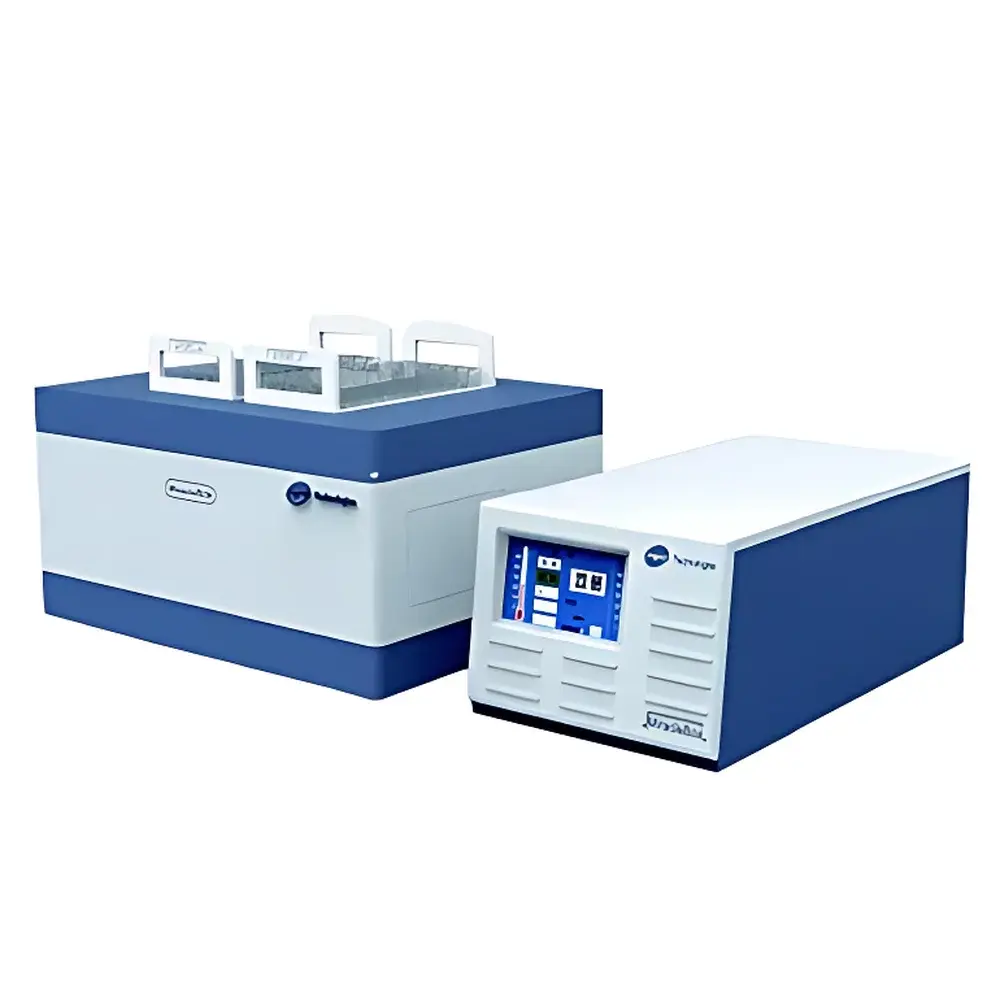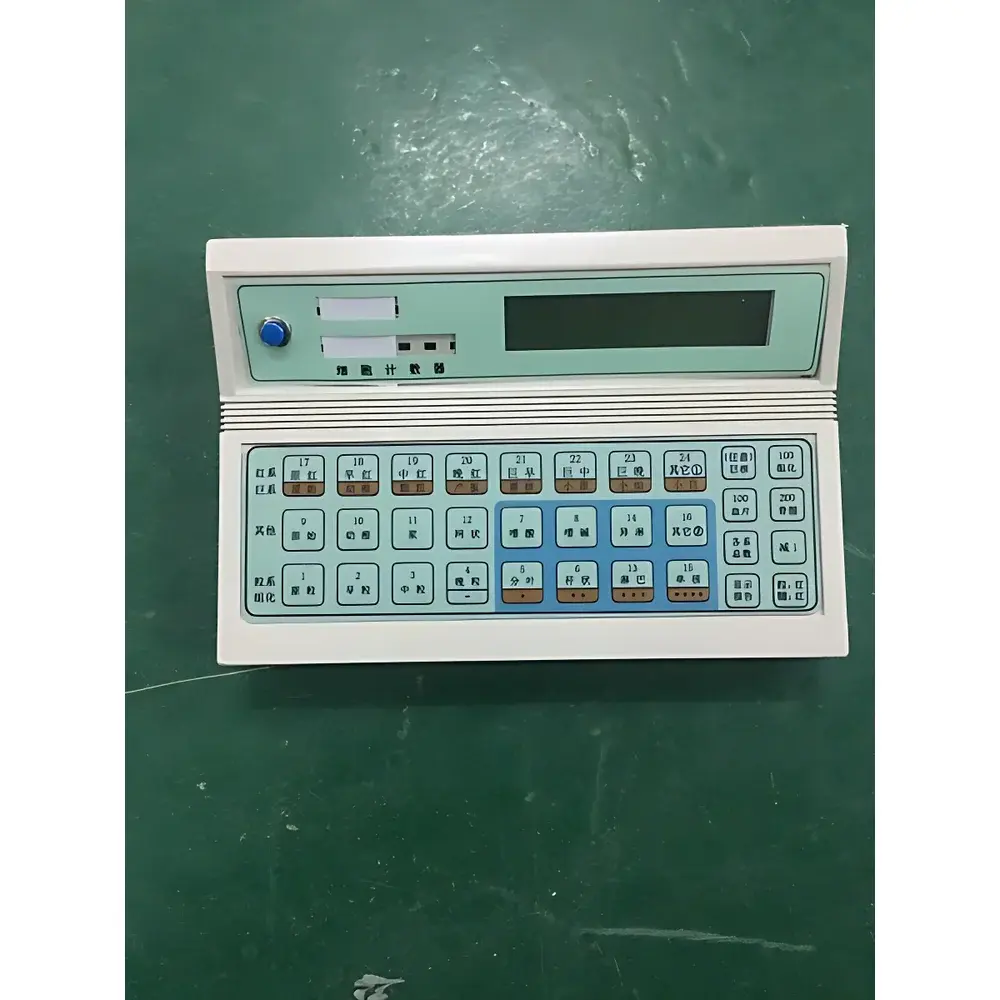
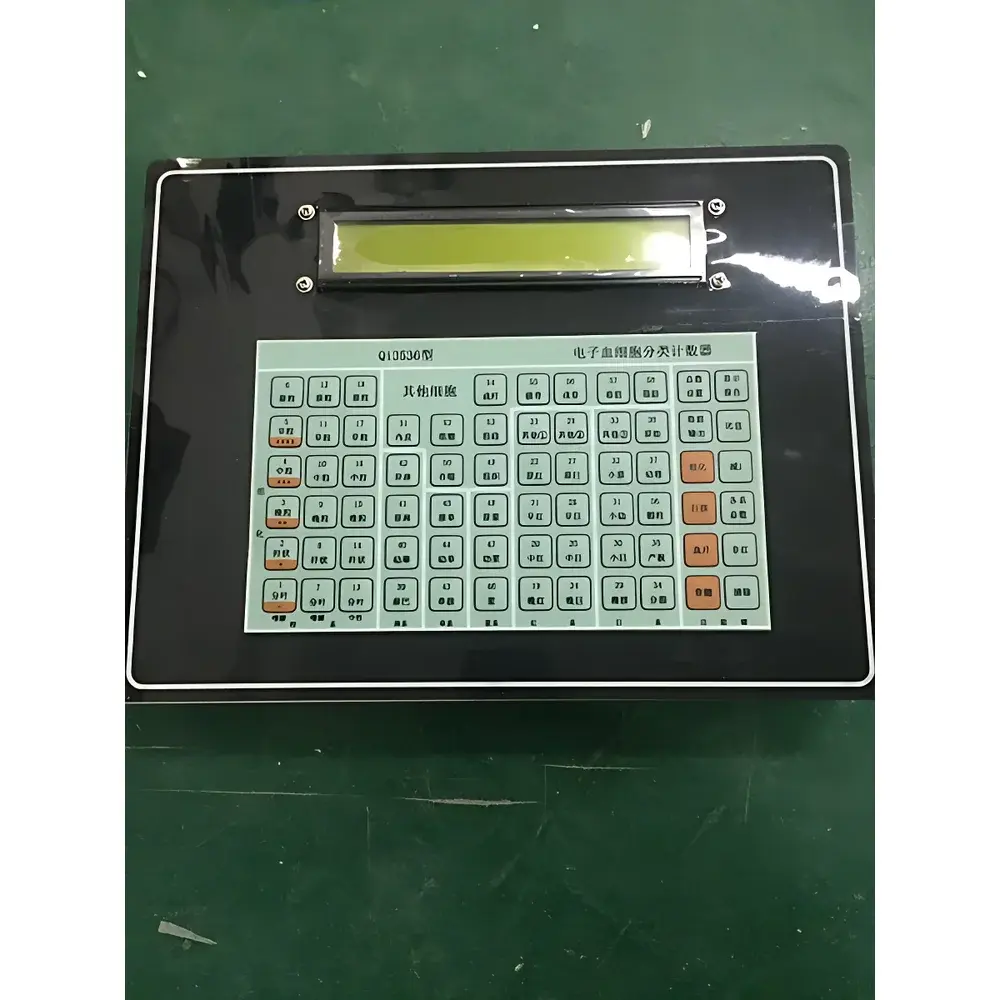
Chuanyi Qi3536 Hemocytometer with Cell Classification & Differential Counting Functionality
| Brand | Chuanyi Instruments (Hangzhou Chuanyi Electronic Co., Ltd.) |
|---|---|
| Origin | Zhejiang, China |
| Model | Qi3536 |
| Power Consumption | 3 W |
| Display | 20×2 large-character LCD |
| Data Retention | Non-volatile memory with power-loss protection |
| Counting Modes | Bone marrow smear, peripheral blood smear, megakaryocyte count, histochemical staining |
| Cell Categories | 58 defined cell types across granulocytic, erythroid, megakaryocytic, plasmacytic, monocytic, lymphoid, and other lineages (e.g., fat cells, mast cells, reticular cells, osteoblasts, osteoclasts) |
| Staining Intensity Grading | –, +, ++, +++, ++++ |
| Output Metrics | Absolute counts, percentages, five diagnostic ratios (e.g., myeloid:erythroid), six lineage totals, non-erythroid cell summary |
| Input Volume | 10 µL per chamber |
| Operating Modes | AC/DC dual-power supply |
Overview
The Chuanyi Qi3536 Hemocytometer is a dedicated microprocessor-controlled differential cell counter engineered for manual microscopic classification and quantitative enumeration of hematopoietic and non-hematopoietic cells in clinical and research cytology workflows. Unlike automated flow-based analyzers, the Qi3536 supports morphologically guided, user-validated cell identification—aligning with WHO and ICSH guidelines for manual differential leukocyte and bone marrow evaluation. It operates on the principle of standardized visual assessment of stained smears or cytospins, where trained personnel classify cells using predefined morphological criteria, and the instrument records, aggregates, and calculates lineage-specific metrics in real time. Designed for compliance with GLP-aligned laboratory documentation practices, the Qi3536 captures operator-defined classifications without algorithmic inference—ensuring traceability, audit readiness, and full interpretive control by the cytotechnologist or hematopathologist.
Key Features
- 58 preconfigured cell categories organized across seven major lineages: granulocytic (18 subtypes including segmented neutrophils, eosinophils, basophils), erythroid (5 stages), megakaryocytic (10 forms), plasmacytic (3), monocytic (3), lymphoid (4), and “other” (15 entities including mast cells, osteoclasts, endothelial cells, and histiocytic variants)
- Four validated counting protocols: peripheral blood film, bone marrow aspirate smear, megakaryocyte enumeration (per high-power field), and histochemical reaction scoring (– to ++++ intensity scale)
- 20×2 large-character LCD display with backlight—optimized for prolonged visual assessment under standard laboratory lighting conditions
- Non-volatile memory with automatic power-loss protection: all intermediate and final counts persist through unexpected shutdowns; resume counting from last active mode upon reboot
- Dual independent counting chambers (A/B) with tactile insertion feedback (“click” confirmation); each chamber processed sequentially with separate result logging
- Real-time calculation of clinically relevant ratios—including myeloid:erythroid (M:E), granulocyte:lymphocyte (G:L), and blast percentage—calculated to two decimal places
- Low-power architecture (3 W typical draw) supporting uninterrupted operation during extended batch processing in resource-constrained environments
- AC/DC dual-power input enabling deployment in mobile labs, field clinics, or backup power scenarios
Sample Compatibility & Compliance
The Qi3536 accepts standard 10 µL aliquots loaded onto reusable or disposable hemocytometer slides compatible with conventional Wright-Giemsa, May-Grünwald, PAS, or myeloperoxidase-stained preparations. It does not perform image acquisition or AI-based segmentation; instead, it serves as a digital tally interface synchronized with manual microscopy. As such, it complies with ISO 15189:2022 requirements for manual differential count documentation, supports traceable operator ID entry (via optional external keyboard integration), and maintains immutable session logs required for internal quality audits. While not FDA 510(k)-cleared or CE-IVDR certified as an IVD device, its design adheres to IEC 61010-1 safety standards for laboratory electrical equipment and is routinely deployed in academic core facilities, hospital hematology labs, and biotech QC units operating under CLIA-equivalent or CAP-accredited quality management systems.
Software & Data Management
The Qi3536 embeds firmware-level data handling without external software dependencies. All counting sessions generate timestamped, mode-tagged records stored in onboard flash memory (capacity sufficient for ≥500 complete differential sessions). Data export occurs via standard USB 2.0 interface to FAT32-formatted drives, outputting CSV files containing: sample ID (user-entered), counting mode, cell-type counts, percentages, ratios, lineage totals, and operator notes field. No cloud connectivity, remote access, or database synchronization is implemented—ensuring full data sovereignty and alignment with HIPAA-compliant or GDPR-restricted institutional policies. Audit trails include power-on timestamp, session start/end times, and mode selection history—supporting retrospective review per 21 CFR Part 11 principles when paired with procedural SOPs defining operator authentication and data transcription protocols.
Applications
- Clinical hematology labs performing manual differentials for CBC correlation, blast screening, and dysplasia assessment in suspected MDS or leukemia
- Bone marrow morphology labs quantifying megakaryocyte density, erythroid maturation index, and abnormal localization of immature precursors (ALIP)
- Transfusion medicine units validating platelet concentrates or assessing storage lesion in RBC units via morphologic scoring
- Academic research groups conducting longitudinal immune cell profiling in murine models or primary human tissue isolates
- Biomanufacturing QA/QC teams monitoring viability and lineage composition of expanded T-cell or NK-cell products prior to release
- Medical education programs teaching cytomorphology interpretation with immediate quantitative feedback on classification consistency
FAQ
Does the Qi3536 perform automated image analysis or cell recognition?
No. It is a manual classification aid—not an imaging cytometer. Users visually identify cells under microscope and press corresponding keys; the device logs and computes results.
Can the Qi3536 be integrated with LIS or hospital EMR systems?
Not natively. Data must be exported manually via USB and imported into external systems. No HL7 or ASTM interface is provided.
What is the maximum number of cells that can be counted per session?
There is no hard upper limit. The device supports continuous counting until manually stopped; memory retention depends on session depth, not total cell count.
Is calibration required before use?
No hardware calibration is needed. However, users must validate morphologic recognition proficiency per institutional competency assessment protocols prior to unsupervised operation.
Are consumables proprietary?
No. Standard glass or disposable hemocytometer slides (e.g., Neubauer-improved type) and common staining reagents are fully compatible.